- Company Articles
- Products and Technology
- Product knowledge
- Benefits of Using Three Way Lean Pipe Joint Chrome in Lean Manufacturing

Benefits of Using Three Way Lean Pipe Joint Chrome in Lean Manufacturing
Related Product
Three Way Lean Pipe Joint Chrome
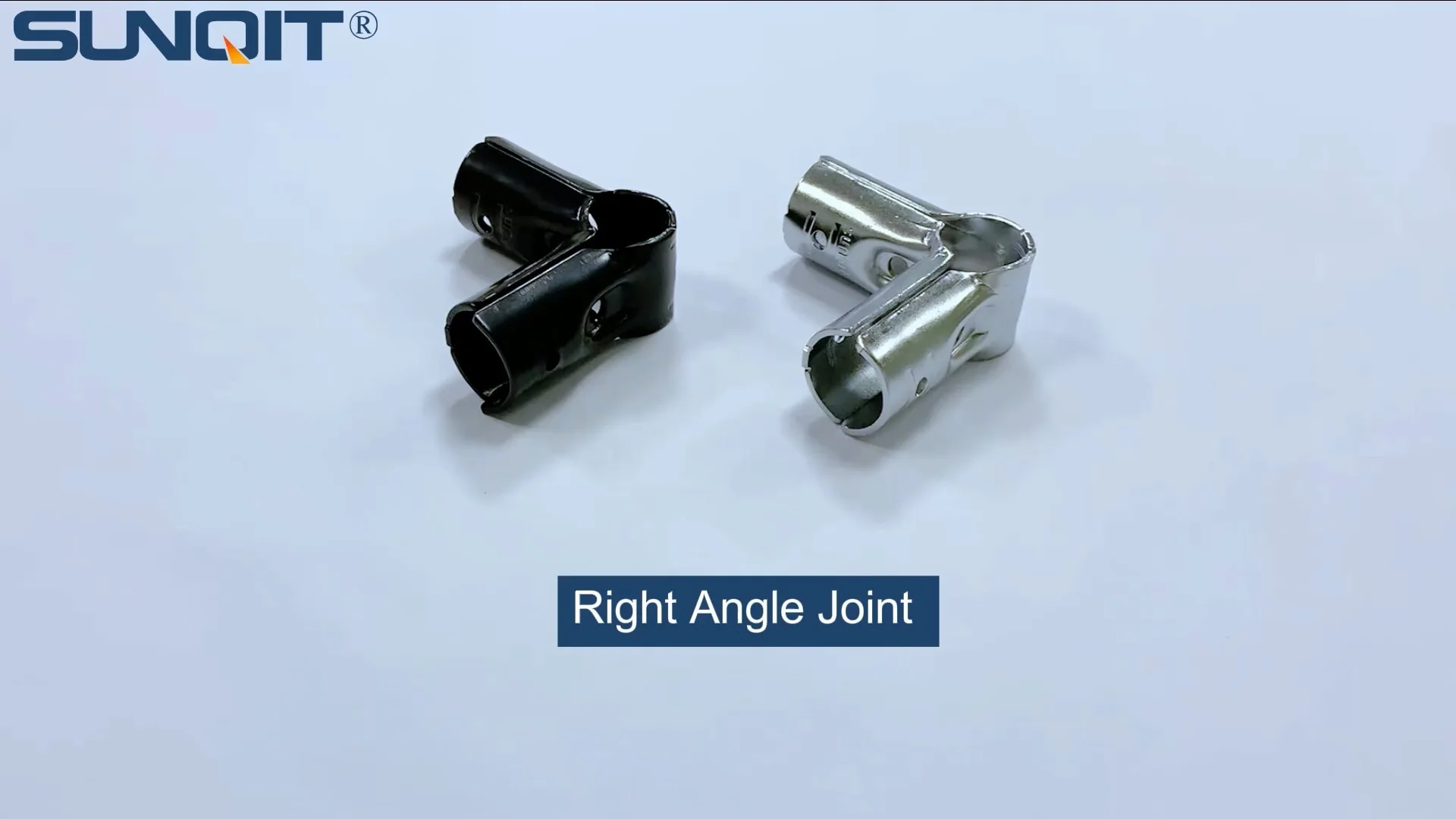
Three way lean pipe joint for 3 pcs 28MM lean pipe connection in straight angle, which used widely in workbench, flow rack, hand trolley frame connection.
In the bustling world of manufacturing, where every second counts and efficiency is the lifeblood of productivity, the difference between a stagnant operation and a thriving one often lies in the details. Lean manufacturing, a philosophy centered on eliminating waste and maximizing value, has become the cornerstone of modern production—but even the most well-crafted lean strategy can stumble without the right tools to bring it to life. Enter the three way lean pipe joint chrome: a small yet mighty component that quietly shapes the backbone of modular, adaptable workspaces. From assembly lines to warehouses, this unassuming joint plays a pivotal role in building the flexible structures that make lean manufacturing actionable. In this article, we'll explore why this component deserves a spotlight, how it enhances everything from workbenches to flow racks, and why it's more than just a metal fitting—it's a catalyst for operational excellence.
Lean Manufacturing: The Pursuit of Efficiency
Before diving into the specifics of three way lean pipe joints, let's ground ourselves in the principles that make lean manufacturing so transformative. At its core, lean is about creating more value for customers while using fewer resources. This means identifying and eliminating "muda"—the Japanese term for waste—in all its forms: excess inventory gathering dust, workers walking unnecessary distances to retrieve tools, equipment sitting idle during production lulls, or defective products requiring rework. But lean isn't just about cutting costs; it's a mindset of continuous improvement, where every process, tool, and workspace is scrutinized for ways to work smarter, not harder.
A critical pillar of lean success is modularity. Traditional manufacturing setups often rely on rigid, custom-built structures—think welded steel workstations or fixed material racks—that become liabilities when production needs shift. A sudden product redesign, a spike in demand, or a new regulatory requirement can render these structures obsolete, forcing expensive overhauls and painful downtime. Modular systems, by contrast, are designed to evolve. They're constructed from interchangeable components that can be reconfigured, extended, or repurposed in hours, not weeks, ensuring the production line adapts as quickly as the market does.
This is where lean pipes (or "lean tubes") and their accompanying joints take center stage. Lean pipes are lightweight yet robust tubes—typically steel with a plastic or metal coating—used to build everything from workbenches and material trolleys to conveyors and assembly cells. But pipes alone are just pieces of metal; it's the joints that transform them into functional structures. Joints determine how pipes connect, how stable the structure is, and how easily it can be modified. Among the diverse range of joints available, the three way lean pipe joint chrome stands out for its versatility, durability, and ability to enable complex, multi-directional configurations that drive lean efficiency.
The Anatomy of a Three Way Lean Pipe Joint Chrome
At first glance, a three way lean pipe joint chrome might seem like just another industrial fitting. But a closer look reveals engineering that addresses the unique challenges of lean manufacturing. Let's break down its key features and how they translate to real-world performance.
Multi-Directional Connectivity: Building in Three Dimensions
The defining feature of a three way joint is its ability to connect three lean pipes at a single point. This simple capability revolutionizes how structures are built. In a two-way joint system, creating a corner or adding a shelf requires multiple joints and extra pipes, increasing complexity and weakening stability. With a three way joint, one component replaces two or more two-way joints, streamlining assembly and creating a sturdier connection. For example, when constructing a workbench with an overhead shelf, a three way joint can simultaneously connect the vertical leg, the horizontal work surface frame, and the vertical support for the shelf—eliminating redundant parts and ensuring weight is distributed evenly. This not only speeds up setup but also reduces the risk of wobbling or collapse under heavy loads.
Chrome Coating: Durability That Defies the Elements
The chrome plating on these joints is far more than a cosmetic upgrade—it's a protective shield. Manufacturing environments are harsh: spills, humidity, constant tool contact, and exposure to oils or chemicals can corrode uncoated metal joints, leading to rust, instability, and contamination risks (critical in industries like food processing or electronics). Chrome plating involves depositing a thin layer of chromium onto the joint's surface, creating a barrier that resists corrosion, oxidation, and scratches. This means the joint remains functional and safe for years, even in damp or dusty conditions. Unlike painted or plastic-coated joints, chrome doesn't chip or fade, ensuring the structure maintains a professional, clean appearance with minimal maintenance.
Tool-Free Assembly: Speed Without Sacrifice
In lean manufacturing, downtime is the ultimate waste. Every minute spent waiting for a welder or fumbling with bolts is a minute not spent producing value. Three way lean pipe joints chrome are engineered for tool-free assembly, typically using a clamping mechanism—like a set screw or cam lever—that tightens around the pipe. This allows a single worker to assemble or reconfigure a structure in minutes. Need to adjust a workbench height to accommodate a new operator? Loosen the joint, slide the pipe, retighten, and you're done. No welding, no drilling, no specialized tools. This agility is game-changing for teams that need to pivot quickly—whether to launch a new product line, scale up production, or adapt to seasonal demand fluctuations.
Universal Compatibility: Playing Well With Others
A modular system is only as strong as its ability to integrate with existing components. Three way lean pipe joints chrome are designed to work seamlessly with standard lean pipes (usually 28mm diameter) and a wide range of accessories—from casters and roller tracks to tool hooks and bins. This means you don't have to overhaul your entire setup to adopt them; you can mix them with two-way, four-way, or swivel joints to create custom configurations. Whether you're building a simple material rack or a complex conveyor system, these joints ensure components work in harmony, keeping your lean ecosystem flexible and future-proof.

5 Key Benefits of Three Way Lean Pipe Joint Chrome in Lean Operations
Now that we understand the "what" of three way lean pipe joints chrome, let's explore the "why"—how these features translate to tangible advantages for lean manufacturing operations.
1. Unmatched Flexibility: Adapt or Perish
In today's manufacturing landscape, adaptability isn't optional—it's survival. Customer demands shift, product designs evolve, and production volumes fluctuate. Rigid structures can't keep pace, but modular setups built with three way joints thrive. Consider a consumer electronics manufacturer that produces both smartwatches and tablets. During smartwatch season, their assembly line uses compact workstations with small-part storage. When tablet production ramps up, the same workstations need to accommodate larger screens and different tooling. With three way joints, workers can quickly reposition shelves, add extra supports, or extend the work surface—all without replacing the entire workstation. This flexibility reduces lead times for new product launches and ensures the facility never has idle, underused space.
The three way joint's multi-directional design also enables creativity in workspace layout. For example, a U-shaped assembly cell—proven to reduce worker movement and improve efficiency—can be built using three way joints to connect the front, back, and side rails, creating a cohesive, ergonomic workspace. If process improvements later call for a linear layout, the cell can be disassembled and rebuilt in hours, not days.
2. Durability: Built to Last, Not Just to Assemble
Manufacturing environments are tough on equipment. Workstations endure daily impacts from tools and materials; material racks bear heavy loads; conveyors operate in dusty or humid conditions. A joint that fails under stress isn't just an inconvenience—it's a safety hazard and a productivity killer. Three way lean pipe joints chrome are built to withstand this abuse. The chrome plating resists corrosion from oils, moisture, and chemicals, ensuring joints don't rust or weaken over time. The metal construction (often high-grade steel) handles heavy loads without deforming, whether supporting a 500-pound material rack or a workstation with multiple tools. Unlike plastic joints, which can crack under stress, or uncoated steel joints, which rust and degrade, chrome-plated joints maintain their integrity for years. Many manufacturers report their chrome joints lasting 5-7 years with minimal maintenance—far longer than alternatives—delivering a superior return on investment.
3. Cost Efficiency: Saving Money at Every Turn
Lean manufacturing is ultimately about delivering value at the lowest cost, and three way lean pipe joints chrome contribute to savings in ways both obvious and subtle. First, their tool-free assembly slashes labor costs. A team can build a flow rack in 2 hours instead of 2 days, eliminating the need for expensive contractors or welders. Second, their reusability means components aren't wasted when structures are reconfigured. A joint used in a workbench today can be reused in a conveyor tomorrow, reducing the need for new parts. Third, their durability minimizes maintenance expenses. No more spending on rust treatments, replacement bolts, or emergency repairs due to joint failure. Finally, their flexibility reduces over-investment in fixed infrastructure. Instead of building a new workstation for every product, a single modular setup adapts, saving on capital expenses. Over time, these savings add up: manufacturers report 30-50% lower costs for workspace solutions when using modular systems with chrome-plated joints compared to traditional fixed structures.
4. Safety: Protecting Your Most Valuable Asset
A safe workplace is a productive workplace, and three way lean pipe joints chrome prioritize safety in every design detail. The chrome plating creates a smooth, burr-free surface, eliminating sharp edges that could cut workers or damage products. The secure clamping mechanism ensures pipes don't slip or loosen, preventing structures from collapsing or materials from falling. In high-vibration environments—like near heavy machinery—the joints maintain their grip, reducing the risk of accidents. For industries where electrostatic discharge (ESD) is a concern (e.g., electronics manufacturing), some chrome-plated joints are even available with conductive properties, dissipating static to protect sensitive components. By reducing workplace hazards, these joints not only protect workers but also lower the risk of costly accidents, product damage, and regulatory fines—an often-overlooked but critical aspect of lean efficiency.
5. Seamless Integration with Lean Systems
Lean manufacturing thrives on interconnected systems, and three way lean pipe joints chrome excel at bridging components into a cohesive ecosystem. They're the glue that holds together workbenches, flow racks, conveyors, and material trolleys—all key elements of a lean operation. For example, a flow rack built with three way joints can integrate with roller tracks to create a gravity-fed system that moves materials from receiving to assembly with zero manual effort. The joints support the roller tracks at the perfect angle, ensuring smooth product flow, and their modularity allows the rack to expand as inventory needs grow. Similarly, when paired with casters, a modular workstation becomes a mobile unit that can be positioned exactly where it's needed, reducing worker movement and cutting down on "wait time" waste. In short, these joints don't just build structures—they build integrated, efficient workflows.

Real-World Applications: Where Three Way Joints Shine
To truly appreciate the impact of three way lean pipe joints chrome, let's look at how they're applied in common lean scenarios. These examples show how they transform abstract lean principles into concrete, daily improvements.
Workbenches: The Heart of the Operation
Workbenches are where assembly, inspection, and packaging happen—the literal "value-add" zones of manufacturing. A well-designed workbench should be ergonomic, organized, and adaptable. Three way joints make this possible. For instance, a automotive parts assembly bench might feature a main work surface, a shelf for tools, and a side rack for component bins. Three way joints connect the vertical legs, horizontal frame, and shelf supports in one secure fitting, ensuring stability even when workers lean on the bench or place heavy parts on it. If a new part requires a taller shelf, the joint can be loosened, the shelf raised, and retightened—no need for a new bench. The chrome coating ensures the bench remains rust-free, even in shops where oil or coolant is present, keeping the workspace clean and professional.
Flow Racks: Streamlining Material Handling
Flow racks (or gravity racks) are lean material handling staples, using gravity to move products from "replenish" to "pick" ends, eliminating manual lifting. These racks rely on sturdy frames to support inclined roller tracks, and three way joints are ideal for the job. Take a "material rack b (3 row and 3 floor)" setup: three way joints connect vertical supports, horizontal beams, and cross-braces, ensuring each shelf is level and can bear the weight of heavy bins. The joints also allow adjusting the roller track angle—critical for controlling flow speed. If a product line switches to larger bins, the rack can be reconfigured by adjusting vertical spacing between joints, avoiding the cost of a new rack.
Conveyors: Moving Products, Not People
Conveyors reduce waste by automating product movement between workstations, and modular conveyors built with lean pipes and joints offer flexibility traditional motorized conveyors can't match. Three way joints construct the conveyor frame, supporting roller tracks or belt systems. For example, a gravity conveyor for boxes might use three way joints to connect side rails, support legs, and cross-braces, creating a sloped path that moves boxes effortlessly. If production expands, new sections can be added by connecting pipes and joints. If a 90-degree turn is needed, three way joints form the corner, with extra supports for stability. The chrome joints ensure the frame stays strong in dusty warehouses, and tool-free assembly means maintenance or reconfiguration takes minutes, not hours.
Three Way Chrome Joints vs. Alternatives: A Comparative Analysis
To fully appreciate the value of three way lean pipe joints chrome, let's compare them to common alternatives: plastic joints and uncoated steel two-way joints. This table highlights why chrome-plated three way joints are the superior choice for lean operations.
| Feature | Three Way Lean Pipe Joint Chrome | Plastic Joints | Uncoated Steel Two-Way Joints |
|---|---|---|---|
| Connectivity | 3 pipes; multi-directional (x, y, z axes) | 2-3 pipes; limited load capacity | 2 pipes; linear or 90° only |
| Durability | High; chrome resists corrosion, scratches, and heavy loads | Low; prone to cracking under stress or temperature changes | Medium; rusts without coating, weakens over time |
| Assembly Time | Fast; tool-free clamping (5-10 mins/structure) | Fast; snap-fit (5-10 mins/structure) | Slow; requires bolts/welding (1-2 hours/structure) |
| Reusability | High; can be disassembled/reused indefinitely | Medium; may weaken after 3-5 reconfigurations | Low; welding makes disassembly destructive |
| Load Capacity | Up to 200kg per joint (varies by size) | Up to 50kg per joint | Up to 150kg per joint (but limited by two-way design) |
| Safety | High; smooth chrome surface, secure clamping | Medium; may crack, creating sharp edges | Low; rust creates sharp edges, bolts can loosen |
| Long-Term Cost | Low; durable, reusable, minimal maintenance | High; frequent replacement needed | High; rust treatment, welding repairs, replacement |
The data speaks for itself: three way lean pipe joints chrome outperform alternatives in durability, flexibility, safety, and cost-efficiency. While plastic joints may be cheaper upfront, their fragility makes them impractical for heavy use. Uncoated steel two-way joints lack flexibility and corrode, driving up long-term costs. Chrome-plated three way joints strike the perfect balance, embodying lean principles by delivering maximum value with minimal waste.
Conclusion: Small Component, Big Impact
In the world of lean manufacturing, success lies in the details—and the three way lean pipe joint chrome is a detail that delivers outsized impact. It's more than a fitting; it's a tool that enables the adaptability, durability, and efficiency lean operations demand. By facilitating multi-directional, tool-free assembly, resisting corrosion, and integrating seamlessly with other lean components, it transforms static workspaces into dynamic ecosystems that evolve with your business.
Whether you're building workbenches, flow racks, or conveyors, these joints quietly drive productivity: reducing downtime, lowering costs, enhancing safety, and empowering teams to continuous improvement. They embody the lean philosophy of doing more with less, proving that even the smallest components can be the biggest catalysts for operational excellence.
So, the next time you walk through a manufacturing plant, take a moment to notice the structures that keep production moving. Chances are, three way lean pipe joints chrome are holding them together—quietly, reliably, and leanly. For manufacturers committed to building a more adaptable, efficient, and sustainable future, they're not just a smart investment—they're a lean necessity.