- Company Articles
- Products and Technology
- Product knowledge
- Bespoke 3060 Aluminum Angle Yards Designs for Automotive Tooling

Bespoke 3060 Aluminum Angle Yards Designs for Automotive Tooling
Related Product
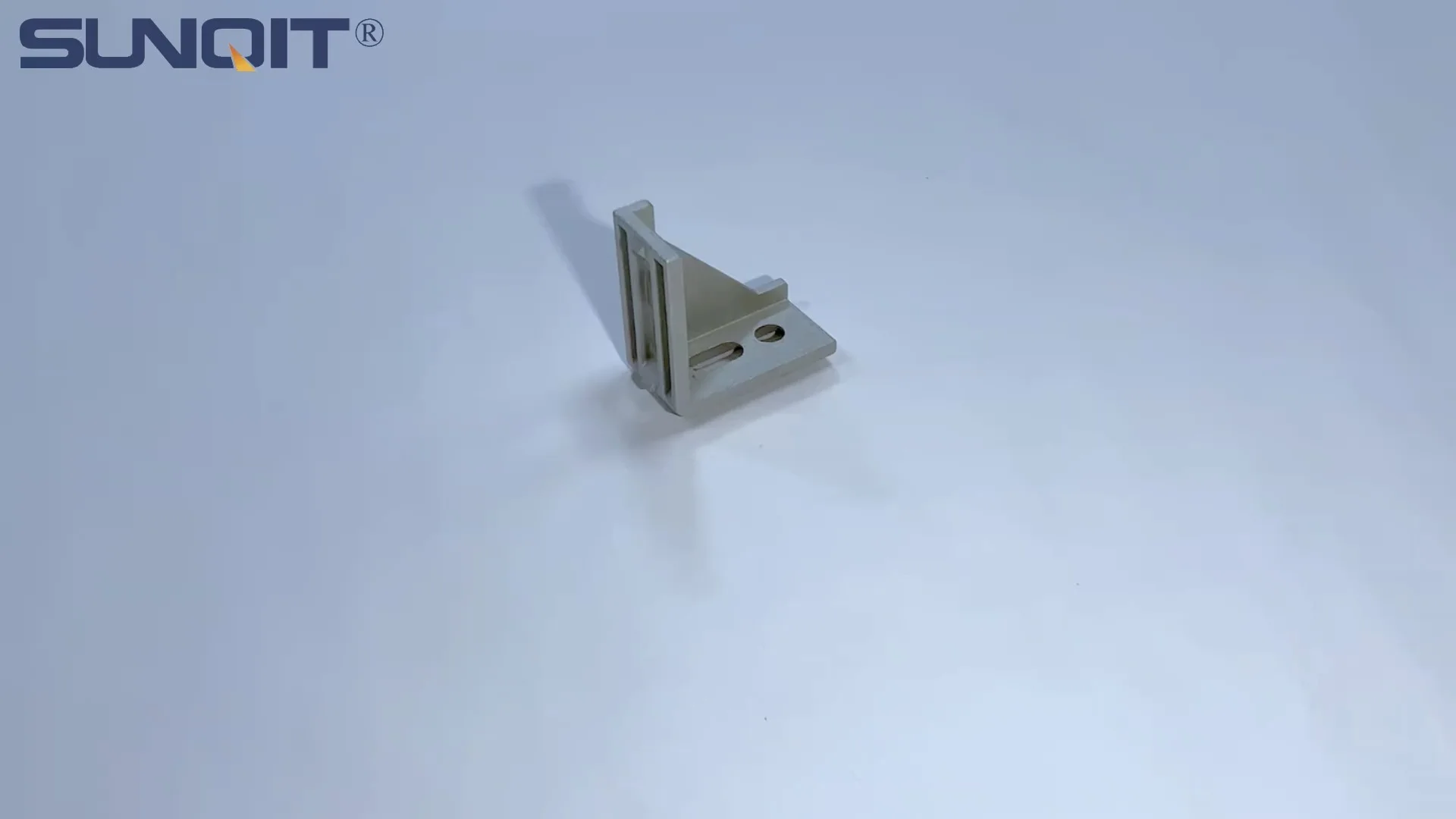
3060 Aluminum Angle Yards
It used for 90° flat connection for 20 series aluminum profile.
The Backbone of Modern Automotive Manufacturing: Why Tooling Matters
Walk into any automotive production plant today, and you'll notice a symphony of precision—robots assembling engines, workers fitting components with meticulous care, and conveyor belts moving parts seamlessly from one station to the next. But behind this orchestration lies an unsung hero: tooling. From workbenches where technicians assemble wiring harnesses to material racks that hold body panels, tooling is the silent framework that keeps production lines efficient, safe, and adaptable. And in an industry where every second counts—where a delayed line can cost thousands in lost output—the right tooling isn't just a nice-to-have; it's a game-changer.
But here's the thing: automotive manufacturing isn't static. New models roll out yearly, each with unique components and assembly processes. Electric vehicles (EVs) introduce entirely new powertrains, requiring tooling that can handle batteries instead of engines. Customization—think specialized trim packages or limited-edition models—means production lines must pivot quickly. Off-the-shelf tooling, with its one-size-fits-all approach, often falls short. It's rigid, hard to modify, and rarely optimized for a specific plant's unique workflow. That's where bespoke solutions come in. And when it comes to crafting these tailored tools, one material has risen to the top: aluminum. Specifically, aluminum extrusion profile —and more precisely, the 3060 aluminum angle yards that are revolutionizing how automotive tooling is designed and built.
Why Aluminum? The Material That Checks All the Boxes
Let's start with the basics: why aluminum? For decades, steel was the go-to for industrial tooling. It's strong, durable, and familiar. But steel has a downside: weight. A steel workbench or material rack can be cumbersome to move, limiting flexibility. It's also prone to rust, which is a problem in factories where spills (coolants, lubricants) are common. Aluminum, on the other hand, is a revelation. It's 30% lighter than steel but boasts comparable strength when engineered properly. Its natural resistance to corrosion means it holds up in harsh industrial environments, and it's infinitely recyclable—aligning with the automotive industry's push for sustainability.
But the real magic of aluminum lies in its versatility, especially when it comes to extrusion. Aluminum extrusion is a process where heated aluminum billets are pushed through a die to create complex cross-sectional shapes—think T-slots, channels, and angles. This allows manufacturers to create profiles with built-in features like grooves for attaching accessories, slots for wiring, or flanges for structural support. Unlike steel, which often requires welding or drilling to modify, aluminum extrusion profiles are designed to be modular. You can bolt, clamp, or snap accessories into place, making reconfiguration a breeze. For automotive plants that need to switch between assembling sedans, SUVs, and trucks on the same line, this adaptability is gold.

Meet the 3060 Aluminum Extrusion Profile: A Workhorse for Tooling
Not all aluminum extrusion profiles are created equal. Sizes range from tiny 20x20mm profiles (used for lightweight shelving) to beefy 80x160mm beams (for heavy-duty machinery frames). But in automotive tooling, one profile has emerged as a favorite: the 3060 aluminum extrusion profile. Let's break down what makes it special. The "3060" refers to its dimensions: 30mm in width and 60mm in height. This balance of size and strength hits a sweet spot for most tooling applications. It's sturdy enough to support heavy components—like a battery pack subassembly weighing 50kg—but not so bulky that it wastes valuable floor space. Its T-slot design (a standard feature in aluminum extrusion) allows for easy attachment of accessories, from brackets to casters, without the need for welding.
To understand why 3060 is so popular, let's compare it to other common profiles. Take the 2020, for example: at 20x20mm, it's great for lightweight tasks like mounting small tools, but it lacks the load capacity for larger workbenches. The 4040 (40x40mm) is stronger, but its square shape isn't always ideal for corner supports or angled structures. The 3060, with its rectangular cross-section, offers more vertical strength than a 3030 (30x30mm) while maintaining a slim profile. This makes it perfect for building frames that need to stand tall—like material racks or workbench legs—without sacrificing stability.
| Profile Type | Dimensions (WxH, mm) | Typical Wall Thickness (mm) | Max Load Capacity (Static, kg/m) | Common Automotive Tooling Uses |
|---|---|---|---|---|
| 2020 | 20x20 | 1.5-2.0 | 80-120 | Small tool holders, cable management |
| 3030 | 30x30 | 2.0-2.5 | 150-200 | Light shelving, workbench accessories |
| 3060 | 30x60 | 2.0-3.0 | 250-350 | Workbench frames, material racks, angle supports |
| 4040 | 40x40 | 2.5-3.0 | 300-400 | Heavy-duty workbenches, machine guards |
| 4080 | 40x80 | 3.0-4.0 | 450-600 | Conveyor frames, large assembly fixtures |

3060 Aluminum Angle Yards: The Unsung Hero of Structural Stability
Now, let's zoom in on a specific component that makes 3060 profiles even more versatile: 3060 aluminum angle yards . If the 3060 profile is the "bones" of tooling, angle yards are the "joints" that hold everything together. An angle yard (or angle bracket) is a connector designed to join two profiles at a 90-degree angle—think of the corner where a workbench's leg meets its top frame. But not all angle yards are created equal. Bespoke 3060 aluminum angle yards are engineered to fit the 3060 profile's exact dimensions, ensuring a snug, secure fit that off-the-shelf brackets often miss.
Why does this matter? Imagine building a workbench with generic steel brackets. Even if they're "close enough" in size, there might be tiny gaps between the bracket and the profile. Over time, as workers lean on the bench or heavy parts are placed on it, those gaps cause the joint to loosen. The bench wobbles, tools slide, and before long, you're spending time (and money) on repairs. Bespoke 3060 angle yards eliminate this problem. They're machined to match the 3060's T-slots, so when you bolt them in place, they lock tight. Some even feature reinforced corners or gussets (small triangular supports) to distribute weight evenly, preventing stress cracks in the profile.
But the benefits go beyond stability. Bespoke angle yards can be customized to fit specific angles—not just 90 degrees. Maybe a production line needs a material rack that tilts 15 degrees to make parts easier to reach. A standard angle yard can't do that, but a custom-designed one can. Or perhaps a workbench needs to wrap around a conveyor belt, requiring a 135-degree corner. With bespoke 3060 angle yards, engineers can design tooling that fits the plant's unique layout, rather than forcing the layout to fit the tooling.

Crafting Bespoke Solutions: How Custom Design Solves Automotive Pain Points
Every automotive plant has its own set of challenges. Maybe Plant A struggles with workbenches that are too low for tall workers, leading to ergonomic injuries. Plant B needs material racks that can hold odd-shaped EV battery modules, which don't fit in standard shelving. Plant C wants to reduce changeover time between model builds, so its tooling needs to reconfigure in minutes, not hours. Off-the-shelf tooling rarely solves these specific problems. That's where bespoke design comes in—and 3060 aluminum angle yards are at the heart of it.
Let's take an example: ergonomic workbenches. In traditional assembly lines, workbenches are often a fixed height—say, 800mm. But workers come in all sizes: a 1.9m technician will hunch over, while a 1.5m worker will strain to reach the back of the bench. A bespoke solution using 3060 profiles and angle yards can fix this. By designing adjustable legs with telescoping 3060 sections (secured with custom angle yards that lock at different heights), the workbench can be raised or lowered by up to 200mm. Add a foot pedal to release the locking mechanism, and workers can adjust the height in seconds—no tools required. This doesn't just reduce injuries; it boosts morale. When workers feel their comfort is prioritized, they're more engaged, and that translates to better quality work.
Another pain point: material handling. EV manufacturers, for instance, deal with battery packs that are heavy, bulky, and sensitive to impact. A standard steel rack might scratch the battery casing, or its fixed shelves might not accommodate different pack sizes (e.g., a 75kWh pack for a sedan vs. a 100kWh pack for an SUV). A bespoke rack built with 3060 profiles and angle yards solves this. The shelves can be made with aluminum roller tracks (using aluminum profile accessories like roller track connectors) to let packs slide in smoothly, reducing the risk of drops. The angle yards can be designed with slotted holes, allowing shelf heights to be adjusted by loosening a few bolts. And since aluminum is non-conductive, there's no risk of electrical shorts if a battery terminal accidentally touches the rack—critical for safety.
Beyond the Basics: Integrating 3060 Angle Yards with Lean Systems
In automotive manufacturing, "lean" isn't just a buzzword—it's a way of life. Lean systems aim to eliminate waste: wasted time, wasted space, wasted effort. And bespoke tooling built with 3060 aluminum angle yards aligns perfectly with this philosophy. Let's see how.
First, modularity. Lean manufacturing thrives on flexibility. When a new model is introduced, production lines need to reconfigure quickly. With traditional steel tooling, this means cutting, welding, and repainting—days of downtime. With 3060 profiles and angle yards, it's a different story. Since everything is bolted together, you can disassemble a workbench in an hour, move the profiles to a new location, and reassemble them with new angle yards. No welding, no repainting, just quick adjustments. This supports "just-in-time" production, where tooling is only built (or reconfigured) when needed, reducing storage costs for unused equipment.
Second, space optimization. In a lean plant, every square meter counts. Bespoke 3060 angle yards let engineers design tooling that's compact but functional. For example, a material rack for small components (like screws or clips) can be built tall and narrow, using 3060 profiles for vertical supports and custom angle yards to add shelves at varying heights. This uses vertical space instead of sprawling horizontally, freeing up floor space for other equipment. Or take a mobile workbench: adding lockable casters (another aluminum profile accessory ) to a 3060 frame lets workers roll tools directly to the assembly line, eliminating trips back and forth to a fixed bench—wasted motion that lean systems target.
Third, durability and low maintenance. Lean systems hate waste, and nothing wastes more time than broken tooling. Aluminum's corrosion resistance means 3060-based tooling lasts longer than steel, even in damp or greasy environments. And since bespoke angle yards create tight joints, there's less wear and tear on bolts or brackets. When a component does need replacing—say, a caster wheel—it's easy to swap out using standard tools, without having to replace the entire bench or rack.
The Role of Aluminum Profile Accessories: Making Tooling Work Smarter
A 3060 profile and angle yard are powerful on their own, but they truly shine when paired with the right aluminum profile accessories . These small, often overlooked components turn basic frames into fully functional tooling systems. Let's explore a few that are game-changers for automotive applications.
First, end caps. These simple plastic or aluminum covers snap onto the ends of 3060 profiles, hiding sharp edges and preventing debris from getting inside the T-slots. In a plant where workers are constantly moving around, this reduces the risk of cuts—especially important in high-traffic areas like assembly lines. Some end caps even have built-in cable management channels, letting wires (for power tools or LED lights) run through the profile instead of cluttering the bench top.
Next, casters. Mobile tooling is a cornerstone of lean manufacturing, and heavy-duty casters (rated for 100kg+ per wheel) transform a static workbench into a rolling workstation. But not just any caster will do. Bespoke caster mounts, designed to fit 3060 profiles, ensure the casters align perfectly with the bench's legs, preventing wobbling. Some casters even have brakes that lock both the wheel and the swivel, so the bench stays put when workers are using it—no more slipping mid-assembly.
Then there are tool holders and bins. Aluminum profile accessories like clamp-on tool hooks or magnetic strip mounts can be attached to 3060 frames, keeping screwdrivers, wrenches, and pliers within arm's reach. For smaller parts, stackable plastic bins with T-slot compatible bases clip directly onto the profile, eliminating the need for separate shelving. This "5S" (sort, set in order, shine, standardize, sustain) approach reduces time spent searching for tools, boosting productivity by up to 15% in some cases.
Real-World Impact: How One Plant Transformed Production with Bespoke 3060 Tooling
Let's put this all into context with a real-world example. A mid-sized automotive supplier in Michigan specializes in assembling door panels for a major automaker. A few years ago, they were struggling with inefficiencies: their workbenches were too low, causing worker complaints about back pain; material racks were too deep, making it hard to reach panels at the back; and changeover time between door models (sedan vs. SUV) was 4 hours, leading to missed deadlines.
The solution? A complete overhaul using bespoke 3060 aluminum angle yards and profiles. First, they replaced the fixed-height workbenches with adjustable ones. Using 3060 legs, custom angle yards with telescoping sections, and foot-pedal locks, workers could now set the height from 750mm to 950mm. Within three months, reports of back pain dropped by 60%. Next, they redesigned the material racks. Using 3060 profiles for the frame and bespoke angle yards to angle the shelves at 10 degrees, panels rolled forward as the front ones were taken, making even the back panels easy to reach. They added aluminum roller tracks (with plastic guides to prevent scratching) and labeled each shelf by door model. Changeover time? By using quick-release bolts on the angle yards, workers could now reconfigure the racks in 30 minutes instead of 4 hours. The result? The plant increased output by 20% and reduced overtime costs by $120,000 in the first year alone.
Looking Ahead: The Future of Bespoke Aluminum Tooling
As automotive manufacturing evolves—with EVs, autonomous vehicles, and AI-driven production lines—so too will tooling. And 3060 aluminum angle yards and profiles are poised to play a starring role. Here's what we can expect to see in the next decade.
First, smarter materials. Engineers are already experimenting with aluminum alloys that are stronger and lighter than today's standards. Imagine a 3060 profile that can support 50% more weight without increasing thickness—perfect for EV battery tooling. Then there's sustainability: recycled aluminum is becoming more prevalent, and bespoke angle yards made from 100% recycled aluminum could help plants meet their carbon neutrality goals.
Second, integrated technology., 3060 T .,,,."" (IoT) ,.
,. 3D , 3060 ,.,,.,.
Conclusion: Why Bespoke 3060 Aluminum Angle Yards Are More Than Just Metal
At the end of the day, bespoke 3060 aluminum angle yards are about more than just connecting pieces of metal. They're about empowering automotive plants to build tooling that works for their people, their processes, and their products. They're about turning a rigid production line into a flexible, adaptable system that can keep up with the fast-paced world of automotive manufacturing. They're about reducing waste, boosting morale, and ultimately, building better cars.
So the next time you see a car roll off the line, take a moment to appreciate the tooling that made it possible. Chances are, somewhere in that plant, there's a workbench, a material rack, or a conveyor frame held together by 3060 aluminum angle yards—quietly doing their job, so the industry can keep moving forward.