- Company Articles
- Products and Technology
- Installation And Maintenance
- Best Castor Install Base for Mobile Material Racks in 3C Assembly Lines

Best Castor Install Base for Mobile Material Racks in 3C Assembly Lines
Related Product
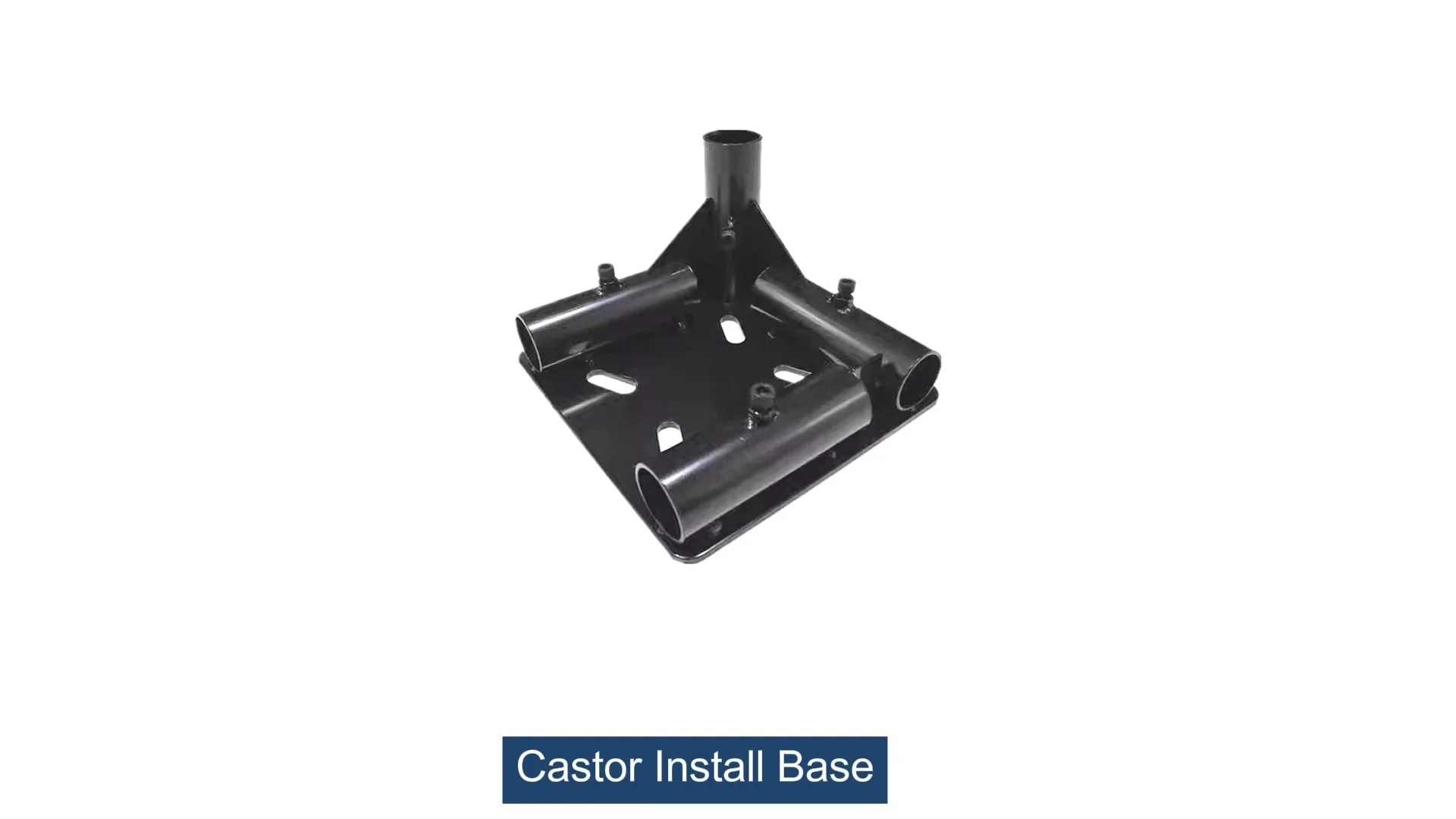
Castor Install Base
Castor install base, used for connection between pipe and castor, it can connect 4 pcs pipe by 1 pcs castor base, to make the structure strong and stable.
In the fast-paced world of 3C manufacturing—where computers, communication devices, and consumer electronics are assembled at breakneck speeds—efficiency isn't just a goal; it's the lifeblood of operations. Every second saved on the assembly line translates to higher output, lower costs, and a sharper edge over competitors. One often-overlooked hero in this race for efficiency? The mobile material rack. These versatile units glide across factory floors, delivering components like circuit boards, display panels, and wiring harnesses right to the hands of workers, eliminating time wasted on manual material handling. But here's the truth: a mobile rack is only as good as its ability to move smoothly, safely, and reliably. And that ability hinges on a small but critical component: the castor install base.
If you've ever pushed a wobbly cart loaded with fragile smartphone screens, you know the frustration of uneven movement or a sudden jolt that risks damaging parts. That's where the castor install base comes in. It's the unsung connector between the rack's frame and its casters, distributing weight evenly, absorbing shocks, and ensuring that every push or pull feels controlled. In 3C assembly lines, where precision and safety are non-negotiable, choosing the right castor install base isn't just a purchase—it's an investment in uptime, product quality, and worker satisfaction. Let's dive into what makes a castor install base stand out in these high-stakes environments, and how to pick the best one for your mobile material racks.
Understanding the 3C Assembly Line: Why Mobility Matters
To appreciate the role of the castor install base, let's first step into a typical 3C assembly facility. Picture rows of workers stationed at workbenches, each focused on a specific task: soldering microchips, attaching cameras, testing touchscreens. The line moves quickly—some smartphone models can be assembled in under 10 minutes—but that speed relies on a steady flow of materials. A delay in delivering a batch of batteries or a shortage of screws can bring an entire section to a halt. Mobile material racks solve this by acting as "floating warehouses," keeping parts organized and accessible exactly where they're needed.
But 3C assembly lines aren't static. Production schedules shift to meet demand for new models; workstations are reconfigured to accommodate different device sizes (think: a switch from assembling tablets to smartwatches); and cleaning crews need unobstructed access to sanitize floors at the end of shifts. Mobile racks must adapt to these changes, moving from one workbench to another, squeezing through narrow aisles, and even being stored compactly when not in use. This flexibility is why they've become a cornerstone of lean system principles in 3C manufacturing—eliminating waste by reducing unnecessary movement and ensuring resources are used efficiently.
Here's the catch: all that mobility puts stress on the rack's components. Casters take the brunt of the movement, but without a sturdy castor install base, even the best casters will fail. Imagine a rack loaded with 20kg of lithium-ion batteries. If the install base is flimsy, the casters might tilt, causing the rack to lean. Over time, this uneven weight distribution could bend the base, loosen bolts, or even snap the connection between the base and the rack. The result? Damaged parts, increased maintenance costs, and potential safety hazards for workers. In 3C lines, where a single dropped component can cost hundreds of dollars, this risk is simply too great to ignore.
What Is a Castor Install Base, and Why Does It Matter?
At its core, a castor install base is a mounting plate or bracket that attaches casters to the bottom of a mobile rack. It might seem like a simple piece of hardware, but its design directly impacts three critical factors: load capacity, stability, and durability. Let's break down each:
Load Capacity: Bearing the Weight of 3C Components
3C parts might seem lightweight individually, but when stacked, they add up quickly. A typical mobile material rack in a smartphone factory could hold 50+ circuit boards (each ~0.5kg), 100 battery packs (each ~0.15kg), and various small parts like screws and connectors. That's easily 50-80kg of weight—before you factor in the rack itself. A castor install base must distribute this weight evenly across all casters to prevent overloading any single wheel, which could cause it to lock up or break.
High-quality bases are engineered with load ratings clearly marked (e.g., "100kg per base") and use materials like reinforced steel or aluminum profile to handle the stress. Aluminum, in particular, is a popular choice here: it's lightweight enough to keep the rack maneuverable but strong enough to resist bending under heavy loads. Plus, its corrosion resistance ensures it holds up in factories where cleaning agents or humidity might otherwise rust steel components.
Stability: Preventing Wobble and Tipping
Ever tried pushing a tall rack that feels like it might topple over? That's a stability issue, often caused by a poorly designed castor install base. In 3C lines, where racks may be stacked with parts up to 1.5 meters high, a low center of gravity is key. The install base plays a role here by positioning casters as far apart as possible (within the rack's footprint) to create a stable "base of support."
Look for bases with wide mounting plates that attach securely to the rack's frame. Some designs even include gussets or cross-braces to reinforce the connection, reducing flex when the rack is in motion. For example, a base with a "T" shape or triangular mounting points will distribute stress more evenly than a simple flat plate, minimizing wobble when navigating tight turns or uneven floor tiles—common in older factories.
Durability: Withstanding the Grind of Daily Use
3C assembly lines run long hours—often 24/7 to meet global demand. That means mobile racks are in constant use: pushed, pulled, stopped, and started hundreds of times per shift. The castor install base must withstand this repetitive stress without deforming or loosening. Cheap bases might use thin metal or plastic, which can crack after months of use. Premium options, however, use thick-gauge steel or aluminum extrusion profile, which resists fatigue and maintains its shape over time.
Another durability factor is the quality of the hardware used to attach the base to the rack and casters. Stainless steel bolts and nuts are a must, as they resist rust and stay tight even with vibration. Some bases even come with pre-tapped holes or weld-on brackets, ensuring a secure fit that won't shift over time. In short, a durable castor install base reduces downtime by minimizing the need for repairs or replacements—keeping your lean system running smoothly.

Key Features to Look for in a Castor Install Base
Now that we know why the castor install base matters, let's outline the must-have features for 3C assembly lines. Not all bases are created equal, and the right one for your racks depends on your specific needs—like the weight of your materials, the type of casters you use, and your factory's floor conditions. Here are the top factors to consider:
Material: Steel vs. Aluminum Profile
The first decision is material. Steel bases are known for raw strength—great for ultra-heavy loads (100kg+). But they're heavier, which can make racks harder to push, and they're prone to rust if not coated. Aluminum profile bases, on the other hand, offer a balance of strength and lightness. They're easier to maneuver, resist corrosion, and work well with aluminum-framed racks (a common choice in lean system setups for their modularity). For most 3C applications (50-80kg loads), aluminum profile bases are the sweet spot—light enough for workers to push with ease, strong enough to handle daily use, and durable enough to last years.
Load Rating: Match It to Your Racks
Never guess the load rating. Check the total weight your rack will carry (parts + rack weight), divide by the number of casters (usually 4), and choose a base with a load rating higher than that number. For example, a 60kg total load ÷ 4 casters = 15kg per caster. Opt for a base rated for 20kg+ per caster to leave a safety margin. This prevents overloading and extends the base's lifespan.
Compatibility: Caster and Rack Fit
Casters come in different stem sizes (e.g., 12mm, 16mm) and mounting styles (threaded stem, plate mount). Your castor install base must match both the caster's stem size and your rack's frame. For example, if your rack uses aluminum extrusion profile with T-slots, look for bases with T-slot nuts that slide into the profile for a secure, tool-free installation. If you're using plate-mount casters, the base should have pre-drilled holes that align with the caster's mounting plate. Mismatched bases and casters are a recipe for wobble and failure.
Floor Protection: Gentle on Factory Surfaces
3C factories often have polished concrete or epoxy floors to maintain cleanliness (dust and debris can ruin sensitive electronics). A rough or ill-fitting castor install base might scratch floors, leading to costly repairs. Look for bases with smooth edges and casters that swivel freely without catching. Some bases even include rubber padding or plastic inserts to absorb shocks and prevent scuffing—small touches that make a big difference in floor longevity.
Ease of Installation and Maintenance
In lean system environments, time is money. A castor install base that takes 30 minutes to mount with specialized tools is a waste of resources. Opt for bases with simple, intuitive designs: pre-drilled holes, quick-attach brackets, or snap-on features. Similarly, maintenance should be easy—bolts should be accessible for tightening, and the base should be easy to clean (no crevices where dust or debris can build up and cause corrosion).

Comparing Castor Install Base Types: Which Is Right for You?
Not all mobile material racks are the same, so neither are their castor install bases. Let's compare the most common types used in 3C assembly lines to help you decide:
| Base Type | Material | Load Capacity (per base) | Best For | Pros | Cons |
|---|---|---|---|---|---|
| Flat Steel Plate Base | Reinforced steel | 80-120kg | Heavy-duty racks (e.g., holding laptops or large displays) | Ultra-strong, affordable, compatible with most casters | Heavy (harder to maneuver), prone to rust without coating |
| Aluminum Profile Base | Aluminum extrusion profile | 50-90kg | Medium-weight racks (e.g., smartphone components, small parts) | Lightweight, corrosion-resistant, easy to customize with T-slots | More expensive than steel, lower max load |
| Adjustable Height Base | Steel/aluminum mix | 60-100kg | Racks used on uneven floors or with variable load heights | Can level racks on sloped floors, reduces wobble | Complex design, may loosen over time if not maintained |
| Swivel-Ready Base | Reinforced plastic/steel | 30-60kg | Small, agile racks (e.g., moving parts between tight workbench gaps) | Allows casters to swivel 360° without binding, super maneuverable | Lower load capacity, not ideal for heavy loads |
For most 3C applications, the aluminum profile base is the standout choice. Its balance of strength, lightness, and corrosion resistance makes it perfect for medium-weight racks carrying electronics components. Plus, its compatibility with T-slot accessories (like additional brackets or tool holders) lets you customize the rack to your line's needs—aligning perfectly with lean system principles of adaptability.

Real-World Impact: How the Right Base Boosts Efficiency
Still not convinced that the castor install base is worth the attention? Let's look at a real example. A leading Chinese smartphone manufacturer recently upgraded the castor install bases on 200 of their mobile material racks. Previously, they'd been using generic steel plate bases that often wobbled under load, leading to 2-3 damaged circuit boards per week (costing ~$200 each) and monthly caster replacements ($50 per caster). After switching to aluminum profile bases with reinforced T-slot mounting, here's what happened:
- Damaged parts dropped to zero—no more wobbling or sudden jolts.
- Caster lifespan increased from 1 month to 6+ months, cutting replacement costs by 80%.
- Workers reported less fatigue from pushing racks, as the lighter aluminum bases made movement smoother.
- Floor scratches decreased, reducing maintenance costs by $1,000/year.
The total savings? Over $15,000 in the first year alone—from a component that costs just $15-30 per base. That's the power of choosing the right castor install base.
Choosing a Supplier: Why Reliability Matters
Once you've decided on the type of castor install base, the next step is finding a reputable supplier. In 3C manufacturing, where downtime is costly, you can't afford to wait weeks for a replacement base or deal with inconsistent quality. Look for suppliers who specialize in lean system components and have a track record in the 3C industry. Ask for references, check load-testing certifications, and inquire about lead times. A good supplier will also offer technical support—helping you choose the right base for your rack's dimensions and load requirements, and even providing samples for testing in your facility.
Conclusion: Invest in the Foundation of Mobility
In the rush to optimize 3C assembly lines, it's easy to focus on high-tech solutions like automated robots or AI-driven inventory systems. But sometimes, the biggest gains come from upgrading the smallest components. The castor install base might not grab headlines, but it's the foundation of mobile material rack performance—ensuring smooth movement, protecting parts, and keeping workers safe. By prioritizing features like load capacity, stability, and durability, and choosing the right type for your needs (aluminum profile bases are a solid bet for most 3C applications), you'll transform your racks from frustrating obstacles into reliable allies in the fight for efficiency.
So, the next time you're evaluating your assembly line's performance, take a moment to look down at those mobile racks. Check their bases. Are they bending? Wobbling? Rusting? If so, it's time for an upgrade. Your bottom line, your workers, and your fragile 3C components will thank you.