- Company Articles
- Products and Technology
- Product knowledge
- Best Practices for Choosing Three Way Lean Pipe Joint Chrome for Medical Equipment Lines

Best Practices for Choosing Three Way Lean Pipe Joint Chrome for Medical Equipment Lines
Related Product
Three Way Lean Pipe Joint Chrome
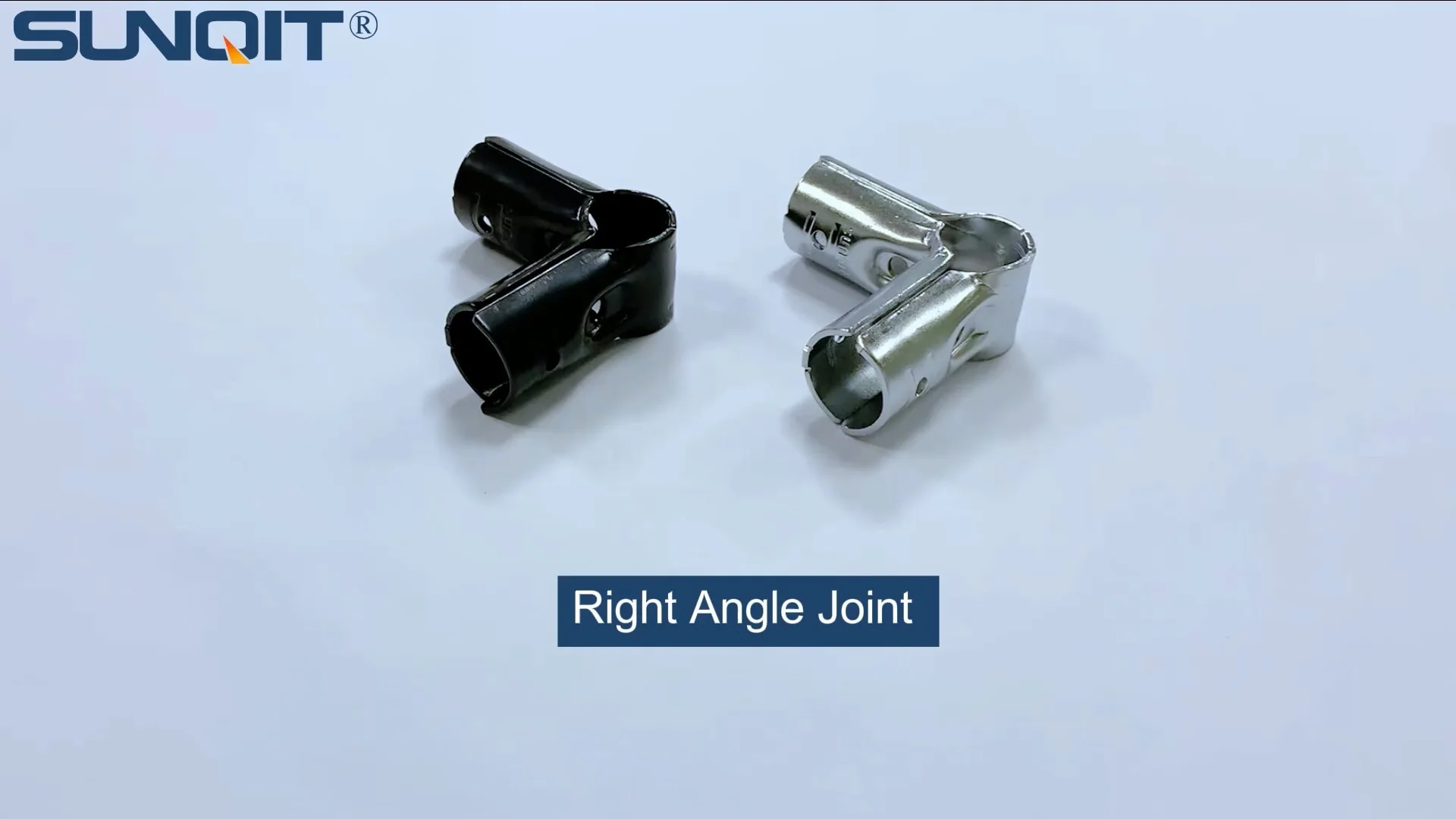
Three way lean pipe joint for 3 pcs 28MM lean pipe connection in straight angle, which used widely in workbench, flow rack, hand trolley frame connection.
1. Introduction: The Critical Role of Lean Systems in Medical Manufacturing
In the world of medical equipment manufacturing, precision isn't just a goal—it's a necessity. Every tool, every component, and every step in the production line must adhere to strict standards to ensure patient safety, regulatory compliance, and operational efficiency. From surgical instruments to diagnostic machines, the stakes are high, and even the smallest inefficiency can lead to delays, increased costs, or worse, compromised product quality. This is where lean systems come into play, acting as the backbone of modern medical manufacturing facilities.
Lean systems, rooted in the principles of minimizing waste and maximizing value, have revolutionized how medical manufacturers approach production. At the heart of these systems lie modular components—flexible, reusable, and adaptable tools that can be reconfigured to meet evolving needs. Among these components, lean pipes and their accompanying joints stand out as unsung heroes. They form the building blocks of workbenches, material racks, conveyor systems, and more, enabling facilities to create custom setups without the need for permanent, expensive infrastructure.
But not all joints are created equal. When it comes to medical manufacturing, where cleanliness, durability, and compliance are non-negotiable, the choice of joint becomes critical. Enter the three way lean pipe joint chrome—a component that might seem small, but plays a disproportionately large role in ensuring the integrity and efficiency of medical equipment lines. In this article, we'll dive deep into what makes this joint essential, how to select the right one, and why cutting corners here could cost your facility far more than you might expect.
2. Understanding Three Way Lean Pipe Joint Chrome: What Makes It Essential?
Before we jump into selection best practices, let's start with the basics: What exactly is a three way lean pipe joint chrome, and why does it matter in medical settings? At its core, a three way joint is a connector designed to join three lean pipes at a single point, typically forming a T-shape or Y-shape. This might sound simple, but in modular lean systems, this flexibility is game-changing. It allows manufacturers to build multi-directional structures—think workbenches with attached material racks, or conveyor systems that split into multiple lines—without welding or complex fabrication.
The "chrome" in its name isn't just for show, either. Chrome plating adds a layer of protection to the joint's base material (often steel), offering several key benefits that are particularly valuable in medical environments. First, chrome is highly resistant to corrosion, a must in facilities where frequent cleaning with harsh disinfectants is standard. Unlike uncoated steel, which can rust or degrade over time when exposed to chemicals, chrome-plated joints maintain their integrity, ensuring long-term reliability. Second, chrome creates a smooth, non-porous surface that's easy to wipe clean, reducing the risk of bacterial buildup—a critical factor for complying with FDA and ISO cleanliness standards. Finally, chrome plating enhances durability, making the joint more resistant to wear and tear from repeated assembly, disassembly, and heavy use.
But perhaps the biggest advantage of three way lean pipe joint chrome is its role in supporting modularity. Medical manufacturing lines are rarely static; as new equipment is developed, production needs shift, or regulatory requirements change, facilities must adapt quickly. With chrome-plated three way joints, reconfiguring a workbench or reorganizing a material flow system becomes a matter of loosening a few bolts, adjusting the pipes, and tightening them back up. This agility not only saves time and money but also ensures that your facility can stay ahead in a rapidly evolving industry.

3. Key Factors to Consider When Selecting Three Way Lean Pipe Joint Chrome for Medical Lines
3.1 Material Compatibility: Pairing with Lean Pipes (Stainless Steel vs. Aluminum)
One of the first questions to ask when choosing a three way lean pipe joint chrome is: What type of lean pipes will it be paired with? In medical manufacturing, the two most common options are stainless steel pipes (often part of the stainless steel pipe series) and aluminum pipes or profiles. Each has its own strengths, and the right choice depends on your specific needs—but crucially, the joint must be compatible with the pipe material to ensure structural integrity and compliance.
Stainless steel pipes, part of the stainless steel pipe series, are prized for their strength and corrosion resistance. They're ideal for heavy-duty applications, such as supporting large medical devices or withstanding frequent cleaning. When paired with three way lean pipe joint chrome, stainless steel pipes create a robust, long-lasting structure. However, stainless steel is heavier than aluminum, which can make reconfiguration more labor-intensive. It's also generally more expensive, so it's best suited for areas where durability is the top priority.
Aluminum pipes or profiles, on the other hand, are lightweight and highly customizable. They're often used in ESD workstations, where static control is essential (more on that later), and in setups that require frequent adjustments. Aluminum is also resistant to corrosion, though not to the same degree as stainless steel, and its smooth surface is easy to clean. When using aluminum pipes, it's important to ensure the three way joint's chrome plating is compatible with aluminum to avoid galvanic corrosion—a process where two dissimilar metals react chemically, leading to degradation. Look for joints specifically rated for use with aluminum, or consult with your supplier to confirm compatibility.
3.2 Load Capacity: Ensuring It Can Handle Medical-Grade Weight
Medical equipment components come in all shapes and sizes, from small surgical tools to bulky diagnostic machine parts. The three way lean pipe joint chrome you choose must be able to support the weight of whatever will pass through or rest on the structure it helps build. Underestimating load capacity can lead to bent pipes, loose joints, or even structural failure—all of which pose safety risks and can disrupt production.
When evaluating load capacity, don't just look at the joint's maximum weight rating in isolation. Consider the entire system: the thickness of the lean pipes, the number of support joints, and how the weight is distributed. For example, a workbench holding heavy imaging equipment will require joints with a higher load capacity than a light-duty material rack for surgical gauze. Most reputable suppliers provide load capacity charts, so take the time to match your needs to the joint's specifications. When in doubt, err on the side of overestimating—adding a few extra joints for support is far cheaper than dealing with a collapsed structure.
3.3 Compliance with Industry Standards: FDA, ISO, and Beyond
In medical manufacturing, compliance isn't optional—it's the law. Any component used in production, including three way lean pipe joint chrome, must meet strict standards set by organizations like the FDA (Food and Drug Administration) and ISO (International Organization for Standardization). These standards cover everything from material safety to cleanliness and durability, and failing to comply can result in fines, production shutdowns, or even product recalls.
When selecting a joint, look for certifications that verify it meets these standards. For example, ISO 13485, which specifically addresses medical device quality management systems, is a good starting point. The joint's chrome plating should be free of harmful substances like lead or cadmium, and its surface should be non-reactive to ensure it doesn't leach chemicals into the environment. Additionally, check that the joint is compatible with cleanroom protocols if your facility operates in a controlled environment. Some joints may have crevices or rough edges that trap particles, which can be a problem in Class 8 or higher cleanrooms. Opt for smooth, seamless designs with minimal gaps to simplify cleaning and reduce contamination risks.

4. Material Deep Dive: Stainless Steel Pipe Series vs. Aluminum Profile in Medical Applications
To help you make an informed decision about pipe material and its compatibility with three way lean pipe joint chrome, let's break down the pros and cons of the two most popular options: stainless steel pipe series and aluminum profile. The table below compares key factors relevant to medical manufacturing:
| Factor | Stainless Steel Pipe Series | Aluminum Profile |
|---|---|---|
| Corrosion Resistance | Excellent—resists rust and chemical damage from disinfectants. | Good—naturally forms a protective oxide layer, but may require additional coating for harsh environments. |
| Load Capacity | Higher—ideal for heavy equipment and high-stress applications. | Moderate—best for lightweight to medium loads; suitable for ESD workstations and small parts handling. |
| Ease of Cleaning | High—smooth surface with minimal pores; compatible with strict cleanroom protocols. | High—smooth, non-porous surface, but may show fingerprints or smudges more easily. |
| Weight | Heavier—can make reconfiguration more labor-intensive. | Lightweight—easier to move and adjust, reducing worker strain. |
| Cost | More expensive upfront, but lower long-term maintenance costs. | Less expensive initially, but may require more frequent replacement in heavy-use areas. |
| Best For (Medical Application) | Surgical instrument production lines, heavy equipment assembly, cleanrooms with frequent chemical cleaning. | ESD workstations for electronics (e.g., pacemakers), lightweight material racks, temporary or frequently reconfigured setups. |
As the table shows, both materials have their place in medical manufacturing. The key is to align your choice with your specific needs. If your facility deals with heavy loads or aggressive cleaning agents, the stainless steel pipe series paired with three way lean pipe joint chrome is likely the way to go. For lighter applications or setups that need to be reconfigured often—like an ESD workstation where diagnostic circuit boards are assembled—aluminum profile might be the more practical option. In some cases, a hybrid approach works best: using stainless steel for critical, high-load areas and aluminum for flexible, low-stress zones.
5. Integrating Three Way Lean Pipe Joint Chrome with Other Medical Manufacturing Components
5.1 Lean Pipe Workbenches: Building Ergonomic, Compliant Workstations
Lean pipe workbenches are the workhorses of medical manufacturing lines. They're where assembly happens, where quality checks are performed, and where workers spend hours each day focused on precision tasks. The three way lean pipe joint chrome plays a pivotal role in constructing these workbenches, allowing for custom heights, widths, and like tool holders or overhead shelves.
When integrating joints into a lean pipe workbench, ergonomics should be top of mind. Medical manufacturing often involves repetitive motions, so workbenches must be adjustable to reduce strain on workers. Three way joints make this possible by enabling the addition of height-adjustable legs or tilting surfaces. For example, a workbench used for assembling small catheters might need a lower surface to allow seated work, while one for larger surgical tools could benefit from a standing-height setup with a footrest. The joint's flexibility ensures these adjustments can be made quickly, without replacing the entire bench.
Compliance is another consideration here. Workbenches in medical facilities must be easy to clean and free of crevices where debris can hide. Three way lean pipe joint chrome, with its smooth, chrome-plated surface, pairs well with stainless steel or aluminum workbench tops (like aluminum honeycomb panels) to create a seamless, hygienic workspace. Some manufacturers even offer specialized joints with rounded edges to eliminate sharp corners, reducing the risk of injury and making cleaning even easier.
5.2 ESD Workstations: Protecting Sensitive Medical Electronics
Many medical devices today rely on sensitive electronics—think pacemakers, MRI machine controls, or portable ultrasound units. These components are highly susceptible to damage from electrostatic discharge (ESD), which can fry circuits or cause malfunctions that aren't detected until the device is in use. That's where ESD workstations come in, designed to dissipate static electricity and protect vulnerable parts.
Three way lean pipe joint chrome can be a valuable part of an ESD workstation setup, but it's important to ensure the joint itself doesn't interfere with static control. While chrome is conductive, some joints may have non-conductive coatings or gaskets that could disrupt the ESD path. Look for joints labeled as ESD-compliant, or confirm with your supplier that they'll work with your existing ESD mats, wrist straps, and flooring. When paired with aluminum profile (which is naturally conductive), three way joints can help create a grounded framework that channels static away from sensitive components, keeping your products safe and your defect rates low.
6. Installation and Maintenance Tips for Long-Term Success
6.1 Proper Installation: Avoiding Common Pitfalls
Even the best three way lean pipe joint chrome will underperform if installed incorrectly. To ensure your joints hold up over time, follow these installation tips: First, always start with a clean surface. Wipe down the lean pipes and joint threads with a lint-free cloth to remove dust, oil, or debris—this ensures a tight, secure fit. Next, hand-tighten the joint onto the pipes before using tools. Over-tightening with wrenches can strip threads or damage the chrome plating, so use a torque wrench set to the manufacturer's recommended specifications. Most joints require between 15 and 25 Nm of torque—check the product manual to be sure.
Alignment is another key factor. Misaligned pipes can put extra stress on the joint, leading to premature wear. Use a level to ensure pipes are straight and perpendicular before fully tightening the joint. If you're building a complex structure, assemble it in stages, checking alignment at each step. Finally, consider using thread-locking fluid on the joint's bolts, especially in high-vibration areas like near conveyor systems. This prevents the joint from loosening over time, reducing the need for frequent re-tightening.
6.2 Maintenance: Keeping Joints Clean and Functional
Regular maintenance is the key to extending the life of your three way lean pipe joint chrome. In medical facilities, this starts with a consistent cleaning schedule. Wipe down joints with a mild detergent and warm water weekly, and use a disinfectant approved for medical use (like isopropyl alcohol) daily in high-risk areas. Avoid abrasive cleaners or scouring pads, as these can scratch the chrome plating, making it more susceptible to corrosion.
Inspect joints monthly for signs of wear, including loose bolts, cracks, or peeling chrome. If a joint shows damage, replace it immediately—don't try to repair it with tape or glue, as this can compromise structural integrity and cleanliness. For facilities with heavy use, consider implementing a preventive maintenance program where joints are replaced proactively (every 12–18 months, depending on usage) rather than waiting for them to fail. This minimizes downtime and ensures your lean system remains reliable.
7. Real-World Case Study: How One Medical Manufacturer Improved Efficiency with Three Way Lean Pipe Joint Chrome
To put these best practices into context, let's look at a real example of how a medical device manufacturer transformed its production line using three way lean pipe joint chrome. The company, which produces minimally invasive surgical tools, was struggling with several issues: their workbenches were fixed and couldn't be adjusted for different tasks, material racks were rusting after repeated cleaning, and reconfiguring the line for new product launches took weeks of downtime.
After consulting with a lean system supplier, they decided to upgrade to a modular setup using stainless steel pipe series and three way lean pipe joint chrome. The results were dramatic. First, the chrome-plated joints eliminated rust issues, even with daily cleaning using industrial disinfectants. Second, the modular workbenches could now be adjusted in height and width, reducing worker fatigue and cutting assembly time by 15%. Third, reconfiguring the line for a new tool launch took just two days instead of two weeks, thanks to the joints' easy disassembly and reassembly.
Perhaps most importantly, the company saw a 20% reduction in product defects, partly due to the improved ergonomics of the workbenches and partly due to the cleaner, more stable work environment created by the chrome joints. Within a year, the investment in quality joints had paid for itself through increased efficiency and reduced waste—a testament to why choosing the right components matters.
8. Common Mistakes to Avoid
Even with the best intentions, it's easy to make missteps when selecting three way lean pipe joint chrome. Here are three common mistakes to steer clear of: First, prioritizing cost over quality. It might be tempting to opt for cheaper, unbranded joints to save money upfront, but these often lack the chrome plating thickness or material quality needed for medical environments. They may rust, wear out quickly, or fail to meet compliance standards—costing you more in replacements and downtime in the long run.
Second, ignoring material compatibility. As we discussed earlier, pairing stainless steel pipes with aluminum joints (or vice versa) without checking for galvanic corrosion can lead to premature failure. Always confirm that your joints and pipes are compatible, and when in doubt, ask your supplier for guidance.
Third, underestimating reconfiguration needs. Medical manufacturing lines are dynamic, so it's important to choose joints that can grow with your facility. Avoid joints that require specialized tools or permanent modifications to adjust—opt for those with standard hex keys or quick-release mechanisms instead. This flexibility will save you time and money as your needs change.
9. Conclusion: Investing in Quality for Medical Manufacturing Success
In the fast-paced, high-stakes world of medical equipment manufacturing, every component counts. The three way lean pipe joint chrome may seem like a small part of the puzzle, but its impact on efficiency, compliance, and product quality is undeniable. By prioritizing material compatibility, load capacity, compliance, and proper maintenance, you can ensure your joints support your facility's goals for years to come.
Remember, the best practices outlined here aren't just about choosing a joint—they're about investing in the future of your manufacturing line. A well-chosen three way lean pipe joint chrome will adapt to your changing needs, stand up to the rigors of medical environments, and help you deliver the high-quality products patients and healthcare providers depend on. So take the time to research, consult with experts, and choose wisely—your facility, your workers, and your bottom line will thank you.