- Company Articles
- Products and Technology
- Installation And Maintenance
- Best Practices for Securing Two Way Lean Pipe Joint in High-Vibration Environments

Best Practices for Securing Two Way Lean Pipe Joint in High-Vibration Environments
Related Product
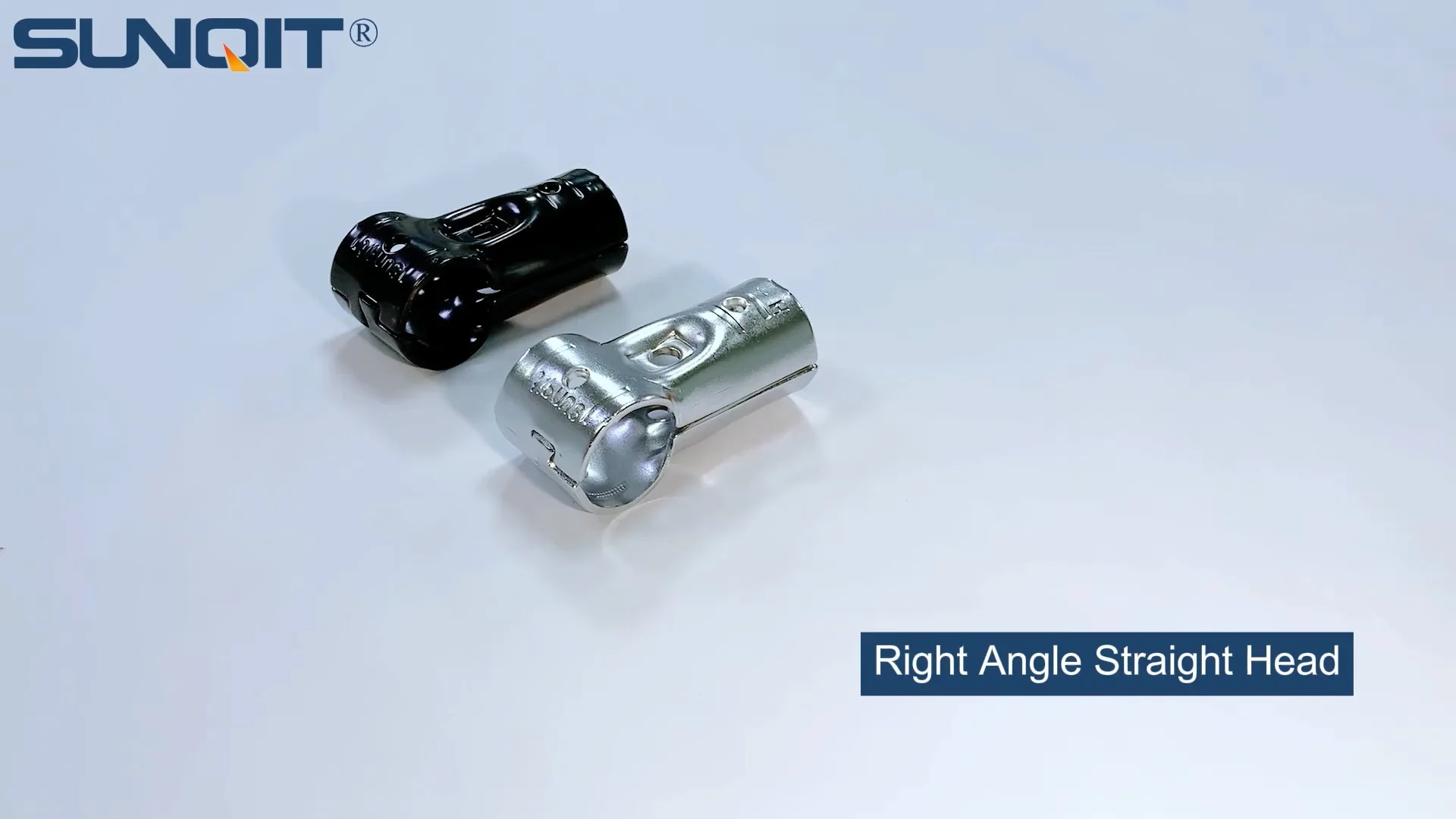
Two Way Lean Pipe Joint
Two way lean pipe joint for 2 pcs 28MM lean pipe connection in straight angle, which used widely in workbench, flow rack, hand trolley frame connection.
Introduction: The Hidden Cost of Loose Joints in Lean Systems
In the fast-paced world of manufacturing and production, lean systems have become the backbone of efficiency. From
lean pipe
workbenches on assembly lines to material racks in warehouses, these structures are designed to streamline workflows, reduce waste, and keep operations running like well-oiled machines. But here's the thing: even the most well-designed lean system is only as strong as its weakest link—and all too often, that weak link is a loose joint.
High-vibration environments, common in settings with heavy machinery, conveyor belts, or robotic equipment, put unique stress on lean structures. Every hum of a motor, every thud of a press, every movement of a
conveyor
belt sends tiny shockwaves through the system. Over time, these vibrations can rattle joints loose, misalign pipes, and even compromise the structural integrity of the entire setup. The result? Unplanned downtime, increased maintenance costs, and even safety risks for workers.
At the heart of many lean structures lies the
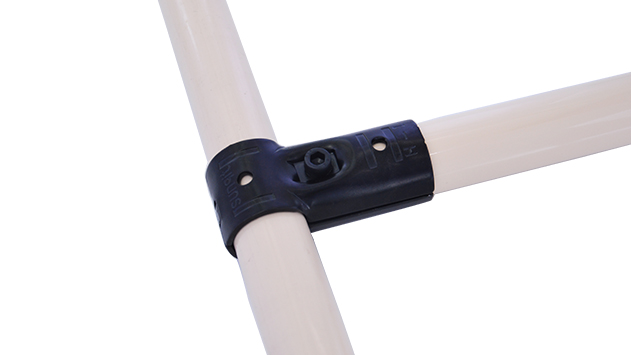
two way lean pipe joint
—a small but mighty component that connects two pipes at a 90-degree angle, forming the framework for workbenches, racks, and trolleys. Securing these joints properly isn't just a matter of "tightening a screw"; it's a science that combines material knowledge, installation precision, and proactive maintenance. In this article, we'll dive into the best practices for keeping two way lean pipe joints secure in high-vibration environments, ensuring your lean system stays strong, efficient, and reliable for the long haul.
Understanding High-Vibration Environments: What's Really Happening to Your Lean Structure
Before we talk about solutions, let's first understand the problem. What exactly makes high-vibration environments so tough on lean pipe joints?
Vibrations in manufacturing settings typically come from three sources: rotating machinery (like motors or fans), impact tools (such as pneumatic hammers), and repetitive motion (think conveyor belts or robotic arms). These vibrations aren't just "noise"—they're mechanical energy that travels through surfaces and structures. When that energy reaches a lean pipe joint, it does more than just rattle it; it creates micro-movements between the joint and the pipe. Over days, weeks, or months, these tiny movements wear down threads, loosen screws, and weaken the friction that holds the joint in place.
The effects of loose joints are often subtle at first. A workbench might wobble slightly, or a material rack might start to lean. But left unchecked, these issues escalate quickly. A misaligned
roller track
could cause parts to jam, a wobbly workbench might lead to inaccurate assembly, and in extreme cases, a collapsed structure could damage equipment or injure employees. For lean systems designed to boost productivity, these disruptions are the opposite of what you need.
So, what makes two way lean pipe joints particularly vulnerable? Unlike fixed joints, two way joints are designed to provide flexibility—allowing you to reconfigure the structure as needs change. But that flexibility comes with a trade-off: they rely heavily on proper installation and tension to stay secure. In high vibrations, that tension is constantly under attack. The key is to balance flexibility with stability, ensuring the joint can handle movement without coming loose.
The Role of Two Way Lean Pipe Joints: More Than Just a "Connector"
To secure two way lean pipe joints effectively, it helps to first appreciate their role in the larger lean system. These joints aren't just passive connectors; they're active load distributors. When you build a structure with
lean pipe
—whether it's a workbench, a trolley, or a flow rack—the two way joints are responsible for transferring weight and stress between pipes. For example, on a workbench, the joints must support the weight of tools, parts, and workers while absorbing vibrations from nearby machinery.
Two way lean pipe joints come in various designs, but most share a similar core: a metal or plastic housing with threaded holes, designed to clamp onto the ends of two pipes. Some are fixed (permanently set at 90 degrees), while others are swivel or adjustable, allowing for angled connections. The best choice depends on your structure's needs, but in high-vibration environments, fixed joints often provide more stability—though they sacrifice some flexibility.
What sets a high-quality two way joint apart? Look for features like reinforced threading (to resist stripping), corrosion-resistant coatings (to handle harsh environments), and precision-machined surfaces (to ensure a tight fit with pipes). Cheap, poorly made joints might save money upfront, but they'll loosen quickly under vibration, leading to frequent replacements and downtime. Investing in a reliable
lean pipe supplier
who offers durable joints is the first step toward long-term security.

Best Practice 1: Choose the Right Materials for the Job
When it comes to securing joints in high vibrations, material matters—and not just for the joints themselves, but for the pipes and accessories too. Let's break down the options:
So, which should you choose? For most high-vibration settings, a hybrid approach works best. Use aluminum lean pipe for lighter structures (like workbenches or small trolleys) where vibration dampening is key, and stainless steel for heavy-duty setups (like material racks or conveyor supports) where strength and rigidity are non-negotiable.
Lean Pipe: Aluminum vs. Stainless Steel
The two most common materials for lean pipes are aluminum lean pipe and stainless steel (part of the stainless steel pipe series ). Each has its strengths and weaknesses in high-vibration environments:| Feature | Aluminum Lean Pipe | Stainless Steel Pipe Series |
|---|---|---|
| Weight | Lightweight (easier to handle and reconfigure) | Heavier (adds stability but makes reconfiguration harder) |
| Vibration Absorption | Moderate; aluminum's flexibility helps dampen small vibrations | Low; steel is rigid, so vibrations travel through it more easily |
| Strength | Good for medium loads; may bend under extreme stress | High; ideal for heavy loads and high-stress environments |
| Corrosion Resistance | Excellent (anodized coatings add extra protection) | Superior (resists rust even in humid or chemical-heavy areas) |
| Cost | Generally more affordable | More expensive upfront, but longer lifespan in harsh conditions |
Joints: Metal vs. Plastic
Joints are equally critical. Plastic joints are cheap and lightweight, but they're prone to cracking under repeated vibration. Metal joints—typically made of zinc-plated steel or aluminum—are far more durable. Look for joints with "internal rotary" or "lockable" designs, which use friction or set screws to prevent loosening. For example, an internal rotatary aluminum joint allows for adjustment during setup but locks into place once tightened, reducing movement in high vibrations.Accessories: The Unsung Heroes
Don't overlook lean pipe accessories —they can make or break joint security. Lock washers, for instance, add friction between the joint and the pipe, preventing screws from backing out. Gusset plates (like the gusset alp 3030 ) reinforce right-angle connections, distributing stress and reducing joint strain. Even small details, like using thread-locking adhesive (such as Loctite) on screws, can significantly extend a joint's lifespan in high vibrations.
Best Practice 2: Master the Art of Installation
Even the best materials will fail if installed poorly. Securing two way lean pipe joints in high-vibration environments requires precision, patience, and attention to detail. Here's how to do it right:
Start with a Level Foundation
Before you even attach the first joint, ensure your base structure is level and stable. If the pipes are misaligned from the start—even by a few degrees—the joints will bear uneven stress, making them more likely to loosen. Use a spirit level to check both horizontal and vertical alignment, and adjust feet or casters (like anti-slip adjustable leveling feet ) as needed. On uneven floors, shims can help distribute weight evenly.Torque Matters: Tighten, but Don't Over-Tighten
One of the biggest mistakes in lean pipe installation is either under-tightening or over-tightening joints. Under-tightening leaves gaps for movement; over-tightening strips threads or cracks the joint. The solution? Use a torque wrench and follow the manufacturer's specifications. Most metal two way joints require a torque of 15–20 Nm (check your supplier's guidelines), while aluminum joints may need slightly less (12–18 Nm) to avoid damaging the softer material. Pro tip: After tightening, give the joint a gentle wiggle. If it moves, it's too loose. If the pipe bends or the joint deforms, it's too tight. The goal is a firm, immobile connection with no visible gaps between the joint and the pipe.Align Pipes Perfectly
Two way joints rely on the pipes being flush with the joint's inner surface. If the pipe is cut at an angle or the end is burrs, it won't seat properly, creating weak points. Always use a pipe cutter (not a hacksaw) for clean, square cuts, and deburr the ends with a file or sandpaper. When inserting the pipe into the joint, push it all the way in until it hits the stop—this ensures maximum contact area and load distribution.Use Locking Mechanisms
In high vibrations, standard screws can back out over time. Combat this with mechanical locking devices:- Lock washers: Split washers or star washers bite into the joint and pipe, creating friction that resists loosening.
- Thread-locking adhesive: Apply a small drop of medium-strength thread locker (like Loctite Blue) to the screw threads before tightening. It dries to a flexible bond that prevents vibration-induced loosening but can be removed with hand tools if you need to reconfigure the structure.
- Lock nuts: Nylon-insert lock nuts (nyloc nuts) have a plastic ring that grips the screw threads, adding extra security.
Best Practice 3: Dampen Vibrations at the Source
Even with perfect installation, constant vibrations will test your joints. The next line of defense? Reducing the vibrations that reach them in the first place. Here are practical ways to dampen vibration in your lean system:
Isolate the Structure from Vibration Sources
If your lean structure is near a high-vibration machine (like a stamping press or a large motor), create physical separation. For example, place the workbench or rack on a different floor slab, or use vibration-isolating pads (made of rubber or neoprene) under the structure's feet. These pads absorb shock, preventing vibrations from traveling up into the lean pipe framework.Use Flexible Connections
In areas where vibrations are unavoidable, replace rigid joints with flexible ones—sparingly. For example, using a swivel joint (like the 180° swivel lean pipe joint ) between a fixed and moving part of the structure can allow small movements without stressing the two way joints. Just be cautious: too many flexible joints can reduce overall stability, so use them only where necessary.Add Damping Materials
Aluminum profile rubber strip isn't just for sealing gaps—it's also a great vibration dampener. Wrap a strip around the pipe where it meets the joint, or insert it between the joint and the pipe, to add a layer of cushioning. The rubber absorbs micro-vibrations, reducing wear on the joint's threads and screws. Similarly, anti-slip foot pads (like suction cup anti-slip foot adjuster ) can stabilize the structure and dampen floor-borne vibrations.Optimize Conveyor and Roller Track Design
Conveyor belts and roller track are common sources of vibration in lean systems. To minimize their impact:- Keep rollers clean and well-lubricated to reduce friction (and thus vibration) as parts move along the track.
- Align roller tracks perfectly to prevent jams—sudden stops and starts cause intense vibrations.
- Use soft-stop motors on conveyors to slow down gradually, rather than slamming to a halt.
Best Practice 4: Inspect and Maintain Proactively
Even with the best materials and installation, high-vibration environments demand regular attention. Think of your lean system like a car: it needs routine check-ups to stay running smoothly. Here's how to build a proactive maintenance routine:
Daily Visual Checks
Assign operators or maintenance staff to perform quick visual inspections each shift. Look for:- Wobbly or leaning structures
- Gaps between joints and pipes
- Bent or damaged pipes
- Loose screws or missing washers
- Cracks in joints or accessories
Weekly Torque Checks
Once a week, use a torque wrench to re-tighten all two way lean pipe joints to the manufacturer's specifications. Even if a joint feels tight, vibration can gradually reduce torque over time. Focus on high-stress areas first: joints near conveyor systems, workbenches with heavy tools, or material racks holding bulky items.Monthly Deep Dives
Every month, take a closer look at critical components:- Remove and inspect joints for signs of wear (stripped threads, cracks, deformation).
- Check lean pipe accessories like gussets and clamps for rust or damage.
- Test the structure's stability by applying gentle pressure to different points—if it moves more than 1–2 mm, the joints need attention.
- replace any worn parts immediately. Waiting for a joint to fail is a recipe for downtime.
Keep a Maintenance Log
Track inspections, repairs, and replacements in a log. Over time, you'll spot patterns—like certain joints loosening more frequently, or specific areas of the plant with higher vibration levels. Use this data to adjust your maintenance schedule or redesign problem structures (e.g., switching from aluminum to stainless steel in a particularly high-vibration zone).Real-World Success: How One Manufacturer Solved Chronic Joint Issues
To put these best practices into context, let's look at a real example. A mid-sized automotive parts manufacturer was struggling with frequent downtime due to loose two way lean pipe joints on their assembly line workbenches. The workbenches were located near robotic welding stations, which generated constant high-frequency vibrations. Despite weekly tightening, joints would loosen within days, leading to wobbly work surfaces and occasional part defects.
The manufacturer implemented the following changes:
- Switched materials: Replaced plastic joints with metal internal rotatary aluminum joint s, which offered better rigidity and thread strength.
- Improved installation: Trained technicians to use torque wrenches (setting torque to 18 Nm) and added lock washers and thread-locking adhesive to all screws.
- Added damping: Installed aluminum profile rubber strip between the workbench legs and the floor, and placed vibration-isolating pads under the welding robots to reduce shock transfer.
- Enhanced maintenance: Created a daily inspection checklist for operators and scheduled weekly torque checks for maintenance staff.
Conclusion: Strong Joints, Stronger Lean Systems
In the world of lean manufacturing, efficiency and reliability go hand in hand. A lean system that's constantly breaking down or requiring repairs isn't lean at all—it's a liability. Two way lean pipe joints may seem small, but they're the linchpin of these structures, and securing them properly is critical to keeping your operations running smoothly.
By choosing the right materials (aluminum lean pipe or stainless steel), mastering installation techniques (proper torque, alignment, locking mechanisms), dampening vibrations at the source (isolation pads, rubber strips), and maintaining proactively (daily checks, weekly torque, monthly deep dives), you can ensure your joints stay tight, your structure stays strong, and your team stays productive.
Remember: the goal isn't just to "fix" loose joints—it's to prevent them from loosening in the first place. With the right practices in place, your lean system will not only withstand high vibrations but thrive in them, delivering the efficiency and reliability that make lean manufacturing so powerful.
So, take a walk through your facility today. Look at those two way lean pipe joints. Are they secure? Are they showing signs of wear? With the tips in this article, you have the tools to make them stronger. Your team, your bottom line, and your peace of mind will thank you.