- Company Articles
- Products and Technology
- Installation And Maintenance
- Best Practices for Using Multi-Angle Fixed Aluminum Joints in Assembly Lines

Best Practices for Using Multi-Angle Fixed Aluminum Joints in Assembly Lines
Related Product
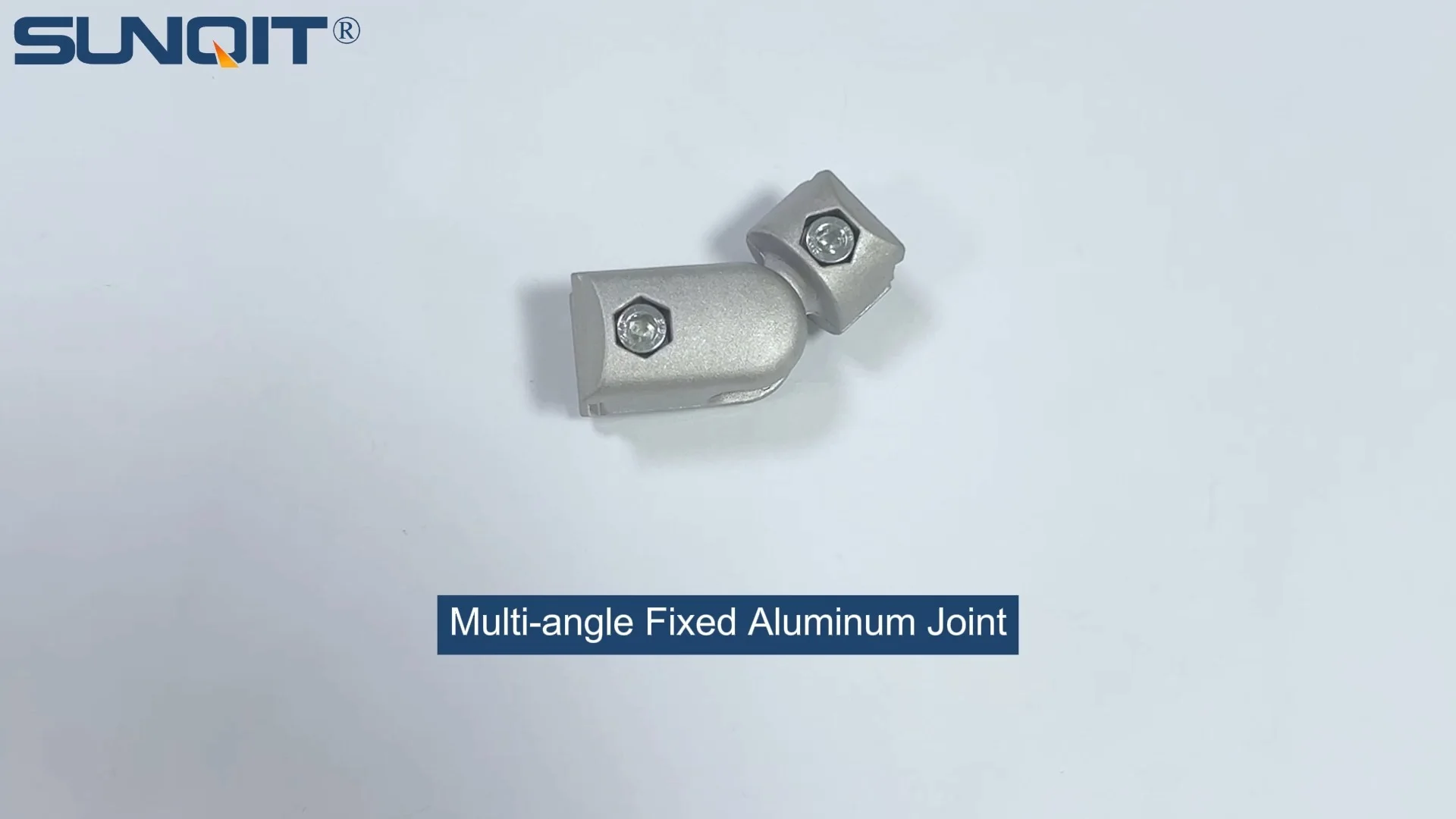
Multi-angle Fixed Aluminum Joint
Aluminum joint pipe connection for two pipe connection and work in mutiple angle.
In the fast-paced world of manufacturing, assembly lines are the beating heart of productivity. Every component, no matter how small, plays a role in keeping operations running smoothly—from the largest machinery to the tiniest connectors. Among these unsung heroes are multi-angle fixed aluminum joints, a humble yet critical part of modern modular assembly systems. These joints aren't just pieces of metal; they're the glue that holds together workbenches, roller tracks, material racks, and other essential structures, enabling flexibility, durability, and efficiency. Whether you're setting up a new production line or upgrading an existing one, understanding how to use multi-angle fixed aluminum joints effectively can transform your workflow, reduce downtime, and boost your team's ability to adapt to changing demands. Let's dive into the best practices that will help you get the most out of these versatile components.
What Are Multi-Angle Fixed Aluminum Joints?
Before we jump into best practices, let's clarify what multi-angle fixed aluminum joints are and why they matter. Simply put, these are specialized connectors designed to join aluminum pipes or profiles at various angles—think 90°, 45°, 135°, or even custom angles—without the need for welding or complex tools. Made from high-grade aluminum, they're lightweight yet strong, resistant to corrosion, and built to withstand the daily wear and tear of factory environments. Unlike rigid steel joints, which often require permanent installation, aluminum joints offer a modular approach: they can be disassembled, reconfigured, and reused, making them ideal for lean manufacturing systems where adaptability is key.
What sets multi-angle fixed aluminum joints apart is their precision. Each joint is engineered with pre-drilled holes and internal threads that align perfectly with standard aluminum profiles, ensuring a tight, secure fit. This precision not only enhances structural stability but also simplifies assembly—even a team with minimal training can put together a workbench or roller track in hours, not days. Whether you're building a single-deck workbench E for electronics assembly or a multi-tier material rack B for storing components, these joints provide the flexibility to tailor the structure to your exact needs.
Key Benefits of Multi-Angle Fixed Aluminum Joints
Why choose multi-angle fixed aluminum joints over other connectors? Let's break down their advantages:
- Flexibility in Design: With the ability to lock into multiple angles, these joints let you customize structures to fit your workflow. Need a 45° incline on a roller track to guide parts downhill? Or a 90° corner for a workbench that wraps around a machine? Multi-angle joints make it possible without custom fabrication.
- Durability: Aluminum's natural resistance to rust and corrosion means these joints hold up in damp or dusty environments, unlike steel which can degrade over time. This longevity reduces replacement costs and keeps your assembly line running smoothly for years.
- Ease of Assembly: Forget about welding torches or heavy machinery. Most multi-angle joints can be tightened with a simple hex key or torque wrench, cutting down on installation time and labor costs. This is a game-changer for teams that need to set up or reconfigure workstations quickly.
- Cost-Effectiveness: Their modular design means you can repurpose joints from old projects for new ones. If your production line shifts from assembling small parts to larger components, you won't need to buy entirely new structures—just rework the joints and add new aluminum profiles. This reduces waste and aligns with sustainable manufacturing practices.

Best Practices for Using Multi-Angle Fixed Aluminum Joints
Now that we understand their value, let's explore the step-by-step best practices for using multi-angle fixed aluminum joints in your assembly line.
1. Start with Pre-Installation Planning
The old saying "measure twice, cut once" applies here—maybe even more so. Rushing into installation without planning is a recipe for misaligned joints, unstable structures, and wasted time. Here's how to plan effectively:
Assess Your Assembly Line Needs: Begin by asking: What will the structure be used for? Will it hold heavy equipment (like a workbench with machinery) or lightweight parts (like a roller track for small components)? How much weight will the joints need to support? Most manufacturers provide load ratings for their joints (e.g., 50kg per joint for standard models), so check these specs to ensure you're choosing the right product. Also, consider the angles you'll need. A material rack B with 3 rows and 3 floors might require mostly 90° joints for vertical supports, while a curved roller track could need 135° or custom angles.
Map Out the Structure: Sketch a rough diagram of your project, noting where each joint will go and at what angle. For example, if you're building a workbench E (single deck, without casters), you'll need 90° joints to connect the vertical legs to the horizontal top frame, and possibly 45° joints for diagonal bracing to add stability. Label each joint with its angle and position—this will prevent confusion during installation.
Check Compatibility with Aluminum Profiles and Accessories: Multi-angle fixed aluminum joints are designed to work with specific aluminum profile sizes (e.g., 2020, 3030, or 4040 series) and accessories like aluminum guide rails or caster wheels. Mixing incompatible parts can lead to loose fits or structural failure. For instance, a joint designed for a 30mm aluminum pipe won't work with a 40mm profile, no matter how hard you try to force it. Always verify that your joints, profiles, and accessories are from the same system or compatible brands.
| Joint Angle | Common Applications | Recommended Aluminum Profile Size | Typical Load Capacity (per joint) |
|---|---|---|---|
| 90° Fixed | Workbench frames, vertical supports for material racks, right-angle roller track corners | 3030, 4040 | 50-80kg |
| 45° Fixed | Diagonal bracing for workbenches, sloped roller tracks, angled material chutes | 2020, 3030 | 30-50kg |
| 135° Fixed | Curved roller tracks, L-shaped workbench extensions, non-right-angle material racks | 3030, 4040 | 40-60kg |
| Adjustable (30°-180°) | Custom structures, prototype workstations, variable-angle roller tracks | 4040, 4080 | 45-75kg (depending on angle) |
2. Master Proper Installation Techniques
Even the best joints will fail if installed incorrectly. Follow these steps to ensure a secure, long-lasting setup:
Gather the Right Tools: You'll need a hex key (or Allen wrench) matching the joint's bolt size, a torque wrench (to avoid over-tightening), a level (to ensure straight lines), and a soft cloth (to clean profiles and joints). Avoid using power tools like drills—they can strip the threads in the joints.
Prepare the Surfaces: Before assembly, wipe down the aluminum profiles and joint surfaces with a cloth to remove dust, oil, or debris. Even small particles can create gaps between the joint and profile, weakening the connection.
Align and Tighten Gradually: Start by loosely attaching the joint to one profile, then align the second profile at the desired angle. Use a level to check that the structure is straight—this is crucial for roller tracks, where even a slight tilt can cause parts to jam. Once aligned, tighten the bolts gradually, alternating between them (like tightening lug nuts on a car wheel) to ensure even pressure. Over-tightening can crack the joint or strip the threads, while under-tightening leaves the structure wobbly. Most manufacturers recommend a torque of 2-3 Nm for standard joints—check the product manual for specifics.
Test for Stability: After installation, give the structure a gentle shake or apply light pressure to key points (e.g., the corner of a workbench). If it wobbles, check for loose bolts or misaligned profiles and adjust as needed. For load-bearing structures like material racks, do a test run with weighted boxes to ensure the joints hold up under stress.
3. Implement Regular Maintenance and Inspection
Multi-angle fixed aluminum joints are durable, but they're not indestructible. Regular maintenance keeps them functioning at their best and prevents unexpected failures:
Schedule Routine Checks: Assign a team member to inspect joints weekly (or monthly, depending on usage). Look for loose bolts, signs of corrosion (white spots on aluminum), or cracks in the joint body. Pay extra attention to joints in high-traffic areas or those supporting heavy loads—these are more likely to loosen over time.
Clean and Lubricate (If Needed): Wipe joints with a mild detergent and water to remove grease or grime. Avoid harsh chemicals like bleach, which can damage the aluminum finish. If your joints have moving parts (e.g., adjustable angle mechanisms), apply a small amount of silicone lubricant to keep them easy to adjust.
replace Worn Joints Promptly: If a joint is cracked, stripped, or corroded, replace it immediately. A single faulty joint can compromise the entire structure, leading to accidents or production delays. Keep a stock of spare joints on hand—this is especially important for critical assembly lines where downtime is costly.
4. Optimize for Workflow and Ergonomics
Multi-angle fixed aluminum joints aren't just about structure—they're about making your team's work easier. Use them to design ergonomic, workflow-friendly spaces:
Adjust Heights and Angles for Worker Comfort: For example, a workbench used for detailed assembly (like electronics) should be at elbow height when standing, while a roller track feeding parts to a machine should slope gently to reduce bending. Use 45° or adjustable joints to angle work surfaces, reducing strain on workers' wrists and shoulders.
Integrate with Roller Tracks and Material Flow: Multi-angle joints are perfect for building roller tracks that guide parts from one workstation to the next. Use 90° joints to create right-angle turns, or 135° joints for smoother curves, ensuring parts glide easily without getting stuck. Pair these with plastic roller track guide rails (yellow or grey) to keep parts aligned—this combination reduces jams and speeds up material handling.
Add Mobility (When Needed): While workbench E is designed without casters, you can use multi-angle joints to build mobile structures by attaching caster wheels to the base. For example, a turnover trolley with 90° joints and swivel casters makes it easy to move heavy loads across the factory floor, reducing manual lifting.
5. Avoid Common Mistakes
Even with careful planning, missteps can happen. Here are pitfalls to watch for:
Overlooking Environmental Factors: Aluminum resists corrosion, but it's not immune to extreme conditions. If your assembly line is in a humid area (like a food processing plant) or exposed to chemicals, choose joints with a protective coating or opt for stainless steel variants. Similarly, in high-temperature environments, ensure the joint's plastic components (if any) are heat-resistant.
Ignoring Weight Distribution: A joint might be rated for 50kg, but if the structure's weight isn't evenly distributed, that joint could fail. For example, a material rack with heavy items stacked only on one shelf will put extra stress on the joints supporting that side. Distribute weight evenly and add extra bracing (with 45° joints) for top-heavy structures.
Using Damaged or Counterfeit Joints: Cheap, knockoff joints might save money upfront, but they're often made with low-quality aluminum and imprecise threading. These joints can loosen easily or snap under load, leading to accidents. Stick to reputable suppliers who provide quality certifications and load-test data.

Real-World Example: Transforming a Production Line with Multi-Angle Joints
To see these best practices in action, let's look at a hypothetical case study. A mid-sized electronics manufacturer was struggling with a rigid assembly line: their workbenches were fixed steel structures, and material racks were welded in place. When they needed to switch from assembling smartphones to larger tablets, the team had to spend 3 days dismantling and rebuilding workstations—costing them valuable production time.
They decided to invest in a modular system using multi-angle fixed aluminum joints, aluminum profiles, and roller tracks. Here's how they applied the best practices:
- Planning: They mapped out the new workflow, determining that tablet assembly required wider workbenches and steeper roller tracks. They chose 90° joints for the workbench frames, 45° joints for bracing, and adjustable-angle joints for the roller tracks to fine-tune the slope.
- Installation: The team used torque wrenches to tighten joints to 2.5 Nm, ensuring a secure fit without stripping threads. They added aluminum guide rail A to the roller tracks to keep tablets aligned during transport.
- Maintenance: They scheduled weekly checks, and within a month, noticed a few joints on the busiest roller track were slightly loose—they tightened them immediately, preventing a potential jam.
- Result: When the next product change came (switching to smartwatches), the team reconfigured the entire line in just 4 hours by adjusting angles and swapping out a few profiles. Downtime dropped by 85%, and worker satisfaction improved thanks to ergonomic, adjustable workbenches.

Conclusion: Building a Leaner, More Adaptable Assembly Line
Multi-angle fixed aluminum joints may seem like small components, but their impact on assembly line efficiency is huge. By following these best practices—planning carefully, installing properly, maintaining regularly, and prioritizing compatibility—you can create a modular, flexible system that adapts to your team's needs, reduces downtime, and supports lean manufacturing principles. Whether you're building a simple workbench or a complex network of roller tracks and material racks, these joints are the key to unlocking a more productive, resilient, and human-centered production environment. So the next time you look at your assembly line, remember: the right joints aren't just connectors—they're the foundation of your success.