- Company Articles
- Products and Technology
- Installation And Maintenance
- Bolt-On vs Weld-On Castor Installation Base: Ease of Reconfiguration in Flexible Lines

Bolt-On vs Weld-On Castor Installation Base: Ease of Reconfiguration in Flexible Lines
Related Product
Castor Installation Base
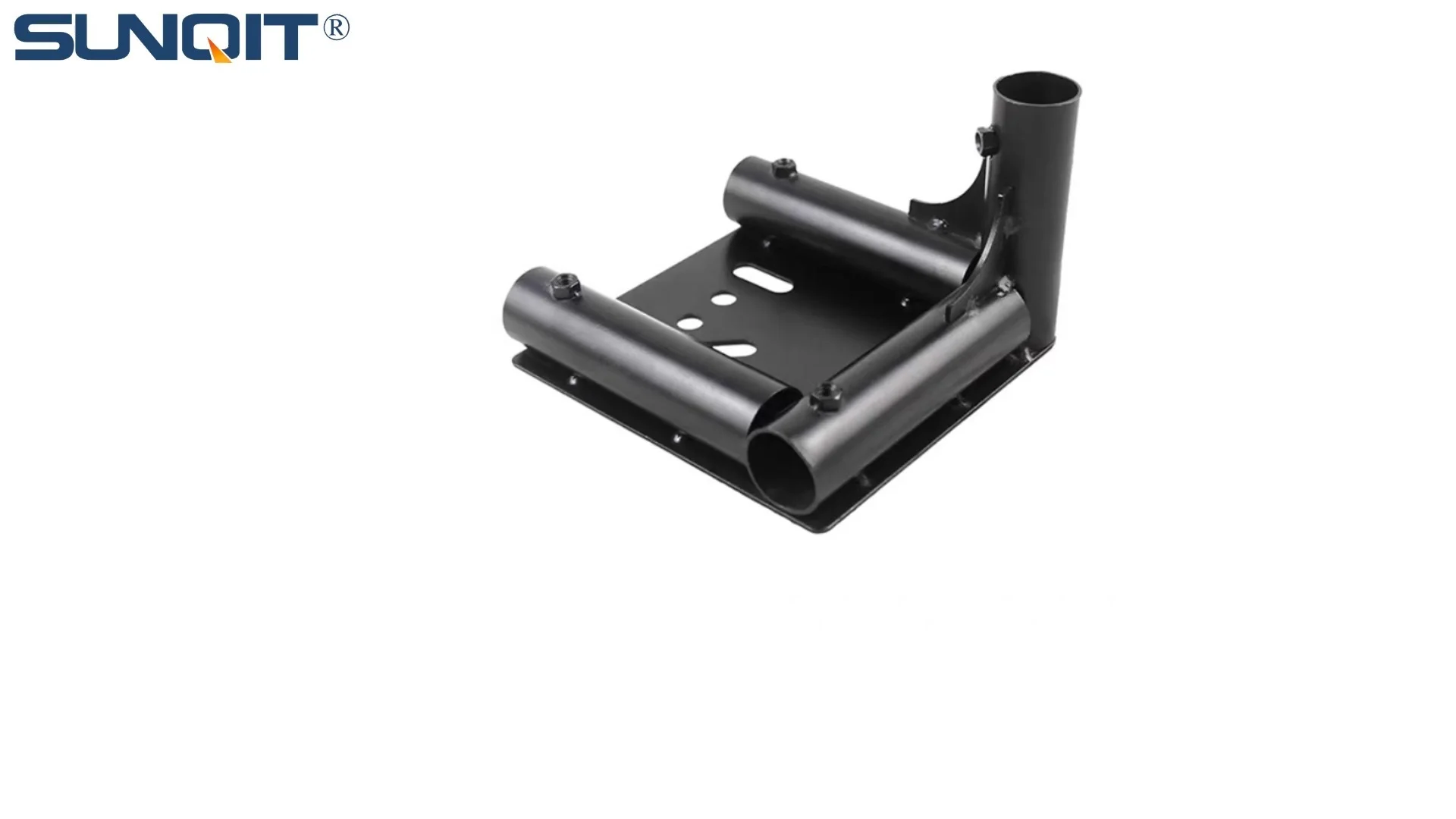
Pipe fitting castor installation base,Well made, precise and strong. Made of high quality of steel,black painting surface treatment for greater resistance to corrosion. It is used for castor or foot lever connection with lean pipe.
The Heartbeat of Modern Manufacturing: Flexibility
Walk into any manufacturing facility today, and you'll notice something fundamental has changed over the past decade: the lines between "fixed" and "temporary" have blurred. Where once production floors were dominated by heavy, immovable machinery bolted to concrete and workbenches welded into place, today's factories pulse with movement. A lean system isn't just a buzzword here—it's the operating philosophy that keeps businesses competitive. And at the center of this shift? The ability to reconfigure spaces quickly, adapt to new product lines, and scale operations up or down without grinding production to a halt for weeks.
Whether you're running a small electronics assembly shop churning out custom circuit boards or a large automotive plant ramping up for a new model year, the question isn't if you'll need to rearrange your workspace—it's how fast you can do it. Downtime isn't just lost minutes; it's lost opportunities. A delay in reconfiguring a flow rack might mean missing a client deadline. A workbench that can't be moved to accommodate a new team layout could slow down assembly times. And in a world where customer demands shift overnight, rigidity is the enemy.
This is where the humble castor installation base enters the spotlight. It might not seem glamorous—after all, it's just the part that connects a caster wheel to a workbench , trolley, or rack—but its design can make or break your facility's flexibility. Today, we're diving deep into two of the most common types: bolt-on and weld-on castor installation bases. We'll explore how each works, when to choose one over the other, and why the right choice can turn your production line from a static setup into a dynamic, adaptable ecosystem.
What Even Is a Castor Installation Base?
Before we compare bolt-on and weld-on, let's make sure we're all on the same page. A castor installation base is the bridge between your equipment (think workbenches, material racks, or turnover trolleys) and the caster wheels that let them move. It's the metal plate, bracket, or mounting hardware that ensures the caster stays securely attached, even when rolling over uneven floors or carrying heavy loads. Without a reliable base, your caster wheels might wobble, loosen, or even detach—turning a "flexible" setup into a safety hazard.
But not all bases are created equal. The choice between bolt-on and weld-on isn't just about installation method; it's about aligning your equipment with your operational needs. Let's break them down.

Bolt-On Castor Installation Bases: The Chameleons of the Factory Floor
Quick Setup, Quicker Changes
Imagine you're setting up a new assembly station. You've got a workbench fresh out of the box, and you need to attach casters so your team can roll it next to the soldering station tomorrow. With a bolt-on castor installation base, this isn't a project for the maintenance crew—it's a 20-minute job with a wrench and a level. Bolt-on bases come with pre-drilled holes that align with standard caster mounting plates, and they're secured using bolts, nuts, and washers. No special skills, no fire hazards from welding torches, just straightforward mechanical connection.
But the real magic of bolt-on bases shines when you need to change things. Let's say six months later, that workbench is no longer needed at the soldering station. Instead, it needs to move to the packaging area, where it will be loaded with heavier boxes. With bolt-on, you don't have to scrap the entire base or hire a welder to cut and reattach. You simply unbolt the old casters, swap them for heavy-duty ones with locking brakes, and bolt the new set on. Done. The base itself remains intact, and the workbench is ready for its new role.
This flexibility is a game-changer for facilities that thrive on adaptability. A small medical device manufacturer I worked with last year is a perfect example. They produce both standard and custom orthopedic tools, which means their production runs can be as short as 50 units or as long as 5,000. Their assembly line uses bolt-on bases for everything from component flow racks to testing workbenches. When a custom order comes in, they can reconfigure the entire line in under four hours by swapping casters (some with swivel locks for stability, others with larger wheels for moving over carpeted office-factory hybrid floors) and rearranging the layout. "We used to lose a full day to reconfiguration with our old welded setup," their operations manager told me. "Now, we can pivot during a lunch break."
Durability Without the Drama
Critics of bolt-on sometimes argue that "bolts can loosen over time," and it's true—if you ignore maintenance. But modern bolt-on designs address this with locking nuts, thread-locking adhesives, and protocols. In fact, in many cases, bolt-on bases can be more durable than welds in high-vibration environments. Welds, while strong, create a rigid connection that can crack under repeated stress (like a workbench being rolled over a threshold 50 times a day). Bolted connections, by contrast, have a tiny bit of "give" that absorbs vibration, reducing wear on both the base and the equipment.
Take a automotive parts supplier I visited last month. Their material handling trolleys, which carry engine components weighing up to 800 pounds, use bolt-on bases with grade 8 bolts (the strongest commercial steel bolts available). They inspect the bolts monthly, tighten any that are loose, and haven't had a single base failure in three years. "We used to weld our trolleys, but the welds would crack at the joints after six months of daily use," their plant engineer explained. "Bolt-on gave us the strength we need, plus the ability to replace a caster in 10 minutes if a wheel gets damaged."

Weld-On Castor Installation Bases: The Silent Giants of Stability
Permanence Has Its Place
If bolt-on bases are the chameleons, weld-on bases are the oak trees of the manufacturing world: slow to move, but deeply rooted. Weld-on bases are attached by melting the base material (usually steel) to the equipment frame, creating a single, continuous piece of metal. This creates an incredibly strong bond—one that's resistant to twisting, bending, or coming loose, even under extreme loads.
Where does this matter most? Think of applications where the equipment never needs to move, but must withstand constant, heavy use. A large injection molding machine, for example, might weigh 10,000 pounds or more. It's not going anywhere, but it vibrates intensely during operation. A weld-on base ensures the casters (which in this case might be fixed, non-swivel types used only for initial positioning) stay anchored, preventing the machine from "walking" across the floor over time. Similarly, in food processing plants, where equipment is hosed down daily, weld-on bases eliminate crevices where bolts and nuts might trap moisture and bacteria—critical for meeting sanitation standards.
I once consulted with a bakery that produces frozen pizza dough in bulk. Their mixing vats are mounted on heavy steel frames with weld-on caster bases. These vats weigh 2,000 pounds when full, and they're cleaned with high-pressure hoses twice a day. "We tried bolt-on bases first," their plant manager said, "but the constant vibration from the mixers loosened the bolts, and the hosing would get water under the washers, causing rust. Welding the bases shut eliminated both problems. These vats haven't moved in five years, and they're still solid as a rock."

Head-to-Head: Bolt-On vs Weld-On in Real-World Scenarios
To help you decide which base is right for your facility, let's compare them across key factors that matter most in day-to-day operations:
| Factor | Bolt-On Castor Installation Base | Weld-On Castor Installation Base |
|---|---|---|
| Installation Time | 30 minutes to 1 hour (basic tools, no special skills) | 2–4 hours (requires certified welder, setup for safety) |
| Reconfiguration Ease | High: Unbolt, swap casters/bases, rebolt (1–2 hours) | Low: Requires cutting welds, re-welding new base (1–2 days) |
| Load Capacity | Up to 10,000 lbs (with heavy-duty bolts and reinforced plates) | Unlimited (depends on weld quality and base material thickness) |
| Maintenance Needs | Regular: Check bolts for tightness every 1–3 months | Minimal: Inspect welds annually for cracks (no moving parts) |
| Cost (Initial + Long-Term) | Lower initial cost ($20–$50 per base); higher long-term flexibility (no rework costs) | Higher initial cost (welder labor + materials: $100–$200 per base); lower long-term maintenance (no bolt replacements) |
| Best For | Lean systems, frequent reconfiguration, multi-use equipment (workbenches, flow racks, trolleys) | Static equipment, extreme loads, harsh environments (heavy machinery, food processing, chemical plants) |
When to Choose Which: It's About Your "Reconfiguration Rhythm"
The decision between bolt-on and weld-on ultimately comes down to your facility's "reconfiguration rhythm"—how often you need to move, adapt, or repurpose equipment. Let's break it down into three common scenarios:
Scenario 1: You Reconfigure Monthly (or More)
If your facility runs on short production runs, custom orders, or seasonal shifts (like a toy manufacturer ramping up for the holidays), bolt-on is the clear winner. The ability to swap casters, adjust heights, or move entire flow racks in a matter of hours keeps your lean system humming. You'll save on labor costs from avoiding welders, and you'll minimize downtime when pivoting between projects.
Scenario 2: You Reconfigure Once Every 3–5 Years
For facilities with stable, long-term production lines (like a beverage bottling plant with a 5-year product roadmap), weld-on might make sense for heavy, immovable equipment. But don't sleep on bolt-on for secondary tools—like maintenance workbenches, parts storage trolleys, or temporary assembly stations. Even in stable environments, there's always room for small-scale adaptability.
Scenario 3: You're Not Sure (And That's Okay)
Many facilities fall into this gray area, and that's where a hybrid approach works best. Use weld-on bases for your heaviest, most permanent equipment (like CNC machines or large mixers) and bolt-on for everything else. A furniture manufacturer I know does this brilliantly: Their main assembly line has welded bases for the conveyor systems (which haven't moved in 10 years), but the component workbenches, tool carts, and packing flow racks all use bolt-on bases. This way, they get the stability of welds where they need it and the flexibility of bolts where they don't.
Enhancing Flexibility: The Role of Caster and Accessories
No discussion of castor installation bases is complete without mentioning the accessories that make them even more versatile. For bolt-on bases, the right accessories can turn a basic setup into a customized solution for your specific needs. Here are a few game-changers:
Swivel Locks and Brake Casters
Bolt-on bases pair seamlessly with casters that have swivel locks (to keep equipment straight when rolling) and total-lock brakes (to lock both the wheel and swivel motion). This is essential for workbenches that need to stay put during assembly but move freely during reconfiguration. A pharmaceutical lab I visited uses these on their sample testing workbenches—during testing, the brakes lock the bench in place; after hours, they unlock and roll the bench to the cleaning station.
Adjustable Height Casters
Uneven floors? No problem. Bolt-on bases can accommodate adjustable height casters, which let you level equipment with a simple turn of a wrench. This is a lifesaver for flow racks that need to align perfectly with conveyor belts—even if the floor dips slightly in one corner.
Caster Mounting Plates
Standard bolt-on bases work with most casters, but for non-standard equipment (like oddly shaped tool cabinets or custom trolleys), universal mounting plates let you adapt the base to fit. These plates have multiple pre-drilled holes, so you can align them with whatever caster pattern you need.
The Future of Flexible Lines: Why Bolt-On Is Gaining Ground
As manufacturing continues to shift toward smaller batches, faster turnarounds, and more customized production, the demand for flexible infrastructure is only growing. This is why bolt-on castor installation bases are becoming the default choice for forward-thinking facilities. They align perfectly with the principles of a lean system : eliminate waste (in this case, waste from downtime and rework), optimize flow (by moving equipment where it's needed), and empower teams to make changes without waiting for external contractors.
Even industries traditionally reliant on welds are starting to pivot. A large aerospace supplier I toured last quarter recently switched 70% of their secondary assembly workbenches to bolt-on bases. "We used to think welds were the only way to ensure precision," their manufacturing engineer told me. "But with modern bolt-on hardware and torque wrenches, we can get the same level of stability—with the added benefit of reconfiguring our tooling stations for new aircraft models in days instead of weeks."
Final Thoughts: Invest in Flexibility, Not Just Hardware
At the end of the day, choosing between bolt-on and weld-on castor installation bases isn't just about hardware—it's about investing in your facility's ability to grow, adapt, and thrive. A weld-on base might save you a few dollars upfront, but if it costs you a day of production when you need to reconfigure, that savings disappears fast. Conversely, a bolt-on base might cost a bit more initially, but the ROI in reduced downtime and increased agility can be massive.
So, take a walk around your facility today. Look at your workbenches, flow racks , and material trolleys. Ask yourself: When was the last time we needed to move this? How long did it take? And when we need to move it again (because we will), can we do it without halting production? The answers will guide you toward the base that keeps your operations flexible, your team productive, and your business ready for whatever comes next.