- Company Articles
- Products and Technology
- Product knowledge
- Brake Reliability Test: Ensuring Flat Swivel Castor Wheel with Brake Performance Under Load

Brake Reliability Test: Ensuring Flat Swivel Castor Wheel with Brake Performance Under Load
Related Product
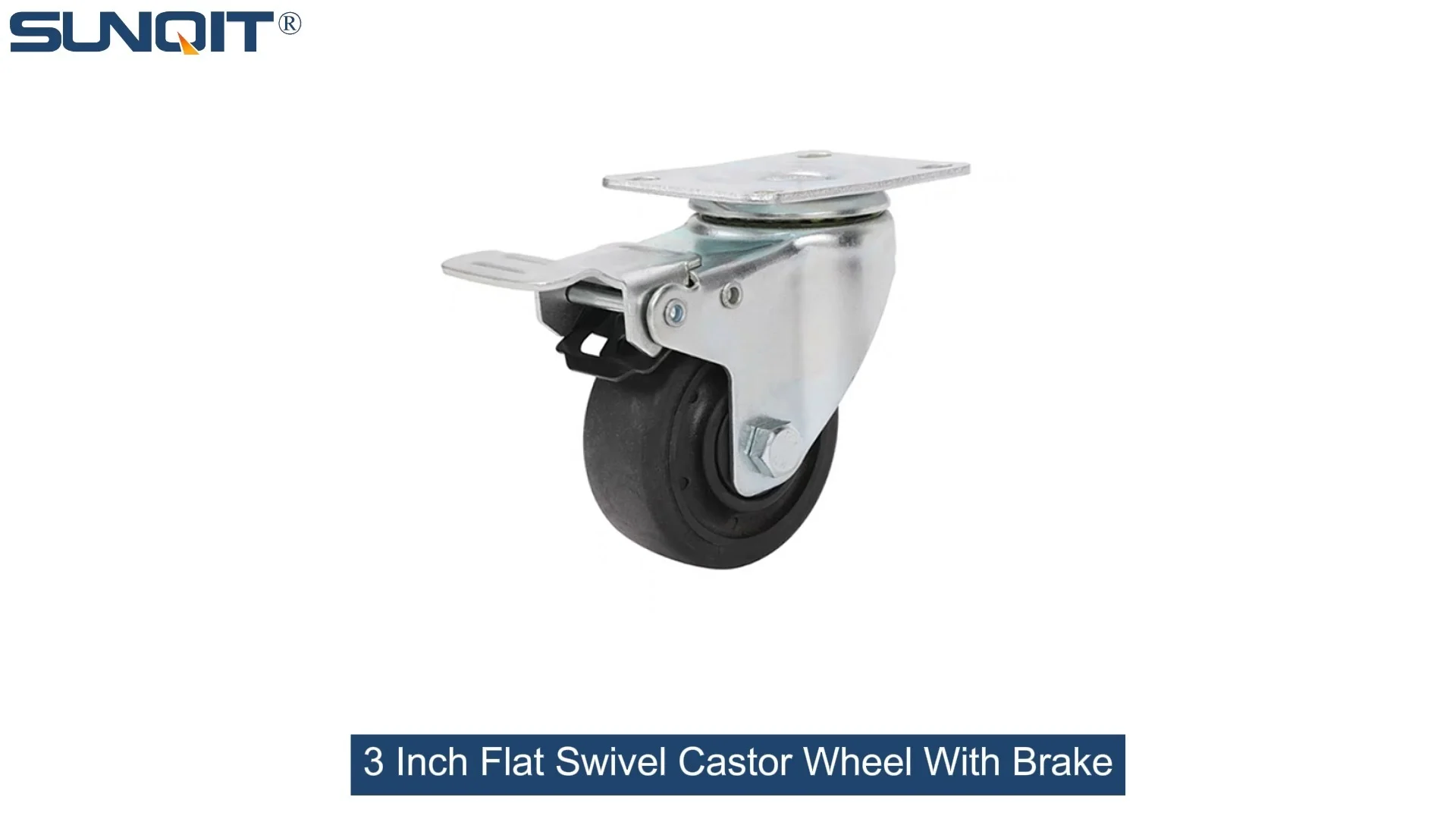
Flat Swivel Castor Wheel With Brake
Chair Casters Ball Bearing Wheels Rubber Base with brake design. Resistant to abrasion, impact and corrosion. Heavy payload can hold 70Kgs per pcs,which can make it works at a stable and smooth status.
In the hustle of a busy warehouse, the steady hum of production lines, or the precision of a laboratory, there's an unsung hero keeping everything in place: the flat swivel castor wheel with brake . These small but mighty components are the silent guardians of stability, ensuring that carts, workbenches, and equipment stay exactly where they're needed—even when loaded with heavy materials. But what happens when that brake fails? A single slip could disrupt an entire workflow, compromise safety, or derail the efficiency of a well-tuned lean system . That's why brake reliability testing isn't just a formality; it's the backbone of trust between manufacturers, suppliers, and the end-users who depend on these castors daily.
In this article, we'll dive into the world of brake reliability testing for flat swivel castor wheels with brake, exploring why it matters, how it's done, and the real-world impact of getting it right. We'll also touch on the key role of caster accessories , the importance of load conditions, and how a reliable lean system supplier ensures that every castor meets the highest standards. Whether you're a facility manager overseeing a warehouse, a procurement specialist sourcing equipment, or simply curious about the engineering behind everyday stability, this deep dive will show you why "good enough" isn't enough when it comes to brake performance.
The Unsung Role of Flat Swivel Castor Wheels with Brake in Daily Operations
Before we jump into testing, let's take a moment to appreciate how integral these castors are to daily operations. Imagine a workbench in a electronics manufacturing plant, loaded with sensitive circuit boards and tools. An operator needs to adjust its position to reach a new component, so they unlock the brake, glide the workbench into place, and lock it again. For the next hour, that brake must hold firm—even as the operator leans on the bench, pulls tools from drawers, or shifts materials. A weak brake here could send the workbench rolling, risking damage to components or injury to the worker.
Or consider a hospital cart transporting medication. Nurses rely on the brake to keep the cart stationary while they retrieve supplies, especially in busy corridors where a rolling cart could collide with patients or staff. In a warehouse, a loaded trolley full of inventory needs to stay put during loading and unloading to prevent accidents and maintain the flow of a lean system , where every second and every movement is optimized to eliminate waste.
At their core, flat swivel castor wheels with brake are about control. They let you move heavy objects with ease (thanks to the swivel design) and secure them with confidence (thanks to the brake). But that control is only as good as the brake's ability to perform under stress. Which brings us to the question: How do we ensure that brake can be trusted—no matter the load, the environment, or the number of times it's engaged and released?
Key Components: What Makes a Brake Reliable?
A flat swivel castor wheel with brake isn't just a wheel and a lever. It's a system of interconnected parts, each playing a role in brake performance. Let's break down the key components that influence reliability:
1. The Caster Wheel Itself
The caster wheel is the point of contact with the floor, and its material and design directly impact braking. Harder materials like polyurethane offer durability but may slip more easily on smooth floors, while softer rubbers provide better grip but wear faster. The wheel's diameter and tread pattern also matter—wider wheels distribute weight more evenly, reducing the stress on the brake mechanism.
2. The Brake Mechanism
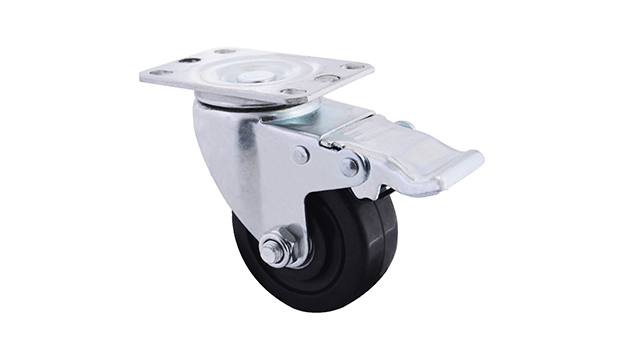
Most flat swivel castor wheels with brake use either a foot-operated lever or a hand brake to engage a stopping mechanism. This could be a pad that presses against the wheel, a cam that locks the swivel motion, or a combination of both. The precision of this mechanism—how tightly it grips, how smoothly it engages, and how resistant it is to wear—determines its reliability.
3. Caster Accessories: The Hidden Reinforcements
Caster accessories like springs, pins, and washers might seem minor, but they're critical to brake longevity. A weak spring, for example, could cause the brake to disengage unexpectedly, while a worn washer might lead to looseness in the mechanism. High-quality accessories ensure that the brake maintains consistent pressure and alignment, even after thousands of uses.
Together, these components form a chain—if one link fails, the entire brake system falters. That's why brake reliability testing puts each of these parts through their paces, simulating real-world conditions to ensure they hold up when it matters most.
The Brake Reliability Test Process: What Happens Behind the Scenes
Brake reliability testing is a rigorous process designed to answer one question: Can this castor's brake consistently hold a specified load under realistic conditions? To find out, manufacturers subject flat swivel castor wheels with brake to a series of controlled tests, each targeting a different aspect of performance. Let's walk through the key steps:
1. Static Load Testing: The Foundation of Trust
Static load testing is the first hurdle. Here, the castor is mounted to a test rig and loaded with a weight—often 1.5 to 2 times the maximum rated load—to simulate worst-case scenarios. The brake is engaged, and the rig is tilted gradually to measure the angle at which the brake slips. For example, a castor rated for 500 lbs might be tested with 750 lbs to ensure the brake can handle unexpected overloading.
Why does this matter? In real life, operators might accidentally overload a cart or workbench. A brake that fails under static load could lead to dangerous rollaways, especially on sloped floors or uneven surfaces.
2. Dynamic Load Testing: Braking in Motion
Static testing checks for "hold," but dynamic testing checks for "stop." In this phase, the castor is attached to a moving platform, loaded to capacity, and brought to a controlled speed (typically 2-3 mph, mimicking walking pace). The brake is then engaged suddenly, and sensors measure the stopping distance and force. A reliable brake should stop the load quickly and smoothly, without skidding or jerking that could damage materials or cause instability.
Think of it like slamming on the brakes in a car—you want to stop safely, not send the cargo flying. Dynamic testing ensures the brake can handle the kinetic energy of a moving load, a common scenario in warehouses where carts are pushed between workstations.
3. Endurance Testing: The Test of Time
A brake might work perfectly once, but what about after 10,000 cycles of engagement and release? Endurance testing puts the castor through repetitive braking—engaging, releasing, and re-engaging the brake under load—to simulate months or years of use. Engineers monitor for signs of wear: Does the brake lever become harder to press? Does the stopping force decrease? Do caster accessories like springs or pins show signs of fatigue?
This is where cheap castors often fail. Low-quality materials or shoddy assembly can lead to premature wear, turning a reliable brake into a liability after just a few months of use. A reputable lean system supplier will specify endurance test results (e.g., "tested to 50,000 cycles with no performance loss") to back their product claims.
4. Environmental Testing: Braking Through the Elements
Castors don't live in perfect conditions. They're exposed to dust, moisture, oil, extreme temperatures, and even chemicals, depending on the industry. Environmental testing subjects the brake to these elements to ensure performance doesn't degrade. For example:
- Humidity and corrosion: Castors are placed in salt spray chambers to test for rust, which can seize brake components.
- High temperatures: In factories with ovens or furnaces, brakes must resist warping or melting.
- Chemical exposure: In labs or cleanrooms, brakes might come into contact with solvents—testing ensures they don't degrade or become slippery.
5. Real-World Simulation: The Final Check
Finally, some manufacturers go a step further with real-world simulation. They mount the castors to actual equipment—a workbench , a tool cart, or a material handling trolley—and test them in environments that mirror their intended use. This might involve rolling the loaded equipment over rough floors, uneven thresholds, or debris to see how the brake performs when pushed to its limits.
Test Parameters at a Glance
| Test Type | What It Measures | Typical Test Conditions | Pass/Fail Criteria |
|---|---|---|---|
| Static Load | Brake hold under stationary weight | 1.5x rated load, tilted to 15° | No slip at ≤15° tilt |
| Dynamic Load | Stopping distance and force in motion | 3 mph speed, full load | Stopping distance ≤2 ft; no skidding |
| Endurance | Performance after repeated use | 10,000+ brake cycles under load | ≤10% loss in stopping force |
| Environmental | Resistance to moisture, heat, chemicals | 48-hour salt spray; 120°F heat | No rust, warping, or reduced grip |

Why Load Conditions Are Non-Negotiable in Testing
If there's one factor that makes or breaks brake reliability, it's load conditions. A brake that works flawlessly with a 100-lb load might fail completely with 500 lbs. That's because braking force isn't just about friction—it's about physics. The heavier the load, the more force the brake must exert to counteract inertia and gravity. Testing under realistic load conditions ensures the brake is sized correctly for its intended use.
Consider a lean system in a automotive plant, where a trolley loaded with engine parts (often 800+ lbs) is moved between assembly stations. If the brake is tested only with 400 lbs, it might slip under full load, disrupting the just-in-time flow of materials. This isn't just inefficient; it's a safety hazard. Workers might strain to hold the trolley, leading to injuries, or the trolley could collide with machinery, causing costly downtime.
Load conditions also vary by industry. A medical cart carrying 200 lbs of supplies has different needs than a warehouse trolley hauling 2,000 lbs of pallets. A reputable lean system supplier will tailor testing to these specific use cases, ensuring that castors are rated for the loads they'll actually encounter—not just a generic "one-size-fits-all" number.

Real-World Impact: How Reliable Brakes Strengthen Lean Systems
At this point, you might be thinking, "This all sounds technical—but how does it affect me?" The answer lies in the lean system philosophy: eliminating waste, optimizing flow, and maximizing value. A reliable flat swivel castor wheel with brake is a linchpin in this philosophy, enabling smoother workflows, safer environments, and more efficient operations. Here's how:
1. Minimizing Downtime: When Stability Equals Productivity
In a lean system, every second counts. A workbench that rolls unexpectedly during assembly forces operators to stop, reposition, and readjust—wasting time that could be spent on value-added tasks. Reliable brakes keep equipment stationary, ensuring that workers can focus on their jobs without interruptions. Over a shift, those saved seconds add up to hours of increased productivity.
2. Enhancing Safety: Trust as a Foundation for Efficiency
Safety and efficiency go hand in hand. Workers who trust their equipment are more confident, move faster, and make fewer mistakes. A brake that holds under load reduces the risk of accidents, from minor bumps to serious collisions. This not only protects employees but also reduces the cost of injuries, insurance claims, and damaged goods—all of which eat into a company's bottom line.
3. Supporting Flexibility: The Power of "Move and Lock"
Modern workplaces thrive on flexibility. A workbench might need to be repositioned for a new project, or a cart might serve multiple stations in a day. Flat swivel castor wheels with brake enable this flexibility by combining mobility with stability. Workers can move equipment quickly when needed and lock it securely when stationary—no more wrestling with heavy objects or using wedges to keep things from rolling. This adaptability is key to scaling operations and responding to changing demands.
How a Lean System Supplier Ensures Quality: Beyond the Test Lab
Testing is critical, but it's just one piece of the puzzle. A trusted lean system supplier goes beyond the lab to ensure that every flat swivel castor wheel with brake meets rigorous standards from design to delivery. Here's what sets reputable suppliers apart:
1. Material Selection: The Right Ingredients for Durability
Quality starts with materials. Top suppliers use high-grade steel for brake components, reinforced nylon or polyurethane for caster wheels , and corrosion-resistant coatings for longevity. They also source caster accessories from trusted partners, ensuring that springs, pins, and levers are built to last. For example, a supplier might use heat-treated steel levers to prevent bending or fatigue, even after thousands of uses.
2. Quality Control: Checking Every Castor, Every Time
Batch testing isn't enough. The best suppliers implement 100% inspection, checking each castor's brake for smooth engagement, proper alignment, and consistent force. Automated tools measure lever resistance, while manual checks ensure that no defects—like a misaligned brake pad or a loose pin—slip through the cracks. This attention to detail means that when you receive a shipment, you can trust that every castor is ready to perform.
3. Collaboration with Customers: Understanding Real-World Needs
A great supplier doesn't just sell products—they solve problems. They work closely with customers to understand their unique challenges: Do they need brakes that work in cold storage? Castors resistant to chemicals? Loads that fluctuate daily? By tailoring designs to these needs, suppliers ensure that testing reflects real-world use, not just abstract standards.
Common Challenges and Solutions in Brake Reliability
Even with rigorous testing, challenges can arise. Let's look at some common issues and how manufacturers address them:
Challenge 1: Brake Fade Under Heat
In high-temperature environments (e.g., foundries, bakeries), brake pads can overheat and lose friction, leading to "fade." Solution: Suppliers use heat-resistant materials like ceramic composites for brake pads, or add ventilation to dissipate heat. Some even design brakes with heat shields to protect components from radiant heat.
Challenge 2: Corrosion in Wet or Humid Settings
Moisture can rust brake components, causing them to seize or slip. Solution: Stainless steel or zinc-plated parts, combined with sealed bearings and waterproof lubricants, prevent corrosion. For extreme cases, suppliers offer fully enclosed brake mechanisms to keep water and debris out.
Challenge 3: Inconsistent Brake Force Across Multiple Castors
On carts with four castors, uneven brake force can cause tipping or instability. Solution: Precision manufacturing ensures that all castors in a set have identical brake tension. Some suppliers also offer adjustable brakes, letting users fine-tune force to match load distribution.
Conclusion: The Small Component That Makes a Big Difference
At the end of the day, a flat swivel castor wheel with brake is more than just a wheel and a lever. It's a promise—a commitment from suppliers to manufacturers, and from manufacturers to the workers who rely on stable, safe, and efficient equipment. Brake reliability testing is how that promise is kept, ensuring that every engagement of the brake is a guarantee of stability, not a gamble.
Whether you're building a lean system from the ground up, upgrading your facility's equipment, or simply replacing worn castors, remember: the best lean system supplier doesn't just sell parts—they sell peace of mind. So the next time you lock a brake and go about your work, take a moment to appreciate the engineering, testing, and care that went into keeping you—and everything around you—right where you need to be.