- Company Articles
- Products and Technology
- Product knowledge
- Brake Types Compared: Side Brake vs. Top Brake for Flat Swivel Castor Wheels

Brake Types Compared: Side Brake vs. Top Brake for Flat Swivel Castor Wheels
Related Product
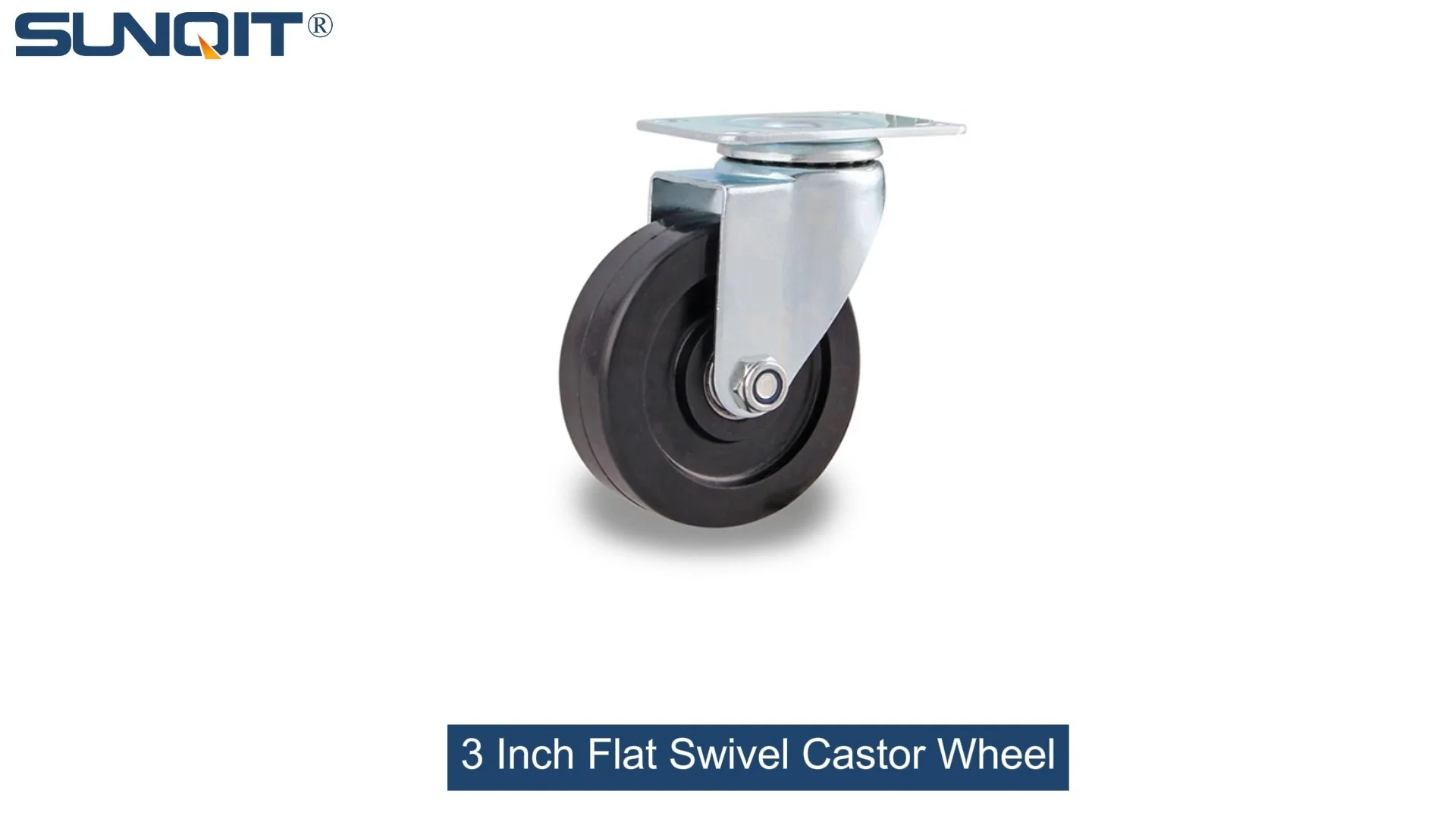
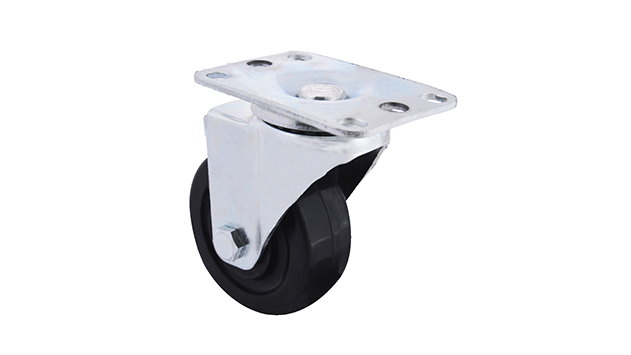
Flat Swivel Castor Wheel
Chair Casters Ball Bearing Wheels Rubber Base. Resistant to abrasion, impact and corrosion. Heavy payload can hold 70-90Kgs per pcs,which can make it works at a stable and smooth status.
A deep dive into safety, efficiency, and real-world performance
Introduction: The Unsung Heroes of Material Handling
Picture this: It's a busy Tuesday morning in a manufacturing plant. A team of workers is rushing to assemble components for a critical order. Nearby, a flat swivel castor wheel on a material trolley suddenly gives way, sending tools clattering to the floor. The delay costs the team precious minutes, and frustration mounts. Sound familiar? If you've ever worked in a warehouse, factory, or even a busy retail stockroom, you know that the smallest components—like castor wheels—can make or break your daily operations.
Castor wheels are the silent workhorses of material handling. They're the reason you can effortlessly push a heavy turnover trolley and rack loaded with inventory, or adjust a workbench to just the right position for assembly. But here's the thing: not all castors are created equal. And when it comes to safety and control, the brake mechanism is where the rubber truly meets the road—literally.
In this article, we're zeroing in on two of the most common brake types for flat swivel castors: side brakes and top brakes. We'll explore how they work, their pros and cons, and which one might be the best fit for your needs. Whether you're a facility manager upgrading equipment, a small business owner setting up a workshop, or just someone curious about the mechanics of everyday tools, this guide will help you make an informed decision. Let's roll in.
Understanding Flat Swivel Castor Wheels: More Than Just "Wheels on a Stick"
Before we jump into brakes, let's take a moment to appreciate what makes flat swivel castor wheel s unique. Unlike fixed castors, which only roll forward and backward, swivel castors have a rotating joint that allows 360-degree movement. This maneuverability is a game-changer in tight spaces—think navigating a trolley around a corner in a crowded warehouse or positioning a workbench exactly where you need it without lifting.
Flat swivel castors get their name from their low-profile design. The "flat" refers to the mounting plate, which sits close to the ground, providing stability even when carrying heavy loads. This design is especially popular in applications where height clearance is limited, like under-shelf storage units or mobile workstations. But with great maneuverability comes great responsibility—and that's where brakes enter the picture.
Every flat swivel castor wheel has three main components: the wheel itself (usually made of rubber, polyurethane, or plastic), the swivel head (the joint that allows rotation), and the brake mechanism. Today, we're focusing on that third component. Brakes aren't just about stopping movement—they're about control. A good brake keeps a loaded trolley steady while you load or unload, prevents accidental rolling on uneven floors, and protects workers from slips, trips, and falls. In short, they're non-negotiable for safety and efficiency.
The Critical Role of Brakes: Why They Matter More Than You Think
Let's talk about the consequences of a bad brake. Imagine pushing a trolley loaded with 500 pounds of raw materials up a slight incline. If the brake fails, that trolley could roll backward, crashing into equipment or, worse, a coworker. Even in less dramatic scenarios, a weak brake can slow down workflows: a trolley that drifts while you're loading it forces you to waste time readjusting, or a workbench that won't stay put makes precise assembly nearly impossible.
Brakes also play a hidden role in ergonomics. A poorly designed brake requires more force to engage, leading to hand or wrist strain over time. Workers might avoid using the brake altogether to save effort, increasing the risk of accidents. On the flip side, a well-designed brake feels intuitive—almost second nature—to use. It engages smoothly, holds firm under load, and releases easily when needed. That's the difference between a tool that works with you and one that works against you.
When it comes to flat swivel castor wheel s, two brake types dominate the market: side brakes and top brakes. Each has its own set of strengths and weaknesses, and choosing between them depends on your specific needs. Let's break them down.

Side Brake Castors: The Reliable Workhorse
How Side Brakes Work: Simple, Effective, and Time-Tested
Side brakes are exactly what they sound like: a brake lever mounted on the side of the castor housing. To engage the brake, you press down on this lever with your foot (or sometimes your hand, in smaller models). Inside the housing, a brake pad or shoe presses against the wheel, creating friction that stops movement. Release the lever, and the spring-loaded mechanism retracts, letting the wheel roll freely.
What makes side brakes popular? Their simplicity. There are fewer moving parts compared to other brake types, which means less can go wrong. They're also easy to identify at a glance—you can spot the lever sticking out from the side, even from a distance. This simplicity translates to lower maintenance costs, too. When parts do wear out, caster accessories like replacement brake pads are usually affordable and easy to install.
Pros of Side Brakes: Why They're a Staple in Many Industries
- Intuitive Operation: Most people figure out how to use a side brake in seconds. The lever is easy to reach with your foot, even if you're wearing work boots or safety shoes.
- Durability: With fewer components, side brakes are less prone to jamming or breaking. They hold up well in dusty or dirty environments, like construction sites or recycling centers, where debris can clog more complex mechanisms.
- Cost-Effective: Side brakes are generally cheaper to manufacture than top brakes, making them a budget-friendly choice for businesses buying in bulk—say, equipping an entire fleet of turnover trolley and rack units.
- Space-Saving Design: The lever sits close to the castor housing, so it doesn't add extra height or width. This is crucial for equipment that needs to fit through narrow doorways or under low shelves.
Cons of Side Brakes: Where They Fall Short
Of course, no brake type is perfect. Side brakes have a few drawbacks to consider:
- Limited Force: Side brakes rely on the user's foot pressure to engage. If you're a smaller person or dealing with a very heavy load, you might need to press harder to get a firm hold. In some cases, the brake might slip under extreme weight.
- Vulnerable to Damage: The exposed lever is at risk of being bumped or bent, especially in high-traffic areas. A stray pallet jack or forklift could easily knock the lever out of alignment, rendering the brake useless.
- Uneven Wear: If the brake pad isn't aligned perfectly, it can wear unevenly, reducing its lifespan. This is more common in cheaper models with lower-quality manufacturing.
Ideal Use Cases for Side Brakes
Side brakes shine in environments where simplicity and cost are priorities. Think: light to medium-duty applications like retail stock trolleys, office chairs (yes, many office chairs use side brakes!), or workbench units that don't need to hold extremely heavy loads. They're also great for outdoor use—their rugged design stands up to rain, mud, and gravel better than more delicate brake types.

Top Brake Castors: The Precision Contenders
How Top Brakes Work: A Closer Look at the Mechanism
Top brakes, as the name suggests, have their lever mounted on the top of the castor housing. Unlike side brakes, which typically only lock the wheel, many top brakes are "total lock" brakes—meaning they lock both the wheel and the swivel head. This dual locking action prevents both rolling and rotation, making the castor completely stationary.
Here's how it works: When you press down on the top lever, a rod inside the housing pushes a brake shoe against the wheel (stopping rolling) and a separate plate against the swivel head (stopping rotation). Some models use a single lever for both actions, while others have two levers (one for wheel lock, one for swivel lock). This added complexity gives top brakes a reputation for precision—but it also makes them more intricate than side brakes.
Pros of Top Brakes: Why They're Worth the Investment
Top brakes are often the choice for applications where stability is non-negotiable. Here's why:
- Dual Locking Power: The ability to lock both wheel and swivel head is a game-changer for safety. Imagine a medical cart in a hospital—you don't want it rolling or turning while a nurse is administering medication. Top brakes keep it rock-steady.
- Consistent Force: Top brakes are often designed with a cam or gear mechanism that multiplies the force from the lever, meaning even a light press can engage a strong lock. This is ideal for heavy loads or users with limited upper body strength.
- Protection from Debris: The lever and internal components are often housed within the castor's top plate, shielding them from dirt, dust, and water. This makes top brakes a better choice for clean environments like food processing plants or labs.
- Ergonomic Design: The top-mounted lever is easier to reach for some users, especially if the castor is mounted on a low trolley. You can engage it with your hand or foot, depending on the model, reducing strain on wrists and ankles.
Cons of Top Brakes: The Trade-Offs to Consider
Top brakes aren't without their downsides, though. Here's what to watch for:
- Higher Cost: The dual-locking mechanism and more complex parts make top brakes pricier than side brakes. If you're outfitting a large number of trolleys, this cost can add up quickly.
- Maintenance Headaches: More moving parts mean more opportunities for jamming or wear. If debris does get inside, it can gum up the works, requiring disassembly to clean. And when caster accessories like gears or springs need replacement, they're often more expensive than side brake parts.
- Height Issues: The top-mounted lever adds a few inches to the castor's overall height. In applications where clearance is tight—like under a workbench with a low shelf—this can be a problem.
Ideal Use Cases for Top Brakes
Top brakes are the go-to for heavy-duty or high-safety environments. Think: industrial manufacturing lines with 1,000-pound loads, healthcare facilities where patient safety is critical, or cleanrooms where even a small amount of debris can ruin a product. They're also popular for mobile workbench units that need to stay perfectly still during precision tasks like electronics assembly.
Side Brake vs. Top Brake: A Head-to-Head Comparison
To help you visualize the differences, let's put side brakes and top brakes side by side. The table below breaks down key factors like cost, safety, maintenance, and ideal use cases.
| Factor | Side Brake Castors | Top Brake Castors |
|---|---|---|
| Locking Action | Wheel only (prevents rolling) | Wheel + swivel head (prevents rolling and rotation) |
| Cost | Lower (simpler mechanism) | Higher (dual-locking parts) |
| Installation Complexity | Easy (fewer parts to align) | Moderate (requires precise alignment of dual locks) |
| Maintenance Needs | Low (fewer moving parts; caster accessories are affordable) | Moderate to high (more parts prone to wear; replacement gears/spring can be costly) |
| Best for Load Capacity | Light to medium (up to 500 lbs per castor) | Medium to heavy (up to 1,500 lbs per castor) |
| Environmental Resistance | Good (exposed lever but simple design resists debris) | Excellent (enclosed mechanism protects from dust/water) |
| User-Friendliness | High (intuitive foot lever; easy for all users) | Moderate (may require training for dual-lever models) |
| Safety Rating | Good (prevents rolling but not rotation) | Excellent (total lock prevents all movement) |
As you can see, there's no "one-size-fits-all" answer. The right choice depends on your specific needs. Let's explore some real-world scenarios to make this clearer.
Real-World Scenarios: Which Brake Type Wins?
Scenario 1: A Small Retail Warehouse
Imagine you run a small online clothing store with a warehouse that stocks 500-1,000 items. Your team uses turnover trolley and rack units to move boxes of inventory. The trolleys rarely carry more than 200 pounds, and the warehouse floor is smooth concrete. Space is tight, with narrow aisles between shelves.
Winner: Side Brakes. Why? The loads are light, so the side brake's force is sufficient. The tight aisles mean you need space-saving castors, and the lower cost of side brakes will help keep your startup budget in check. Plus, with simple maintenance, you won't have to pause operations for frequent repairs.
Scenario 2: A Large Automotive Manufacturing Plant
Your plant produces car parts, and you use heavy-duty trolleys to move engine blocks (weighing up to 800 pounds each). The floor has slight inclines near loading docks, and workers often need to stop trolleys mid-movement to grab tools. Safety is a top priority—OSHA inspections are frequent, and you can't afford accidents.
Winner: Top Brakes. The dual-locking feature is critical here. A trolley loaded with an engine block could cause serious injury if it rolls or swivels unexpectedly. The top brake's ability to lock both wheel and swivel head ensures stability, even on inclines. Yes, they're more expensive, but the investment in safety and reduced downtime is worth it.
Scenario 3: A Hospital Pharmacy
Your pharmacy dispenses medication to patients across a large hospital. Nurses use mobile carts to transport drugs, and these carts must stay completely still when unlocked (to prevent medication spills) and locked (to prevent theft). The carts are used around the clock, and the floors are often cleaned with water and disinfectants.
Winner: Top Brakes. The enclosed mechanism resists water and cleaning chemicals, ensuring reliability in a damp environment. The dual lock keeps the cart steady during dispensing, and the precision of the brake reduces the risk of human error. In healthcare, where every second counts, you can't afford a brake that slips.
Maintenance Matters: Keeping Your Brakes in Top Shape
Whether you choose side or top brakes, proper maintenance is key to extending their lifespan. Here's how to care for each type:
Maintaining Side Brakes
- Clean Regularly: Wipe the lever and wheel with a dry cloth to remove dust and debris. For stubborn grime, use a mild detergent and a soft brush—avoid harsh chemicals that can degrade rubber brake pads.
- Check Brake Pads: Inspect the brake pad (the part that presses against the wheel) monthly. If it's worn down to less than 1/8 inch thick, replace it with a new caster accessory . Most hardware stores carry generic brake pads, or you can order from your castor supplier.
- Lubricate the Lever: Apply a few drops of silicone lubricant to the lever pivot point every 3 months. This prevents rust and keeps the lever moving smoothly.
Maintaining Top Brakes
- Keep the Housing Sealed: Check the top plate for cracks or gaps where debris could enter. If you notice damage, replace the housing immediately—water or dust inside can ruin the gear mechanism.
- Test Dual Locks Separately: Every month, engage the wheel lock and swivel lock individually to ensure they work properly. If one sticks, spray the mechanism with compressed air to dislodge debris, then apply a dry lubricant (wet lubricants attract dust).
- Tighten Loose Screws: The top lever is held in place by small screws that can loosen over time. Use a Phillips-head screwdriver to tighten them gently—over-tightening can strip the threads.
- replace Worn Gears: If the lever feels "spongy" or doesn't engage with a firm click, the internal gears may be worn. This is a job for a professional, but replacing gears is cheaper than buying a new castor.
Remember: Regular maintenance isn't just about extending life—it's about safety. A brake that's well-cared for is less likely to fail when you need it most.
Choosing the Right Brake: A Step-by-Step Guide
Still on the fence? Use this simple checklist to narrow down your options:
Step 1: Assess Your Load Capacity
Start with the numbers. How much weight will each castor need to support? If it's under 500 pounds, side brakes are probably sufficient. Over 500 pounds, or if you need extra stability, top brakes are better.
Step 2: Evaluate Your Environment
- Dirty/Dusty: Side brakes (simpler design resists clogging).
- Wet/Clean: Top brakes (enclosed mechanism stays dry).
- Narrow Spaces: Side brakes (lower profile).
Step 3: Consider User Needs
Who will be using the castors? If your team includes workers with limited strength, top brakes' mechanical advantage may be worth the cost. If users are trained quickly and turnover is high, side brakes' simplicity will reduce errors.
Step 4: Factor in Long-Term Costs
Side brakes are cheaper upfront, but if you're in a harsh environment where they wear out quickly, top brakes may save money in the long run. Calculate the cost of replacement caster accessories and downtime for repairs over 2-3 years to compare.
Step 5: Test Before Buying in Bulk
Order one or two of each brake type and test them in your actual workspace. Push them over the same floors, load them with typical weights, and have workers try engaging the brakes. Real-world testing beats any checklist.
Conclusion: Safety, Efficiency, and the Right Tool for the Job
At the end of the day, both side brakes and top brakes have their place in material handling. Side brakes are the reliable, budget-friendly workhorses—perfect for light loads, tight spaces, and simple applications. Top brakes are the precision tools, offering unmatched stability for heavy loads, high-safety environments, and critical tasks.
Remember that flat swivel castor wheel s are more than just wheels—they're a link in your operation's chain. A weak link here can break the entire chain, leading to delays, injuries, and frustration. By choosing the right brake type, you're not just buying castors—you're investing in your team's safety and your business's efficiency.
So, what's next? Take a walk through your facility. Look at your turnover trolley and rack units, your workbench es, and any other mobile equipment. Ask your team what they struggle with—do trolleys roll too easily? Is the brake hard to reach? Use that feedback, pair it with the insights in this guide, and make a choice that works for your unique needs. Your team (and your bottom line) will thank you.