- Company Articles
- Products and Technology
- Product knowledge
- Budget-Friendly Four Way Straight Lean Pipe Joint Options: OEM vs. Aftermarket

Budget-Friendly Four Way Straight Lean Pipe Joint Options: OEM vs. Aftermarket
Related Product
Four Way Straight Lean Pipe Joint
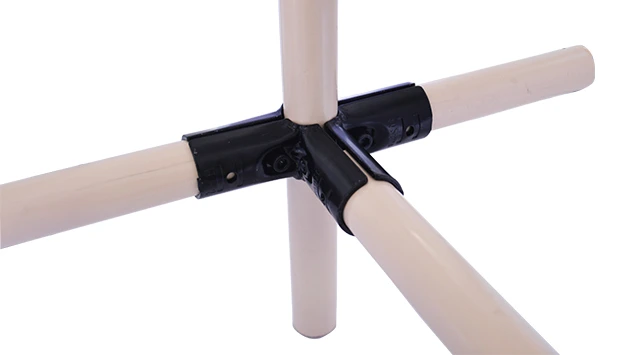
Four way lean pipe joint for 4 pcs 28MM lean pipe connection in straight angle, which used widely in workbench, flow rack, hand trolley frame connection.
If you've ever stepped into a manufacturing facility, warehouse, or assembly line, you've probably seen them—those modular workbenches, flow racks, and material carts that seem to effortlessly adapt to whatever task is at hand. Behind that flexibility lies a quiet hero: the lean pipe system. And at the heart of every sturdy, reliable lean pipe setup? The joints. Today, we're zooming in on a workhorse of the lean world: the four way straight lean pipe joint. Whether you're a small workshop owner looking to upgrade your setup or a plant manager tasked with trimming costs, choosing between OEM and aftermarket options can feel like navigating a maze. Let's break it down, no jargon, just real talk about which path might be right for your budget and your business.
First Things First: What Even Is a Four Way Straight Lean Pipe Joint?
Before we dive into the OEM vs. aftermarket debate, let's make sure we're all on the same page. A four way straight lean pipe joint is exactly what it sounds like: a connector that joins four lean pipes (or tubes) in a straight, cross-like formation. Think of it as the "cornerstone" of modular lean systems—without it, you can't build those multi-directional structures that make lean manufacturing so efficient. These joints are typically made from materials like steel, aluminum, or high-strength plastic, and they're designed to lock pipes securely in place while still allowing for quick adjustments. Whether you're building a workbench, a flow rack, or a turnover trolley, chances are you'll need a handful of these joints to keep everything stable and aligned.
Now, why does this matter for your budget? Because when you're scaling up or replacing worn-out parts, the cost of joints adds up fast. A single four way straight lean pipe joint might not seem pricey on its own, but multiply that by 50, 100, or 500 for a large project, and suddenly you're looking at a significant line item. That's where the choice between OEM (Original Equipment Manufacturer) and aftermarket comes into play.
OEM: The "Brand Name" Option
OEM parts are made by the same company that manufactured your original lean pipe system. So if you bought your initial setup from a big-name lean pipe supplier, their OEM four way straight lean pipe joints are the ones designed specifically to work with their pipes, accessories, and other components. Think of it like buying ink cartridges directly from HP for your HP printer—you know they'll fit perfectly, and the company stands behind their quality.
The Pros of OEM Four Way Straight Lean Pipe Joints
- Quality Assurance: OEM joints are built to the exact specs of the original system. That means tight tolerances, durable materials, and rigorous testing. If your operation relies on precision (say, in aerospace or medical device manufacturing), this can be a game-changer. You're less likely to deal with wobbly structures or joints that loosen over time.
- Perfect Compatibility: No guessing games here. OEM joints are designed to snap (or screw) into place with the brand's own lean pipes and accessories. If you've ever tried to mix and match parts from different suppliers and ended up with a "close enough" fit that just doesn't work, you know how valuable this is.
- Warranty and Support: Most OEM suppliers offer warranties on their parts—sometimes even extending the warranty of the entire system if you use their official components. Plus, if you run into issues, you can call their customer support team, and they'll know exactly what part you're talking about. No explaining, no "this isn't our product" runaround.
The Cons (Spoiler: It's Mostly About Cost)
The biggest downside of OEM? Price. Because you're paying for the brand name, the strict quality control, and the peace of mind of compatibility, OEM four way straight lean pipe joints are almost always more expensive than aftermarket options. For example, a single OEM joint might cost $8–$12, while an aftermarket one could be as low as $3–$5. If you're working with a tight budget or don't need military-grade precision, this price gap can be hard to justify.
Another potential con? Lead times. OEM suppliers often produce parts in batches, so if you need a large order quickly, you might be stuck waiting weeks for them to restock. This can throw a wrench in your production schedule if you're in a hurry to replace broken parts or expand your setup.

Aftermarket: The "Budget-Friendly Alternative"
Aftermarket four way straight lean pipe joints are made by third-party manufacturers—not the original company that built your system. These suppliers specialize in creating "generic" or "compatible" parts that work with multiple brands of lean pipes and accessories. Think of them as the "off-brand" cereal of the lean world: not the name you're used to, but often just as good (and cheaper).
The Pros of Aftermarket Four Way Straight Lean Pipe Joints
- Cost Savings: This is the big one. Aftermarket joints are almost always cheaper than OEM, sometimes by 50% or more. For small businesses or startups, this can be a lifesaver. Imagine needing 100 joints for a new workbench setup—with OEM, that's $800–$1200; with aftermarket, it could be $300–$500. That's money you can reinvest in other areas, like better tools or employee training.
- Availability: Aftermarket suppliers often keep large inventories, so you can get your hands on joints quickly—sometimes even same-day or next-day shipping. This is a huge plus if you're in a pinch and can't afford to wait for OEM restocks.
- Flexibility: Many aftermarket suppliers design their joints to be compatible with multiple pipe sizes and brands. So if you have a mix of lean pipes from different manufacturers (maybe you upgraded from steel to aluminum, for example), an aftermarket joint might work with both, saving you the hassle of buying all-new parts.
The Cons (Yes, There Are Trade-Offs)
The biggest risk with aftermarket joints is quality inconsistency. Since anyone can make aftermarket parts, the quality can vary widely from supplier to supplier. Some aftermarket joints are nearly as durable as OEM, using similar materials and manufacturing processes. Others, though, might cut corners—using thinner steel, weaker plastic, or looser tolerances. A poorly made joint can lead to wobbly structures, which isn't just annoying; it can be a safety hazard for your team.
Compatibility is another potential issue. While many aftermarket suppliers claim their joints work with "most" lean pipes, there's no guarantee they'll fit your specific system perfectly. You might end up with joints that are slightly too loose (causing pipes to slip) or slightly too tight (making assembly a frustrating, time-consuming process). To avoid this, it's crucial to buy from a reputable aftermarket lean pipe supplier—one with good reviews and a track record of making compatible parts.
Finally, aftermarket suppliers rarely offer warranties as robust as OEMs. You might get a 30-day guarantee, but if a joint fails after six months, you're probably on your own. This is something to keep in mind if you're building structures that will see heavy daily use.

OEM vs. Aftermarket: A Side-by-Side Breakdown
| Factor | OEM Four Way Straight Lean Pipe Joints | Aftermarket Four Way Straight Lean Pipe Joints |
|---|---|---|
| Cost | $8–$12 per joint | $3–$5 per joint |
| Quality | Consistently high; strict manufacturing standards | Varies; depends on the supplier (good to excellent) |
| Compatibility | Guaranteed with original system | Compatible with most systems (verify with supplier) |
| Lead Time | Longer (weeks for large orders) | Shorter (often days or same-day) |
| Warranty | 6–12 months (sometimes longer) | 30–90 days (rarely longer) |
So, Which One Should You Choose?
The answer depends on your specific needs. Let's break it down into scenarios:
Choose OEM If…
- You need maximum precision and durability . If your operation involves heavy loads (think 500+ pounds) or strict safety regulations (like in automotive or medical manufacturing), OEM joints are worth the splurge. The last thing you want is a joint failing and causing downtime or, worse, an accident.
- You're building a brand-new system from scratch with one supplier. If you've already invested in a full lean system from a single OEM (say, all aluminum profile accessories and pipes from Brand X), sticking with their OEM joints ensures everything works together seamlessly. Mixing brands here could lead to compatibility headaches.
- You have no budget constraints and value peace of mind over cost savings. If money isn't an issue, OEM joints are the "safe" choice—you know what you're getting, and you have the supplier's support if something goes wrong.
Choose Aftermarket If…
- You're on a tight budget and need to stretch your dollar. If you're a small business or startup, the cost savings from aftermarket joints can free up cash for other essentials, like tools, training, or marketing.
- You need parts quickly . If a joint breaks in the middle of a production run and you can't wait weeks for OEM parts, aftermarket suppliers are often your best bet for same-day or next-day shipping.
- You're working with mixed-brand systems . If you have lean pipes from multiple suppliers (maybe you inherited some steel pipes and bought new aluminum ones), a reputable aftermarket joint is more likely to work with both than an OEM one tied to a single brand.
- You don't need industrial-grade durability . If your setup is for light use (like a small workshop bench or a home-based assembly line), aftermarket joints are more than sturdy enough. They might not last 10 years, but they'll get the job done for 3–5, which is often all you need.
Pro Tips for Buying Aftermarket Joints (Without Getting Burned)
If you've decided aftermarket is the way to go, here are a few tips to ensure you get quality parts without overspending:
- Stick to reputable suppliers. Look for aftermarket lean pipe suppliers with good reviews on platforms like Google or industry forums. Avoid random eBay or Amazon sellers with no ratings—you don't want to end up with joints that snap after a week.
- Ask for samples first. Most aftermarket suppliers will send you a few sample joints for free or a small fee. Test them out! Assemble a mini-structure, shake it around, and see if the joints hold tight. If they loosen or feel flimsy, move on to another supplier.
- Check material specs. Good aftermarket joints are made from materials like galvanized steel, aluminum, or reinforced plastic. Avoid joints made from cheap, thin metal or brittle plastic—they won't stand up to regular use.
- Buy in bulk (but not too bulk). Many aftermarket suppliers offer discounts for large orders, so if you know you'll need 50+ joints, buy them all at once to save even more. Just don't overbuy—if you change your setup later, you might end up with unused joints collecting dust.
Final Thoughts: It's All About Balance
At the end of the day, there's no "one size fits all" answer to the OEM vs. aftermarket debate. Both options have their place, and the right choice depends on your budget, your needs, and your tolerance for risk. If you need precision and durability and can afford it, OEM four way straight lean pipe joints are worth the investment. If you're on a budget, need parts quickly, or have a mixed-brand system, aftermarket joints are a smart, cost-effective alternative—just do your homework to avoid duds.
Remember, the goal of lean manufacturing is to eliminate waste—including wasteful spending. By choosing the right joints for your setup, you're not just saving money; you're building a more efficient, flexible workspace that grows with your business. And isn't that the whole point of lean, anyway?