- Company Articles
- Products and Technology
- Solution
- Building Flexible Production Lines with 4040E EU Standard Aluminum Profile

Building Flexible Production Lines with 4040E EU Standard Aluminum Profile
Related Product
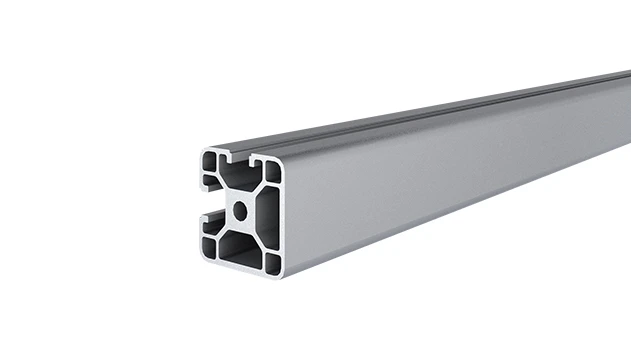
4040E EU Standard Aluminum Profile
4040E is a 4.00x4.00 CM fractional 40 series square extrusion T-slot profile with two side open T-slots, two side with closed face, each side with 4.00cm face. The profile has align-a-grooves to assist in aligning connecting profiles.
The Modern Manufacturing Challenge: Rigidity vs. Flexibility
Walk into any manufacturing facility today, and you'll likely hear the same refrain from floor managers and operations teams: "We need to adapt faster." Whether it's a sudden surge in demand for a new product, a last-minute design change, or the need to scale down production during slower seasons, rigidity in production lines has become the silent enemy of efficiency. Traditional production setups—often built with fixed steel structures, welded frames, and one-size-fits-all workstations—lock businesses into inflexible processes. When change is needed, it means costly downtime, expensive reconfigurations, and teams stuck waiting for custom parts or contractors to rearrange the line.
This is where the shift toward modular, adaptable systems has gained momentum. Manufacturers are no longer asking, "How can we build a line that works today?" but rather, "How can we build a line that grows, changes, and evolves with us?" The answer, for many forward-thinking operations, lies in 4040E EU standard aluminum profile —a material that's redefining what's possible in flexible production design. But what makes this aluminum profile so special, and how does it transform the way we build production lines? Let's dive in.
What Is 4040E EU Standard Aluminum Profile?
At first glance, 4040E aluminum profile might look like just another metal bar, but its design is a masterclass in practical engineering. The "4040" refers to its dimensions: 40mm in width and 40mm in height, making it a versatile middleweight option for structural frames. The "E" denotes its compliance with EU standards, ensuring consistent quality, precision, and compatibility across accessories and components. Unlike generic aluminum extrusions, 4040E profiles feature a T-slot design along all four sides—a simple yet genius detail that turns a basic metal bar into a building block for endless configurations.
Imagine T-slots as the "universal language" of modular design. They allow you to attach, detach, and reposition components without welding, drilling, or cutting. Need to add a shelf to a workstation? Slide a bracket into the T-slot and secure it with a bolt. Want to adjust the height of a conveyor? Loosen the fasteners, reposition the profile, and tighten—done. This flexibility isn't just convenient; it's revolutionary for production lines that need to pivot quickly.
But 4040E isn't just about T-slots. Its aluminum composition strikes the perfect balance between strength and weight: strong enough to support heavy equipment (think workbenches loaded with tools or conveyor systems moving bulk materials) but lightweight enough for teams to reconfigure without heavy machinery. It's also resistant to corrosion, making it suitable for both indoor and controlled outdoor environments, and its smooth, anodized finish reduces friction—ideal for integrating moving parts like roller tracks or sliding shelves.

Key Features of 4040E: Why It Stands Out
To understand why 4040E has become a staple in modern manufacturing, let's break down its standout features:
- Modularity at Its Core: The T-slot design isn't just a feature—it's the foundation of 4040E's flexibility. Pair it with aluminum profile accessories like brackets, joints, hinges, and clamps, and you can build everything from simple workbenches to complex multi-tiered material racks. No two production lines are the same, and 4040E doesn't force them to be.
- Strength Without the Bulk: Aluminum's high strength-to-weight ratio means 4040E frames can support heavy loads (up to 200kg per linear meter in some configurations) without the heft of steel. This makes reconfigurations easier—no need for cranes or forklifts when a team of two can disassemble and reassemble a workstation in hours, not days.
- Precision Engineering: EU standards ensure tight tolerances, so every 4040E profile and accessory fits together seamlessly. Whether you're ordering from a local supplier or a global distributor, you can trust that a bracket from one batch will work with a profile from another. This consistency eliminates the guesswork and delays that come with mismatched parts.
- Cost-Efficiency Over Time: While the upfront cost of 4040E might be slightly higher than basic steel, its longevity and reusability make it a smarter investment. Unlike welded steel frames, which are often scrapped when reconfigured, 4040E profiles can be repurposed for new projects. A workstation that once assembled circuit boards can be disassembled and rebuilt as a packaging station with minimal new parts.
Building Your Flexible Production Line: From Workbench to Roller Track
So, how do you turn a stack of 4040E profiles and accessories into a fully functional, flexible production line? Let's walk through a common scenario: building a modular assembly line for small electronic components, complete with workstations, material flow systems, and adjustable shelving. This example will highlight how 4040E integrates with key components like workbench setups and roller track systems.
Step 1: Designing the Workstation Base
Every production line starts with the workbench—the heart of daily operations. With 4040E, building a workstation isn't about ordering a prefab table; it's about customizing to your team's needs. For example, an electronics assembly station might require a flat surface for circuit boards, integrated ESD (electrostatic discharge) protection, and shelves for tools and components. Using 4040E profiles as the frame, you can adjust the height to match ergonomic standards (no more strained backs from poorly positioned tables!), add a honeycomb panel top for ESD safety, and attach side shelves using L-brackets and T-slot nuts. Need to add a monitor arm or a tool holder later? Simply slide the accessory into the T-slot and secure it—no drilling required.
Step 2: Integrating Material Flow with Roller Track
A smooth production line relies on seamless material movement, and this is where roller track systems shine—especially when paired with 4040E. Roller tracks use gravity or motorized rollers to move parts, bins, or finished products between workstations, reducing manual handling and speeding up workflows. The beauty of 4040E here is its ability to support roller tracks of all types: aluminum, steel, or plastic, with varying roller sizes (1 inch, 0.5 inch) to match the weight and size of your materials.
For instance, a light-duty roller track with 0.5-inch swivel balls might handle small component bins, while a heavy-duty steel roller track with 1-inch wheels could move larger assemblies. Attaching the roller track to the 4040E frame is straightforward: use specialized brackets (like "roller track placon mount for aluminum profile flat" or "center support brackets") that slide into the T-slots, ensuring the track is level and secure. And if you need to reposition the track—say, to shorten the distance between two workstations—simply loosen the brackets, adjust, and retighten. It's that simple.
Step 3: Adding Customization with Aluminum Profile Accessories
The real magic of 4040E lies in the details, and aluminum profile accessories are what bring those details to life. Let's say your team needs a mobile workstation that can be moved to different parts of the line. Add casters (via caster mounting plates that fit into the T-slots) for mobility. Need to separate tools from components? Attach dividers using slot covers or partition brackets. Even small touches—like end caps to smooth sharp edges or rubber strips to dampen noise—make the workstation safer and more user-friendly.
Accessories also future-proof the line. For example, if you later decide to automate part of the process, you can add motor mounts for conveyor belts or sensor brackets for quality control cameras—all without rebuilding the entire frame. This adaptability is why 4040E lines are often called "grow-with-you" systems.
Traditional vs. 4040E Production Lines: A Comparison
| Feature | Traditional Steel/Welded Lines | 4040E Aluminum Profile Lines |
|---|---|---|
| Reconfiguration Time | Weeks (requires welding, cutting, custom parts) | Hours to days (modular assembly with hand tools) |
| Cost of Change | High (scrap metal, labor, downtime) | Low (reuse profiles, minimal new accessories) |
| Ergonomics | Fixed (one-size-fits-all height/position) | Adjustable (height, angle, and layout tweaks) |
| Weight | Heavy (requires machinery for movement) | Lightweight (team-friendly reconfigurations) |
| Longevity | Short (prone to rust, difficult to repair) | Long (corrosion-resistant, replaceable parts) |
Real-World Applications: Where 4040E Shines
4040E isn't just a theoretical solution—it's proven in factories, warehouses, and workshops worldwide. Let's look at a few examples:
- Automotive Component Assembly: A Tier 1 auto parts supplier needed to switch between assembling door handles for two car models—one compact, one SUV. With a traditional steel line, this meant stopping production for 2 days to swap out fixtures. Using 4040E workbenches and roller tracks, they reconfigured the line in 4 hours by adjusting shelf heights, repositioning tool holders, and swapping roller track guides to match the larger SUV components. Downtime dropped by 90%.
- Electronics Manufacturing: A smartphone repair facility struggled with space constraints, as workstations for screen repairs, battery replacements, and diagnostics all required different setups. By building modular 4040E workbenches, they could collapse unused stations during slow periods and expand during peak times. Roller tracks between stations ensured parts (screens, batteries, tools) flowed smoothly without manual carrying, cutting errors by 25%.
- Food Packaging: A snack company needed to adapt its packaging line for seasonal flavors—think switching from 100g bags to 50g holiday-themed packs. With 4040E frames supporting adjustable conveyor guides and roller tracks, they adjusted the line width and speed in under an hour, avoiding the usual 3-day shutdown for retooling.
Choosing the Right Partner: The Role of a Lean System Supplier
Building a flexible production line with 4040E isn't just about buying profiles and accessories—it's about partnering with a lean system supplier who understands your unique needs. A good supplier does more than sell parts; they act as a consultant, helping you design a line that aligns with your workflow, budget, and long-term goals. Here's what to look for:
- Depth of Inventory: They should stock not just 4040E profiles but a full range of aluminum profile accessories—from basic brackets to specialized roller track connectors and ESD-safe components. This ensures you can get what you need quickly, without waiting for backorders.
- Customization Support: While 4040E is modular, some projects need custom parts (e.g., specialized workbench tops or unique roller track layouts). A reputable supplier will offer design assistance and prototyping to turn your vision into reality.
- Technical Expertise: Look for suppliers with a team that understands manufacturing workflows. They should be able to recommend configurations that improve efficiency—like where to place roller tracks for optimal material flow or how to design workstations to reduce waste.
- Quality Assurance: Since 4040E is EU-standard, ensure the supplier's products meet certifications for strength, corrosion resistance, and dimensional accuracy. Subpar profiles or accessories can compromise the line's stability and safety.
Remember, your supplier isn't just a vendor—they're an extension of your team. The right partner will help you avoid common pitfalls (like overdesigning a workstation or underestimating roller track load capacity) and ensure your line delivers on its promise of flexibility.
The Future of Production: Why 4040E Is Here to Stay
As manufacturing continues to evolve—with trends like small-batch production, mass customization, and agile manufacturing gaining ground—flexibility will only grow more critical. 4040E EU standard aluminum profile isn't just a tool for today; it's a foundation for tomorrow. Its modularity, strength, and cost-efficiency make it adaptable to whatever the future holds, whether that's integrating AI-driven robotics, supporting green manufacturing initiatives (aluminum is highly recyclable), or scaling for global expansion.
For factory managers, the message is clear: rigid lines belong in the past. The future belongs to systems that move as fast as your business does. And for many, that future starts with a simple aluminum profile: 4040E.
Final Thoughts: Building More Than a Line—Building Resilience
At the end of the day, a production line built with 4040E is more than just a set of workbenches and conveyor belts. It's a statement of resilience—a commitment to adapt, grow, and thrive in an unpredictable market. It's about empowering your team to work smarter, not harder, by giving them tools that bend, not break, when change comes. And it's about investing in a system that pays dividends not just in efficiency today, but in flexibility for years to come.
So, if you're ready to say goodbye to rigid lines and hello to a production setup that keeps up with your ambition, start with 4040E. Pair it with quality aluminum profile accessories, a trusted lean system supplier, and a team willing to innovate, and you'll build more than a production line—you'll build a competitive edge.