- Company Articles
- Products and Technology
- Application Cases
- Bulk Applications: Lean Pipe Clamp B in Large-Scale Manufacturing Plants

Bulk Applications: Lean Pipe Clamp B in Large-Scale Manufacturing Plants
Related Product
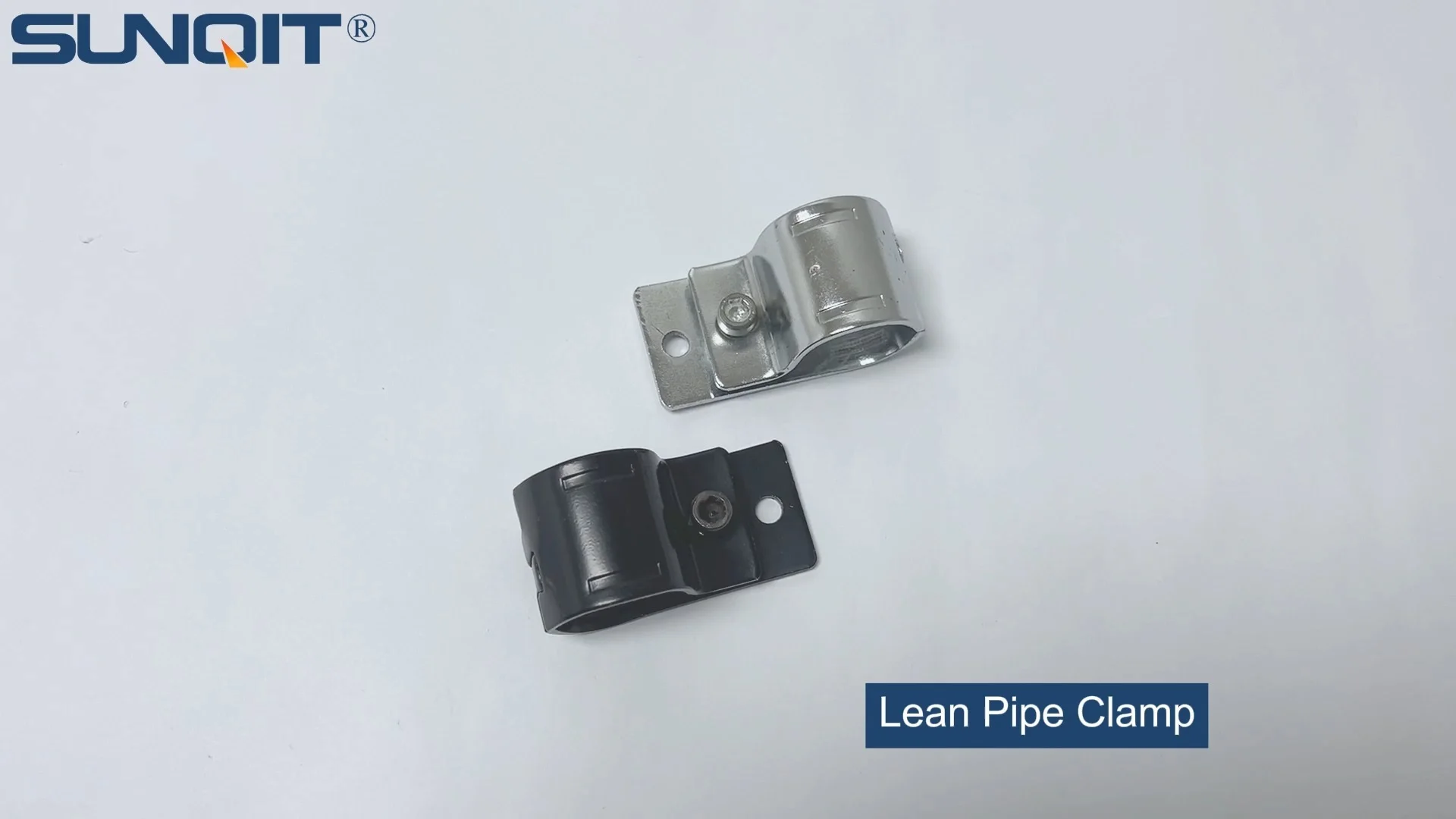
Lean Pipe Clamp
Lean pipe clamp is used for rack system hang monitor or other panel for workbenck, flowrack in production daily use.
Walk into any large-scale manufacturing plant, and you'll quickly realize that the magic of production isn't just in the machines—it's in the infrastructure that holds everything together. From the workbenches where operators assemble intricate components to the flow racks that shuttle materials across the floor, every structure plays a silent but critical role in keeping the line moving. In this chaos of nuts, bolts, and deadlines, there's one unsung hero that often goes unnoticed: the lean pipe clamp. Specifically, Lean Pipe Clamp B has emerged as a game-changer for manufacturers aiming to balance flexibility, durability, and cost-effectiveness. But why does this small component matter so much in bulk operations? Let's dive in.
What Exactly Is Lean Pipe Clamp B?
Before we explore its bulk applications, let's get clear on what Lean Pipe Clamp B is. At its core, it's a connector designed to join lean pipes—hollow tubes made of steel, aluminum, or plastic—into rigid, customizable structures. Unlike traditional clamps that require welding, drilling, or specialized tools, Lean Pipe Clamp B uses a simple tightening mechanism (often a hex key or hand knob) to secure pipes at various angles. This might sound trivial, but in a factory where every second counts, the ability to assemble, disassemble, and reconfigure structures without stopping production is revolutionary.
What sets Lean Pipe Clamp B apart from other clamps? For starters, its versatility. It works with multiple pipe materials, including the popular aluminum lean pipe, and can pivot to create 90-degree angles, T-junctions, or even complex multi-pipe assemblies. Its design also prioritizes durability: made from high-grade steel with a rust-resistant coating, it withstands the wear and tear of daily use—think heavy loads, constant vibration, and exposure to coolants or lubricants. But perhaps most importantly, it's engineered for bulk use . In large plants that need hundreds (or thousands) of clamps to build workbenches, flow racks, and material trolleys, consistency is key. Lean Pipe Clamp B delivers that consistency, ensuring every joint is as strong and reliable as the last.
Why Bulk Matters in Large-Scale Manufacturing
Large-scale manufacturing isn't just about making more products—it's about making them efficiently, safely, and adaptably. When you're running a plant with thousands of square feet of production space, hundreds of workers, and dozens of assembly lines, standardization is your best friend. Imagine ordering clamps from multiple suppliers, each with slightly different dimensions or tightening mechanisms. One clamp might fit a 28mm pipe, another 30mm; one might loosen under heat, another rust after a month. The result? Downtime, inconsistent structures, and frustrated teams.
This is where bulk purchasing of Lean Pipe Clamp B shines. By sourcing hundreds or thousands of the same clamp from a trusted lean pipe supplier , manufacturers eliminate variability. Every clamp fits the same pipes, uses the same tools, and performs the same way—whether it's used on Line A's workbench or Line B's flow rack. This consistency reduces training time (new operators don't need to learn multiple clamp types) and simplifies maintenance (spare parts are universal). Plus, bulk orders often come with cost savings—suppliers offer discounts for large quantities, which adds up quickly when you're outfitting an entire plant.

Real-World Bulk Applications: Where Lean Pipe Clamp B Shines
Now, let's get practical. How does Lean Pipe Clamp B actually get used in bulk in large plants? Let's break down three key applications where its impact is most felt.
1. Building Custom Lean Pipe Workbenches
Workbenches are the heart of any assembly operation. Each station might need a unique setup: some require tool holders, others shelves, and a few need ESD (electrostatic discharge) protection to safeguard sensitive electronics. Here's where Lean Pipe Clamp B becomes indispensable. Instead of buying pre-made workbenches that rarely fit perfectly, manufacturers can build custom lean pipe workbench setups using bulk clamps and pipes.
Consider a smartphone assembly plant. Each workbench must hold a specific set of tools: tweezers, screwdrivers, and magnifying glasses within arm's reach, plus a small shelf for spare parts. With Lean Pipe Clamp B, the plant can order 500 clamps, 200 aluminum lean pipes, and a handful of accessories (like tool hooks and ESD mats). Workers assemble each bench on-site, adjusting heights and adding components as needed. If a new phone model requires a taller bench, the clamps are loosened, pipes are rearranged, and the structure is re-tightened—no welding, no waste, no delays. In bulk, this approach cuts costs by 30% compared to pre-built benches, according to a 2024 study by the Manufacturing Efficiency Institute.
2. Constructing Flow Racks for Material Handling
Material flow is the lifeblood of manufacturing. If parts get stuck in transit, the entire line grinds to a halt. Flow racks —tilted racks with roller tracks that let materials slide forward as items are removed—solve this problem. But building flow racks in bulk requires a connector that can handle both weight and precision. Enter Lean Pipe Clamp B.
A typical auto parts plant might need 50 flow racks to supply different assembly stations with gears, bolts, and gaskets. Each rack has multiple levels, angled at 5-10 degrees to ensure smooth rolling. Using Lean Pipe Clamp B, workers can attach roller tracks (another key component) to vertical support pipes, adjusting the angle with precision. The clamps' tight grip ensures the tracks don't shift under the weight of heavy bins, even as operators pull materials multiple times per minute. And when the plant reconfigures its layout (a common occurrence in agile manufacturing), the racks are disassembled, and the clamps are reused—no need to buy new ones. This reusability is a sustainability win, too: one plant reported reducing waste by 45% after switching to Lean Pipe Clamp B for flow rack construction.
3. Assembling Turnover Trolleys and Roller Tracks
Beyond workbenches and flow racks, large plants rely on turnover trolleys to move materials between departments. These trolleys need to be sturdy enough to carry 200+ kg loads but lightweight enough for a single worker to push. Again, Lean Pipe Clamp B delivers. By connecting aluminum lean pipes and casters (via caster accessories), manufacturers can build trolleys that balance strength and mobility.
Take a pharmaceutical packaging plant, for example. Trolleys here transport delicate glass vials, so stability is non-negotiable. Using bulk Lean Pipe Clamp B, the plant constructs trolleys with reinforced corners (thanks to the clamp's ability to join three pipes at once) and added cross-bracing for extra support. The result? Trolleys that glide smoothly across the floor without wobbling, even when fully loaded. And when vial sizes change, the trolleys are modified by swapping out pipes—no need for a complete overhaul. It's this adaptability that makes Lean Pipe Clamp B a favorite among plant managers who hate being locked into rigid, one-size-fits-all solutions.

The Case for Bulk: Why Thousands of Clamps Are Better Than a Few
At this point, you might be thinking: "Why not just buy clamps as needed?" For small workshops, that might work. But in large-scale manufacturing, bulk purchasing of Lean Pipe Clamp B offers three unbeatable advantages:
Cost Efficiency
It's simple economics: buying 10,000 clamps at once costs less per unit than buying 100 at a time. Suppliers often offer tiered pricing, with discounts kicking in at 500+ units. For a plant building 200 workbenches (each requiring 15-20 clamps), that's 3,000-4,000 clamps per project—bulk orders can slash costs by 15-20%. Over time, these savings add up, freeing up budget for other critical investments like new machinery or worker training.
Reduced Downtime
Nothing kills productivity faster than running out of essential parts. Imagine a team midway through building a new flow rack only to realize they're short on clamps. By keeping bulk stock on hand, plants avoid these delays. A study by the Lean Manufacturing Association found that plants with bulk clamp inventory reduced setup time for new structures by 60% compared to those ordering on-demand.
Standardization Across Teams
In large plants, different shifts or departments might have their own ways of doing things. Without standardized tools, this can lead to inconsistent structures—one team's workbench might be wobbly, another's rock-solid. Bulk Lean Pipe Clamp B ensures everyone uses the same connector, with the same torque requirements and load capacities. This uniformity not only improves safety (no weak joints) but also makes it easier for teams to collaborate—if the night shift modifies a trolley, the day shift knows exactly how to adjust it back.

Comparing Lean Pipe Clamp B to Other Connectors: A Quick Table
| Feature | Lean Pipe Clamp B | Traditional Welded Joints | Plastic Snap-On Clamps |
|---|---|---|---|
| Assembly Time | 5-10 seconds per joint (no tools needed for hand-tightened versions) | 5-10 minutes per joint (requires welding equipment) | 10-15 seconds per joint (but prone to slipping) |
| Reusability | Unlimited (can be disassembled and reused) | None (permanent once welded) | Limited (plastic weakens after 3-5 uses) |
| Load Capacity | Up to 500 kg per joint (with steel pipes) | High, but fixed (cannot adjust for higher loads) | Up to 100 kg per joint (risk of breaking under strain) |
| Bulk Cost Per Unit | $1.20-$1.80 (depending on quantity) | $3.50-$5.00 (including labor and materials) | $0.50-$0.80 (but higher replacement costs) |
| Best For | Large-scale, adaptable manufacturing plants | Static, permanent structures (e.g., warehouse shelving) | Light-duty, temporary setups (e.g., trade show displays) |
Choosing the Right Lean Pipe Supplier for Bulk Orders
Of course, none of this matters if you're not sourcing your Lean Pipe Clamp B from a reliable supplier. When ordering in bulk, look for a partner that offers:
- Consistent Quality: Ask for material certificates to ensure clamps meet industry standards (e.g., ISO 9001). A good supplier will test samples for tensile strength and corrosion resistance.
- Flexible Lead Times: Large orders shouldn't mean waiting months. The best suppliers can fulfill bulk requests in 2-4 weeks, with rush options if needed.
- Technical Support: Even with a simple product like a clamp, questions arise. Does the supplier offer guidance on load capacities or assembly best practices? A responsive support team can save you from costly mistakes.
- Customization Options: While standard Lean Pipe Clamp B works for most cases, some plants need specialized finishes (e.g., ESD-safe coatings) or sizes. A supplier willing to customize adds extra value.
Remember, your supplier isn't just a vendor—they're a partner in your plant's efficiency. Taking the time to vet them upfront pays off in smoother operations down the line.
The Future of Lean Manufacturing: Why Clamps Still Matter
As manufacturing evolves—with automation, AI, and IoT taking center stage—it's easy to overlook the "small stuff" like clamps. But the truth is, even the most advanced factories still rely on physical structures to support their digital tools. Lean Pipe Clamp B, with its focus on flexibility and bulk usability, aligns perfectly with the future of manufacturing: agile, sustainable, and people-centric.
Consider this: a recent survey of plant managers found that 78% plan to increase their use of modular structures over the next five years. Why? Because consumer demands change faster than ever, and plants need to pivot quickly. A phone case manufacturer might switch from plastic to metal frames overnight; a medical device plant might scale up production of a new tool during a health crisis. In these scenarios, rigid, fixed infrastructure becomes a liability. Lean Pipe Clamp B, by enabling quick reconfiguration, turns that liability into an asset.
Final Thoughts: The Power of the "Small" Component
At the end of the day, Lean Pipe Clamp B is more than just a connector. It's a symbol of what modern manufacturing does best: finding elegance in simplicity. In a world of over-engineered solutions, this small clamp proves that sometimes the most impactful innovations are the ones that make life easier for the people on the floor—whether that's an operator assembling a workbench or a manager trying to cut costs.
So the next time you walk through a manufacturing plant, take a closer look at those workbenches and flow racks. Chances are, they're held together by Lean Pipe Clamp B—quietly doing its job, in bulk, to keep the world of production moving forward. And in manufacturing, that's the highest compliment of all.