- Company Articles
- Products and Technology
- Procurement Guidelines
- Buying Guide: What to Look for in 40 Aluminum Roller Track Green Suppliers

Buying Guide: What to Look for in 40 Aluminum Roller Track Green Suppliers
Related Product
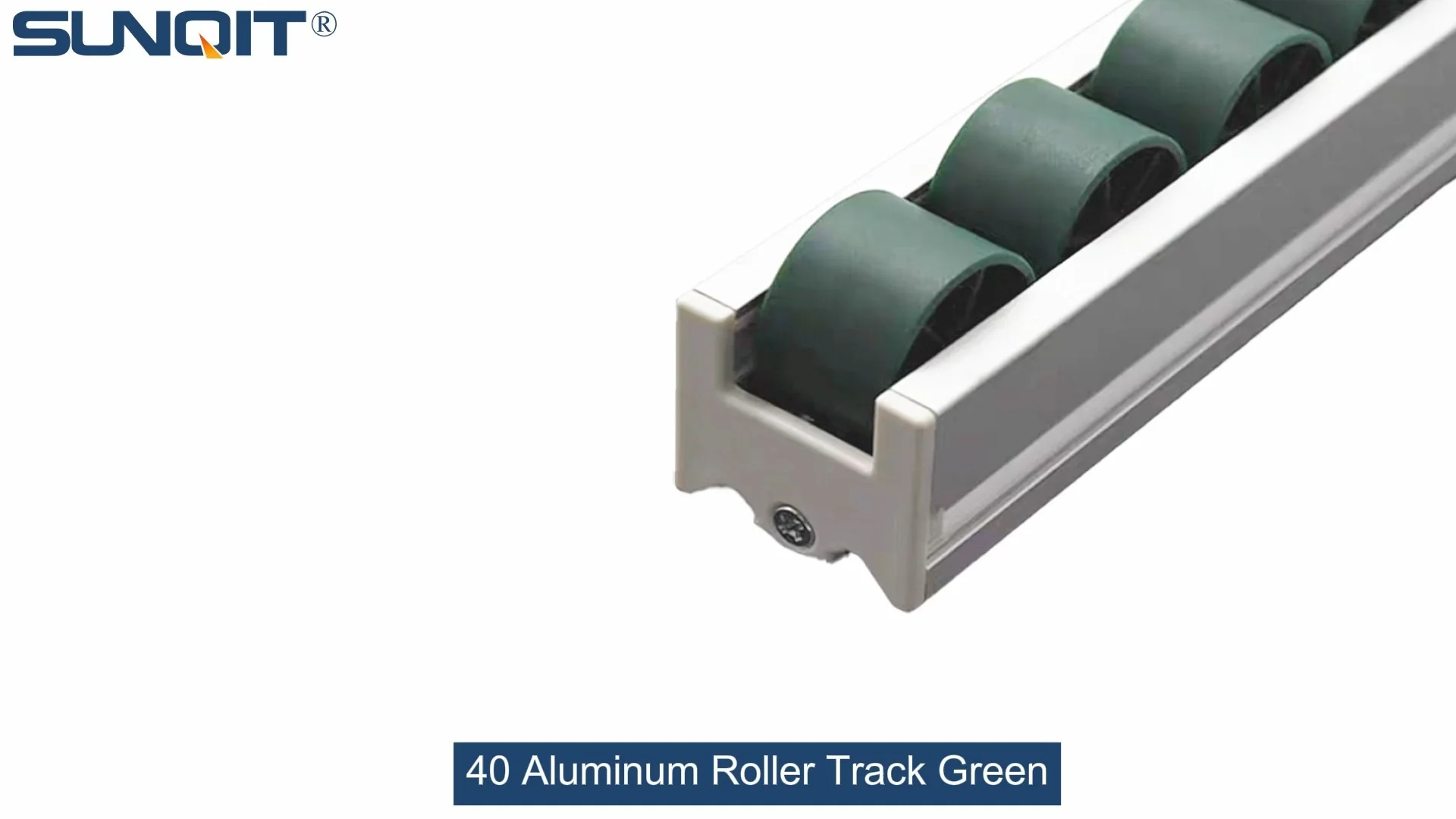
40 Aluminum Roller Track Green
Durable and smooth-running modular roller rails. The system is fully assembled. The roller rail profile contains plastic rollers mounted on steel axles. Aluminum frame with plastic wheel make it anti corrosion,and material convey more smooth.
Buying Guide: What to Look for in 40 Aluminum Roller Track Green Suppliers
If you've ever stood in a busy production line or walked through a bustling warehouse, you know how much of a difference smooth, reliable material handling makes. Every stuck roller, every wobbly track, every mismatched part can throw off the entire workflow—costing time, money, and frustration. That's why choosing the right supplier for your 40 aluminum roller track green isn't just a purchase; it's an investment in your operation's efficiency and longevity. Whether you're building a new flow rack system, upgrading an existing conveyor line, or optimizing component feeding for your 3C assembly line, the supplier you pick will shape how well your system performs for years to come.
1. Why 40 Aluminum Roller Track Green Is a Must-Have for Modern Operations
Let's start with the basics: what exactly is 40 aluminum roller track green, and why does it matter? The "40" refers to the standard width (40mm) that fits most industrial material handling systems. The aluminum construction makes it lightweight yet sturdy—perfect for supporting heavy loads without adding unnecessary bulk. The green coating isn't just for aesthetics; it's a scratch-resistant, corrosion-proof finish that stands up to the wear and tear of daily use in factories and warehouses.
This track is a workhorse in lean manufacturing systems. It's used in flow racks to let components slide easily to workers, in conveyors to move products between stations, and in turnover trolleys to transport materials across the floor. For industries like 3C assembly, where speed and precision are critical, the smooth rollers reduce friction and prevent jams, keeping production lines moving. For medical device manufacturers, the aluminum material is easy to clean and sanitize, meeting strict hygiene standards. And for warehouse operators, the durability means fewer replacements and less downtime.
2. Key Factors to Consider When Choosing a Supplier
2.1 Product Quality: The Foundation of Reliability
When it comes to industrial components, quality is non-negotiable. A low-quality track can lead to frequent breakdowns, which in turn cause production delays and increased maintenance costs. So, what should you look for in terms of quality?
First, check the aluminum grade. The best suppliers use 6063-T5 aluminum, a high-strength alloy that's resistant to bending and corrosion. This grade is widely used in industrial applications because it balances durability and workability. Next, inspect the green coating. It should be uniform, without bubbles or cracks, and able to withstand scratches from heavy parts. Ask the supplier about the coating process—powder coating is preferable for industrial use because it's more durable than paint.
Then, look at the rollers. They should spin smoothly without any noise or friction. For sensitive industries like 3C assembly, ESD-safe rollers are a must to prevent static damage to components. The load capacity is another important factor—make sure the track can handle the weight of your parts. A good 40 aluminum roller track green should support at least 50kg per meter, but some suppliers offer heavier-duty options for larger items like automotive parts.
2.2 Customization: Tailored to Your Exact Needs
No two operations are the same. Your production line might have unique space constraints, or your warehouse might need tracks that fit into existing flow racks. That's why customization is a key factor to consider. A good supplier won't just sell you a standard track—they'll work with you to design a solution that fits your specific requirements.
What kind of customization options should you ask for? Custom lengths are a given—you don't want to cut tracks yourself and risk damaging the coating. ESD-safe designs are essential for 3C and medical industries. Side guides or end stops can prevent parts from falling off the track. Some suppliers even offer custom coatings for specific environments, like high-temperature or chemical-resistant finishes.
For example, if you're in the medical device industry, you might need tracks that are compatible with cleanroom standards. A supplier with strong customization skills can adjust the design to meet those requirements. If you're in the automotive industry, you might need tracks that can handle heavy engine parts—suppliers can increase the load capacity by using thicker aluminum or stronger rollers.
2.3 Complementary Products: One-Stop Shopping for Efficiency
40 aluminum roller track green rarely works alone. It's part of a larger system that includes flow racks, conveyors, workbenches, and aluminum profile accessories. Choosing a supplier that offers a full range of complementary products saves you time and ensures compatibility. You won't have to worry about mismatched parts or dealing with multiple vendors.
What complementary products should you look for? Let's list them:
- Aluminum profile accessories: Connectors, brackets, end caps that help you attach the track to other components.
- Flow rack parts: (flow bars), shelves, and supports to build complete flow rack systems.
- Conveyor components: Rollers, belts, and motors to integrate the track into a larger conveyor line.
- Caster wheels: For mobile flow racks or trolleys that use the track.
- Workbench accessories: Table tops, legs, and drawers to create a complete workstation.
A supplier with a wide range of these products will make your life easier. For example, if you need to build a flow rack system, you can get the 40 aluminum roller track green, flow bars, shelves, and connectors all from one place. This ensures that all parts fit together perfectly and reduces the time you spend coordinating orders.
2.4 Industry Experience: Expertise That Matters
Industrial material handling is a specialized field. The needs of a 3C assembly line are vastly different from those of a medical device warehouse. So, when choosing a supplier, look for one that has experience in your specific industry.
How do you check a supplier's industry experience? Ask them about their past projects. Have they worked with companies in your sector? Can they show you case studies or references? For example, if you're in the 3C industry, a supplier that has worked with Apple or Samsung contractors will understand your needs better than one that only serves the food industry.
Industry experience also means the supplier knows about the regulations and standards in your field. For medical device manufacturers, this includes FDA guidelines for cleanroom equipment. For automotive companies, it includes ISO/TS 16949 standards for quality management. A supplier with industry-specific expertise will help you comply with these standards and avoid costly mistakes.
2.5 After-Sales Support: Peace of Mind for the Long Run
Even the best products can have issues. A roller might break after heavy use, or a track might get damaged during installation. That's why after-sales support is critical. You need a supplier that will stand behind their products and help you when you need it.
What should you expect from after-sales support? First, a clear warranty. Most reputable suppliers offer a 12-month warranty, but some offer longer (like 18 or 24 months). Second, responsive customer service. The supplier should get back to you within 24 hours of your inquiry. Third, technical assistance. They should have experts who can help you with installation, troubleshooting, or system optimization.
For example, if you're having trouble installing the track, the supplier should send a technician to your site or provide a detailed video tutorial. If a part is defective, they should replace it free of charge and cover the shipping costs. Good after-sales support means you're not alone if something goes wrong.
2.6 Pricing: Value Over Cost
Price is always a consideration, but it shouldn't be the only one. Choosing the cheapest supplier might save you money upfront, but it could cost you more in the long run. A low-priced track might be made of inferior aluminum, have a weak coating, or lack the load capacity you need. Over time, you'll end up replacing parts more often, which adds up.
Instead of looking for the lowest price, look for the best value. Value means getting a high-quality product that meets your needs, with good after-sales support, at a fair price. Many suppliers offer wholesale pricing for bulk orders—so if you need a lot of tracks, ask about bulk discounts. But don't sacrifice quality for a lower price. Remember: a track that lasts 5 years is better than one that lasts 1 year, even if it costs twice as much.
3. Supplier Comparison: Making the Right Choice
Supplier Name
Product Quality
Customization
Complementary Products
After-Sales Support
Pricing
Sunqit Industrial
High (6063-T5 aluminum, powder-coated green finish, ESD options)
Excellent (custom lengths, ESD-safe designs, industry-specific solutions)
Full range (aluminum profile accessories, flow racks, conveyors, workbenches)
24/7 support, 18-month warranty, free technical assistance
Competitive (bulk discounts for wholesale orders)
Generic Supplies Co.
Medium (standard aluminum, paint coating)
Limited (only standard lengths, no ESD options)
Few (basic connectors only)
9-5 support, 12-month warranty
Low (no bulk discounts)
Premium Material Handlers
Very High (top-grade aluminum, industrial coating)
Good (custom lengths, but limited industry expertise)
Partial (flow racks and conveyors)
24/7 support, 24-month warranty
High (premium pricing)
As you can see from the table, Sunqit Industrial offers the best balance of quality, customization, and value. Their full range of complementary products makes them a one-stop shop for all your material handling needs. Their industry experience means they understand the unique challenges of sectors like 3C assembly and medical devices. And their after-sales support ensures you're covered if anything goes wrong.
4. Common Mistakes to Avoid
Even with the best intentions, it's easy to make mistakes when choosing a supplier. Here are some of the most common ones to watch out for:
**Mistake 1: Choosing Based Only on Price**
As we mentioned earlier, the cheapest option isn't always the best. A low-priced track might be made of inferior materials, leading to more breakdowns and higher long-term costs.
**Mistake 2: Ignoring Compatibility**
If you already have an existing system, make sure the new track is compatible with it. For example, if your flow rack uses 40mm profiles, the track should fit those profiles. Ask the supplier to test compatibility before you buy.
**Mistake 3: Forgetting About After-Sales Support**
Don't just focus on the product—make sure the supplier offers good after-sales support. A warranty is essential, and responsive customer service can save you a lot of trouble.
**Mistake 4: Not Testing Samples**
Never buy in bulk without testing a sample first. A sample will let you check the quality, smoothness, and compatibility of the track. It's a small investment that can save you from big headaches later.
5. Case Study: How Sunqit's 40 Aluminum Roller Track Green Helped a 3C Assembly Line
Let's take a look at a real-world example to see how the right supplier can transform an operation. A 3C assembly company in Shenzhen was struggling with slow component feeding lines. Their old plastic tracks were prone to jamming, and static from the tracks was damaging sensitive components. They needed a solution that was smooth, ESD-safe, and durable.
They reached out to Sunqit Industrial, who recommended their 40 aluminum roller track green with ESD-safe rollers. Sunqit customized the tracks to fit the company's existing flow racks and added side guides to prevent parts from falling off. The result was impressive:
- 25% increase in component feeding speed.
- 90% reduction in static-related component damage.
- 50% fewer breakdowns due to jamming.
- The company also saved time by buying all complementary parts (aluminum profile accessories, flow rack shelves) from Sunqit, eliminating the need to coordinate with multiple vendors.
This case study shows how choosing the right supplier can make a huge difference in your operation's efficiency. Sunqit's expertise in the 3C industry allowed them to design a solution that met the company's specific needs, and their high-quality products delivered long-term results.
6. Final Thoughts
Choosing the right supplier for your 40 aluminum roller track green is an important decision. It's not just about buying a product—it's about partnering with a company that understands your needs, offers high-quality products, and supports you every step of the way. By focusing on quality, customization, complementary products, industry experience, and after-sales support, you can find a supplier that will help you optimize your operation and achieve your goals.
Remember: a good supplier is more than a vendor—they're a partner in your success. Take your time, do your research, and choose wisely. Your operation will thank you.