- Company Articles
- Products and Technology
- Procurement Guidelines
- Buying Gusset Alp 3030: Key Factors to Consider for Your Project

Buying Gusset Alp 3030: Key Factors to Consider for Your Project
Related Product
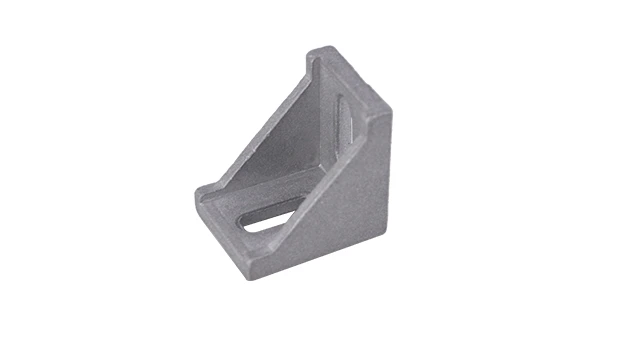
Gusset ALP 3030
The 3030 bracket/Gusset is an external fastening method that creates a 90 degree connection. 3030 means this size is used for 30 series aluminum profile with a quick connection by bolt and nut.
If you've ever worked on building a lean manufacturing setup, a lab workstation, or even a custom storage solution, you know that the smallest components can make or break the entire structure. Take, for example, the humble gusset—a piece that reinforces joints between aluminum profiles. But not just any gusset will do. When it comes to 3030 aluminum profiles, one component stands out: the Gusset Alp 3030. This little accessory might seem trivial, but it's the unsung hero that keeps your aluminum frames stable, your workbenches wobble-free, and your material racks from collapsing under heavy loads.
In this guide, we're going to walk through everything you need to know before buying Gusset Alp 3030. Whether you're a seasoned project manager setting up a new lean pipe workbench or a small business owner DIY-ing a warehouse rack, these key factors will help you avoid costly mistakes and ensure your project lasts for years. We'll cover material quality, compatibility with your existing aluminum profiles, load-bearing capacity, installation ease, and even how to spot a reliable supplier. Plus, we'll throw in real-world examples to show you why cutting corners on gussets is never worth it. Let's dive in.
What Even Is Gusset Alp 3030, Anyway?
Before we get into the nitty-gritty of buying, let's make sure we're all on the same page. Gusset Alp 3030 is a specific type of reinforcement bracket designed to work with 3030 aluminum profiles—the workhorses of modular construction. These profiles, as the name suggests, measure 30mm by 30mm and feature T-slots along their length, which let you slide in accessories like brackets, shelves, and yes, gussets.
Think of a 3030 aluminum profile as the backbone of your structure. If you're building a lean pipe workbench, for instance, the vertical and horizontal beams are probably 3030 profiles. Where those beams meet at a corner or a T-joint? That's where the Gusset Alp 3030 comes in. It's a triangular or L-shaped piece that bolts into the T-slots of two connected profiles, distributing weight evenly and preventing the joint from flexing under stress. Without a quality gusset, even a well-built frame can start to sag over time, especially if you're loading it up with tools, parts, or heavy equipment.
But here's the thing: not all gussets are created equal. Generic gussets might fit 3030 profiles, but they often skimp on material thickness or use low-grade aluminum, leading to premature bending or breaking. Gusset Alp 3030, on the other hand, is engineered specifically for 3030 profiles, with precision-cut holes, optimal thickness, and a design that maximizes strength without adding unnecessary weight. It's the difference between using duct tape to fix a broken shelf and using a proper bracket—one works for a day, the other works for a decade.
Factor 1: Material Quality—Not All Aluminum Is Created Equal
Let's start with the basics: what your Gusset Alp 3030 is made of. Since it's designed for aluminum profiles, it should come as no surprise that the gusset itself is typically aluminum. But not just any aluminum. The quality of the aluminum alloy used here will directly impact how well the gusset performs over time.
Aluminum Alloys: 6061 vs. 6063—What's the Difference?
Most aluminum profiles and accessories, including Gusset Alp 3030, are made from either 6061 or 6063 aluminum alloys. Both are popular in construction, but they have key differences. 6061 is known for its high strength and excellent weldability, making it ideal for structural components that need to bear heavy loads. 6063, on the other hand, is more malleable and has a smoother finish, which is why it's often used for decorative or precision parts.
For Gusset Alp 3030, you'll want to look for 6061 aluminum. Why? Because strength matters here. A gusset made from 6061 will resist bending under pressure better than 6063, which is crucial if your structure (like a material rack holding 50kg boxes) is under constant stress. Some cheaper gussets use 6063 to cut costs, but you'll notice the difference when you try to tighten the bolts—they might warp or crack. Ask your supplier for the alloy grade; a reputable one will be happy to share that info.
Thickness: Don't Be Fooled by "Lightweight" Claims
Next, check the thickness of the gusset. Most Gusset Alp 3030 models range from 2mm to 4mm thick. While 2mm might seem "lightweight" and easier to install, it's often too thin for heavy-duty applications. Imagine mounting a gusset that's 2mm thick at the corner of a lean pipe workbench where you'll be placing a 30kg tool chest. Over time, that thin metal will flex, and eventually, the joint will loosen.
For most industrial or commercial projects, 3mm to 4mm is the sweet spot. It's thick enough to handle loads up to 100kg per joint (depending on the profile and bolts used) but still lightweight enough that it won't add unnecessary bulk to your structure. Hold the gusset in your hand—if it feels flimsy or bends when you press on it, put it back. You want something that feels solid, like a small steel plate, but with the corrosion resistance of aluminum.
Finish: Anodized vs. Unfinished
Finally, pay attention to the finish. Aluminum naturally forms a thin oxide layer that resists corrosion, but anodized gussets take this a step further. Anodization is a process that (thickens) this oxide layer, making the metal more durable and resistant to scratches, rust, and even chemicals. If your project is in a humid environment (like a warehouse near the coast) or a lab with frequent cleaning, anodized Gusset Alp 3030 is a must.
Unfinished gussets might cost a few cents less, but they'll start to look dull and develop white corrosion spots over time. Anodized gussets, on the other hand, come in colors like silver, black, or blue (though silver is standard), and they'll keep their finish for years. It's a small detail, but it makes a big difference in the longevity of your project.

Factor 2: Compatibility with 3030 Aluminum Profiles
You've found a Gusset Alp 3030 made from 6061 aluminum, 3mm thick, and anodized—great! But before you hit "buy," there's one critical question: Does it actually fit your 3030 aluminum profiles? Sounds obvious, right? But you'd be surprised how many people order gussets only to find they don't align with their profile's T-slots.
T-Slot Spacing: The Hidden Compatibility Killer
3030 aluminum profiles might all be 30mm x 30mm, but not all T-slots are the same. The T-slots are the grooves that run along the length of the profile, where you insert bolts to attach accessories. The spacing between these slots (the distance from the edge of the profile to the center of the slot) can vary slightly between manufacturers. For example, some 3030 profiles have T-slots centered 10mm from the edge, while others are 12mm.
Gusset Alp 3030 is designed to match standard T-slot spacing, but if your profile is non-standard (like a cheap import from a no-name brand), the holes in the gusset might not line up with the slots. To avoid this, measure your profile's T-slot spacing before ordering. Take a ruler and measure from the outer edge of the profile to the middle of the T-slot. Most standard 3030 profiles (like those from reputable suppliers) have slots spaced 10mm from the edge, so Gusset Alp 3030 should fit. But if yours is different, ask the supplier if they offer custom gussets (some do for bulk orders).
3030 Aluminum Profile End Cap: Your Gusset's Best Friend
Here's a pro tip: Always pair your Gusset Alp 3030 with a 3030 aluminum profile end cap. The end cap is a small plastic or metal cover that fits over the end of the aluminum profile, protecting it from dents and preventing sharp edges. But it also helps your gusset perform better. Without an end cap, the raw edge of the profile can wear down the gusset's bolt holes over time, especially if the joint moves slightly (like when a caster wheel on a trolley hits a bump).
The end cap acts as a buffer, keeping the gusset's bolts tight and the joint stable. Plus, it makes your structure look more professional—no more jagged aluminum edges sticking out. Most suppliers sell end caps in packs of 10 or 50, so grab a few extra when you order your gussets. They're cheap insurance for your project.
Real-World Example:
A local electronics manufacturer once tried to save money by skipping end caps on their 3030 profiles. They installed Gusset Alp 3030 on their lean pipe workbenches, but within six months, the gussets started to loosen. When they inspected the profiles, they found that the sharp edges had worn down the bolt holes in the gussets, making them oval-shaped instead of round. They had to replace all the gussets and add end caps—costing them twice as much as if they'd bought the end caps in the first place.

Factor 3: Load-Bearing Capacity—Know Your Limits
Let's talk numbers. Every Gusset Alp 3030 has a load-bearing rating, which tells you how much weight it can support at the joint. This is usually listed as "maximum load per joint" in kilograms or pounds. But here's the catch: that number isn't just about the gusset itself—it depends on the aluminum profile, the bolts you use, and even how tight you torque the nuts.
Understanding Load Ratings
Most standard Gusset Alp 3030 models have a load rating of 80kg to 120kg per joint when used with 3030 aluminum profiles (6061 alloy, 1.5mm wall thickness) and M5 or M6 bolts. But don't take this at face value. If your structure has multiple gussets (like a cube-shaped rack with gussets at all eight corners), the total load capacity goes up, but each individual gusset is still only handling a portion of that weight.
For example, a material rack with four vertical posts and horizontal beams at three levels (top, middle, bottom) will have gussets at each beam-post joint. If the rack holds 300kg total, each of the 12 gussets (4 posts x 3 levels) is supporting about 25kg—well within the 80kg rating. But if you stack all 300kg on the top shelf, the top four gussets now have to support that weight, which is 75kg each. That's pushing the limit of an 80kg gusset, especially if the weight isn't evenly distributed. Always calculate the worst-case scenario.
Testing Load Capacity (Without Breaking Your Gusset)
If you're unsure about a gusset's load rating, do a simple test before installing it in your final structure. Mount two 3030 profiles at a 90-degree angle, attach the gusset, and tighten the bolts to the recommended torque (usually 5-8 Nm for M5 bolts). Then, hang a weight from the end of the horizontal profile and see if the joint flexes. A good Gusset Alp 3030 should only bend slightly under 50kg and return to shape when the weight is removed. If it bends more than 2mm or stays bent, it's not strong enough.
| Gusset Type | Material | Thickness | Load Capacity (per joint) | Best For |
|---|---|---|---|---|
| Generic 3030 Gusset | 6063 Aluminum | 2mm | 40-50kg | Light shelves, small workbenches |
| Gusset Alp 3030 (Standard) | 6061 Aluminum | 3mm | 80-100kg | Lean pipe workbenches, medium racks |
| Gusset Alp 3030 (Heavy-Duty) | 6061 Aluminum | 4mm | 120-150kg | Industrial material racks, machinery frames |
Factor 4: Installation Ease—Save Time (and Sanity)
Let's be honest: No one wants to spend hours wrestling with a gusset that doesn't fit or requires special tools. Installation ease is a big factor, especially if you're working with a tight deadline or a small team. Here's what to look for:
Pre-Drilled Holes: The Mark of a Quality Gusset
Gusset Alp 3030 should come with pre-drilled holes that align perfectly with the T-slots of 3030 profiles. If the holes are off by even 1mm, you'll struggle to get the bolts through, and the gusset won't sit flush against the profile. This leads to uneven pressure and a weaker joint.
Hold the gusset up to your profile—do the holes line up with the T-slots? If not, put it back. Some cheap gussets have poorly drilled holes, often because the manufacturer used low-quality machinery. A good gusset will have clean, precise holes with no burrs (those sharp metal bits around the edges). Burrs can scratch your profile's anodized finish or even cut your hands during installation—always check for that.
Tools Needed: Keep It Simple
You shouldn't need a PhD in engineering to install a gusset. Most Gusset Alp 3030 models use standard hex bolts (M5 or M6), which means you can install them with a basic hex key (Allen wrench) or a cordless drill with a hex bit. Avoid gussets that require special tools, like proprietary star-shaped bolts or custom drivers. Not only are these tools expensive, but if you lose one, you'll be stuck waiting for a replacement.
Alignment Guides: A Little Extra Goes a Long Way
Some premium Gusset Alp 3030 models come with small alignment tabs or notches that fit into the T-slots of the profile. These tabs act as a guide, holding the gusset in place while you tighten the bolts. This might seem like a minor feature, but when you're installing 50 gussets in a day, it saves you from constantly readjusting the bracket. Look for gussets with these tabs—they're a sign that the manufacturer thought about real-world installation.
Pro Tip:
Apply a small amount of thread locker (like Loctite) to the bolts when installing your gussets. This prevents them from loosening over time due to vibration (common in manufacturing settings with nearby machinery). Just don't use too much—you'll need to remove the bolts someday for maintenance!
Factor 5: Choosing the Right Supplier—Avoid Headaches Down the Line
Even the best gusset design can fail if it's made by a shoddy supplier. When shopping for Gusset Alp 3030, don't just look at the product—look at the company behind it. Here's what to check:
Reputation: Read Reviews (and Not Just the 5-Star Ones)
A quick Google search for "Gusset Alp 3030 supplier" will bring up dozens of options, but not all are created equal. Check online reviews on platforms like Alibaba, Amazon, or industry forums. Look for comments about consistency—do customers mention that some gussets were thicker than others? Or that the holes were misaligned in one batch?
Pay attention to how the supplier responds to negative reviews. A good supplier will apologize, offer a refund or replacement, and explain how they'll fix the issue. A bad one will ignore the review or get defensive. Also, ask for references—most suppliers will share contact info for past clients, especially if you're ordering in bulk.
Certifications: ISO 9001 Matters
Look for suppliers with ISO 9001 certification. This standard ensures that the company has a quality management system in place, from raw material sourcing to production to shipping. An ISO 9001-certified supplier is more likely to have consistent quality control, which means your gussets will all be the same thickness, with properly drilled holes and the correct alloy grade. It's not a guarantee, but it's a good indicator.
Aluminum Profile Accessories: One-Stop Shopping
Finally, consider buying your Gusset Alp 3030 from a supplier that also sells aluminum profile accessories like 3030 end caps, bolts, and T-slot nuts. This way, you can ensure all components are compatible. For example, if you buy gussets from Supplier A and bolts from Supplier B, the bolts might be slightly too long or short, leading to installation issues. A one-stop shop will have tested their accessories together, so you know they'll work seamlessly. Plus, you'll save on shipping by ordering everything in one box.
Wrapping Up: Your Project Deserves the Best Gusset
At the end of the day, buying Gusset Alp 3030 isn't just about picking the cheapest option on Amazon. It's about investing in a component that will keep your structure safe, stable, and functional for years. By focusing on material quality (6061 aluminum, 3mm+ thickness), compatibility with your 3030 profiles (check T-slot spacing and pair with end caps), load-bearing capacity (match it to your project's needs), installation ease (precise holes, simple tools), and a reputable supplier, you'll avoid the frustration of bent gussets, wobbly joints, and costly rework.
Remember, the Gusset Alp 3030 might be small, but it's a critical part of your project's foundation. Whether you're building a lean pipe workbench for your garage or a warehouse full of material racks, taking the time to choose the right gusset will pay off in the long run. Your back (and your budget) will thank you.