- Company Articles
- Products and Technology
- Product knowledge
- Can Four Way Straight Lean Pipe Joint Chrome Withstand High-Moisture Environments?

Can Four Way Straight Lean Pipe Joint Chrome Withstand High-Moisture Environments?
Related Product
Four Way Straight Lean Pipe Joint Chrome
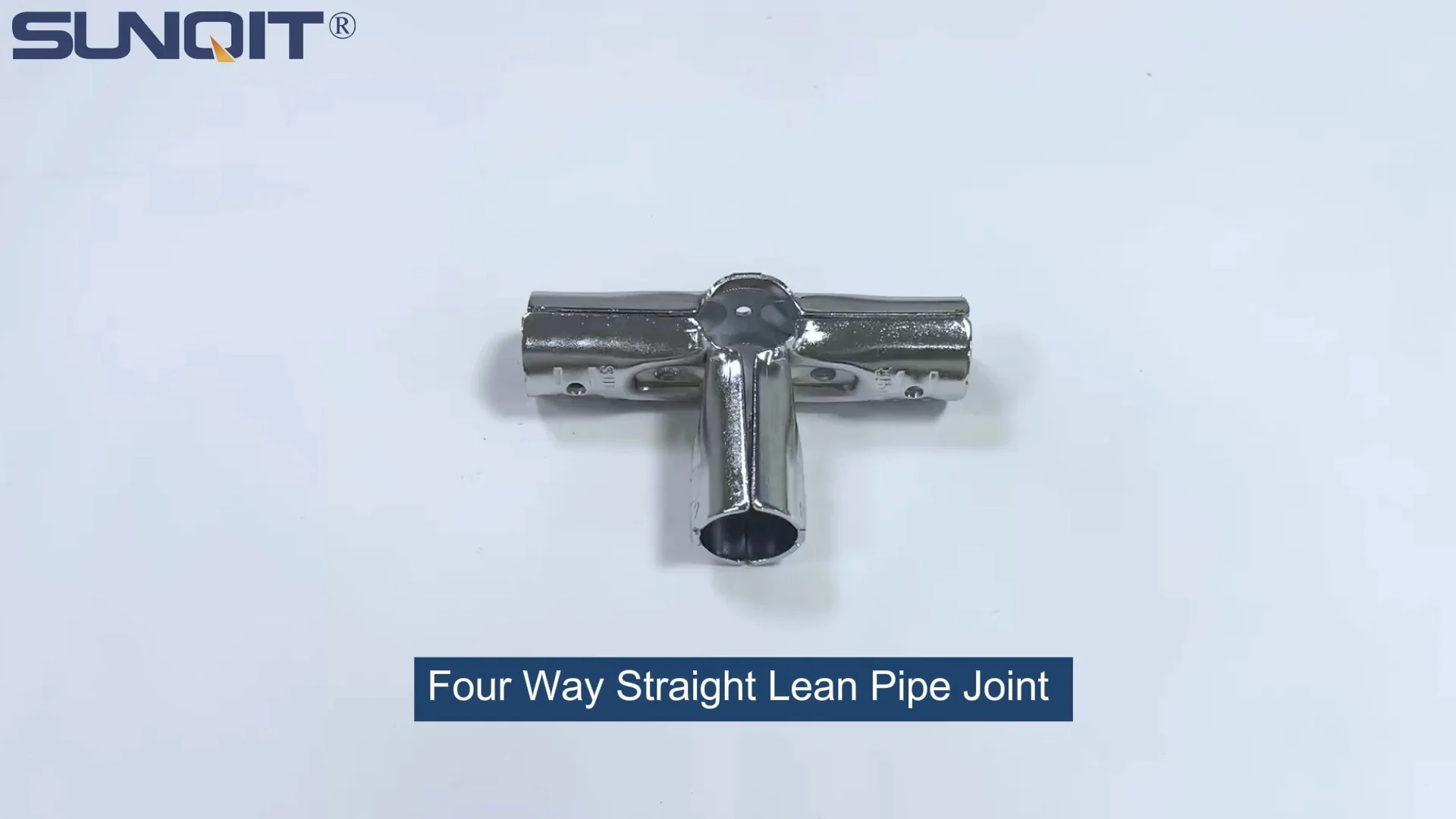
Four way lean pipe joint for 4 pcs 28MM lean pipe connection in straight angle, which used widely in workbench, flow rack, hand trolley frame connection.
The Unsung Backbone of Lean Manufacturing: Why Joints Deserve Your Attention
Walk through any modern manufacturing facility, and you'll quickly spot the hallmarks of a well-optimized operation: streamlined workbenches, efficient flow racks, and conveyor systems that move materials with precision. These are the visible signs of a lean system —a philosophy built on minimizing waste, maximizing productivity, and keeping workflows agile. But behind this efficiency lies a critical, often overlooked component: the joints that hold everything together.
For plant managers, maintenance teams, and operations leaders, the reliability of these joints isn't just a technical detail—it's the difference between smooth production and costly downtime. This rings especially true in high-moisture environments: think coastal factories where salt-laden air hangs thick, food processing plants with daily washdowns, or pharmaceutical facilities where humidity control is non-negotiable. In these settings, moisture isn't just a minor inconvenience; it's a silent enemy that can turn sturdy metal components into corroded liabilities.
One joint that frequently finds itself in the crosshairs of these challenges is the Four Way Straight Lean Pipe Joint Chrome . Designed to connect lean pipes in multiple directions, this small but mighty component is a workhorse in building custom workstations, material racks, and production lines. But can it stand up to the relentless assault of moisture? Let's dive in.
What Is the Four Way Straight Lean Pipe Joint Chrome, Anyway?
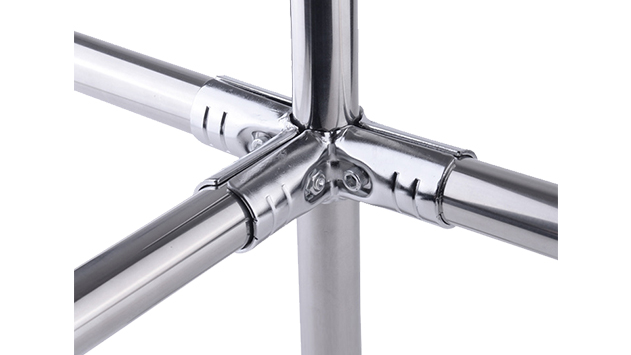
Before we judge its moisture resistance, let's get to know this joint better. The Four Way Straight Lean Pipe Joint Chrome is a connecting fitting engineered to join lean pipes at 90-degree angles, allowing for the creation of square or rectangular structures. Its "four-way" design means it can anchor pipes in four directions (up, down, left, right), making it incredibly versatile for building everything from simple shelving units to complex assembly line frameworks.
At first glance, it might seem like just another metal part, but its design is deceptively clever. Most models feature internal threads or clamping mechanisms that grip pipes tightly, ensuring stability even under heavy loads. The "chrome" in its name refers to the plating applied to its surface—a finishing touch that's supposed to enhance durability and resistance to wear. But here's the question: does that chrome plating hold up when moisture enters the picture?
To answer that, we need to understand what happens to metal in high-moisture environments. Let's break it down.
Moisture vs. Metal: The Science of Corrosion
Moisture is metal's worst nightmare, and it doesn't work alone. When water (H₂O) comes into contact with metal, it teams up with oxygen (O₂) in the air to kickstart a chemical reaction called oxidation. For iron-based metals, this reaction produces iron oxide—better known as rust. Rust isn't just unsightly; it weakens the metal, turning rigid joints into brittle, unreliable connections.
In high-moisture environments, this process accelerates. Add in other culprits like salt (from coastal air or road salt near factories), acids (from cleaning agents in food processing), or even industrial chemicals, and you've got a recipe for rapid corrosion. A joint that works perfectly in a dry warehouse might start showing signs of rust in just a few months in a humid plant—leading to loose connections, wobbly workbenches, and eventually, production delays.
So, where does the Four Way Straight Lean Pipe Joint Chrome fit into this? Chrome plating is often marketed as a corrosion-resistant solution, but not all chrome plating is created equal. Let's take a closer look at how it's made and what it can (and can't) withstand.

Chrome Plating: A Protective Shield—But How Strong?
Chrome plating involves electroplating a thin layer of chromium (Cr) onto the surface of a metal substrate, usually steel. When done correctly, this layer acts as a barrier, preventing moisture and oxygen from reaching the underlying steel. Chromium itself is highly resistant to oxidation, which is why it's a popular choice for parts exposed to the elements.
But here's the catch: the effectiveness of chrome plating depends on two factors: thickness and adhesion . A thin, poorly adhered chrome layer will develop cracks or peel over time, exposing the steel beneath to moisture. In contrast, a thick, well-applied layer (often with a nickel undercoat for better adhesion) can provide robust protection.
Many lean pipe suppliers advertise their chrome-plated joints as "corrosion-resistant," but it's crucial to dig deeper. Ask about the plating process: Is there a pre-treatment step to clean the steel before plating? Is a nickel undercoat used? What's the thickness of the chrome layer (measured in microns)? A reputable supplier will have answers to these questions—transparency that speaks to the quality of their products.
Real-World Test: How Chrome-Plated Joints Perform in High Moisture
To get a sense of real-world performance, let's look at two scenarios where Four Way Straight Lean Pipe Joint Chrome is commonly used:
Scenario 1: A Coastal Electronics Assembly Plant
Imagine a factory in a coastal city, where sea breezes carry salt particles and humidity levels often hover above 70%. The plant uses lean pipes and chrome-plated joints to build workbenches for assembling circuit boards. Initially, the joints look shiny and durable. But after six months, maintenance crews notice small rust spots forming around the edges of the chrome plating. By the one-year mark, some joints have started to loosen, requiring frequent tightening.
What went wrong? Upon inspection, it turns out the chrome plating was thin (only 5 microns) and lacked a nickel undercoat. The salt-laden moisture seeped through tiny pores in the plating, reaching the steel substrate and causing rust. The result: increased maintenance costs and the risk of workbench instability.
Scenario 2: A Beverage Bottling Facility with Daily Washdowns
Now, consider a beverage bottling plant where production lines are washed down with water and sanitizing agents twice daily. Here, the Four Way Straight Lean Pipe Joint Chrome is used in flow racks that hold plastic bottles. The plant opted for joints from a lean pipe supplier that uses a 15-micron chrome layer with a nickel undercoat. After two years of daily exposure to water and cleaning chemicals, the joints show minimal signs of corrosion—no rust, no peeling, and the connections remain tight.
The difference? Quality plating and proper pre-treatment. The supplier's process included thorough cleaning of the steel substrate to remove oils and contaminants, followed by a nickel layer to improve adhesion, and finally, a thick chrome coat. This combination created a barrier strong enough to withstand the harsh environment.
How Does Chrome Compare to Other Materials? A Quick Breakdown
If chrome-plated joints have limitations, what alternatives are there? Let's compare the Four Way Straight Lean Pipe Joint Chrome to two common alternatives: stainless steel (from the stainless steel pipe series ) and aluminum.
| Material | Moisture Resistance | Cost | Lifespan in High Moisture | Best For |
|---|---|---|---|---|
| Chrome-Plated Steel (Four Way Straight Lean Pipe Joint Chrome) | Moderate (depends on plating quality) | $ (Budget-friendly) | 1–3 years (with good plating) | Dry to moderately humid environments; short-term projects |
| Stainless Steel (Stainless Steel Pipe Series) | High (resists rust and corrosion) | $$$ (Premium cost) | 5–10+ years | Coastal areas, food processing, washdown environments |
| Aluminum | High (forms protective oxide layer) | $$ (Mid-range) | 3–7 years | Lightweight applications, indoor humid environments |
The takeaway? Chrome-plated joints are a cost-effective choice for dry or moderately humid settings, but they struggle in extreme moisture. For high-moisture environments, stainless steel pipe series joints are the gold standard—though they come with a higher price tag. Aluminum offers a middle ground, balancing cost and durability for many indoor applications.
Choosing the Right Lean Pipe Supplier: It's About More Than Price
If you've decided that Four Way Straight Lean Pipe Joint Chrome is the right fit for your environment (or if you're weighing it against stainless steel or aluminum), the next step is choosing a lean pipe supplier you can trust. Here's what to look for:
- Transparent Plating Processes: Ask for details about plating thickness, pre-treatment steps, and whether a nickel undercoat is used. A supplier that can't answer these questions is a red flag.
- Quality Certifications: Look for suppliers with ISO 9001 certification or other quality standards—this indicates a commitment to consistent manufacturing.
- Customer Testimonials: Reach out to other customers in high-moisture industries to ask about their experience with the supplier's chrome-plated joints.
- Warranty Coverage: A supplier confident in their product will offer a warranty against premature corrosion—read the fine print to see what's covered.
Remember, the cheapest joints upfront might end up costing more in the long run due to frequent replacements and downtime. Investing in quality from a reputable supplier pays off in durability.
Extending the Life of Chrome-Plated Joints: Maintenance Tips
Even with the best plating and supplier, proper maintenance can significantly extend the life of Four Way Straight Lean Pipe Joint Chrome in high-moisture environments. Here's how:
1. Regular Cleaning
Wipe down joints with a dry cloth at least once a week to remove moisture, dust, and salt buildup. For food processing or chemical environments, use a mild, non-abrasive cleaner to remove residues that can corrosion.
2. Apply a Protective Coating
Every 3–6 months, apply a thin layer of corrosion-inhibiting spray or wax to the chrome surface. This adds an extra barrier against moisture—just make sure the coating is compatible with your industry (e.g., food-safe for food processing plants).
3. Inspect for Damage
Check joints monthly for signs of peeling, cracks, or rust. If you spot damage, replace the joint immediately—small issues can escalate quickly in high moisture.
4. Optimize Storage and Installation
Store unused joints in a dry, climate-controlled area. When installing, ensure joints are tightened properly—loose connections can trap moisture, corrosion.
Final Thoughts: Durability Drives Lean Success
At the end of the day, a lean system is only as strong as its weakest link. For many operations, that link is the humble joint—especially in high-moisture environments. The Four Way Straight Lean Pipe Joint Chrome can be a reliable workhorse, but its performance hinges on plating quality, maintenance, and the environment it's used in.
If you're operating in a dry or moderately humid facility, chrome-plated joints offer an affordable, versatile solution. But if moisture is a constant challenge—whether from coastal air, daily washdowns, or industrial chemicals—don't cut corners. Invest in stainless steel from the stainless steel pipe series or high-quality aluminum, and partner with a lean pipe supplier that prioritizes durability over cost.
After all, the goal of lean manufacturing is to eliminate waste—and nothing wastes time, money, and resources like frequent equipment failures. Choose your joints wisely, maintain them diligently, and watch your lean system thrive, even when the going gets wet.