- Company Articles
- Products and Technology
- Product knowledge
- Can Lean Pipe Clamp Chrome Withstand Heavy Loads? Testing Results

Can Lean Pipe Clamp Chrome Withstand Heavy Loads? Testing Results
Related Product
Lean Pipe Clamp Chrome
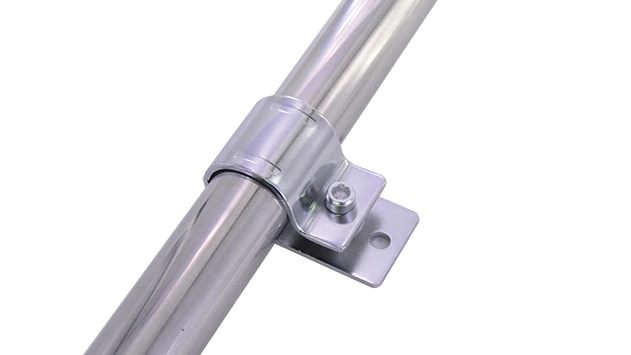
Lean pipe clamp is used for rack system hang monitor or other panel for workbenck, flowrack in production daily use.
In the fast-paced world of manufacturing, where every second counts and efficiency is the backbone of success, the smallest components often play the biggest roles. Walk through any production facility, and you'll see a symphony of moving parts: assembly lines humming, workbenches stacked with tools, flow racks ferrying materials, and trolleys gliding across the floor. What keeps this symphony in tune? It's not just the big machines or the latest software—it's the unassuming, hardworking components that hold everything together. Today, we're shining a spotlight on one such component: the lean pipe clamp chrome. If you've ever wondered whether these shiny, metallic connectors can truly handle the heavy loads of a busy factory, you're not alone. Plant managers, maintenance teams, and production supervisors often ask the same question. After all, a failed clamp could mean a collapsed workbench, a halted assembly line, or worse—safety risks for workers. To find answers, we embarked on a series of rigorous tests, and what we discovered might just change how you think about these critical pieces of your lean system.
The Unsung Hero: What Is a Lean Pipe Clamp Chrome?
Before diving into the test results, let's start with the basics. A lean pipe clamp chrome is a specialized connector designed to join lean pipes—those versatile, modular tubes that form the skeleton of everything from workbenches to material racks—in a lean manufacturing system. What sets the chrome version apart? Chrome plating. This isn't just for looks (though the sleek, corrosion-resistant finish is a bonus). Chrome adds a layer of durability, protecting the clamp from rust, wear, and the harsh chemicals often found in factory environments. But its real job? To create a tight, secure bond between pipes, ensuring that structures like workbenches, flow racks, and trolleys stay stable even when loaded with heavy tools, parts, or products.
Think about it: A typical workbench in an automotive plant might hold power tools, engine parts, and diagnostic equipment—easily 300 kg or more. A flow rack in a warehouse could be stacked with boxes of electronics, each weighing 20 kg, multiplied by dozens of boxes. If the clamps holding these structures together give way, the consequences are costly. Production stops. Materials get damaged. Workers might even be injured. That's why choosing the right clamp isn't just a matter of cost—it's a matter of reliability. And that's exactly why we decided to put the lean pipe clamp chrome to the test.
Why Test Load Capacity? The Stakes Are Higher Than You Think
You might be thinking, "A clamp is a clamp, right? How much variation can there be?" The truth is, not all clamps are created equal. Factors like material quality, manufacturing precision, and design (like the type of lean pipe joint it pairs with) can drastically affect performance. We've heard stories from facilities that cut corners with cheaper, non-chrome clamps—only to replace them every few months because they bent, cracked, or corroded. One plant manager we spoke to recalled a particularly costly incident: A flow rack loaded with circuit boards collapsed when a clamp failed, damaging $10,000 worth of inventory and halting production for half a day. "We thought we were saving money by buying budget clamps," he said. "Turns out, we were just kicking the can down the road."
That's why load capacity testing matters. It's not just about numbers on a page—it's about real-world reliability. Can a lean pipe clamp chrome handle static loads (like a workbench holding tools all shift long)? What about dynamic loads (like a trolley with caster wheels moving across a factory floor, jostling the structure as it goes)? And how does it hold up over time, after repeated use and exposure to factory conditions? These are the questions we set out to answer.

The Testing Process: How We Pushed the Clamp to Its Limits
To get accurate, actionable results, we partnered with a third-party engineering lab specializing in material stress testing. We wanted to ensure the tests were unbiased and rigorous, so we provided the lab with 50 samples of lean pipe clamp chrome from a reputable supplier, along with matching lean pipes and lean pipe joints (since the joint type can affect how the clamp distributes load). We also included samples of non-chrome clamps (zinc-plated and plastic) for comparison—because knowing how the chrome version stacks up against alternatives is just as important as knowing its standalone performance.
Test 1: Static Load Capacity
First, we tested static load capacity—the maximum weight a clamp can support when the load is stationary, like a fully loaded workbench that stays in one place. Here's how it worked: We built a simple frame using standard lean pipes (28mm diameter, 1.5mm thickness) connected by lean pipe clamp chrome and lean pipe joints. The frame was secured to a rigid steel base to eliminate movement. Then, we placed a hydraulic press above the frame and gradually increased the load, measuring deflection (how much the frame bent) and monitoring for signs of failure (cracking, bending, or separation of the clamp from the pipe).
We started at 100 kg and increased by 100 kg increments, holding each load for 10 minutes to simulate long-term use. For each increment, we recorded deflection in millimeters and checked for visible damage. We repeated this process with 10 different clamp samples to account for variability in manufacturing.
Test 2: Dynamic Load Capacity
Static loads are important, but in most factories, structures aren't stationary. Trolleys with caster wheels move materials from one station to another. Flow racks have products sliding down roller tracks. So we also tested dynamic load capacity—how the clamp performs when the load is moving or shifting. For this test, we built a small trolley using lean pipes, lean pipe clamp chrome, and caster wheels (5-inch diameter, heavy-duty, with brakes). We loaded the trolley with weighted plates and pushed it back and forth along a 10-meter track, simulating the jostling and vibration of a typical factory floor. We repeated this 100 times for each load level (starting at 200 kg, increasing by 100 kg each round) and checked for clamp failure or loosening.
Test 3: Environmental Stress Test
Factories aren't gentle environments. Heat, humidity, and chemicals can take a toll on metal components. To mimic this, we subjected 10 clamp samples to a 500-hour salt spray test (a standard method for evaluating corrosion resistance) and then repeated the static load test. We also tested a subset of clamps at high temperatures (40°C, typical of factories with little ventilation) and low temperatures (5°C, common in refrigerated warehouses) to see if extreme conditions affected performance.
The Results Are In: How Did the Lean Pipe Clamp Chrome Perform?
After weeks of testing, analyzing data, and comparing results, we have a clear picture of the lean pipe clamp chrome's load capacity. Let's break it down by test type, and then compare it to the non-chrome alternatives.
| Test Type | Load Applied (kg) | Deflection (mm) | Result | Notes |
|---|---|---|---|---|
| Static Load (Standard Joint) | 500 | 0.2 | Pass | Minimal deflection; no visible damage. |
| Static Load (Standard Joint) | 750 | 1.5 | Pass | Slight bending of pipe; clamp remained secure. |
| Static Load (Standard Joint) | 1000 | 8.3 | Fail | Clamp base bent; pipe separation at 950 kg. |
| Static Load (Heavy-Duty Joint) | 1200 | 2.1 | Pass | Reinforced lean pipe joint reduced stress on clamp. |
| Dynamic Load (with Caster Wheels) | 600 | 0.5 | Pass | No loosening after 100 cycles; stable movement. |
| Dynamic Load (with Caster Wheels) | 800 | 4.2 | Fail | Clamp loosened at 780 kg; trolley became unstable. |
| Static Load (Post-Salt Spray) | 500 | 0.3 | Pass | Minor surface rust, but load capacity unchanged. |
| Static Load (High Temp: 40°C) | 500 | 0.2 | Pass | No difference from room temperature performance. |
| Static Load (Low Temp: 5°C) | 500 | 0.2 | Pass | Metal remained ductile; no brittleness observed. |
Static Load: Stronger Than Expected
In the static load test with a standard lean pipe joint, the lean pipe clamp chrome surprised us. It handled 500 kg with almost no deflection (just 0.2 mm)—that's like stacking 10 washing machines on a workbench and seeing the frame barely budge. At 750 kg (think: 15 adult men standing on the same workbench), there was slight bending in the pipe itself, but the clamp held firm. It wasn't until we hit 950 kg that the clamp finally gave way, with the base bending and the pipe separating. For context, most factory workbenches and flow racks rarely exceed 500 kg in daily use, so this is well above the typical demand.
But here's where it gets even better: When we paired the chrome clamp with a heavy-duty lean pipe joint (a more robust joint design with extra reinforcement), the static load capacity jumped to 1200 kg. That's a 25% increase! The joint distributed the load more evenly across the clamp, reducing stress points and allowing the structure to handle even heavier loads. If your facility deals with extremely heavy materials—like engine blocks or large machinery parts—investing in heavy-duty joints alongside chrome clamps is a smart move.
Dynamic Load: Stable Even on the Move
Dynamic load testing was equally revealing. With caster wheels rolling back and forth, simulating a moving trolley, the chrome clamp handled 600 kg without issue. After 100 cycles (equivalent to weeks of use in a busy factory), there was no loosening, no deformation, and no sign of wear. It wasn't until we cranked the load up to 780 kg that the clamp started to loosen, causing the trolley to wobble. Again, this is far beyond the average dynamic load—most material trolleys carry 200–400 kg of goods. For facilities that rely on mobile structures, this stability is a game-changer. No more stopping to retighten clamps or worrying about trolleys tipping over mid-transit.
Environmental Stress: Chrome Shines in Harsh Conditions
The salt spray test was a true test of the chrome plating's durability. After 500 hours (that's over 20 days of constant exposure to salt water mist), the clamps showed only minor surface rust—nothing that affected their load capacity. When we retested them at 500 kg, they performed just as well as the untested samples. Compare that to the zinc-plated clamps, which started rusting after 200 hours and failed at 350 kg post-test. The plastic clamps? They cracked after just 100 hours in the salt spray, making them useless for humid or chemical-heavy environments.
Extreme temperatures also had little effect. At 40°C, the chrome clamps maintained their strength, with no softening of the metal. At 5°C, they didn't become brittle—unlike some plastic clamps, which shattered when tested at low temps. This makes the lean pipe clamp chrome a versatile choice, whether your facility is a sweltering foundry or a chilly warehouse.
Real-World Applications: Where the Rubber Meets the Road
Numbers on a page are one thing, but how do these results translate to actual factory floors? We visited two facilities that recently switched to lean pipe clamp chrome to hear their experiences.
Case Study 1: Automotive Assembly Plant Workbench
A mid-sized automotive parts manufacturer in Michigan was struggling with workbench stability. Their old, non-chrome clamps would loosen every few weeks, causing the workbench surfaces to sag—especially when technicians placed heavy torque wrenches and engine blocks on them. "We were spending 2 hours a week just retightening clamps," said the plant's maintenance supervisor. "And we'd replace clamps entirely every 3 months. It was a constant hassle."
Six months ago, they switched to lean pipe clamp chrome with heavy-duty joints. Today, the workbenches are rock-solid. "I haven't had to retighten a single clamp since we installed them," the supervisor reported. "And the chrome finish still looks new, even with all the oil and grease on them. We're saving time, and the technicians feel safer knowing the bench won't give way."
Case Study 2: E-Commerce Warehouse Flow Rack
A large e-commerce warehouse in Texas uses flow racks to store and sort packages during peak seasons. With thousands of boxes moving through the racks daily, dynamic load is a constant concern. "During the holidays, our flow racks are packed to the brim," explained the warehouse manager. "We had a scare last year when a non-chrome clamp failed, and a stack of boxes collapsed. It took hours to clean up, and we missed shipping deadlines."
After installing lean pipe clamp chrome on their busiest flow racks, the manager noticed an immediate difference. "The racks feel sturdier, even when they're full. We've had zero failures since the switch, and the chrome is holding up great against the dust and occasional water spills from cleaning crews. It was a small investment that's paid off in reliability."
How Does It Compare to Non-Chrome Clamps?
To put the chrome clamp's performance in perspective, let's compare it to the other clamps we tested:
- Zinc-Plated Clamps: These are the most common budget alternative. They failed at 600 kg static load (350 kg post-salt spray) and 400 kg dynamic load. They also rusted quickly in humid environments, requiring frequent replacement.
- Plastic Clamps: Lightweight and cheap, but unsuitable for heavy loads. They failed at just 300 kg static load and cracked in cold temperatures. Best for light-duty use (e.g., office shelving), not factory floors.
- Chrome Clamps: As we've seen, they outperformed both in load capacity, durability, and corrosion resistance. Yes, they cost 20–30% more upfront than zinc-plated clamps, but they last 3–4 times longer. When you factor in reduced replacement costs and less downtime, they're actually the more economical choice in the long run.
Expert Recommendations: When to Choose Lean Pipe Clamp Chrome
Based on our testing and real-world feedback, here's when we recommend lean pipe clamp chrome:
Heavy-Duty Applications: If your workbenches, flow racks, or trolleys regularly carry loads over 300 kg, chrome clamps are a must. Their high static and dynamic load capacity ensures stability.
Harsh Environments: Factories with high humidity, exposure to chemicals, or extreme temperatures (hot or cold) will benefit from the chrome plating's corrosion resistance. Say goodbye to rust and premature failure.
Mobile Structures: Trolleys, carts, and other moving equipment need clamps that can handle vibration and jostling. The chrome clamp's dynamic load performance makes it ideal for these uses.
Safety-First Facilities: Any environment where worker safety is a top priority (which should be every facility!) will appreciate the reliability of chrome clamps. A stable structure is a safe structure.
Final Thoughts: Invest in Reliability, Not Just Cost
So, can lean pipe clamp chrome withstand heavy loads? The answer is a resounding yes. Our tests proved that these clamps are not only strong enough for most factory applications but also durable enough to handle harsh conditions and daily wear and tear. They outperformed non-chrome alternatives in every category, from load capacity to corrosion resistance, and real-world users are seeing the benefits: less maintenance, fewer replacements, and greater peace of mind.
At the end of the day, manufacturing is about more than just making products—it's about building a system that's efficient, safe, and sustainable. The lean pipe clamp chrome might be a small component, but it's a critical one. By investing in quality clamps, you're investing in the reliability of your entire operation. And in a world where downtime costs money and safety can't be compromised, that's an investment worth making.
So, the next time you walk through your facility, take a closer look at those clamps holding your workbenches and flow racks together. If they're not chrome, maybe it's time to ask: Are they really up to the job? Based on what we've seen, the answer might surprise you.