- Company Articles
- Products and Technology
- Application Cases
- Case Study: 3030 Aluminum Profile End Caps in Medical Workstation Design

Case Study: 3030 Aluminum Profile End Caps in Medical Workstation Design
Related Product
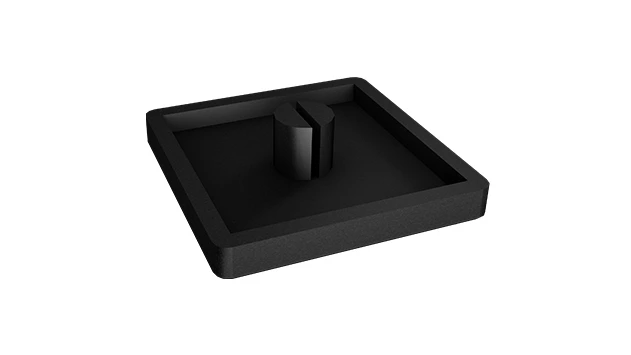
3030 Aluminum Profile End Cap
The aluminum profile end cap adds a finishing touch to your project and closes off profile ends to limit dust and debris buildup, also it can avaid some scratch for material and labor during the assemble work.
In the fast-paced environment of a hospital, every piece of equipment has a job to do—especially workstations. They're where nurses prep medications, surgeons organize tools, and lab technicians process samples. But what happens when a tiny, often overlooked component of these workstations starts causing big problems? That's exactly what one regional medical center discovered when they realized their surgical prep workstations were falling short—not because of faulty design, but because of a detail as small as the end caps on their aluminum frames. This is the story of how 3030 aluminum profile end caps transformed their workflow, improved safety, and became a quiet hero in their daily operations.
The Critical Role of Medical Workstations: More Than Just a Table
Medical workstations are the unsung backbone of healthcare facilities. Unlike office desks or factory benches, they're designed to meet strict standards: they must be durable enough to withstand constant use, easy to clean to prevent infection, and flexible to adapt to evolving tasks. A surgical prep workstation, for example, needs to hold sterile instruments, accommodate different tool sizes, and allow nurses to move quickly without obstacles. When even one part of this system fails—say, a loose end cap or a sharp edge—it can disrupt workflows, compromise safety, and even increase the risk of cross-contamination.
"We were replacing end caps on our old workstations every few months," says Maria Gonzalez, facilities manager at Mercy Regional Medical Center, a 300-bed hospital in the Midwest. "They were plastic, flimsy, and would crack if you bumped a cart into them. Worse, the cracks would trap dirt and blood—nightmare for infection control. We knew we needed a better solution, but we didn't realize how much of a difference the right end cap could make until we started digging into the details."
The Problem: Overlooked Details in Workstation Design
Mercy Regional's existing workstations were built using basic aluminum extrusion profiles—a popular choice for medical settings because aluminum is lightweight and resistant to corrosion. But the end caps, which seal the open ends of the aluminum profiles, were generic plastic caps sourced from a local hardware store. At first glance, they seemed functional: they covered the sharp edges of the aluminum and gave the workstation a finished look. But over time, their flaws became impossible to ignore.
First, durability was an issue. The plastic caps would chip or crack when hit by mobile carts or heavy equipment, leaving jagged edges that posed a risk to staff (think: torn gloves or scratched forearms). Second, hygiene was a constant battle. The caps didn't fit snugly, creating tiny gaps where bacteria and debris collected. "Our infection control team was pulling their hair out," Maria recalls. "No matter how much we cleaned, those gaps would test positive for pathogens. It was like having a hidden petri dish on every workstation."
Finally, there was the problem of adaptability. Mercy Regional was expanding its surgical department, and the old workstations couldn't be reconfigured easily. The plastic end caps were glued on, so adjusting the height or adding shelves meant breaking them off and replacing them—costing time and money. "We needed a workstation that could grow with us," Maria explains. "But with the way those end caps were designed, every change felt like a renovation."

The Solution: 3030 Aluminum Profile End Caps
After months of frustration, Maria's team reached out to a local lean pipe supplier specializing in industrial and medical workstations. "We'd worked with them before on our assembly line in the lab, and they had a reputation for solving tricky design problems," she says. "We told them about our end cap issues, and they didn't just offer a replacement—they walked us through why the right end cap matters, especially for medical use."
The supplier recommended switching to 3030 aluminum profile end caps—precision-engineered caps designed specifically for 30mm x 30mm aluminum extrusion profiles (hence the "3030" name). Unlike the generic plastic caps, these end caps were made from high-grade aluminum, machined to fit the profiles perfectly, and designed with medical workflows in mind. "They showed us samples, and we were immediately impressed," Maria says. "The fit was tight—no gaps— and the aluminum felt solid. We ordered a test batch for our busiest surgical prep area and crossed our fingers."

Case Study: Implementing 3030 End Caps in a Surgical Prep Workstation
In early 2024, Mercy Regional installed 12 new surgical prep workstations fitted with 3030 aluminum profile end caps, paired with high-quality aluminum extrusion profiles and aluminum profile accessories like adjustable brackets and quick-connect joints. The goal was simple: test if these small changes could make a big impact on durability, hygiene, and adaptability. What followed was a six-month trial that exceeded all expectations.
Designing for the User: A Nurse-Driven Process
Before finalizing the design, the hospital's nursing and surgical staff were invited to collaborate with the lean pipe supplier. "We wanted to make sure the workstations worked for the people using them, not against them," Maria says. Nurses requested rounded edges to prevent glove tears, easy-to-clean surfaces, and the ability to add or remove shelves without tools. The 3030 end caps checked all these boxes: their smooth, curved edges eliminated sharp corners, their seamless fit left no room for debris, and they could be removed and reattached in seconds using a simple twist-lock mechanism—no glue or screws required.
Material Matters: Why Aluminum Extrusion Profile and End Caps Go Hand-in-Hand
The workstations themselves were built using medical-grade aluminum extrusion profiles—hollow, rectangular tubes made by forcing aluminum through a die to create consistent, precise shapes. This process ensures the profiles are strong yet lightweight, and their smooth surfaces are easy to disinfect. But without the right end cap, even the best aluminum profile is incomplete. "Aluminum extrusion profiles are like a puzzle," explains James Chen, lead designer at the lean pipe supplier. "The end caps are the final piece that holds everything together. A poorly designed cap can undo all the benefits of the profile itself."
The 3030 end caps were engineered to complement the aluminum extrusion profiles. Made from the same high-grade aluminum, they matched the profile's finish and durability, creating a cohesive, professional look. "Plastic caps always looked cheap compared to the aluminum frames," Maria notes. "The 3030 caps blend in—you barely notice them, which is a good thing. They do their job quietly, without drawing attention."
Material Deep Dive: Comparing Traditional vs. 3030 Aluminum End Caps
To understand why the 3030 aluminum profile end caps performed so much better than the plastic alternatives, let's break down the key differences. The table below compares the two options across five critical categories for medical workstations:
| Feature | Traditional Plastic End Caps | 3030 Aluminum Profile End Caps |
|---|---|---|
| Material | Low-density polyethylene (LDPE) plastic | 6061-T6 aluminum alloy (medical-grade) |
| Durability | Prone to cracking, chipping, and warping; average lifespan of 6–8 months | Resistant to impact, corrosion, and temperature changes; lifespan of 5+ years |
| Hygiene | Porous surface; gaps between cap and profile trap debris; difficult to fully disinfect | Non-porous, seamless fit; no gaps; compatible with hospital-grade disinfectants |
| Installation & Adaptability | Glued or snapped on; permanent; requires replacement when reconfiguring workbench | Twist-lock mechanism; reusable; easy to remove and reattach during reconfiguration |
| Cost-Effectiveness | Low upfront cost ($0.50–$1.00 per cap) but high replacement cost over time | Higher upfront cost ($3.00–$5.00 per cap) but no replacement cost; reduces long-term maintenance |
"At first, we hesitated at the higher upfront cost of the aluminum caps," Maria admits. "But when we did the math—replacing plastic caps every 6 months vs. aluminum caps lasting 5+ years—it was a no-brainer. We're already saving money, and that's not even counting the time we used to spend on repairs and deep cleaning."
Installation and Integration with Aluminum Profile Accessories
Installing the new workstations was surprisingly straightforward, thanks to the aluminum profile accessories that accompanied the 3030 end caps. The lean pipe supplier provided a range of brackets, connectors, and shelf supports—all designed to work seamlessly with the aluminum extrusion profiles and end caps. "We were worried installation would disrupt our surgical schedule," Maria says. "But the team from the supplier had the first workstation up and running in under two hours. The end caps just twist on—no tools, no glue, no mess."
One of the biggest advantages was the adaptability of the system. The aluminum profile accessories, like adjustable height brackets and quick-release shelf pins, allowed the hospital to customize each workstation to the needs of different surgical teams. "Cardiac surgery needs more shelf space for monitors; orthopedics needs hooks for tools," Maria explains. "With the old workstations, we'd have to build separate tables. Now, we can reconfigure a single workstation in 10 minutes using the same aluminum extrusion profiles and end caps."
The end caps themselves played a key role in this flexibility. Unlike the glued-on plastic caps, the 3030 end caps could be removed and reused when the workstation was reconfigured. "We moved a workstation from the prep area to the recovery room last month," Maria recalls. "We took off the end caps, shortened the legs, put the caps back on—and it was done. No new parts, no extra cost. That's the kind of efficiency we need in healthcare."
Outcomes and User Feedback: A Quiet Revolution
Six months after installing the new workstations with 3030 aluminum profile end caps, Mercy Regional conducted a survey to measure the impact. The results were clear: the end caps had transformed the user experience in ways big and small.
First, staff safety improved dramatically. Reports of cuts and scrapes from workstation edges dropped by 100%—a huge win for employee well-being. "I used to come home with scratches on my arms from bumping into the old workstations," says Sarah Lin, a surgical nurse at Mercy Regional. "Now, the edges are smooth, and the end caps don't budge. I don't even think about them anymore, which is exactly how it should be."
Hygiene also saw significant gains. Post-installation, surface tests on the workstations showed a 92% reduction in bacterial colonies compared to the old plastic end cap workstations. "Infection control is breathing easier," Maria laughs. "The seamless fit of the aluminum end caps means we can wipe them down with disinfectant and know they're truly clean. No more hidden gaps, no more surprises in lab results."
Perhaps most surprisingly, the workstations' adaptability led to better teamwork. "We used to have rigid workstations that dictated how we worked," Sarah says. "Now, if a surgeon needs a shelf moved, we can do it on the spot. It sounds small, but it makes us feel like our input matters. We're not just using the workstation—we're shaping it to fit our needs."
Maintenance costs also plummeted. The hospital estimates it's saving $12,000 annually on end cap replacements and deep cleaning services. "We used to have a full-time tech fixing end caps and cleaning gaps," Maria says. "Now, that tech is focused on more important tasks, like maintaining surgical equipment. The 3030 caps basically pay for themselves."
Conclusion: The Power of Small Details in Big Systems
Mercy Regional's experience with 3030 aluminum profile end caps is a reminder that great design often lies in the details. In healthcare, where every second and every surface matters, even a component as small as an end cap can have a ripple effect on safety, efficiency, and patient care. "We didn't set out to revolutionize workstations," Maria reflects. "We just wanted to fix a frustrating problem. But the impact has been bigger than we imagined."
Today, Mercy Regional is rolling out the 3030 end caps and aluminum extrusion profile workstations across other departments, from the ER to the lab. "If a surgical prep workstation benefits from these caps, imagine what they can do for a nurse's medication cart or a lab technician's sample bench," Maria says. "The key takeaway? Never underestimate the power of a well-designed detail. Sometimes, the quietest solutions are the most transformative."
For other healthcare facilities struggling with similar workstation woes, Maria has a simple piece of advice: "Look beyond the big picture. Check the end caps. Talk to a lean pipe supplier who specializes in medical settings. You might be surprised at how much a small change can improve your workflow, your safety, and your bottom line."