- Company Articles
- Products and Technology
- Application Cases
- Case Study: 3060 Aluminum Angle Yards in a 3C Factory Renovation

Case Study: 3060 Aluminum Angle Yards in a 3C Factory Renovation
Related Product
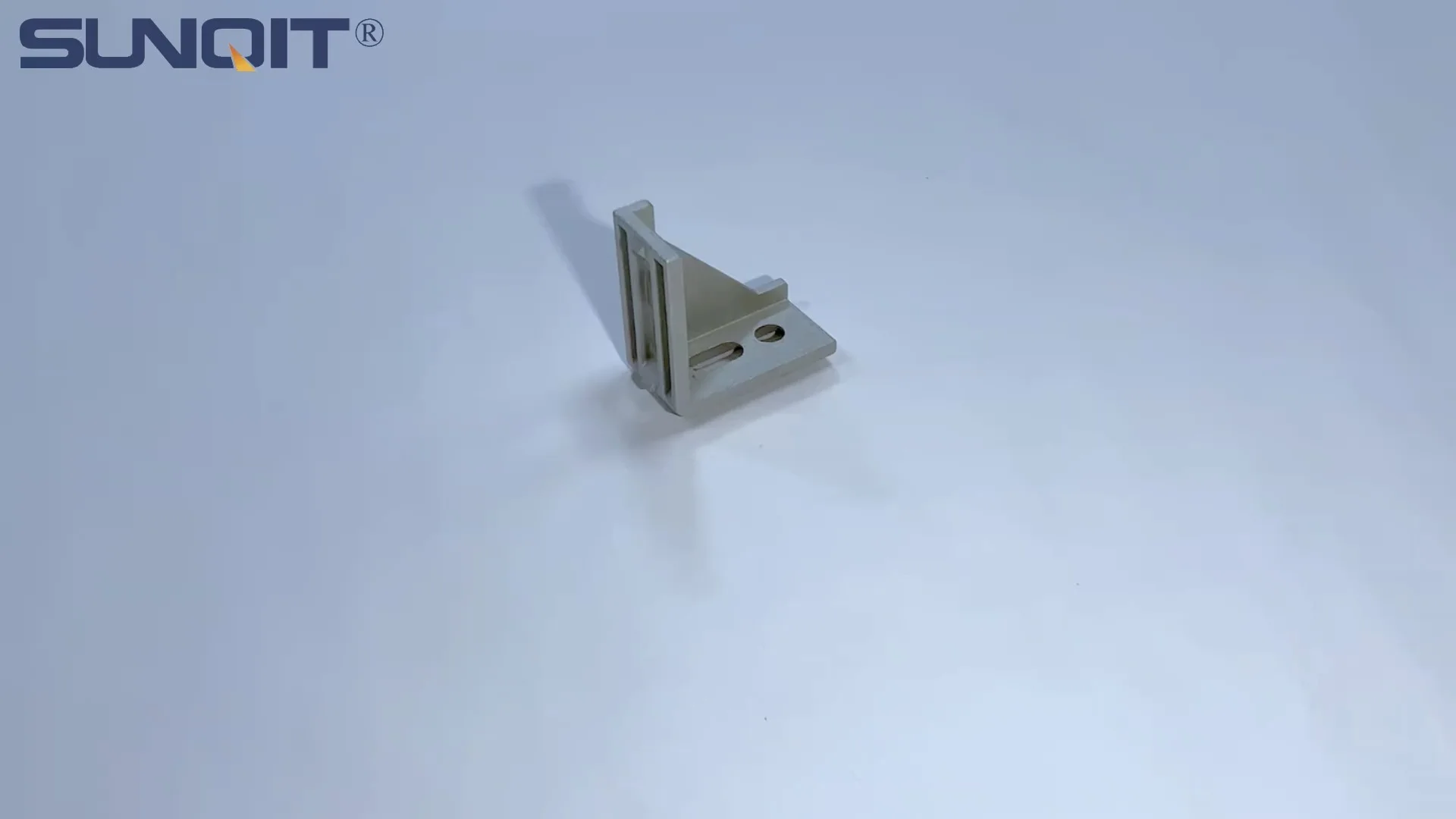
3060 Aluminum Angle Yards
It used for 90° flat connection for 20 series aluminum profile.
In the heart of Shenzhen's tech hub, where the air hums with the energy of innovation, Golden Tech Electronics has long been a staple in the 3C manufacturing scene. Specializing in smartphone components—think precision camera modules and circuit boards—the factory prides itself on churning out high-quality parts for global brands. But by early 2024, something was off. The production floor, once a model of efficiency, had started to feel like a relic. Workstations wobbled under the weight of new equipment, material racks couldn't keep up with expanding product lines, and reconfiguring layouts for new phone models took days instead of hours. "We were stuck in a cycle of fixing what broke instead of building for what's next," says Maria Chen, Golden Tech's Plant Manager, leaning against a now-retired steel workbench in the factory's break room. "That's when we realized: our infrastructure was holding us back."
What followed was a six-month renovation project centered on a quiet game-changer: 3060 Aluminum Angle Yards and 3060 Aluminum Profile . Paired with the right Aluminum Profile Accessories , these unassuming components would transform Golden Tech's workflow, turning chaos into cohesion. This is the story of how a factory rediscovered its agility—and why aluminum might just be the unsung hero of modern manufacturing.
The Breaking Point: When "Good Enough" Stopped Working
To understand why Golden Tech needed a overhaul, you have to step onto their old production floor. Picture this: rows of wooden workbenches, reinforced with steel brackets that had rusted at the joints. Some tables sat lopsided, propped up with scraps of wood to keep circuit boards from sliding off. Nearby, material racks—heavy, welded steel structures—held bins of screws and connectors, but adjusting their height meant bringing in a welder. "We'd launch a new camera module, and suddenly the racks were too short, or the workbench surfaces too narrow," Maria recalls. "Our team spent more time adapting to the space than building products."
The problems ran deeper than just inconvenience. Safety was a growing concern. ESD (Electrostatic Discharge) risks loomed large—wooden workbenches weren't conductive, so static electricity built up, threatening to fry sensitive microchips. "We had three ESD-related defects in one month," says Li Wei, the factory's Quality Control Lead. "Each cost us $10,000 in scrap and delays. That's when management finally said, 'Enough.'"
Flexibility was another pain point. In the 3C industry, product cycles are measured in months, not years. A new smartphone model might require rearranging 20 workstations to accommodate a larger circuit board or a new assembly sequence. With their old setup, that meant days of (dismantling) and rebuilding. "By the time we finished reconfiguring, the next model was already in the pipeline," Maria sighs. "We were always playing catch-up."
"Our team spent more time adapting to the space than building products. We were stuck in a cycle of fixing what broke instead of building for what's next." — Maria Chen, Plant Manager, Golden Tech Electronics
The Lightbulb Moment: Discovering 3060 Aluminum Angle Yards
The search for a solution led Maria and her team to a trade show in Guangzhou, where a booth for an aluminum profile supplier caught their eye. There, they saw it: a sleek, modular workstation built with 3060 Aluminum Profile —long, lightweight beams with T-shaped slots running their length—and 3060 Aluminum Angle Yards , L-shaped brackets that connected the profiles into sturdy frames. "It looked too simple to be true," Maria admits. "But when the sales rep showed us how you could snap accessories into the T-slots—shelves, tool holders, even ESD mats—I thought, 'This is it.'"
So, what makes 3060 Aluminum Profile and Angle Yards so special? Let's break it down. The "3060" refers to the profile's dimensions: 30mm wide, 60mm tall. Made from high-grade aluminum alloy, it's lightweight (about 1/3 the weight of steel) but surprisingly strong—able to support up to 200kg per meter when properly braced. The T-slot design is the real magic: instead of welding or drilling, you slide bolts, nuts, or specialized Aluminum Profile Accessories into the slots and tighten them. Need a shelf higher? Loosen the bolts, adjust, and retighten. Done in 5 minutes, not 5 hours.
The Angle Yards, specifically, solved Golden Tech's stability problem. These L-shaped brackets, made from the same 3060 aluminum, reinforced corners where profiles met, eliminating the wobble that had plagued their old workbenches. "Our old steel brackets would loosen over time, especially with the vibrations from assembly tools," Li Wei explains. "Aluminum Angle Yards lock into the T-slots with these little wedge nuts—they grip tighter the more weight you put on them. It's like a handshake that never gets weak."
But the profile and angle yards alone weren't enough. They needed accessories to turn frames into functional workspaces: end caps to smooth sharp edges, plastic slot covers to keep dust out, and adjustable feet to level workbenches on uneven floors. "The supplier walked us through their catalog of Aluminum Profile Accessories , and suddenly, the possibilities clicked," Maria says. "We could build a workstation, then add a tool rail, then a bin holder—all without modifying the frame itself."

From Blueprint to Build: The Renovation Journey
By March 2024, Golden Tech's renovation plan was set. The goal: replace 80% of the factory's workstations and material racks with 3060 Aluminum Profile setups, prioritizing the camera module assembly line (their busiest) first. The process wasn't without its hurdles—old habits die hard, and some workers were skeptical. "I've been using wooden benches for 15 years," one assembly line worker, Zhang Tao, told Maria during a pre-launch meeting. "What if this aluminum stuff bends under the equipment?"
To ease fears, the team started small: a pilot workstation, built in the factory's training area. They invited Zhang and his colleagues to test it—slamming tools down, stacking heavy component boxes, even leaning on the frame. "I stood on it," Zhang laughs now. "Felt solid as a rock. That's when I shut up and listened."
Step 1: Auditing the Chaos
Before a single aluminum beam was cut, Maria's team mapped every inch of the production floor. They measured workflow bottlenecks (where workers wasted steps fetching parts), noted ESD hotspots (areas with high static buildup), and documented how much space each product line needed. "We realized some material racks were taking up 30% more space than necessary because they couldn't be adjusted," says Li Wei. "That data became our renovation bible."
Step 2: Designing with Flexibility in Mind
Working with the aluminum supplier's engineers, Golden Tech drafted 3D models of the new layout. Key features included:
- Adjustable Workstations: Built with 3060 Aluminum Profile frames and 3060 Aluminum Angle Yards for stability. The tabletops? ESD-safe composite boards, secured to the frame with quick-release brackets (another Aluminum Profile Accessory ). "Now, when we launch a new camera module, we can raise the table by 10cm in 10 minutes," Maria says.
- Modular Material Racks: Instead of fixed steel shelves, racks used 3060 profiles with sliding shelf brackets. Bins could be moved up/down or side-to-side, and the racks themselves could be extended by adding more profile sections. "We used to have 5 separate racks for 5 phone models," Li Wei notes. "Now, one rack does the job—we just reposition the bins."
- Tool Walls: Vertical panels made from 3060 profiles, with hooks and holders for screwdrivers, tweezers, and soldering irons. No more digging through drawers—tools hung at eye level, customized to each worker's preference.
Step 3: Assembly Day—No Welders Required
When the first shipment of 3060 profiles, angle yards, and accessories arrived, the factory floor turned into a hive of activity. The beauty of aluminum profiles? They're pre-cut to length by the supplier, so assembly was more like building with giant Lego blocks. Workers used hex keys to tighten T-slot bolts, connected angle yards at corners, and snapped on end caps to avoid sharp edges. "We trained 10 workers in 2 hours," Maria says. "By lunch, they were assembling workstations faster than the supplier's demo team."
The most satisfying moment? Tearing down the old wooden workbench that had caused so many headaches. "We took a sledgehammer to it," Zhang Tao grins. "Felt like we were breaking free."

The Results: Numbers That Speak for Themselves
Six months after the renovation, Golden Tech's camera module line is unrecognizable. The proof, though, is in the metrics. Let's compare "Before" and "After" with a snapshot of key performance indicators:
| Metric | Before Renovation | After Renovation (3060 Aluminum Setup) | Improvement |
|---|---|---|---|
| Time to Reconfigure Workstations | 48 hours (with welding) | 2 hours (tool-free adjustments) | 96% faster |
| ESD-Related Defects | 3 per month | 0 in 6 months | 100% reduction |
| Worker Steps per Hour (Fetching Parts) | 45 steps | 18 steps | 60% fewer steps |
| Space Utilization (Camera Module Line) | 80 sq.m (wasted space from fixed racks) | 52 sq.m (modular racks) | 35% more efficient |
| Worker Satisfaction Score (1-10) | 5.2 | 8.7 | 67% increase |
For Maria, the most rewarding change isn't in the spreadsheets—it's in the factory's vibe. "Walk through now, and you'll see workers smiling," she says. "They're not fighting the space anymore; the space works for them. Zhang Tao even decorated his workstation with a small plant—something he never would've done with the old wobbly bench."
Cost-wise, the investment paid off faster than expected. While 3060 Aluminum Profile and accessories cost more upfront than wood or basic steel, Maria estimates they'll recoup the expense in 18 months through reduced downtime, lower defect rates, and fewer replacement parts. "And unlike the old steel racks, these aluminum frames won't rust or warp," she adds. "We'll be using them for 10 years, easy."
"They're not fighting the space anymore; the space works for them. Zhang Tao even decorated his workstation with a small plant—something he never would've done with the old wobbly bench." — Maria Chen

Looking Ahead: Aluminum as the Future of 3C Manufacturing
Today, Golden Tech is rolling out 3060 Aluminum Angle Yards and profiles to other lines—starting with their circuit board assembly area. They're even experimenting with custom Aluminum Profile Accessories , like tool holders shaped specifically for their soldering irons. "The supplier said, 'If you can dream it, we can make the bracket for it,'" Maria says. "That's the beauty of this system—it grows with you."
For other 3C factories stuck in a rut, Maria has a simple message: "Stop patching old systems and start building flexible ones. 3060 Aluminum Profile isn't just a material—it's a mindset. It lets you adapt to what's next, not just what's now."
As for Zhang Tao? He's become the factory's unofficial aluminum evangelist. "I tell new workers, 'This isn't just a bench—it's your partner,'" he says, patting the edge of his 3060-framed workstation. "And partners don't let you down."
In a world where 3C manufacturing moves at the speed of innovation, maybe the most innovative tool isn't a robot or a software program. Sometimes, it's a humble aluminum beam—strong, light, and ready to change with the times. Golden Tech learned that lesson the hard way. Now, they're not just building better products—they're building a better way to build.