- Company Articles
- Products and Technology
- Application Cases
- Case Study: 3C Assembly Line Optimization with Flat Swivel Castor Wheel with Brake

Case Study: 3C Assembly Line Optimization with Flat Swivel Castor Wheel with Brake
Related Product
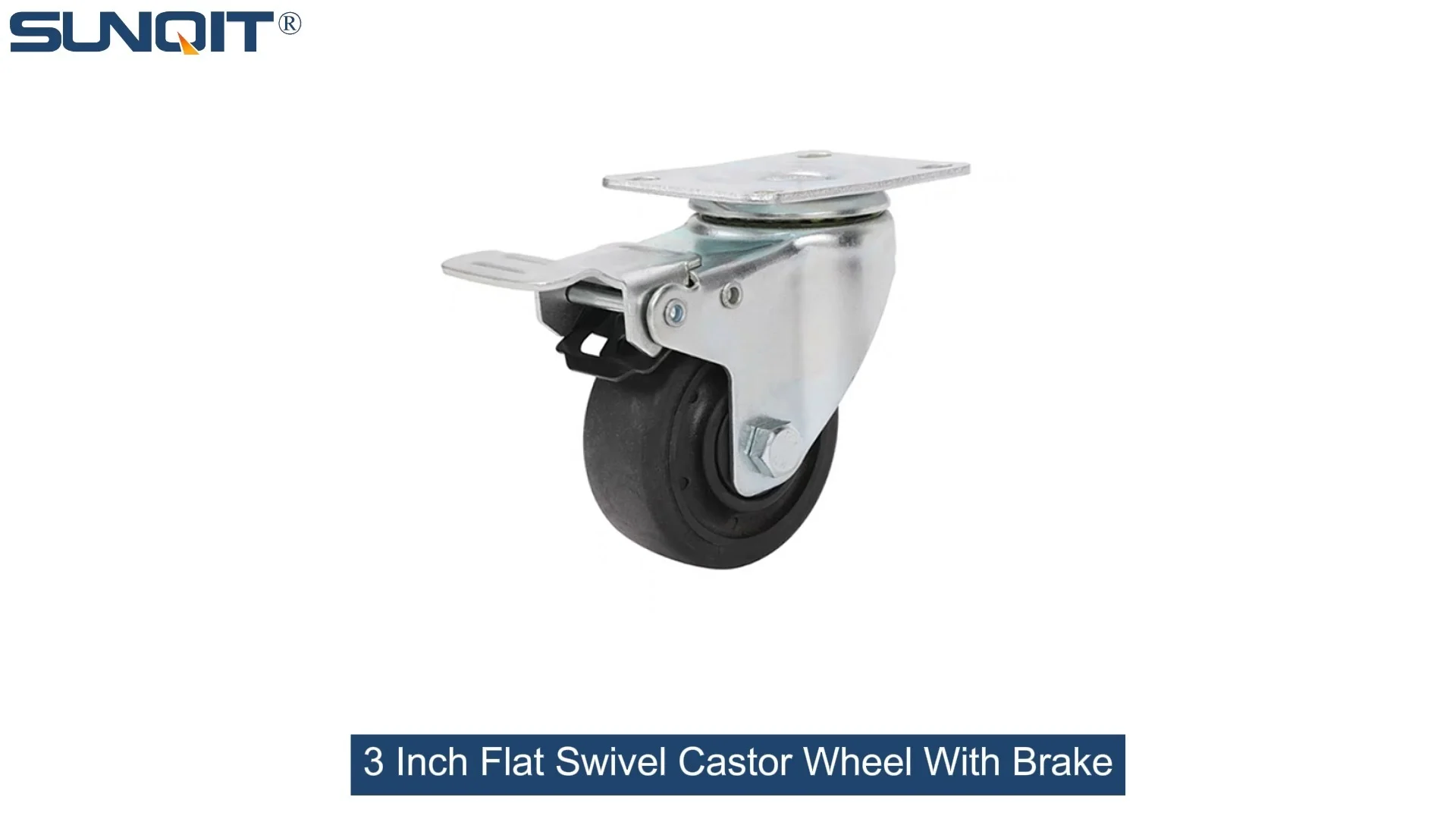
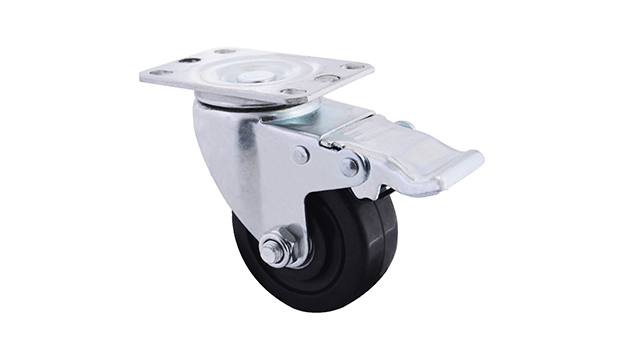
Flat Swivel Castor Wheel With Brake
Chair Casters Ball Bearing Wheels Rubber Base with brake design. Resistant to abrasion, impact and corrosion. Heavy payload can hold 70Kgs per pcs,which can make it works at a stable and smooth status.
The 3C Manufacturing Challenge: Speed, Flexibility, and the Cost of Static Workflows
In the world of 3C (Computer, Communication, Consumer Electronics) production, where new smartphone models launch every six months and smartwatch designs evolve overnight, manufacturers don't just compete on product features—they compete on how quickly they can adapt. A factory that can reconfigure an assembly line in hours instead of days gains a critical edge, turning market trends into revenue before competitors can blink. But for many mid-sized manufacturers, outdated workflows and rigid equipment turn this agility into a distant dream.
Take Everest Electronics , a Guangzhou-based producer of smart home devices and wearable tech. In early 2024, as they geared up to mass-produce a new line of budget fitness trackers, their 5,000-square-meter factory ran into a wall: their assembly line, built around fixed workbenches and immovable conveyor systems, couldn't keep up with the product's frequent design tweaks. What should have been a routine launch threatened to become a logistical nightmare—until a small but powerful component changed everything: the flat swivel castor wheel with brake .
The Breaking Point: When Static Workbenches Cripple Production
Everest's assembly process for the fitness tracker involved 16 stations, from circuit board soldering to battery installation and final quality checks. On paper, it looked efficient—but on the factory floor, bottlenecks emerged daily. Production Manager Chen Hui recalls the frustration vividly: "We'd get a design update from R&D—say, a new sensor module that required a different testing jig—and suddenly, we needed to shift three workstations. With fixed workbenches bolted to the floor, moving even one station meant shutting down that section for 3–4 hours. By the time we restarted, we'd already fallen behind schedule."
The issues ran deeper than just reconfiguration time. Workers reported chronic fatigue from repetitive movements: fetching tools from distant shelves, carrying heavy component bins between stations, and adjusting their posture to reach awkwardly placed equipment. "Our ergonomics survey was alarming," says HR Director Zhou Li. "32% of workers reported wrist or back pain, and error rates spiked in the afternoon when fatigue set in. We weren't just losing time—we were risking our team's well-being."
To make matters worse, the factory's conveyor system, which transported partially assembled trackers between stations, had rigid junctions that often jammed. "If a conveyor stopped, the whole line backed up," Chen explains. "Workers would pile up unfinished units on the floor, leading to scratches and misplacements. We were spending 15% of our daily output just reworking damaged products."
The Turning Point: A Lean System Supplier's Insight
Desperate to hit their Q3 launch date, Everest brought in LeanPro Solutions , a local lean system supplier specializing in factory optimization. Over three days, LeanPro's consultants shadowed workers, mapped workflows, and analyzed production data. Their conclusion? The root cause wasn't poor planning or untrained staff—it was the factory's immobility . "Your workbenches and conveyors are stuck in place, but your products aren't," noted LeanPro's lead consultant. "To build agile products, you need an agile workspace."
The solution centered on three upgrades, with the flat swivel castor wheel with brake as the cornerstone:
1. Mobile Workstations: Workbenches That Move with the Work
Everest's existing workbenches were sturdy but static. LeanPro proposed retrofitting them with heavy-duty flat swivel castor wheels with brake—industrial-grade wheels designed to support 300kg per unit while offering 360° rotation. "The key is the brake mechanism," explains Chen. "Workers can swivel the bench into place, step on the brake to lock it, and it stays rock-solid during assembly. No more wobbling, no more forklifts needed for repositioning."
2. Flow Racks: Gravity-Fed Efficiency at the Worker's Fingertips
To reduce worker movement, LeanPro installed flow racks alongside each workstation. These inclined racks use gravity to feed components (like circuit boards, batteries, and straps) directly to the worker, eliminating trips to central storage. "Before, a worker might walk 100 meters a day just to get parts," Zhou says. "Now, the parts come to them. It's like having a mini supply chain right at their bench."
3. Modular Conveyors: Flexible Transport Without the Jams
The old rigid conveyor system was replaced with shorter, interlocking segments—each mounted on its own castors. This allowed workers to reconfigure the conveyor path in minutes, adding curves or bypassing bottlenecks as needed. "We even added roller track sections at junction points to reduce manual transfers," Chen adds. "Products glide smoothly now, no more jams."

Implementation: From Plan to Production in 21 Days
Everest approved the upgrades in late June, giving the team just three weeks to implement before prototype testing began. The process unfolded in four phases, with minimal disruption to ongoing production:
Phase 1: Workbench Retrofits (Days 1–7)
A local metalworking shop modified 32 workbenches, welding steel brackets to their bases and installing four flat swivel castor wheels with brake per bench. "We tested one bench first," Chen recalls. "A worker moved it across the factory floor, locked the brakes, and assembled a tracker—zero issues. That's when the team really got on board."
Phase 2: Flow Rack Installation (Days 8–14)
LeanPro's technicians installed 18 flow racks, each customized to hold the tracker's components. The racks were positioned 60cm from each workstation, ensuring parts were within arm's reach. "We color-coded bins for different components—red for batteries, blue for screens—to reduce picking errors," Zhou notes.
Phase 3: Conveyor Modularization (Days Days 15–18)
The old conveyor was dismantled, and 12 modular segments (each 2 meters long) were installed. Each segment featured roller track guides and quick-connect joints, allowing workers to link or separate them using simple levers. "We trained a core team of 10 workers to reconfigure the line," Chen says. "By day 18, they could switch from a linear to a U-shaped layout in under 20 minutes."
Phase 4: Worker Training (Days 19–21)
Skepticism initially ran high—"Why fix something that's worked for years?" some workers wondered. But hands-on training changed minds. "We held workshops where workers practiced reconfiguring workstations and flow racks," Zhou explains. "One worker, who'd been with us 10 years, said, 'I wish we'd done this sooner. My back feels 10 years younger.'"

The Results: Faster, Smoother, and Happier Production
By July 1, the new setup was fully operational. Over the next three months, Everest tracked key metrics—and the improvements were staggering. The table below compares pre- and post-optimization performance:
| Metric | Before Optimization | After Optimization | Improvement |
|---|---|---|---|
| Line Reconfiguration Time | 3–4 hours | 20–30 minutes | 92% faster |
| Worker Movement per Shift | 1.2km | 0.4km | 67% reduction |
| Error Rate (Final Inspection) | 7.8% | 2.1% | 73% lower |
| Daily Output (Units) | 850 | 1,200 | 41% increase |
| Worker Satisfaction Score (1–10) | 5.6 | 8.9 | 59% higher |
The most impactful win? Meeting the launch deadline. "We reconfigured the line 11 times during prototype testing—something that would have taken 33+ hours before," Chen says. "With the new setup, it took just 5.5 hours total. We hit our production target two weeks early and even had time to ramp up for holiday orders."
Workers noticed the difference, too. "I used to dread the afternoon shifts—my feet and back hurt so bad," says assembly worker Liu Jia. "Now, I roll my workstation to the tools, parts come to me, and the brake keeps everything steady. I can focus on building the tracker, not fighting the bench."
The Takeaway: Small Components, Big Transformations
Everest's success story underscores a powerful lesson: in manufacturing, innovation isn't just about high-tech robots or AI—it's about rethinking the basics. The flat swivel castor wheel with brake , as it seems, was the catalyst that turned a rigid assembly line into a flexible, worker-centric space. But the real magic was how it worked with flow racks and modular conveyors to create a system —one where every element supported the others.
"We used to think lean manufacturing was about cutting costs," Chen reflects. "Now I realize it's about empowering people. When you remove the barriers to good work—like heavy lifting, wasted movement, and frustrating delays—workers don't just produce more; they produce better. And in the 3C industry, better and faster is everything."
As Everest expands the mobile workstation model to its smart speaker line, Chen has a new mantra for his team: "If your workbench can't adapt, your product can't either." And with their new flat swivel castor wheels with brake, adaptation is now just a swivel and a click away.