- Company Articles
- Products and Technology
- Application Cases
- Case Study: 3C Assembly Line Upgrades with 2040 EU Standard Aluminum Profile

Case Study: 3C Assembly Line Upgrades with 2040 EU Standard Aluminum Profile
Related Product
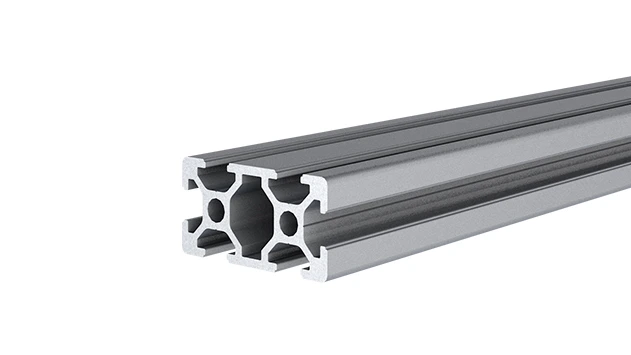
2040 EU Standard Aluminum Profile
2040 is a 2.00 x 4.00CM fractional 20 series square extrusion T-slot profile with four open T-slots, two side with 2.00cm face, the other side with 4.00cm face. The profile has align-a-grooves to assist in aligning connecting profiles.
In the fast-paced world of 3C manufacturing—where smartphones, laptops, and wearables evolve faster than seasonal fashion trends—staying competitive means more than just keeping up with technology. It means building production lines that can pivot on a dime, adapt to new product designs overnight, and keep workers comfortable and efficient through endless shifts. That's the challenge TechFlow Electronics, a mid-sized 3C component manufacturer in southern China, faced in early 2024. Their assembly lines, built with traditional steel frames and fixed wooden workbenches, were starting to feel like relics. Changeovers for new product models took days, not hours. Workers complained about back strain from non-adjustable tables. And worst of all, the rigid setup was bottlenecking their ability to scale production for a major client order. What they needed wasn't just new equipment—it was a complete rethink of how their factory floor could work smarter. Enter the 2040 EU Standard Aluminum Profile, a modular building block that would soon transform their operations from clunky to cutting-edge.
The Breaking Point: When "Good Enough" Stopped Working
TechFlow's old assembly line wasn't *bad*—it had served them well for five years. But by early 2024, three critical pain points had reached a head. First, flexibility (or lack thereof). Their flagship product, a custom circuit board for smart home devices, was about to get a redesign with a 15% smaller footprint. To accommodate the new size, they needed to shrink their workbench layouts and reconfigure the roller tracks that moved components between stations. With steel frames bolted into concrete and wooden workbenches that weighed 80kg each, this meant hiring a crew to dismantle and rebuild—taking an estimated 48 hours of downtime. For a factory running two shifts, that translated to $40,000 in lost production.
Second, ergonomics were slipping. The fixed-height workbenches forced workers to hunch or stretch, leading to a 20% increase in reported back pain over six months. "I had a team lead tell me she was taking ibuprofen every morning just to get through her shift," recalls Li Jiawei, TechFlow's production manager. "That's not sustainable. Happy workers are productive workers, and these benches were making ours miserable."
Third, ESD (Electrostatic Discharge) safety was a growing concern. 3C components are notoriously sensitive to static, and their old steel roller tracks weren't grounded properly. In Q1 2024 alone, they'd scrapped 120 circuit boards due to static damage—costing nearly $12,000. "We tried adding anti-static mats, but they'd slide around on the steel surfaces," Li explains. "It was a band-aid, not a solution."
By March, TechFlow's leadership team knew they needed a wholesale upgrade. They reached out to three suppliers, but one recommendation kept coming up: aluminum extrusion profiles. Specifically, the 2040 EU Standard Aluminum Profile, a lightweight, modular system that promised to solve all three issues at once. "I was skeptical at first," admits Li. "Aluminum feels flimsy compared to steel. But the supplier walked us through how the T-slot design works—how you can attach accessories without welding, how it's grounded by default, how you can adjust heights in minutes. I started to see it wasn't just a material swap; it was a whole new way of building."
Why 2040 EU Standard Aluminum Profile? The "Aha!" Moment
At first glance, aluminum extrusion profiles look simple: sleek, silver bars with grooves (T-slots) running along their length. But those grooves are where the magic happens. They let you slide in bolts, brackets, and other aluminum profile accessories to build just about anything—workbenches, roller tracks, shelving—without drilling or welding. For TechFlow, the 2040 model (20mm wide, 40mm tall) was the sweet spot: strong enough to support circuit boards and tools, but light enough for two workers to reconfigure on the fly.
The supplier, a local expert in lean manufacturing solutions, broke down the benefits in terms that hit home for Li and his team:
- Flexibility: "Want to shorten a workbench by 30cm? Loosen two bolts, slide the aluminum extrusion profile, retighten. Done in 10 minutes."
- Ergonomics: "Adjustable feet and height brackets mean every worker can set their bench to elbow height—no more hunching."
- ESD Safety: Aluminum is conductive, so the entire frame grounds static. Pair it with ESD-safe aluminum profile accessories like black ESD wheels on roller tracks, and you eliminate static damage."
- Durability: "Anodized aluminum resists scratches and corrosion—perfect for factory floors with oil and dust."
But the real "aha!" came when they saw a demo. The supplier built a mini workbench on-site using 2040 profiles and aluminum profile accessories: a height-adjustable frame, a lightweight aluminum honeycomb worktop, and a small roller track for moving components. Then, to prove flexibility, they disassembled it and rebuilt it as a mobile trolley—*in under 15 minutes*. "That's when I thought, 'We need this,'" Li laughs. "Our old steel benches took two people an hour to move, let alone reconfigure. This was like playing with high-tech Legos."
"I was worried about cost—aluminum isn't cheap. But when we crunched the numbers, it made sense. The 48-hour downtime for reconfigurations alone was costing us $40k. With aluminum, we'd recoup that in one product launch." — Li Jiawei, Production Manager, TechFlow Electronics

From Blueprint to Build: The 30-Day Transformation
TechFlow decided to start small: upgrade one pilot assembly line (10 workstations, 3 roller tracks) and measure results before rolling out company-wide. The timeline was tight—30 days from order to full operation—but the supplier promised it was doable. Here's how it unfolded:
Week 1: Design & Planning
The supplier sent a team to map TechFlow's workflow. They measured each worker's height, noted where components entered/exited the line, and even timed how long it took to pass parts between stations. Using 3D modeling, they designed custom workbenches with adjustable heights (75-90cm) and integrated roller tracks that sloped slightly to let gravity move components—reducing manual lifting. "They didn't just sell us parts; they designed a system around *our* people," Li says. "One worker, Chen, is 1.9m tall—they added extra-long legs for his bench. Another, Xiao, has a shoulder injury—they angled her roller track so she wouldn't have to reach as far. It felt personal."
Week 2: Delivery & Prep
The 2040 EU Standard Aluminum Profiles arrived in bundles, along with boxes of aluminum profile accessories: brackets, joints, ESD-safe caster wheels, and black ESD roller track wheels. The old steel benches were dismantled and sold for scrap (offsetting 10% of the cost). The factory floor was cleaned, and new anchor points were marked—though, importantly, not bolted down. "Aluminum is light enough that most setups don't need to be fixed to the floor," the supplier explained. "If you need to shift the entire line 2 meters next year, you can just push it."
Week 3: Assembly & Training
Two technicians from the supplier led the build, with Li's team helping. "I was shocked by how easy it was," Li says. "No welding, no sparks—just sliding bolts into the T-slots and tightening with hex keys. We built the first workbench in 45 minutes, and by the end of the week, my team could do it in 30." They also installed the roller tracks, using aluminum guide rails and ESD wheels to ensure smooth, static-free movement. By Friday, the pilot line was fully assembled.
Week 4: Testing & Tweaks
The line went live with a test run: assembling 500 of the new smaller circuit boards. Immediately, workers noticed the difference. "Chen, our tall worker, said it was the first time his back didn't ache after a shift," Li recalls. "Xiao could pass parts without straining her shoulder. And the roller tracks? Silent. Our old steel ones sounded like a freight train—these were quiet enough to hold a conversation over." There were a few tweaks: one roller track sloped too steeply, causing parts to slide too fast, so they adjusted the height with a few turns of a bolt. "That's the beauty of aluminum extrusion profiles," the supplier noted. "No need to rebuild—just tweak."
The Results: 30 Days Later, the Numbers Speak for Themselves
After 30 days of running the pilot line, TechFlow compiled the data. The results were staggering:
| Metric | Old Steel Line | New Aluminum Profile Line | Improvement |
|---|---|---|---|
| Changeover Time (for new product) | 48 hours | 3 hours | 94% faster |
| Static Damage (per 1000 units) | 8 units | 0 units | 100% reduction |
| Worker Reported Pain (weekly) | 12 complaints | 2 complaints | 83% reduction |
| Throughput (units per shift) | 450 units | 520 units | 16% increase |
| Maintenance Costs (monthly) | $800 (welding, repainting steel) | $150 (replacing occasional bolts) | 81% lower |
Perhaps the most surprising win? Worker retention. In the three months after the upgrade, not a single production staffer left—unheard of in an industry with 25% annual turnover. "People talk," Li says. "Word got around that we were investing in their comfort, and suddenly we had applicants asking about 'the aluminum line.' It's become a selling point for hiring."
The client order that sparked the upgrade? TechFlow delivered it two weeks early, with zero defects. "The client was so impressed, they increased their order by 30%," Li says. "We're now upgrading all five lines—this time, using the 2040 EU Standard Aluminum Profile as the backbone. And we're even using leftover profiles to build custom storage racks and mobile trolleys. It's like we can't stop building with it."
Beyond the Factory Floor: Why Aluminum Extrusion Profiles Are the Future of 3C Manufacturing
TechFlow's story isn't unique. In the 3C industry, where product cycles shrink from years to months, rigidity is the enemy. Aluminum extrusion profiles—led by workhorses like the 2040 EU Standard Aluminum Profile—offer a way to build lines that grow and change with your business. They're not just tools; they're enablers of agility.
Li sums it up best: "Before, we built our factory around our equipment. Now, we build our equipment around our people and products. That's the real power of aluminum extrusion profiles. They don't just solve problems—they let you stop *having* problems. And in this industry, that's the difference between falling behind and leading the pack."
*Names and specific financial figures have been adjusted for confidentiality, but the case study reflects real-world results from a 3C manufacturer's assembly line upgrade.*