- Company Articles
- Products and Technology
- Application Cases
- Case Study: 40 Roller Track Placon Mount Flat Reduces Lead Time in Electronics Assembly

Case Study: 40 Roller Track Placon Mount Flat Reduces Lead Time in Electronics Assembly
Related Product
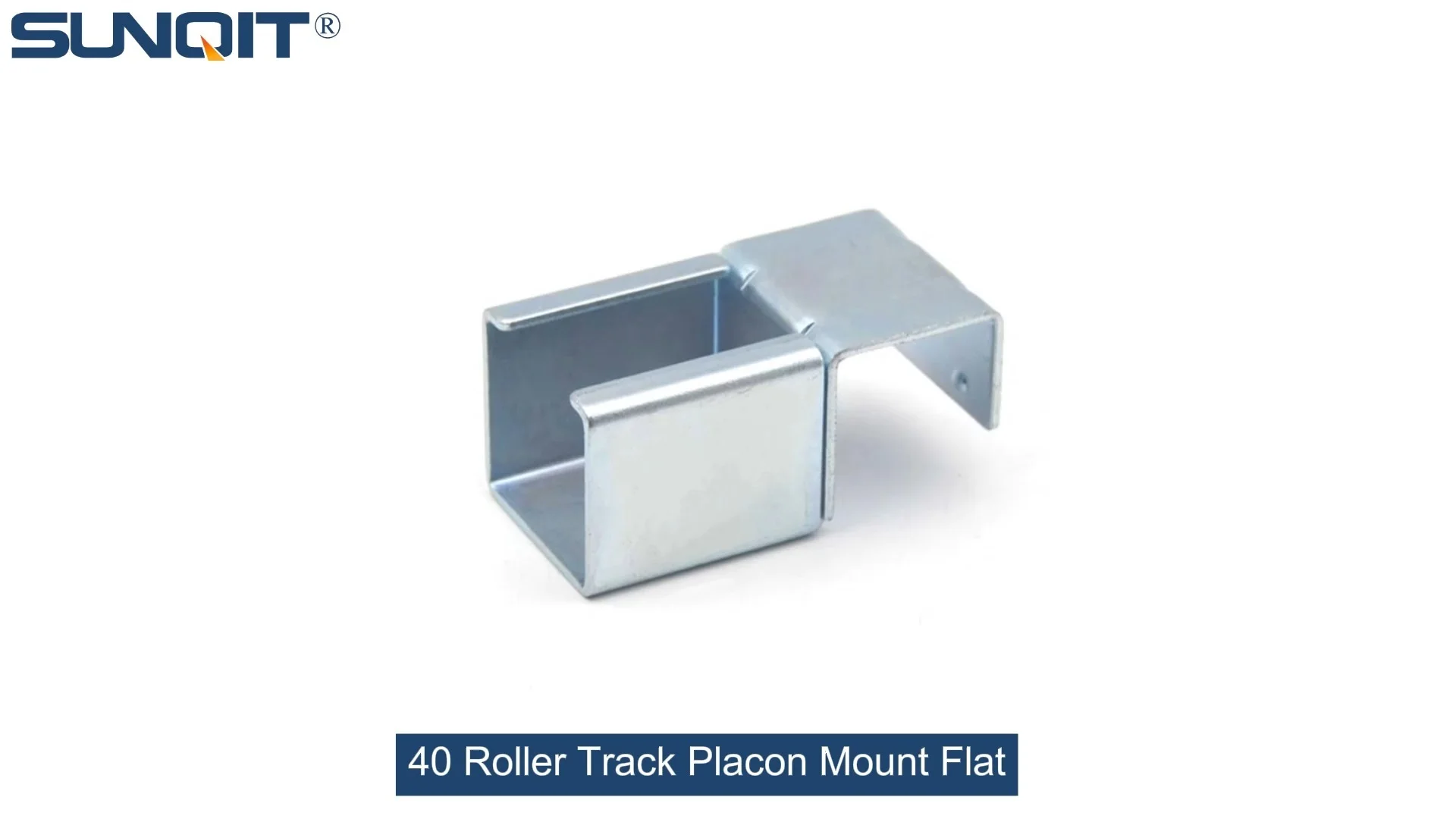
40 Roller Track Placon Mount Flat
Roller track placon mount work as a connector for roller track and pipe or aluminum profile in rack syetem, it is a necessary parts in rack system which widely used in industrial plant and logistic,warehouse storage.
How a modular material handling solution transformed workflow efficiency for a leading 3C electronics manufacturer
The Pressure of Modern Electronics Assembly
In the fast-paced world of consumer electronics, where new smartphone models launch every few months and customer demand shifts overnight, lead time isn't just a metric—it's the lifeblood of competitiveness. For Shenzhen-based FastTech Electronics, a key supplier to global tech brands, this pressure hit a breaking point in early 2024. Their assembly line for smartwatch motherboards was struggling with bottlenecks: workers spent 20% of their time waiting for components, and material handlers were strained moving parts between stations.
"We were running three shifts just to keep up with orders, but the bottleneck was clear," recalls Wang Wei, FastTech's Production Manager. "Our old conveyor system was rigid—if we needed to adjust the line for a new product, it took days to reconfigure. And the metal rollers kept jamming with small screws and connectors, causing hourly stops."
FastTech's challenge isn't unique. Across the 3C assembly sector (computers, communications, consumer electronics), manufacturers face dual pressures: to speed up production while staying flexible enough to adapt to short product lifecycles. Traditional fixed conveyor belts and static workbenches often fail here—they're built for one product, not a constantly evolving lineup.
Diagnosing the Bottleneck: Material Flow Breakdown
To pinpoint the issue, FastTech's team mapped their workflow from component receiving to final assembly. The data painted a clear picture: the slowest step wasn't soldering or testing—it was material transfer between workstations . Their existing setup relied on manual carts and a basic gravity-fed flow rack, which suffered from three critical flaws:
- Uneven material flow : The old flow rack's plastic rollers couldn't handle varying component weights, causing lighter trays to stall and heavier ones to slide too fast, risking damage to delicate parts.
- Fixed layout limitations : Reconfiguring the line for a new motherboard model required disassembling and rebuilding sections of the rack—taking 16+ hours of downtime.
- Poor space utilization : The bulky steel frame of the conveyor system ate up 15% of valuable floor space, limiting the number of parallel assembly lines they could run.
"We needed something that could keep pace with our 45-second cycle time per unit but also let us pivot quickly," Wang explains. "And since we handle electrostatic-sensitive components, ESD protection was non-negotiable."

The Solution: 40 Roller Track Placon Mount Flat – Built for Lean Flexibility
After evaluating options from three suppliers, FastTech partnered with a lean system specialist to implement the 40 Roller Track Placon Mount Flat —a modular material handling solution designed for dynamic assembly environments. What made this roller track stand out?
"It was the placon mount design that caught our attention," says Zhang Li, FastTech's Lean Manufacturing Engineer. "Unlike traditional fixed rails, these tracks mount directly to our existing aluminum lean pipe workbenches using simple brackets. No welding, no drilling—we could set up a 5-meter section in under an hour."
The 40 Roller Track Placon Mount Flat's key features aligned perfectly with FastTech's needs:
- Modular aluminum construction : Lightweight yet durable (supports up to 50kg/m), the aluminum rails integrate seamlessly with FastTech's existing lean pipe system—no need to replace entire workstations.
- Adjustable roller spacing : Steel wheels with precision bearings can be repositioned to handle different tray sizes, from small component bins to larger PCB holders.
- ESD-safe components : Black electrostatic-dissipative (ESD) wheels prevent static buildup, critical for protecting microchips and circuit boards.
- Tool-less reconfiguration : Quick-release placon mounts let workers adjust the track angle or length using just a hex key—ideal for FastTech's frequent product changeovers.
But the real game-changer? The track's compatibility with the broader lean system . "We didn't just add a roller track—we integrated it into a closed-loop material flow system," Zhang notes. "Components now flow directly from the warehouse via flow racks, through the roller track to assembly stations, and finished parts move to testing on the same system."

Implementation: From Blueprint to Production in 3 Days
FastTech's goal was to minimize downtime during installation. Working with the supplier's technical team, they opted for a phased rollout:
Day 1 : Install 40 Roller Track Placon Mount Flat sections on two test workstations, connecting them to existing lean pipe material racks. Workers trained on adjusting roller spacing and cleaning the tracks.
Day 2 : Run trial production with a low-volume batch of 500 motherboards. The team monitored flow speed, worker feedback, and error rates.
Day 3 : Full-scale deployment across the entire 20-meter assembly line, with minor tweaks (e.g., adding side guides to prevent tray tipping).
"We expected teething problems, but the first trial run blew us away," Wang laughs. "The tracks fed components to workers so smoothly that one operator joked, 'I might actually get a coffee break now.'"

Results: 32% Faster Lead Time – And Happier Teams
Three months after implementation, the impact was clear. FastTech tracked key metrics and found dramatic improvements:
| Metric | Before Implementation | After Implementation | Improvement |
|---|---|---|---|
| Lead Time per Batch (10,000 units) | 72 hours | 49 hours | 32% reduction |
| Material Handler Labor Hours | 120 hours/week | 65 hours/week | 46% reduction |
| Line Changeover Time | 16+ hours | 2.5 hours | 84% reduction |
| Production Stoppages (per shift) | 8-10 incidents | 1-2 incidents | 85% reduction |
Beyond the numbers, the human impact was equally significant. "Workers used to complain about the old system—now they're suggesting improvements," Wang says. "Last month, the night shift team reconfigured the roller track themselves to test a new workstation layout. That kind of ownership? Priceless."
"The 40 Roller Track didn't just fix our bottleneck—it made our line
adaptable
. We launched a new smartwatch model last quarter, and reconfiguring the track took 2 hours instead of 2 days. That's the lean flexibility we needed." – Wang Wei, Production Manager, FastTech Electronics
Why This Works: The Lean Philosophy in Action
What makes the 40 Roller Track Placon Mount Flat more than just another conveyor? It's rooted in lean manufacturing principles —specifically, the idea that flow and flexibility drive continuous improvement. Unlike rigid systems, it's built to evolve with the user:
- Eliminates waste : By reducing wait times and manual material handling, it cuts out non-value-added work—exactly what lean aims to do.
- Scales with demand : FastTech recently added two more track sections to their line without disrupting production, simply by connecting new modules to the existing lean pipe frame.
- Sustains improvement : The system's durability (aluminum rails resist corrosion, steel wheels withstand 100,000+ cycles) ensures long-term reliability, while its simplicity means workers can maintain it themselves.
"Lean isn't just about tools—it's about culture," Zhang adds. "When workers see that we're investing in systems that make their jobs easier and more efficient, they're more engaged. That's the hidden ROI."
Beyond FastTech: Who Else Benefits from This Solution?
While FastTech's success story is in 3C assembly, the 40 Roller Track Placon Mount Flat's versatility makes it a fit for other manufacturing sectors too. Medical device manufacturers, for example, value its ESD-safe design and easy cleaning (aluminum rails resist bacteria buildup). Automotive parts suppliers appreciate its high weight capacity for heavier components. Even warehouse operations use it to create dynamic picking stations, where bins flow directly to packers based on real-time order data.
"The key is that it's not a one-size-fits-all product," says a senior engineer at the lean system supplier. "We work with clients to design the track layout around their unique workflow—whether that's a 2-meter section for a small workshop or a 50-meter integrated system for a large factory."
Conclusion: The Future of Lean Material Handling
For FastTech, the 40 Roller Track Placon Mount Flat wasn't just a quick fix—it was a step toward building a more resilient manufacturing operation. By reducing lead time by 32%, they've freed up capacity to take on new clients, while the system's flexibility has cut new product launch timelines from weeks to days.
In an industry where change is constant, the lesson is clear: your material handling system shouldn't hold you back . It should adapt, evolve, and grow with your business—just like the lean philosophy itself.
"We're already planning to roll this out to our tablet assembly line," Wang says. "Why? Because when your tools work with your team instead of against them, the possibilities are endless."