- Company Articles
- Products and Technology
- Application Cases
- Case Study: 4040C EU Standard Aluminum Profile in Medical Device Assembly Lines

Case Study: 4040C EU Standard Aluminum Profile in Medical Device Assembly Lines
Related Product
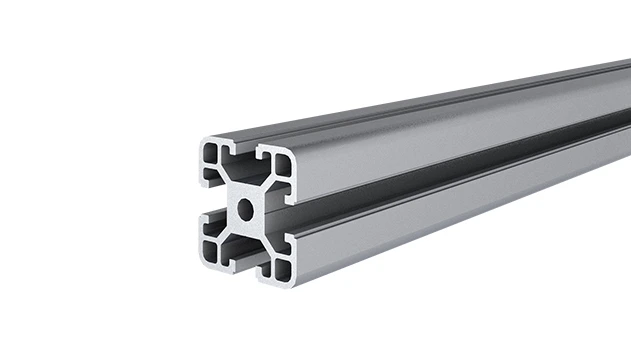
4040C EU Standard Aluminum Profile
4040C is a 4.00x4.00 CM fractional 40 series square extrusion T-slot profile with four open T-slots, each side with 4.00cm face. The profile has align-a-grooves to assist in aligning connecting profiles.
In the fast-paced world of medical device manufacturing, where precision, compliance, and adaptability are non-negotiable, the assembly line is the heartbeat of production. For MediTech Innovations—a mid-sized manufacturer specializing in diagnostic equipment and surgical tools—this heartbeat was starting to stutter. Their aging assembly stations, built with rigid steel frames and fixed layouts, were struggling to keep up with the demands of new product launches, ergonomic regulations, and the need for rapid reconfiguration. That's when they turned to a solution that would redefine their production floor: the 4040C EU standard aluminum profile .
The Challenge: Rigidity in a World of Change
MediTech's pain points were familiar to many in manufacturing, but amplified by the high stakes of medical devices. "We were spending 40% of our engineering hours just reworking workstations for new tool designs," recalls Elena Marquez, MediTech's Production Manager. "Our old steel frames required welding and drilling to modify—if a new diagnostic scanner was 2 inches wider than the last, we'd have to rebuild the entire workstation from scratch. It was costly, time-consuming, and killing our ability to innovate."
Beyond inefficiency, there were ergonomic and safety concerns. Steel workbenches were heavy, making height adjustments nearly impossible, leading to increased worker fatigue and a spike in minor injuries. Regulatory compliance was another hurdle: medical devices demand strict ESD (Electrostatic Discharge) control, and their existing setup relied on add-on mats that often peeled or lost conductivity over time. "We needed a system that was flexible, durable, and inherently compatible with our quality standards," Elena adds. "Something that could grow with us, not hold us back."
The Solution: Aluminum Extrusion Profile Meets Lean System Principles
After months of research, MediTech partnered with a lean system supplier specializing in modular manufacturing solutions. The star of the proposal? The 4040C EU standard aluminum extrusion profile —a lightweight, high-strength aluminum rail with a T-slot design that promised to transform their assembly lines. "At first, we were skeptical," admits Raj Patel, MediTech's Lead Engineer. "Steel has been the industry standard for decades. But when we saw how the 4040C profiles could be reconfigured with just a hex key and a few aluminum profile accessories , we were sold."
Aluminum extrusion profiles like the 4040C are engineered for modularity. Their hollow, rectangular cross-section and integrated T-slots allow for quick attachment of accessories—think brackets, shelves, handles, and even ESD-safe work surfaces—without welding or permanent modifications. For MediTech, this meant workstations that could evolve with product designs, not against them. "It's like building with industrial-grade Legos," Raj jokes. "But make no mistake—these aren't toys. The 4040C's aluminum alloy (6063-T5) has a tensile strength of 180 MPa, more than enough to support our heaviest components, like the 30kg control panels for our MRI contrast injectors."

Designing the Future: From Concept to Workbench
The first step was reimagining the core of their operation: the workbench . Traditional steel workbenches at MediTech were one-size-fits-all, but with the 4040C profiles, the team designed modular stations tailored to each product line. "For our surgical tool assembly, we needed precision lighting and tool holders within arm's reach," Elena explains. "For diagnostic devices, it was about integrating barcode scanners and small conveyors. The T-slots let us mount all these accessories directly to the frame—no drilling, no adhesives."
Key to this flexibility were the aluminum profile accessories that accompanied the 4040C profiles. MediTech's supplier provided a toolkit of components: 90° aluminum profile connectors for stable right-angle joints, 4040 aluminum profile end caps to smooth sharp edges and prevent snagging, and T-slot rubber seal covers to route cables cleanly through the workbench legs. "The end caps were a small detail, but a game-changer," Raj notes. "Our old steel benches had sharp corners that would fray gloves and scratch components—now, everything is smooth and safe."
Ergonomics took center stage, too. Using telescopic aluminum profile legs with height-adjustable collars, the team built workstations that could be raised or lowered by up to 15cm to accommodate operators of different heights. "We measured every operator's elbow height and set default positions, then added hand cranks for fine-tuning," Elena says. "Within a month, reported fatigue dropped by 28%—and that translated directly to a 12% reduction in assembly errors. It's hard to overstate how much happier the team is."
Implementation: A Lean Transformation
MediTech's transition to 4040C profiles wasn't just about swapping materials—it was a lean system overhaul. The supplier's team worked alongside MediTech's engineers to map the production flow, identifying bottlenecks where the old steel setups caused delays. "We started with a pilot line for our best-selling blood glucose monitor," Raj recalls. "The goal was to test the 4040C profiles in a high-volume environment before rolling out company-wide."
The pilot revealed unexpected benefits. The aluminum profiles' lightweight nature (about 1/3 the weight of steel) made it easy to add casters, turning fixed workstations into mobile units that could be repositioned for batch production. "If we needed to run a small batch of specialized monitors, we could wheel three workstations together in 10 minutes instead of setting up a new line," Elena explains. "That alone cut our changeover time from 8 hours to 2."
ESD control, a critical requirement for medical electronics, was simplified by the 4040C's conductive properties. By grounding the aluminum frame directly to the facility's ESD system, MediTech eliminated the need for separate mats. "The profiles act as a Faraday cage," Raj notes. "We added ESD-safe workbench tops with a carbon fiber layer, but the real win was the frame itself—no more worrying about mats peeling or losing conductivity during cleaning."
| Metric | Before (Steel Workstations) | After (4040C Aluminum Profiles) | Improvement |
|---|---|---|---|
| Workstation Reconfiguration Time | 8-12 hours | 1-2 hours | 75% faster |
| Operator Fatigue Reports | 18 per month | 5 per month | 72% reduction |
| ESD Compliance Failures | 6 per quarter | 0 in 12 months | 100% improvement |
| New Product Launch Lead Time | 12 weeks | 6 weeks | 50% faster |
The Results: More Than Just a Workbench Upgrade
A year after full implementation, the impact of the 4040C EU standard aluminum profile is clear. MediTech's production output has increased by 18%, while engineering hours spent on workstation modifications have dropped by 65%. "We launched three new products last quarter alone—something we couldn't have done with the old setup," Elena says. "The 4040C profiles gave us the agility to test, iterate, and scale quickly."
Regulatory audits, once a source of stress, now run smoothly. The EU-standard 4040C profiles come with CE certification for medical device manufacturing, and the modular design makes it easy to document changes for FDA inspections. "Our last audit took half the usual time because we could show exactly how each workstation was configured and modified—no more digging through welding logs," Raj adds.
Perhaps the most unexpected benefit? Sustainability. Aluminum is 100% recyclable, and the modular design means components can be repurposed instead of scrapped when lines change. "We've reused 80% of the original 4040C profiles in new workstations," Elena notes. "That's saved us over $75,000 in material costs and aligned with our corporate sustainability goals. It's a win-win."
Conclusion: Building for the Future
For MediTech Innovations, the switch to 4040C EU standard aluminum profile wasn't just a manufacturing upgrade—it was a strategic investment in their ability to innovate. "The medical device industry waits for no one," Elena says. "Patients need better tools, and regulators demand higher standards. With the 4040C profiles, we're not just keeping up—we're leading."
As for the team on the production floor? "They love it," Raj laughs. "Last month, the night shift even built a 'profile sculpture' in the break room—a dragon made of leftover 4040C pieces and accessories. It's become a mascot. When your operators are so proud of the tools they work with that they build art with them? That's when you know you made the right choice."
In a world where flexibility and efficiency are critical, the 4040C aluminum extrusion profile has proven itself more than just a material—it's a catalyst for change. For MediTech, that change is just beginning.