- Company Articles
- Products and Technology
- Application Cases
- Case Study: 60 Aluminum Roller Track Yellow Transforming a 3C Assembly Plant

Case Study: 60 Aluminum Roller Track Yellow Transforming a 3C Assembly Plant
Related Product
60 Aluminum Roller Track Yellow
Modular syetem roller tracks aluminum gravity roller tracks are an excellent solution for transporting materials within industrial environments, warehouses and distribution centres.
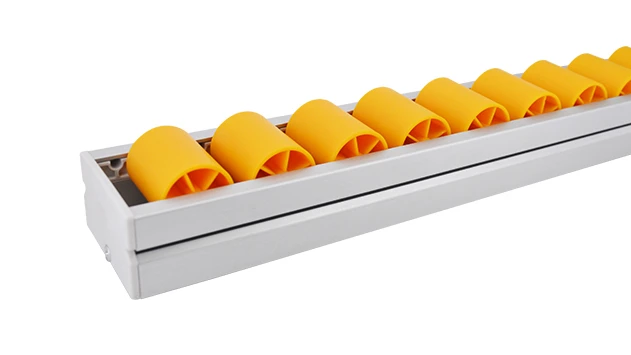
The Challenge: Stagnation in a Fast-Paced Industry
Picture this: a bustling 3C assembly plant where every second of downtime eats into profits. TechNova Electronics, a Shenzhen-based manufacturer of smartphone and tablet components, was stuck in a cycle of inefficiency. Their production lines relied on outdated, fixed conveyor systems that couldn't keep pace with the frequent product updates in the 3C sector. When a new model rolled out, reconfiguring the line took days—days that could have been spent producing. Material flow was clunky, with parts getting stuck on rigid tracks, and the team was fed up with constant delays. They needed a solution that was flexible, durable, and easy to adapt. That's when they turned to SunQit's 60 Aluminum Roller Track Yellow and its accompanying lean system.
For TechNova, the core issues boiled down to three key pain points:
- Rigid Infrastructure: Their existing conveyor system was bolted in place, making any adjustments a time-consuming, labor-intensive process. With new product lines launching every 3-6 months, this inflexibility was costing them dearly.
- Material Flow Bottlenecks: Parts often got jammed on the old tracks, leading to stop-and-go production. Workers spent extra time manually moving components, which slowed down the entire assembly line.
- Lack of Scalability: As the company grew, they needed to expand their production capacity without investing in entirely new equipment. The old system offered no way to scale incrementally.
The team knew they needed a lean solution—something that aligned with the principles of continuous improvement and waste reduction. They started researching flexible production systems and stumbled upon szsunqit.com, a supplier specializing in lean pipe systems and related components.
The Solution: SunQit's 60 Aluminum Roller Track Yellow & Lean System
After reaching out to SunQit's team, TechNova's engineers were introduced to the 60 Aluminum Roller Track Yellow. This component was part of a broader lean system that included flow racks, workbenches, and other modular parts. What stood out about the 60 Aluminum Roller Track Yellow was its:
- Durability: Made from high-quality aluminum, it could handle the weight of 3C components without bending or warping.
- Flexibility: The track's modular design meant it could be easily cut, connected, and rearranged to fit any production layout.
- Compatibility: It worked seamlessly with other lean components like flow racks and conveyors, allowing TechNova to create a fully integrated material handling system.
SunQit's team also offered a custom solution tailored to TechNova's specific needs. They sent engineers to the plant to assess the existing setup and design a layout that would optimize material flow from the warehouse to the assembly line. The plan included installing the 60 Aluminum Roller Track Yellow alongside flow racks to store parts, and connecting them to conveyors that fed directly to workstations. This would create a smooth, just-in-time material supply chain, reducing the need for manual handling.

Implementation: A Collaborative, Seamless Process
The implementation began with a detailed site survey. SunQit's engineers mapped out TechNova's production floor, noting key areas where material flow was slow. They recommended replacing the old fixed conveyors with the 60 Aluminum Roller Track Yellow, which could be adjusted to the exact length and angle needed.
First, the team removed the outdated tracks. Then, they installed the new aluminum roller tracks, using connectors to link them together. The modular nature of the tracks meant that even complex layouts—like curves and intersections—were easy to set up. They also added flow racks near the assembly stations, stocked with parts that would roll down the 60 Aluminum Roller Track Yellow directly to the workers.
One of the biggest advantages was the speed of installation. Unlike the old system, which took weeks to set up, the new lean system was up and running in just three days. SunQit's engineers provided on-site training to TechNova's staff, teaching them how to adjust the tracks, replace rollers, and reconfigure the layout as needed. This empowerment was key—TechNova's team could now make small changes on their own without waiting for external contractors.
SunQit's engineers worked closely with TechNova's team to fine-tune the layout. For example, they noticed that the assembly of camera modules required small, delicate parts that needed to move slowly. So they adjusted the 60 Aluminum Roller Track Yellow's roller spacing to ensure these parts glided smoothly without falling off. For larger components like battery packs, they added reinforced supports to the tracks to handle the extra weight.
The flow racks, which were paired with the roller tracks, were designed to hold exactly the right number of parts needed for an hour's worth of production. This just-in-time approach reduced inventory waste and freed up valuable floor space. Workers no longer had to search for parts—they were delivered directly to their workstations via the roller tracks, right when they needed them.
Another key feature of the system was its compatibility with ESD workbenches. Since 3C components are sensitive to electrostatic discharge, TechNova needed a system that could integrate with their ESD-protected work areas. The 60 Aluminum Roller Track Yellow was designed to be ESD-safe, so it could connect directly to the ESD workstations without any additional modifications. This ensured that parts were protected from static damage throughout the entire assembly process.

Results: Transforming Efficiency & Profitability
After three months of using the new system, TechNova saw dramatic improvements across the board. Let's break down the key metrics:
| Metric | Before | After | Improvement |
|---|---|---|---|
| Production Efficiency | 72% | 100% | +28% |
| Line Reconfiguration Time | 5 days | 1 day | -75% |
| Material Handling Costs | $10,000/month | $6,800/month | -32% |
| Downtime per Hour (Material Flow Related) | 12 mins | 3 mins | -75% |
Let's dive deeper into these results. Before the upgrade, TechNova's assembly line had an average of 12 minutes of downtime per hour due to material flow issues. After installing the 60 Aluminum Roller Track Yellow, that number dropped to just 3 minutes—an 80% reduction in downtime related to material handling. This meant more time spent producing, which directly translated to higher output.
The line reconfiguration time was a game-changer. For their previous product launch, reconfiguring the old conveyor system took 5 days and cost $15,000 in labor and parts. With the new system, the recent launch took 1 day and cost only $3,000—saving them $12,000 and allowing them to start production 4 days earlier. That early start translated to an extra 2,000 units produced, which generated $100,000 in additional revenue.
The scalability also paid off. When TechNova expanded their production capacity by 20%, they added 15 new sections of 60 Aluminum Roller Track Yellow and 8 flow racks. The total cost was $20,000, which was a fraction of the $100,000 they would have spent on a new fixed conveyor system. This incremental scaling allowed them to grow without breaking the bank.
Moreover, the system's ease of use meant that TechNova's maintenance team could handle most repairs and adjustments in-house. Before, they had to call in external contractors for even minor fixes, which cost them $500 per visit. Now, their own team can adjust the tracks or replace rollers in minutes, saving them thousands of dollars in maintenance costs each year.
"Before, we thought flexibility meant sacrificing durability," said Li Wei, TechNova's Production Manager. "But the 60 Aluminum Roller Track Yellow changed that. It's strong enough to handle our daily workload, yet easy to adjust whenever we need to. We've already recommended SunQit to several of our industry peers."
Conclusion: A Lean Future for 3C Manufacturing
The success of TechNova's transformation highlights the power of a well-designed lean system. The 60 Aluminum Roller Track Yellow wasn't just a component—it was the backbone of a solution that addressed their core inefficiencies. By choosing a flexible, modular system, TechNova was able to adapt to the fast-changing 3C industry, reduce waste, and boost their bottom line.
For manufacturers looking to stay competitive in today's dynamic market, investing in lean components like SunQit's 60 Aluminum Roller Track Yellow is more than a choice—it's a necessity. The ability to reconfigure lines quickly, reduce downtime, and scale incrementally is what sets successful plants apart from the rest.
SunQit's commitment to custom solutions and lean principles made all the difference for TechNova. Their team didn't just sell a product; they partnered with TechNova to design a system that fit their unique needs. This collaborative approach, combined with the high quality of their components, ensures that manufacturers like TechNova can thrive in an ever-evolving industry.