- Company Articles
- Products and Technology
- Application Cases
- Case Study: Automotive Plant Improves Efficiency with T-Groove Aluminum Pipe

Case Study: Automotive Plant Improves Efficiency with T-Groove Aluminum Pipe
Related Product
T-Groove Aluminum Pipe
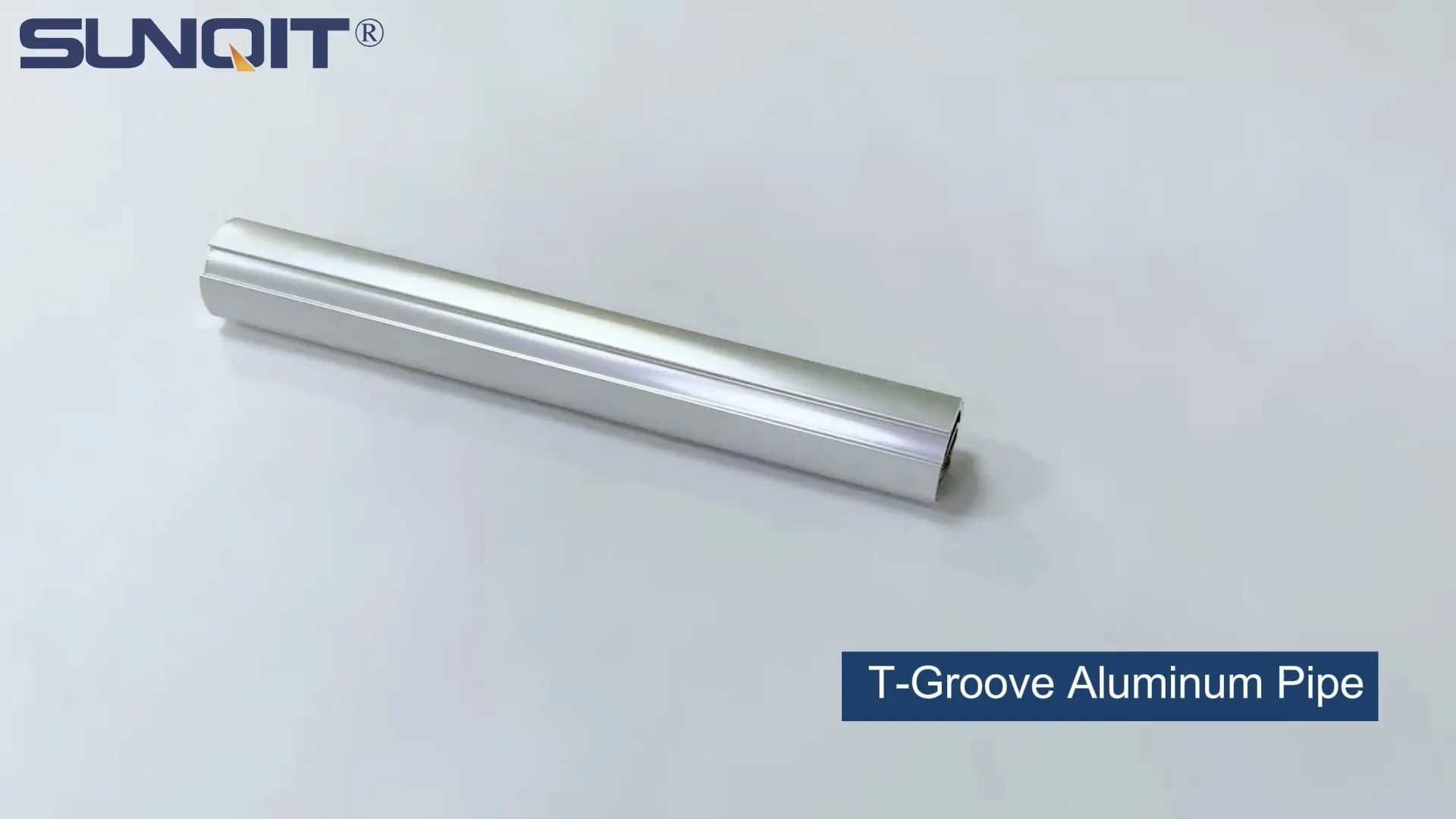
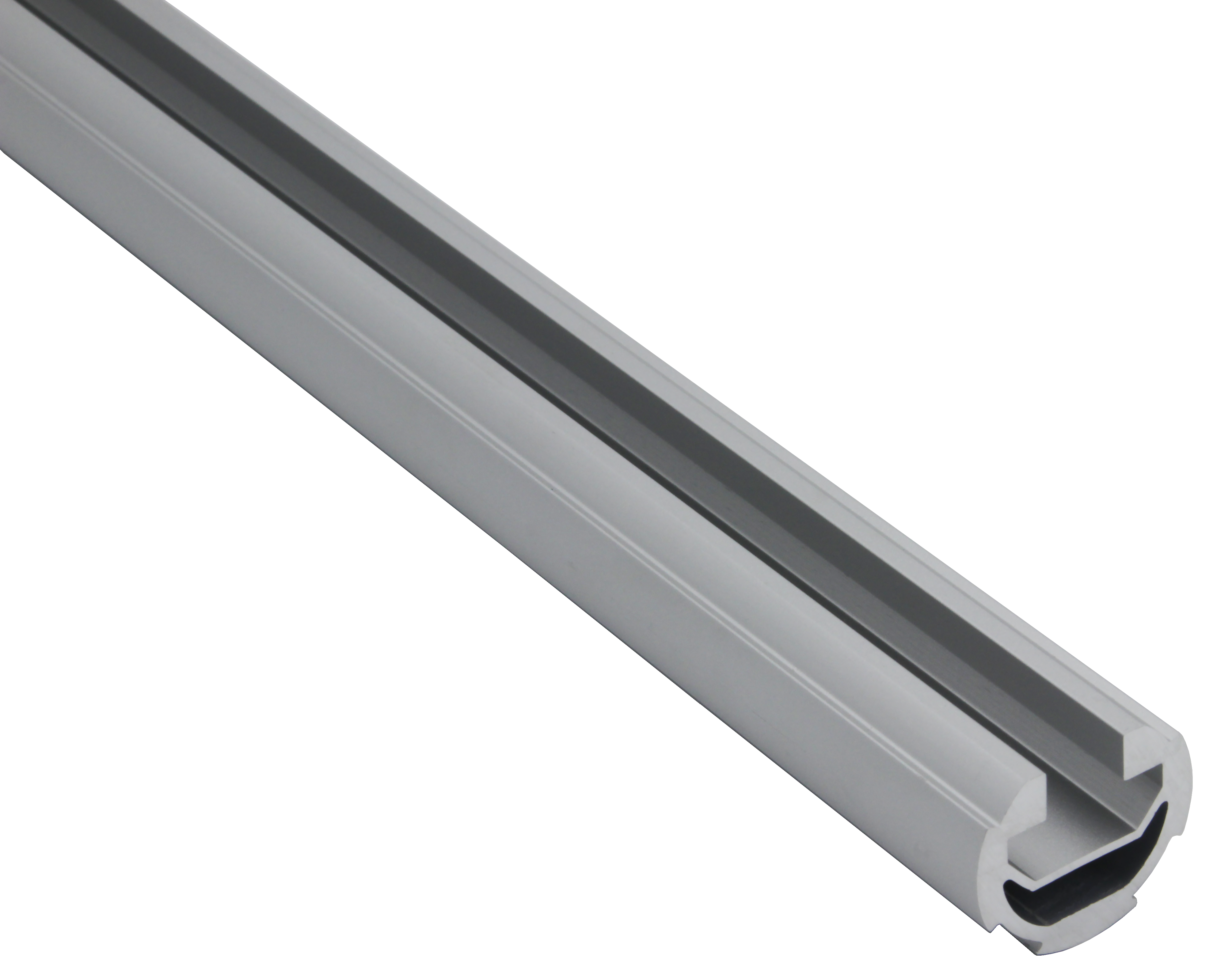
The aluminum pipe opening 10mm is installed into the T-shaped slider, which can be installed with casters or other matching functional parts. The groove can be used for positioning and is used for the track of the roller.
In the fast-paced world of automotive manufacturing, where deadlines loom and production targets shift overnight, flexibility isn't just a nice-to-have—it's the difference between thriving and falling behind. For Greenville Automotive Components (GAC), a mid-sized producer of precision engine parts outside Detroit, this reality hit hard in early 2024. Their production lines, once reliable, were bogging down under the weight of rigid workstations, clunky material handling systems, and a workforce growing frustrated with constant downtime. What followed was a transformative journey—one that centered on an unlikely hero: T-Groove Aluminum Pipe. This is the story of how a modular, adaptable lean system turned their bottlenecks into breakthroughs.
The Challenge: Stagnation in a Changing Industry
GAC's facility spans 85,000 square feet, with six production lines churning out everything from valve covers to camshaft brackets for major automakers. By early 2024, however, the plant was struggling to keep up. Demand for electric vehicle (EV) components was surging, and GAC's existing setup—built around fixed steel workbenches and bolted-down flow racks—couldn't pivot quickly enough. "We'd get a new part design from a client, and suddenly our workbenches were too short, or the flow racks couldn't accommodate the larger bins," recalls Maria Gonzalez, GAC's Production Manager. "Reconfiguring a single line would take 4-5 hours of downtime. By the time we finished, we'd already missed our daily output target."
The issues weren't just logistical. Worker morale was dipping, too. Juan Mendez, a lead assembler on Line 3, put it bluntly: "Those old steel workbenches weighed a ton. If you needed to adjust the height, you'd need two people and a wrench. Half the time, we'd just make do with the wrong setup to avoid the hassle—and that's when mistakes happened." Error rates on complex parts were creeping up (reaching 3.2% by Q1 2024), and turnover among new hires spiked as frustration grew.
GAC's leadership knew something had to change. "We'd invested in lean training years ago, but our tools were working against us," Gonzalez says. "Lean is about eliminating waste, but our rigid infrastructure was creating it—waste of time, waste of effort, waste of talent." The search for a solution led them to a manufacturing expo in Chicago that spring, where they stumbled upon a booth showcasing modular aluminum systems. "The moment I saw the T-Groove Aluminum Pipe displays, I thought, 'This could be it,'" Gonzalez remembers. "Lightweight, easy to adjust, and built for reconfiguration. It felt like the missing piece."
Discovering the Solution: T-Groove Aluminum Pipe and the Power of Modularity
The booth belonged to a lean system supplier specializing in customizable aluminum solutions. After a deep dive with their team, Gonzalez learned that T-Groove Aluminum Pipe—paired with aluminum profile accessories like joints, brackets, and casters—offered exactly what GAC needed: flexibility without sacrificing strength. "Aluminum extrusion profile is strong enough to support heavy engine parts but light enough that a single worker can reposition a workbench," explains Raj Patel, the supplier's technical consultant. "And the T-groove design? It means you can attach accessories—like tool holders or bin rails—in seconds, no drilling or welding required."
Gonzalez was sold, but she needed buy-in from her team. She brought Patel to GAC for a demo, setting up a mock workstation using T-Groove Aluminum Pipe, a basic aluminum tube, and a few internal rotary aluminum joints. "We had Juan and his crew try it out," she says. "They assembled a small parts rack in 10 minutes—something that would've taken an hour with our old steel setup. That's when the room erupted. 'Can we get these everywhere?' one guy asked."
The plan was ambitious: overhaul three of GAC's six lines with T-Groove Aluminum Pipe-based workbenches, flow racks, and adjustable conveyors. The goal? Cut reconfiguration time by 75%, reduce errors by 50%, and boost worker satisfaction. To keep costs in check, they prioritized the lines producing EV components—where flexibility was most critical. "We started with Line 4, which makes battery housing brackets," Gonzalez says. "If it worked there, we'd roll it out company-wide."
Implementation: Building a Lean System That Grows with the Team
In June 2024, the first shipment of T-Groove Aluminum Pipe, aluminum profile, and accessories arrived. What followed wasn't just an installation—it was a collaboration. Patel's team worked side-by-side with GAC's workers to design each workstation, ensuring the new setup fit their unique workflows. "Juan and his team knew exactly what they needed," Patel says. "They wanted workbenches with adjustable heights, flow racks that could tilt for easier access, and conveyors that could curve around a new storage area we were adding. With T-Groove Aluminum Pipe, we could build all of that on the fly."
One of the biggest wins was the workbench design. GAC opted for "Workbench E (single deck-without caster)" models but added locking casters for mobility. "Now, if a worker needs to move their station closer to the conveyor, they just unlock the wheels and roll," Gonzalez explains. "And the aluminum profile top? It's durable enough to handle heavy tools but smooth enough that parts glide easily—no more fumbling with sticky surfaces."
The flow racks saw similar upgrades. GAC replaced their old steel "Material Rack B (3 row and 3 floor)" units with aluminum frame racks using swivel roller balls (1 inch) for easy bin sliding. "Our old racks had fixed shelves," Mendez says. "If a bin was too heavy, you'd strain your back pulling it out. Now, with the swivel balls, even the biggest bins glide. And if we need to add a shelf? Just pop in a few brackets—done."
Perhaps the most impactful change was the conveyor system. GAC installed a roller track with plastic guide rails (yellow, to match their safety markings) that could be extended or shortened by adding/removing sections of T-Groove Aluminum Pipe. "Before, changing the conveyor path meant calling in maintenance to unbolt and re-weld sections," Gonzalez says. "Now, two workers can reconfigure it in 30 minutes. We tested it when we got a rush order for a new bracket size—we moved the conveyor 6 feet to the left, adjusted the workbenches, and were production-ready by lunch."

Results: From Frustration to Flow—The Metrics Speak for Themselves
By September 2024—three months after implementation—the results were undeniable. GAC tracked key metrics across Line 4 and compared them to the previous quarter. The data told a clear story: T-Groove Aluminum Pipe wasn't just a Band-Aid; it was a catalyst for change.
| Metric | Before Implementation (Q1 2024) | After Implementation (Q3 2024) | Improvement |
|---|---|---|---|
| Average Line Reconfiguration Time | 4.5 hours | 45 minutes | 90% reduction |
| Worker Error Rate (per 1000 parts) | 32 errors | 12 errors | 62.5% reduction |
| On-Time Delivery Rate | 78% | 96% | 18% increase |
| Worker Satisfaction Score (1-10) | 5.2 | 8.7 | 3.5 point increase |
The numbers were impressive, but the human impact was even more so. "I used to dread Monday mornings," Mendez admits. "Now? I walk in and think, 'What can we build today?' The new setup makes us feel empowered. We're not fighting the tools anymore—we're working with them." Turnover on Line 4 dropped by 40%, and new hires were productive 2 weeks faster than before, thanks to the intuitive design of the aluminum workstations.
GAC's clients noticed, too. "One of our biggest EV customers visited in October and couldn't believe how quickly we adjusted a line for their prototype part," Gonzalez says. "They ended up increasing their order by 30%—they said we were the only supplier who could keep up with their design changes."
"It's not just about the parts we make—it's about how we make them. T-Groove Aluminum Pipe didn't just fix our production lines; it changed our culture. We're leaner, faster, and—most importantly—our team feels valued. That's the real win." — Maria Gonzalez, Production Manager, Greenville Automotive Components

Scaling Up: From One Line to the Entire Plant
Buoyed by Line 4's success, GAC approved a full plant overhaul in November 2024. By year's end, all six production lines will feature T-Groove Aluminum Pipe workbenches, aluminum extrusion profile flow racks, and adjustable conveyors. They're even exploring aluminum honeycomb panels for lighter, sturdier work surfaces and stainless steel swivel roller balls for high-moisture areas (like their stations).
The investment has paid for itself, too. "We calculated the ROI: the cost of the aluminum system will be covered by labor savings and error reductions within 14 months," Gonzalez says. "And with the new contracts rolling in? It'll be even faster."
Conclusion: Flexibility as the Foundation of Future-Proofing
In an industry where change is the only constant, GAC's story is a reminder that the right tools can turn stagnation into growth. T-Groove Aluminum Pipe, paired with a commitment to worker-centric design, transformed their production from rigid to responsive—proving that lean systems aren't just about cutting waste, but about empowering people to adapt, innovate, and thrive.
As Mendez puts it: "At the end of the day, we're building parts that go into cars. But with this new setup? We're also building a better way to work. And that's something no one can put a price on."