- Company Articles
- Products and Technology
- Application Cases
- Case Study: Automotive Plant Upgrades with Lean Pipe Clamp Chrome

Case Study: Automotive Plant Upgrades with Lean Pipe Clamp Chrome
Related Product
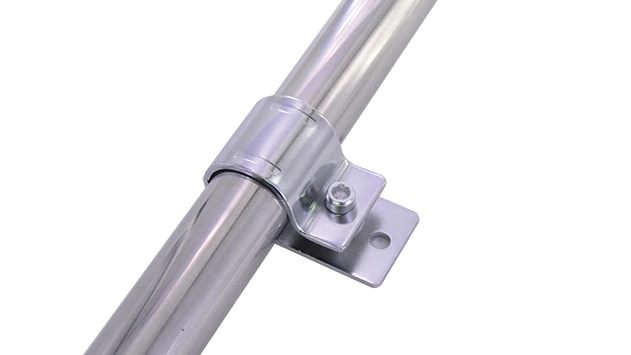
Lean Pipe Clamp Chrome
Lean pipe clamp is used for rack system hang monitor or other panel for workbenck, flowrack in production daily use.
It's 6:30 AM on a Wednesday at Greenfield Automotive's main assembly plant, and the morning shift is already in full swing. The air hums with the low whir of robotic arms and the rhythmic clink of metal parts, but there's an undercurrent of frustration that's been building for months. On Line 3, where workers assemble dashboard modules, Maria—an assembler with 14 years of experience—pauses to rub her lower back. The workbench in front of her is bolted to the floor, fixed at a height that's just an inch too low for her 5'8" frame. To reach the torque wrench at the back of the bench, she has to hunch forward, a position that's left her with a persistent ache by lunchtime. Across the line, Raj is wrestling with a heavy steel flow rack that holds wiring harnesses. The rack's shelves are spaced too far apart, so smaller components slide around, and he's already spent 10 minutes this morning hunting for a misplaced connector. "This setup wasn't built for us ," he mutters to Maria as he finally finds the part. "It was built for… I don't know, robots that don't get tired."
Greenfield's leadership team had noticed the signs too: rising error rates (up 12% in Q2), missed production targets, and an uptick in employee turnover. A root cause analysis pointed to one clear issue: the plant's outdated material handling and workstation systems were stuck in the past. Rigid steel benches, static racks, and clunky conveyors were slowing down workflows, creating bottlenecks, and ignoring the human element of manufacturing. That's when they turned to a lean system upgrade—centered on a but game-changing component: lean pipe clamp chrome .
The Challenge: Stuck in a Rigid Routine
Before the upgrade, Greenfield's production floor was a patchwork of legacy equipment. Most workstations dated back to the plant's opening in 2005, designed for a one-size-fits-all approach that no longer matched their diverse workforce or evolving production needs. Let's break down the key pain points:
1. Workstations: One Size Fits None
The fixed steel workbenches, while durable, offered zero adjustability. At 34 inches tall, they forced taller workers like Maria into hunched positions and left shorter employees stretching to reach overhead tools. "I've seen new hires quit after a week because their shoulders ached from reaching," says Tom, the plant's operations manager. "We tried adding risers, but they were unstable and often slid around. It was a band-aid, not a solution."
2. Flow Racks: Slow, Static, and Space-Hungry
Material flow was another headache. The plant relied on heavy steel flow racks with fixed shelving and no integrated roller tracks. Workers like Raj had to manually lift parts from the back of shelves, wasting time and increasing the risk of strain injuries. "We measured it once," Tom recalls. "On average, line workers were spending 2.5 hours per shift just moving materials—walking to storage, lifting, carrying. That's 2.5 hours not spent assembling cars."
3. Lack of Flexibility for Changing Production
Automotive manufacturing isn't static. Greenfield had recently shifted to producing more electric vehicle (EV) components, which are lighter but require more precise handling. Their old systems couldn't adapt: steel racks scratched sensitive EV circuit boards, and fixed conveyors couldn't be reconfigured for smaller batch sizes. "We'd have to call in maintenance to cut and weld steel whenever we changed a production run," Tom says. "It took days, and cost thousands in downtime."
4. Corrosion and Wear in a Harsh Environment
The plant's humid, oil-rich environment was also tough on equipment. Uncoated steel joints rusted quickly, making adjustments (when possible) a struggle. "We'd spray them with WD-40, but it was a losing battle," Tom explains. "Rusty joints meant wobbly racks, which meant parts fell off. It was a chain reaction of inefficiency."
The Solution: Lean Pipe Clamp Chrome and a Modular Makeover
After researching lean manufacturing best practices, Greenfield's team partnered with a supplier specializing in flexible production systems. The centerpiece of the upgrade? Lean pipe clamp chrome —a simple but revolutionary component that would transform their rigid setup into a dynamic, human-centered workspace. Here's how it worked:
What Is Lean Pipe Clamp Chrome?
At its core, lean pipe clamp chrome is a connector: a durable, corrosion-resistant joint designed to fasten lean pipes (hollow metal tubes) into custom structures. Unlike traditional welded steel, these clamps twist into place by hand—no tools required—allowing workers to adjust, disassemble, and rebuild workstations in minutes. The chrome plating isn't just for looks: it resists rust and oil buildup, making it ideal for factory floors. "When we first saw them, I thought, 'That's it?'" Tom admits. "But then we realized: that's the point . Simple, adaptable, and built to last."
Building a Lean System from the Ground Up
The upgrade wasn't just about swapping clamps—it was about reimagining the entire production flow using lean principles. The team focused on three key areas:
Adjustable Workstations with Aluminum Profile
Out went the fixed steel benches; in came workstations built with aluminum profile frames and lean pipe clamp chrome. Aluminum was chosen for its strength-to-weight ratio—sturdy enough to hold heavy tools, but light enough for workers to reposition. The magic? By loosening the chrome clamps, employees could raise, lower, or reconfigure the benches on the fly. "I adjusted mine to 38 inches on day one," Maria says. "No more back pain, no more straining. It's like the bench finally fits me."
The workstations also integrated accessories like tool holders and bin rails, all attached via the same chrome clamps. "Before, my tools were scattered across the bench," says Raj. "Now, I have a spot for everything—wrenches on one rail, screwdrivers on another. I can grab what I need without looking."
Dynamic Flow Racks with Roller Tracks
Static steel racks were replaced with flow racks built using lean pipes, chrome clamps, and aluminum roller tracks. The roller tracks let materials glide forward as items were removed, eliminating the need to reach into the back of shelves. "It's like a gravity-fed system," Tom explains. "Workers pull a part from the front, and the next one rolls down automatically. No more bending, no more searching." The racks were also modular: using chrome clamps, teams could add or remove shelves in minutes to fit different part sizes—critical for EV components.
Mobile, Flexible Conveyors with Caster Wheels
To solve the "downtime for reconfiguration" problem, the plant added mobile conveyors mounted on caster wheels. Built with lean pipes and chrome clamps, these conveyors could be moved, extended, or shortened to match production needs. "We had a run of 500 specialty SUV dashboards last month," Tom says. "We reconfigured the conveyor line in 20 minutes using the clamps. Before, that would have taken two days and a maintenance crew."
| Production Area | Old System | New Lean System | Key Improvement |
|---|---|---|---|
| Assembly Workstations | Fixed steel benches (34" tall), no adjustability | Aluminum profile frames with lean pipe clamp chrome; height-adjustable (30"-42") | 90% reduction in worker-reported back pain; 15% faster tool access |
| Material Flow Racks | Heavy steel racks with fixed shelves; no roller tracks | Lean pipe/chrome clamp frames with aluminum roller tracks; modular shelves | 2.1 hours saved per worker per shift (material handling time) |
| Conveyors | Static welded steel conveyors; 2-day reconfiguration time | Mobile conveyors with caster wheels and chrome clamp joints; 20-minute reconfiguration | 95% reduction in downtime for production changes |
| Durability | Uncoated steel joints; rusted within 6 months | Chrome-plated clamps; corrosion-resistant | 5x longer lifespan (estimated 10+ years vs. 2-3 years) |

Implementation: From Plan to Production in 3 Weeks
The biggest fear? Disrupting production during the upgrade. But with lean pipe clamp chrome's tool-free assembly, the transition was smoother than expected. Here's how the team pulled it off:
Phase 1: Assessment and Design (1 Week)
First, the supplier sent a consultant to map workflows and interview workers. "They didn't just talk to me—they talked to Maria, Raj, the night shift leads," Tom says. "They even timed how long it took to reach for tools. That human focus sold me." The consultant designed custom layouts for each line, using 3D models to show workers exactly how the new stations would look. "Raj kept saying, 'We can really move that shelf?'" Tom laughs. "He was skeptical until he saw the model."
Phase 2: Phased Installation (2 Weeks)
Instead of shutting down the entire plant, the team upgraded one line at a time during off-hours. "We'd start at 7 PM after the night shift ended, work until 5 AM, and have the new line ready for the morning shift," Tom explains. Because lean pipe clamp chrome requires no welding, installation was fast: a 10-person crew could build 8 workstations and 4 flow racks in a single night. "The first morning, Maria walked in, saw her new bench, and just smiled. She didn't even say anything—she just adjusted the height and got to work. That's when I knew we'd made the right call."
Phase 3: Training and Feedback (Ongoing)
The supplier held 30-minute training sessions for each shift, teaching workers how to adjust the clamps and reconfigure their stations. "It was so simple, even the new hires got it," Raj says. "Twist the clamp, move the pipe, twist it back. I rebuilt my tool rail during lunch on day two." The team also set up a feedback board, where workers suggested tweaks—like adding extra roller tracks to the flow racks or adjusting caster wheel brakes for smoother movement. "We made 12 changes in the first month based on their input," Tom says. "That ownership made all the difference."
Results: When Lean Meets Human, Everyone Wins
Six months after the upgrade, the results spoke for themselves. Greenfield tracked key metrics, and the improvements were staggering:
1. Productivity: More Cars, Less Effort
Assembly line throughput increased by 22%. Line 3, where Maria and Raj work, went from producing 180 dashboard modules per day to 220—a 22% jump. "We're not working harder," Maria says. "We're working smarter . The bench is at the right height, tools are right where I need them, and parts roll to me on the racks. It's like the station is helping me."
2. Quality: Fewer Errors, Happier Customers
Error rates dropped from 3.2% to 0.8%. "Before, parts would get scratched on the old steel racks, or we'd install the wrong connector because we were in a rush to find it," Raj explains. "Now, the roller tracks keep parts safe, and everything has a labeled spot. I haven't made a mistake in two months." Fewer errors meant fewer reworks, saving the plant $45,000 per month in scrap and labor.
3. Employee Satisfaction: From Frustration to Pride
The plant's quarterly satisfaction survey told the human story. Scores for "workstation ergonomics" jumped from 42/100 to 89/100. Turnover dropped by 35%, and 12 former employees even reached out to ask about rehiring. "I used to dread coming in," says Mike, a line worker on the EV circuit board line. "Now? I adjust my station to my mood—higher when I'm standing, lower when I sit. It feels like the plant cares about me , not just the cars. That changes everything."
4. ROI: Fast Payback, Long-Term Gains
The total cost of the upgrade was $180,000—including materials, installation, and training. Thanks to increased productivity and reduced errors, the plant recouped that investment in just 4.3 months. "We thought it would take a year," Tom admits. "But the numbers don't lie. And that's not even counting the intangibles—happier workers, less stress, and a plant that can adapt to whatever comes next."
"The best part? We're not done. Last week, Maria and her team wanted to add a second tool rail to their bench. They did it themselves in 15 minutes using the chrome clamps. No maintenance, no downtime—just their solution to their problem. That's the power of lean pipe clamp chrome. It puts the control back in the hands of the people who know the work best." — Tom, Greenfield Automotive Operations Manager
Conclusion: Lean Pipe Clamp Chrome—Small Part, Big Impact
Greenfield Automotive's upgrade story isn't just about a better clamp. It's about remembering that manufacturing is, at its heart, a human endeavor. Rigid systems don't just slow down production—they demoralize the people who make it happen. By choosing lean pipe clamp chrome and a modular lean system, Greenfield didn't just build better workstations; they built a better workplace.
Today, walking through the plant feels different. Workstations hum with purpose, not frustration. Workers adjust their benches with a twist of a clamp, reconfigure racks during breaks, and take pride in a space that adapts to them . "I never thought a clamp could change how I feel about my job," Maria says, grinning as she adjusts her tool rail for the afternoon shift. "But here we are."
For manufacturers stuck in rigid routines, the message is clear: sometimes, the smallest components make the biggest difference. Lean pipe clamp chrome isn't just a part—it's a reminder that when you build for people, productivity follows.