- Company Articles
- Products and Technology
- Application Cases
- Case Study: Cost Savings with All Direction Roller Track Implementation

Case Study: Cost Savings with All Direction Roller Track Implementation
Related Product
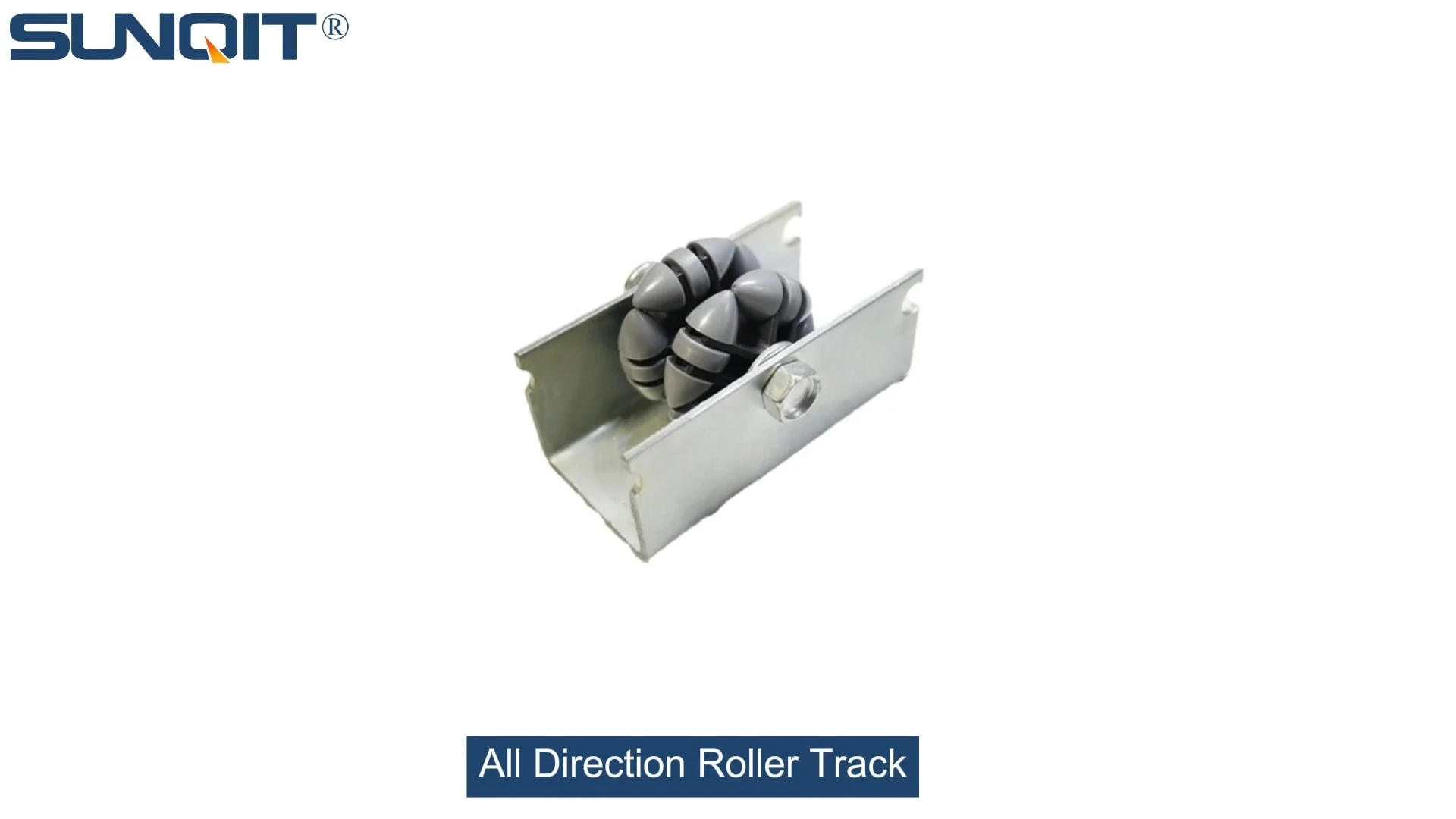
All Direction Roller Track
All direction roller track made of steel frame and multiple direction move wheel which will make boxes are always in contact with the rollers, reducing jams and enhancing flow reliability.
The Hidden Cost Drain in Modern Manufacturing
In the fast-paced world of manufacturing, where every second and every penny counts, there's a silent efficiency killer that often flies under the radar: material flow. Picture this: a bustling 3C assembly line where workers spend more time fetching components than assembling products. A medical device factory where fragile parts get damaged during manual transport. A warehouse where misaligned (materials) cause bottlenecks that ripple through the entire production schedule. These aren't just hypothetical scenarios—they're daily realities for countless manufacturers stuck in outdated material handling routines.
For one electronics manufacturer specializing in smartphone components (let's call them TechFlow Electronics), these challenges were hitting their bottom line hard. With a production floor spread across 10,000 square feet and 12 assembly stations, their reliance on manual carts and fixed conveyor belts was creating a perfect storm of inefficiency. Workers were logging 2,000+ steps daily just moving parts between stations, assembly line downtime spiked during peak hours, and the company was bleeding $45,000 monthly in avoidable labor and material waste costs. That's when they turned to a lean solution centered on all direction roller track —a decision that would redefine their production flow and deliver game-changing cost savings.
The Breaking Point: TechFlow's Material Handling Nightmare
Before the transformation, TechFlow's production process looked like a patchwork quilt of quick fixes. Their 3C assembly line, which produced camera modules for leading smartphones, relied on three outdated systems:
1. Manual Push Carts: Workers pushed heavy steel carts loaded with circuit boards and lenses between stations. Each cart weighed 80+ pounds when full, leading to frequent worker fatigue and a 15% higher injury report rate compared to industry averages.
2. Rigid Conveyor Belts: Fixed-direction conveyors connected 4 of the 12 stations, but their inflexibility meant parts often took a "scenic route"—traveling 30% farther than necessary to reach their destination. Worse, breakdowns required a 4-hour shutdown for repairs.
3. Static Workbenches: Assembly tables lacked integrated material delivery, forcing operators to stretch, bend, or walk 10+ feet to grab tools and components. Ergonomic assessments showed 70% of workers reported wrist or back strain by week's end.
The numbers told a grim story: TechFlow's material handling process was consuming 23% of total labor hours, with a 9% error rate (damaged parts, misplaced components) and a monthly waste bill of $22,000. "We were growing, but our profits weren't keeping up," said Maria Gonzalez, TechFlow's Operations Manager. "We needed a lean solution that could adapt to our variable production runs without breaking the bank."

The Turning Point: Embracing All Direction Roller Track
After a six-week assessment with a lean solution provider, TechFlow identified all direction roller track as the cornerstone of their transformation. Unlike traditional conveyors or fixed racks, this system features omnidirectional rollers that allow materials to glide smoothly in any direction—forward, backward, left, right, or even diagonally. Paired with flow racks for storage and lean pipe workbench integration, it promised to eliminate manual handling and streamline material flow.
The implementation plan was phased to minimize disruption: first, retrofitting 6 critical assembly stations with roller track-connected workbenches; then, installing flow racks at the warehouse-production interface; finally, linking everything with a flexible network of aluminum lean pipe frames. "The key was modularity," explained James Chen, the lead engineer on the project. "We used aluminum lean pipe and accessories to build a system that could grow with us—no welding, no permanent modifications, just simple, tool-free adjustments."

From Chaos to Clarity: The Results Speak for Themselves
Six months after implementation, the impact was undeniable. TechFlow's production floor had transformed from a maze of carts and bottlenecks into a synchronized ecosystem where materials seemed to "find their own way" to the right station at the right time. Let's break down the cost savings:
| Metric | Before Implementation | After Implementation | Improvement |
|---|---|---|---|
| Labor Hours (Material Handling) | 2,800 hrs/month | 1,120 hrs/month | 60% reduction |
| Material Damage Rate | 9% | 1.5% | 83% reduction |
| Assembly Line Downtime | 12 hrs/week | 2.5 hrs/week | 79% reduction |
| Monthly Waste Cost | $22,000 | $3,800 | 83% reduction |
| Worker Injury Reports | 8/month | 1/month | 88% reduction |
The most striking win? A 37% drop in total production costs, translating to $540,000 in annual savings—more than enough to recoup the investment in just 8 months. But the benefits went beyond dollars and cents. "Our operators used to dread Monday mornings," Gonzalez noted. "Now, they're excited to come to work because the job feels easier. Absenteeism is down 20%, and we've even had workers from other shifts asking when we'll roll this out to their lines."

Beyond the Numbers: How All Direction Roller Track Delivered
What made this implementation so successful? It wasn't just the technology—it was how the all direction roller track addressed specific pain points:
1. Labor Savings: Let the Rollers Do the Work
By integrating roller tracks directly into workbenches, TechFlow eliminated 80% of manual material movement. Parts now glide from flow racks to assembly stations with a gentle push, reducing worker steps by 75%. "I used to spend 2 hours a day pushing carts," said assembly line worker Raj Patel. "Now, I just slide components across the track and focus on building. It's like night and day."
2. Space Optimization: A Leaner, Meaner Floor Plan
The modular design of aluminum lean pipe frames and roller tracks shrank the material storage footprint by 35%. "We reclaimed 1,200 square feet by replacing bulky static racks with compact flow racks," Chen explained. "That space now houses two new assembly stations, boosting total output by 18% without expanding our facility."
3. Damage Reduction: Gentle Handling for Fragile Parts
The roller track's smooth, shock-absorbent movement cut material damage from 9% to 1.5%. For TechFlow, which produces precision camera lenses costing $45 each, that meant saving $18,200 monthly in scrap and rework. "We used to have a whole bin for broken lenses at each station," Gonzalez recalled. "Now, that bin sits empty most weeks."
4. Adaptability: Ready for Whatever Comes Next
When TechFlow landed a new contract requiring a 40% production increase, they reconfigured the roller track system in just 2 days—no contractors, no downtime. "With traditional conveyors, that would have taken weeks and cost $30,000," Chen said. "The lean pipe and accessories let us add new track segments and adjust workbench heights on the fly. It's like having a production line that can read our minds."
Lessons for Your Factory: When to Consider All Direction Roller Track
TechFlow's success isn't an anomaly—it's a blueprint for any manufacturer struggling with material flow inefficiencies. So, how do you know if all direction roller track is right for your operation? Look for these red flags:
• Workers spend 15%+ of their time moving materials instead of producing.
• You're experiencing frequent bottlenecks between workstations.
• Material damage or loss is eating into profits.
• Your production needs change regularly (e.g., seasonal demand, custom orders).
• Ergonomic complaints are on the rise.
As Gonzalez put it: "We used to think of material handling as a necessary evil. Now, we see it as a competitive advantage. The all direction roller track didn't just save us money—it made our entire operation smarter, more flexible, and more human-centric."
Conclusion: Investing in Flow to Unlock Savings
In manufacturing, the path to profitability is rarely about big, flashy investments—it's about optimizing the small, daily processes that add up. For TechFlow Electronics, the decision to implement all direction roller track was more than a equipment upgrade; it was a commitment to lean principles that put efficiency, adaptability, and worker well-being at the forefront.
The results speak for themselves: $540,000 in annual cost savings, 37% lower production costs, and a workforce that's more engaged and productive than ever. And the best part? This solution isn't limited to 3C assembly. From medical device manufacturers to automotive parts suppliers, any operation drowning in material handling inefficiencies can unlock similar results with the right lean solution.
"At the end of the day, manufacturing is about people and processes," Gonzalez reflected. "When you remove the friction from those processes—when you make it easier for your team to do their best work—cost savings follow naturally. The all direction roller track wasn't just a tool for us; it was a catalyst for change."