- Company Articles
- Products and Technology
- Application Cases
- Case Study: Duplex Aluminum Pipe Joint in Automotive Lean Production

Case Study: Duplex Aluminum Pipe Joint in Automotive Lean Production
Related Product
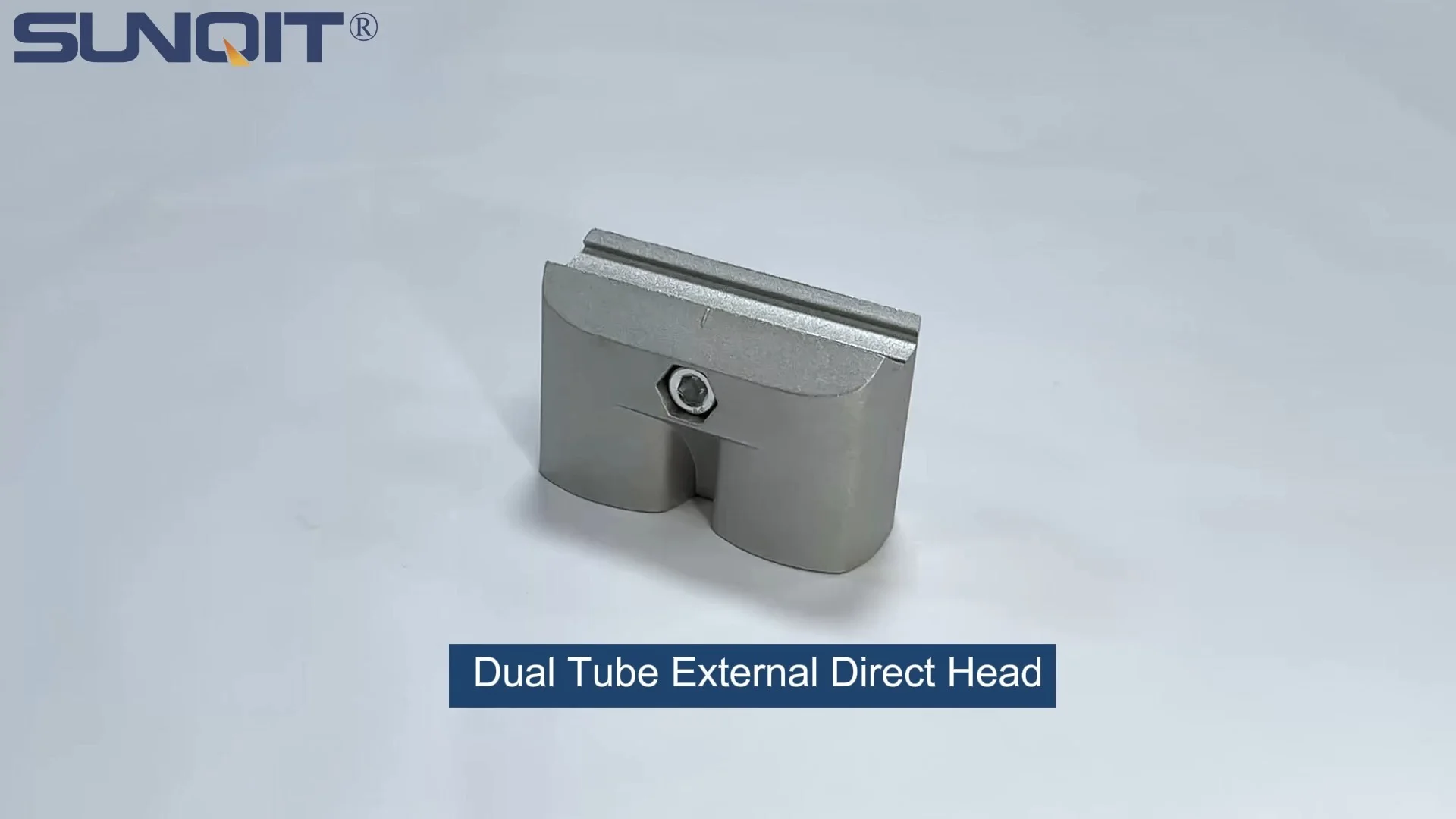
Duplex Aluminum Pipe Joint
Duplex Aluminum pipe joint used for one pcs 28pcs aluminum pipe and one pcs of 28mm duplex pipe connection in straight angle.
How Modular Lean Systems Transformed Production Efficiency at PrecisionAuto Components
Introduction: The Pressure of Modern Automotive Manufacturing
In the fast-paced world of automotive manufacturing, where consumer demands shift overnight and production lines must adapt to new models, materials, and regulations, efficiency isn't just a goal—it's survival. For PrecisionAuto Components, a mid-sized manufacturer specializing in engine parts and chassis components, the challenge of keeping up with this pace had become all too real by early 2024. With a portfolio of over 20 client models and plans to expand into electric vehicle (EV) parts, their factory floor was drowning in inefficiencies: rigid workstations that couldn't keep up with changing assembly needs, material flow bottlenecks that slowed production, and a workforce increasingly frustrated by tools and setups that felt stuck in the past.
"We were spending more time adjusting our lines than producing ," recalls Maria Gonzalez, PrecisionAuto's Production Manager. "When a client requested a minor tweak to a component, we'd have to shut down a workstation for hours—sometimes days—to reconfigure steel racks and weld new supports. Our roller tracks, which should have made material movement seamless, were constantly jamming because the old steel joints couldn't handle the weight without warping. It was like trying to build a puzzle with pieces that didn't fit."
That's when the team turned to lean manufacturing principles—not as a buzzword, but as a lifeline. Their search for a flexible, durable solution led them to a seemingly small but transformative component: the duplex aluminum pipe joint . Paired with aluminum profiles and integrated into a broader lean system , this modular hardware would become the cornerstone of their factory's revival. This case study explores how PrecisionAuto overhauled their production lines, reimagined their workbench setups, and optimized material flow with roller tracks —all while slashing costs, reducing downtime, and empowering their workforce.
The Problem: Rigid Systems in a Flexible World
To understand the impact of the duplex aluminum pipe joint, it's critical to first unpack the specific pain points PrecisionAuto faced. For years, the factory relied on traditional steel-framed workstations and material handling systems—heavy, welded structures designed for a single product line. While sturdy, these systems were the opposite of agile.
"Our old workbenches were built like tanks," says Jason Chen, Lead Manufacturing Engineer. "They weighed over 300 pounds each, so moving them was a two-person job with a forklift. If we needed to adjust the height to accommodate a taller worker or a new tool, we'd have to grind off welds and reattach legs. It was absurdly inefficient." Worse, the steel roller tracks that fed parts to these workstations were prone to rust and misalignment. "We had a section of track near the paint shop that would jam at least twice a shift," Chen adds. "The steel joints would corrode, and the rollers would seize up. Our maintenance team was spending 15 hours a week just unjamming tracks."
The inefficiencies weren't just operational—they hit the bottom line. When PrecisionAuto landed a contract to produce battery housing components for an EV startup in late 2023, the existing setup couldn't handle the new part's dimensions. The company estimated it would take six weeks and $75,000 to reconfigure the steel workstations and tracks—a timeline that risked losing the contract. "That's when we knew we needed a radical change," Gonzalez says. "We couldn't keep throwing money at Band-Aids. We needed a system that could grow with us."
The team began researching lean manufacturing solutions, focusing on modularity and adaptability. They evaluated plastic systems (too flimsy for automotive weights), stainless steel (still heavy and hard to modify), and finally, aluminum. "Aluminum was lighter, resistant to corrosion, and we'd heard about these modular joints that let you assemble structures without welding," Chen explains. "But not all aluminum systems are created equal. We needed something that could handle the torque of daily use—tightening and re-tightening joints without stripping threads. That's when we discovered duplex aluminum pipe joints."

The Solution: Duplex Aluminum Pipe Joints and Modular Lean Systems
Duplex aluminum pipe joints are a marvel of simplicity and strength. Unlike traditional welded joints or single-bolt connectors, these joints feature a dual-locking mechanism: a central bolt that secures the pipe to the joint, and a secondary locking pin that prevents rotation under stress. Made from high-grade aluminum alloy, they're lightweight (about 60% lighter than steel equivalents) but surprisingly robust, with a load capacity of up to 500 kg per joint—more than enough for automotive components.
"What sold us was the speed ," Chen says. "You can assemble a workstation frame in 20 minutes with a hex key—no welding, no drilling, no special tools. And if you need to reconfigure it? Just loosen the bolts, adjust the angle, and lock it back down. It's like building with advanced Lego blocks, but for industrial use."
PrecisionAuto partnered with a supplier to design a complete lean system around these joints, incorporating aluminum profiles for workbench frames, roller tracks with corrosion-resistant aluminum rails, and ergonomic accessories like height-adjustable feet and tool holders. The plan focused on three key areas: workbench redesign, material flow optimization, and cross-training support.
1. Workbench Redesign: From Static to Adaptive
The first priority was replacing the steel workbenches with aluminum profile frames using duplex joints. The new workbenches featured adjustable heights (from 70cm to 110cm) and modular tops—some with ESD (electrostatic discharge) mats for sensitive electronics, others with non-slip surfaces for heavy parts. "We could now tailor each workstation to the operator and the task," Gonzalez notes. "A worker assembling small sensors gets a lower bench with a magnifying lamp; someone handling engine blocks gets a higher bench with a reinforced top. And if we switch products next month? We just adjust the legs and swap the top—no downtime."
2. Roller Track Overhaul: Smooth Flow, Minimal Maintenance
The steel roller tracks were replaced with aluminum roller tracks, also using duplex joints for easy alignment. The new tracks featured plastic-coated rollers (to reduce noise and prevent part scratching) and a modular design that allowed for quick repairs. "If a roller wears out, you don't replace the entire track—just pop out the old roller and snap in a new one," Chen explains. "And because the aluminum rails don't rust, we've gone from 15 hours of weekly maintenance to less than 2 hours. That's a game-changer."
3. Cross-Training and Empowerment
Perhaps the most unexpected benefit was how the new system empowered workers. With tools that were easy to adjust, operators could tweak their workstations without waiting for engineering or maintenance. "One of our line workers, Rosa, came to me with an idea to angle her workbench 15 degrees to reduce neck strain," Gonzalez says. "With the old steel bench, that would have taken a week of approvals and a welder. With the aluminum system? She did it herself during her lunch break. That kind of ownership boosts morale—and when morale is high, productivity follows."

Implementation: From Plan to Production in 30 Days
Implementing a factory-wide system upgrade is never without challenges, but PrecisionAuto's phased approach minimized disruption. The team started with a pilot line: the EV battery housing production cell, which was already behind schedule due to the steel workstation bottleneck. "We chose the most critical line first," Gonzalez explains. "If we could make that work, the rest would follow."
The pilot began with a day of training for operators and maintenance staff. "We brought in the supplier to show everyone how the duplex joints work—how to tighten them to the right torque, how to disassemble and reassemble frames," Chen says. "The biggest concern was that workers would be resistant to change, but they were actually excited. They'd been complaining about the old systems for years, so this felt like a win for them."
Over the next two weeks, the team replaced eight steel workbenches with aluminum profile versions and installed 40 feet of new roller track. The process was surprisingly quick: each workbench took two technicians 45 minutes to assemble, and the track was laid in sections that clipped together via duplex joints. "We worked during second shift, so first shift production wasn't interrupted," Chen notes. "By the end of week two, the pilot line was fully operational."
The results were immediate. The EV battery housing line, which had been averaging 120 units per day, jumped to 165 units per day—an increase of 37.5%. "The operators were faster because they weren't fighting the tools," Gonzalez says. "The roller track didn't jam once in the first month. We even had workers from other lines asking when we'd upgrade theirs."
Encouraged by the pilot, PrecisionAuto rolled out the system to three more lines over the next month. By the end of the implementation, 80% of the factory's workstations and material tracks had been converted to the aluminum-duplex joint system.

Results: Quantifying the Impact
Six months after the upgrade, PrecisionAuto conducted a comprehensive review of the new system's performance. The data told a clear story: the investment in duplex aluminum pipe joints and modular lean systems had delivered significant improvements across key metrics.
| Metric | Before (Steel System) | After (Aluminum-Duplex System) | Improvement |
|---|---|---|---|
| Production Line Speed (units/day) | 120 (EV line) | 185 (EV line) | +54% |
| Workstation Reconfiguration Time | 8 hours | 20 minutes | -95.8% |
| Maintenance Hours (per week) | 45 hours | 8 hours | -82.2% |
| Worker Fatigue Reports (per month) | 12 | 3 | -75% |
| Cost per Unit Produced | $42.50 | $34.80 | -18.1% |
"The most surprising number for me was the reduction in fatigue reports," Gonzalez says. "We thought the system would boost speed, but we didn't anticipate how much better workers would feel at the end of the day. The adjustable workbenches mean less bending and reaching, and the smoother roller tracks mean less strain from pushing carts."
The EV battery housing line, once at risk of missing deadlines, now exceeds production targets by 15%. When the client requested a design change in early 2024—adding a cooling channel to the housing—the team reconfigured the workstation in 45 minutes, compared to the projected six weeks with the old system. "The client was blown away," Gonzalez recalls. "They've since increased our order by 30% because they trust we can adapt."
"I used to dread Monday mornings because I knew I'd spend the first hour unjamming the roller track. Now? The line runs like clockwork. And being able to adjust my bench height? It's saved my back. I can actually work a full shift without feeling like I need a massage." — Rosa Mendez, Production Operator
Challenges and Lessons Learned
While the transition was largely smooth, PrecisionAuto faced a few hurdles. The initial cost of aluminum profiles and duplex joints was higher than steel—about 20% more per workstation. "We had to make a case to leadership that this was an investment, not an expense," Chen says. "We ran the numbers: even with the higher upfront cost, the savings in maintenance, downtime, and labor would pay for the system in 14 months. They approved it."
Another challenge was standardizing joint torque settings. "Early on, some operators over-tightened the duplex joints, which stripped the threads," Chen notes. "We solved that by creating color-coded torque wrenches—green for 'hand-tight,' blue for 'secure'—and posting cheat sheets at each workstation. Now it's second nature."
The biggest lesson? Modularity isn't just about hardware—it's about mindset. "We had to shift from 'build it once, use it forever' to 'build it to change,'" Gonzalez says. "That meant training managers to see reconfiguration as a strength, not a disruption. It also meant trusting our workers to make adjustments—giving them the autonomy to optimize their own spaces. That cultural shift was just as important as the new tools."
Conclusion: The Future of Lean Manufacturing is Modular
For PrecisionAuto Components, the duplex aluminum pipe joint has proven to be more than a hardware upgrade—it's a catalyst for a leaner, more adaptive manufacturing culture. By replacing rigid steel systems with modular aluminum profiles and duplex joints, the company has reduced downtime, boosted productivity, and empowered its workforce to take ownership of their workspace.
The numbers speak for themselves: 54% faster production on key lines, 82% less maintenance time, and an 18% reduction in cost per unit. But the intangible benefits may be even more valuable: a team that feels heard, a client base that trusts their agility, and a foundation for growth as the automotive industry shifts to EVs and beyond.
"We're already planning the next phase," Chen says. "We want to integrate smart sensors into the roller tracks to predict maintenance needs, and use the duplex joints to build mobile workstations that can be deployed to bottlenecks on the fly. The system is so flexible, the possibilities are endless."
In an industry where change is the only constant, the message is clear: lean manufacturing isn't just about cutting waste—it's about building systems that embrace change. For PrecisionAuto, that system starts with a small but mighty component: the duplex aluminum pipe joint. It's a reminder that sometimes, the most transformative innovations are the ones that let you adapt—quickly, easily, and without compromise.