- Company Articles
- Products and Technology
- Application Cases
- Case Study: Duplex Aluminum Pipe Joint Success in Medical Equipment Plants

Case Study: Duplex Aluminum Pipe Joint Success in Medical Equipment Plants
Related Product
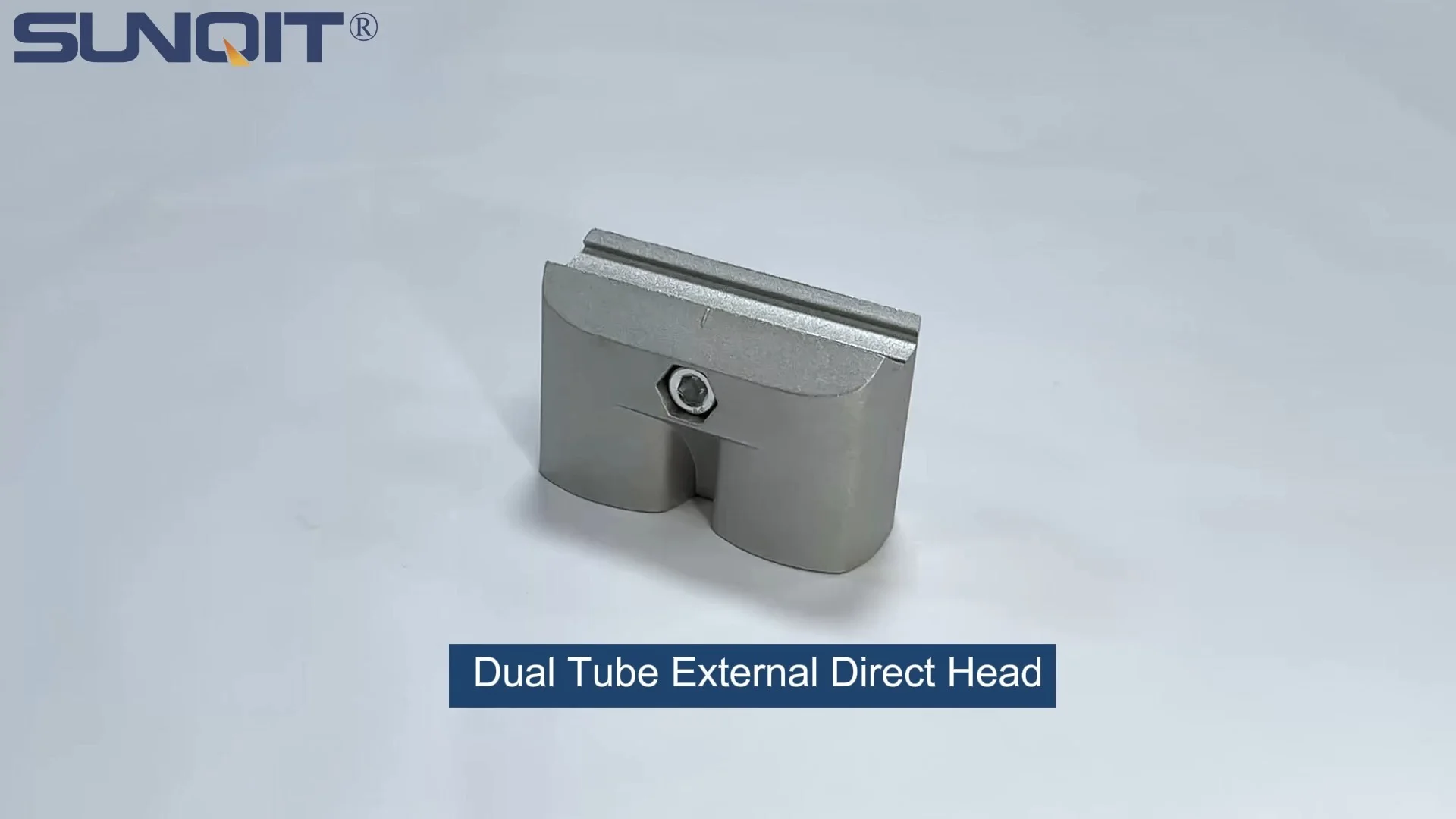
Duplex Aluminum Pipe Joint
Duplex Aluminum pipe joint used for one pcs 28pcs aluminum pipe and one pcs of 28mm duplex pipe connection in straight angle.
In the high-stakes world of medical equipment manufacturing, precision isn't just a goal—it's a mandate. Every scalpel, MRI component, and surgical instrument must meet stringent regulatory standards, while production lines race to keep pace with evolving healthcare demands. Yet for many plant managers, the struggle to balance compliance, flexibility, and efficiency feels like walking a tightrope. Rigid workbenches, clunky material racks, and outdated assembly systems often become bottlenecks, slowing down workflows and increasing the risk of errors. This was exactly the challenge facing MediTech Solutions, a mid-sized medical device manufacturer based in the Midwest, until they discovered a game-changing solution: the duplex aluminum pipe joint. In this case study, we'll dive into how this unassuming component, paired with aluminum profiles and lean system principles, transformed their production floor—one reconfigurable workstation and streamlined flow rack at a time.
The Client: MediTech Solutions' Growing Pains
Founded in 2010, MediTech Solutions specializes in manufacturing precision surgical tools and diagnostic equipment components. By 2023, their client list had grown to include over 200 hospitals and clinics nationwide, and their product line had expanded from 12 to 28 unique items. On paper, this growth was a success story—but on the factory floor, it was creating chaos.
"We were running into walls everywhere," says James Carter, MediTech's Production Manager, who joined the company in 2018. "Our original setup was built for a smaller product line. We had these heavy steel workbenches bolted to the floor, and flow racks that were basically fixed shelving units. When we launched a new line of arthroscopic tools last year, we needed to rearrange three assembly stations. It took two weeks of welding and drilling just to move the workbenches—and even then, they didn't fit right. The material handlers were complaining about back pain from lifting parts onto the old racks, and our quality team flagged three ESD (Electrostatic Discharge) incidents in one quarter because the steel surfaces weren't grounded properly."
MediTech's pain points weren't unique. Like many manufacturers scaling up, they faced three critical challenges:
- Inflexibility: Traditional steel workbenches and flow racks couldn't adapt to new product dimensions or production volumes, requiring costly and time-consuming overhauls.
- Inefficiency: Material handling was slow and error-prone, with workers spending 15-20% of their shifts walking between static racks or struggling to reach tools on awkwardly positioned shelves.
- Compliance Risks: The plant's existing systems lacked proper ESD protection and failed to meet the FDA's latest guidelines for cleanroom-compatible surfaces, putting audits and certifications at risk.
"We knew we needed a lean system upgrade," Carter recalls. "But every vendor we talked to pushed either fully custom steel setups—way too expensive—or flimsy plastic racks that wouldn't hold up to our heavy parts. Then, at a manufacturing expo, we stumbled onto a boothaluminum profile systems. The sales rep mentioned 'duplex aluminum pipe joints' and how they could build almost anything with them. I was skeptical at first—aluminum? For medical equipment? But when he showed us a demo workbench that could be reconfigured in 10 minutes flat, I thought, 'Maybe this is the way.'"
The Solution: Duplex Aluminum Pipe Joints and the Lean Aluminum Revolution
Carter's team began researching aluminum profile systems, focusing on suppliers that specialized in lean manufacturing solutions. That's when they connected with PrecisionFlow, a supplier of aluminum pipe and joint systems with a track record in regulated industries. "What sold us wasn't just the aluminum—it was the duplex joint design," says Maya Reed, MediTech's Lead Industrial Engineer, who led the evaluation process.
What Makes Duplex Aluminum Pipe Joints Different?
Unlike standard pipe joints, which often require welding, threading, or permanent adhesives, duplex aluminum pipe joints are engineered for flexibility and strength. They feature a dual-locking mechanism: an internal rotary clamp that secures the joint to the aluminum profile, and an external set screw that reinforces the connection. This design allows for tool-free adjustments (using just an Allen wrench) while maintaining a load capacity of up to 500 lbs per joint—critical for holding heavy medical components like stainless steel instrument trays or glass diagnostic panels.
"We tested a prototype joint with a 400-lb load," Reed explains. "We shook it, we bumped it, we even tried to twist it by hand. It didn't budge. And when we needed to reposition the shelf? Loosened two screws, moved it, tightened them back—done. That's when I knew this wasn't just a 'light-duty' solution. This could handle our workflow."
Beyond the joints, the system relied on aluminum profiles —lightweight, corrosion-resistant extrusions with T-slots that allowed for easy attachment of accessories like tool hooks, ESD mats, and roller tracks. Unlike steel, aluminum is naturally conductive, making it easier to ground for ESD protection—a must for MediTech's sensitive electronics components. It's also non-porous, which meant it could be sanitized with the same disinfectants used in their cleanrooms, addressing compliance concerns.
Designing the Custom Lean System
PrecisionFlow and MediTech collaborated to design a full-floor solution centered on three key components:
- Reconfigurable Workbenches: Using duplex joints and aluminum profiles, the team replaced 12 steel workbenches with custom stations featuring adjustable height, modular shelving, and integrated ESD mats. Each workbench was equipped with tool rails (attached via T-slot accessories) and overhead lighting, reducing worker fatigue and errors.
- Dynamic Flow Racks: Static shelving was swapped for gravity-fed flow racks built with aluminum roller tracks and duplex joints. These racks allowed parts to "flow" to workers via inclined roller tracks, eliminating the need for manual lifting and cutting material handling time.
- Mobile Turnover Trolleys: To connect workstations and flow racks, the team added lightweight aluminum trolleys with caster wheels (another keyword from MediTech's supplier list), making it easy to transport parts between stations without heavy lifting.
"The design phase was surprisingly fast," Carter notes. "We used 3D modeling software to mock up the new layout, and PrecisionFlow adjusted the joint placements and profile lengths in real time. For example, our arthroscopic tool assembly station needed a narrower workbench top to fit between two existing machines. With the duplex joints, we just shortened the aluminum profiles by 18 inches—no custom cutting or welding required. It was like building with industrial-grade Legos."

Implementation: From Blueprint to Production in 30 Days
MediTech's leadership was wary of production downtime during the transition. "We couldn't afford to halt assembly for weeks," Carter says. "Our hospitals rely on us for just-in-time deliveries." To mitigate risk, PrecisionFlow proposed a phased rollout: starting with the low-traffic packaging area, then moving to the diagnostic component assembly line, and finally tackling the high-priority surgical tool stations.
The first step was removing the old steel workbenches—a process that, ironically, took longer than installing the new system. "We had to bring in a crew with angle grinders to cut the bolts holding the steel benches down," Carter laughs. "That took three days. Installing the first aluminum workbench? Two hours. And that included training the team on how to adjust it."
For the workers, the transition was eye-opening. "I was skeptical at first," admits Lisa Wong, an assembly technician with six years at MediTech. "I thought the aluminum would feel flimsy compared to steel. But when I adjusted the shelf height on my new bench by myself—no asking maintenance for help—I was sold. Now, if I need to lower the surface to work on a smaller part, I do it in two minutes. Before, I'd have to ask James [Carter] to schedule a maintenance slot, and that could take days."
The flow racks proved equally transformative. "Our old racks were like climbing a ladder," says Marcus Greene, a material handler. "Parts were stacked so high, I'd have to use a step stool to reach the top shelf. The new aluminum flow racks are inclined, so the parts roll down as we take them from the front. No more stretching, no more backaches. Last week, I filled an order in half the time it used to take."

Results: 6 Months Later, the Metrics Speak for Themselves
By the six-month mark, MediTech's investment in duplex aluminum pipe joints and aluminum profiles had paid off—literally. The team tracked key performance indicators (KPIs) before and after implementation, and the improvements were staggering.
| Key Performance Indicator | Before Implementation | After Implementation | Improvement |
|---|---|---|---|
| Changeover Time (per new product line) | 14 days | 1.5 days | 90% reduction |
| Material Handling Time (per assembly station) | 45 minutes/day | 12 minutes/day | 73% reduction |
| ESD Incidents (per quarter) | 3 incidents | 0 incidents | 100% reduction |
| Maintenance Costs (annual) | $22,000 | $5,500 | 75% reduction |
| Worker Fatigue Complaints (monthly) | 8 complaints | 1 complaint | 88% reduction |
"The ESD reduction alone justified the cost," says Carter. "A single ESD incident can ruin a batch of circuit boards worth $10,000. We haven't had one since the new workbenches went in. And the maintenance savings? We used to spend $2,000 a month just on welding repairs for the steel racks. Now, we buy a few replacement joints here and there—maybe $500 a year. It's night and day."
Compliance, too, became easier. During their annual FDA audit six months post-implementation, MediTech received a "no findings" report—a first in company history. "The auditor was impressed by the aluminum surfaces," Reed recalls. "He ran his hand along the workbench and said, 'This is how it should be done.' The non-porous aluminum doesn't trap bacteria, and the ESD grounding is built into the system, not added as an afterthought. We passed with flying colors."
"I used to dread audit season. Now? I look forward to showing off our setup. The duplex joints and aluminum profiles didn't just fix our workflow—they made us a more attractive partner for hospitals. Last month, we landed a contract with a major medical group specifically because they toured our floor and saw how efficient and compliant our process is." — James Carter, Production Manager, MediTech Solutions

Long-Term Impact: Scalability and the Future of Manufacturing
Today, MediTech is planning its next expansion: a new cleanroom for developing minimally invasive surgical tools. And this time, there's no debate about the setup. "We're going all-in on aluminum profiles and duplex joints," Carter says. "We've already designed the layout using the same 3D software, and PrecisionFlow is quoting us a 10-day installation. No welding, no downtime—just plug-and-play."
The system's scalability has also allowed MediTech to experiment with new lean principles, like cellular manufacturing. "We've created small, self-contained assembly cells using the aluminum workbenches and flow racks," Reed explains. "Each cell handles a specific product, and if demand spikes for one item, we can reconfigure the cells in a day. Before, that would have required a full floor redesign."
Perhaps the most unexpected benefit? Employee morale. "Our turnover rate was 18% last year," Carter notes. "This year, it's down to 7%. Workers feel empowered when they can adjust their workstations to fit their needs. Lisa [Wong] even customized her bench with a cup holder and a tool organizer—things we never would have allowed with the old steel setup, because we were afraid of damaging the surfaces. Now, it's encouraged. Happy workers are productive workers."
Conclusion: Why Duplex Aluminum Pipe Joints Are a Game-Changer for Medical Manufacturing
MediTech Solutions' journey from rigid steel to flexible aluminum is a case study in how the right tools can transform a manufacturing operation. The duplex aluminum pipe joint, as it may seem, proved to be the linchpin—enabling a lean system that's adaptable, efficient, and compliant. For medical equipment plants facing similar growing pains, the takeaway is clear: flexibility doesn't have to mean sacrificing strength, and compliance doesn't have to mean stagnation.
"We're not just building better workbenches or flow racks," Carter reflects. "We're building a factory that can grow with us. The duplex aluminum pipe joint isn't just a component—it's a mindset. It says, 'We're ready for whatever comes next.' And in healthcare, that's priceless."
As the medical manufacturing industry continues to evolve, one thing is certain: the future belongs to systems that can keep up. For MediTech Solutions, that future is built on aluminum—and it's just getting started.