- Company Articles
- Products and Technology
- Application Cases
- Case Study: Efficiency Gains with End Support for Roller Track Placon Mount with Wheel

Case Study: Efficiency Gains with End Support for Roller Track Placon Mount with Wheel
Related Product
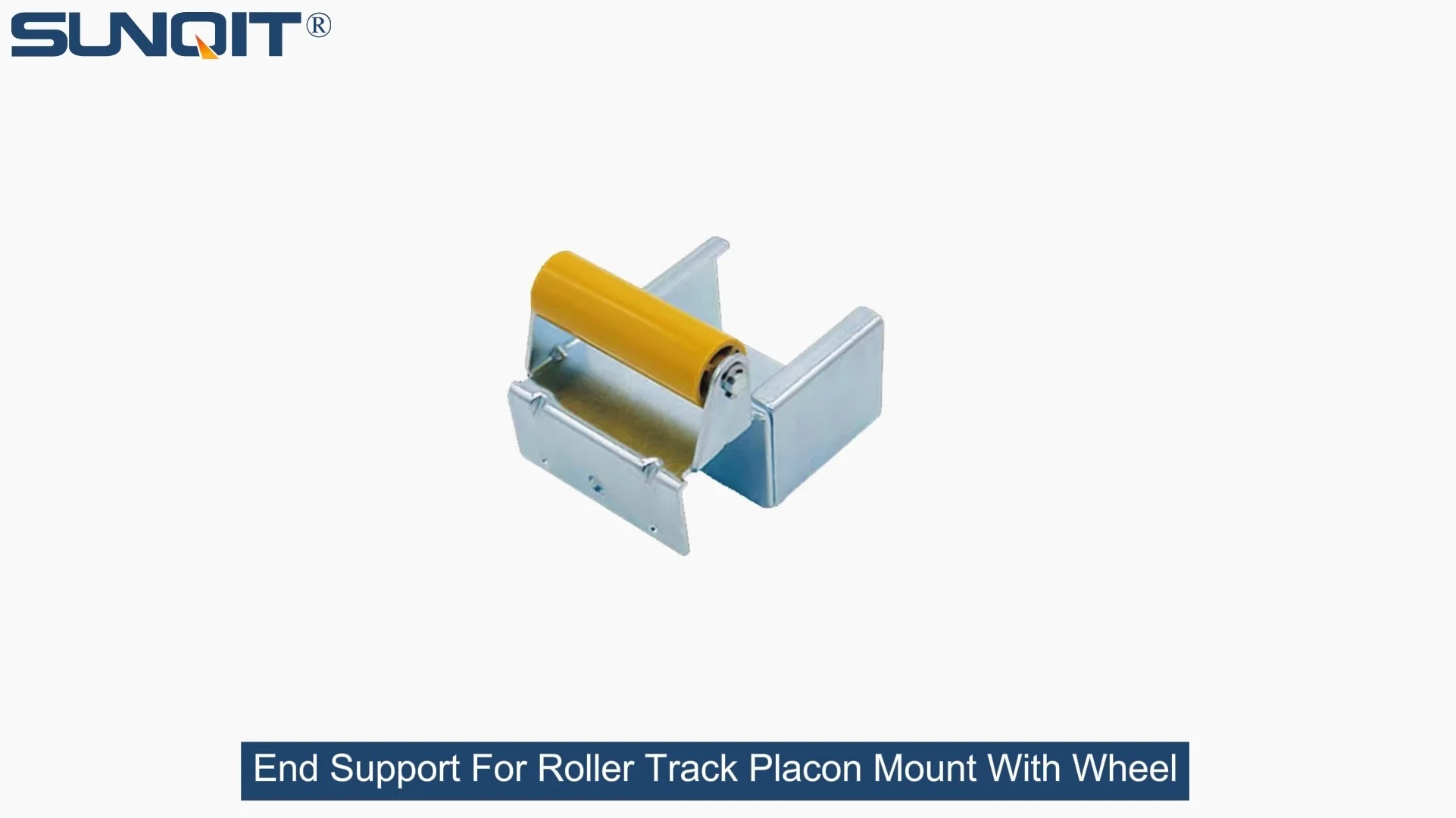
End Support for Roller Track Placon Mount with Wheel
End support for roller track placon mount with wheel,the special design with end wheel,make it with more flexible function for roller track and pipe connection and give more option for selection for building flow rack system.
How a Small Component Transformed Material Flow in Electronics Manufacturing
The Heartbeat of Production: Why Material Flow Matters
In the fast-paced world of manufacturing, every second counts. But here's the thing: even the most advanced assembly lines can grind to a halt if the materials they need aren't moving smoothly. For production managers, engineers, and frontline workers alike, material flow isn't just a "logistics detail"—it's the invisible force that keeps teams on track, deadlines within reach, and morale high.
Take electronics manufacturing, for example. Factories churning out smartphones, laptops, and wearables deal with hundreds of tiny components daily—from screws and circuit boards to delicate sensors. These parts need to glide from storage to assembly stations, then on to testing and packaging, without delays, damage, or confusion. When this flow breaks down, everything suffers: workers wait idle, production targets slip, and the pressure mounts.
This is the story of how one electronics manufacturer turned a common material flow headache into a competitive advantage—all thanks to a seemingly small upgrade: the end support for roller track placon mount with wheel . Paired with a flow rack system and lean principles, this component didn't just fix a problem—it transformed their entire production rhythm.
The Challenge: Stuck in the Slow Lane
Let's meet "TechFlow Electronics," a mid-sized manufacturer specializing in smart home devices. With a team of 120 production workers across three shifts, their factory floor was always buzzing—but not always in a good way. For years, their assembly line relied on traditional static shelves to hold components. Workers would walk to the shelves, bend down to grab bins, and carry them back to their stations. Sounds simple, right? In reality, it was a daily battle.
"By 9 a.m., the shelves were already a mess," recalls Maria, a line supervisor with 8 years at TechFlow. "Components would get mixed up, bins would slide off the edges, and workers were constantly asking, 'Where's the next batch of capacitors?' By afternoon, everyone was exhausted from the extra steps. We were falling behind by 100 units a day, and the overtime was killing team morale."
Juan's Experience (Assembly Line Worker): "I used to spend 20 minutes every hour just walking to the shelves and back. Bending down to reach the lower bins hurt my back, and once I dropped a bin of microchips—cost us an hour of cleanup and a lot of stress. You could feel the frustration building; we were letting each other down, even though we were all trying our best."
The numbers told the same story: TechFlow's material handling process was eating up 15% of total production time. Their error rate for component delivery (wrong parts, missing bins) was 8%, and 30% of workers reported minor injuries like strained backs or wrist pain. Worst of all, their "changeover time"—the delay when switching from one product model to another—was 45 minutes, far above the industry average of 25 minutes.
"We knew we needed a lean solution ," says Raj, TechFlow's Operations Manager. "But we didn't want to overhaul everything at once. We needed something targeted—something that could fix the material flow bottleneck without disrupting our entire operation."

The Solution: Small Adjustments, Big Impact
Enter the lean system experts, who visited TechFlow's factory to diagnose the problem. After observing the workflow, measuring distances, and interviewing workers, they pinpointed the root cause: the static shelves forced workers into inefficient movements, and the old roller tracks (without proper end supports) often jammed or failed to guide bins smoothly.
"The key wasn't replacing everything—it was upgrading the parts that were breaking the flow," explains the lead engineer on the project. "The end support for roller track placon mount with wheel might seem small, but it's the unsung hero here. It stabilizes the roller track, keeps bins aligned, and lets workers adjust the height so they don't have to bend. Paired with a modern flow rack system, it turned passive shelves into an active, self-sustaining material delivery line."
Here's how it worked in practice:
- Smooth Material Glide: The end support's wheels and precision alignment meant bins slid from the flow rack directly to the assembly station—no more lifting or dragging.
- Ergonomic Design: Adjustable height settings let workers position bins at waist level, cutting down on back strain and fatigue.
- Flexible Configuration: Since TechFlow runs multiple product lines, the system could be reconfigured quickly for different component sizes—perfect for their frequent changeovers.
- Durable and Reusable: Made from high-grade aluminum, the end supports and roller tracks stood up to 12-hour shifts and could be repurposed if the factory layout changed—aligning with TechFlow's commitment to sustainable, lean practices.
"At first, I thought, 'It's just a metal bracket with a wheel—how much difference can it make?' But after the first day, I didn't have to ask. The bins just… came to me. No more hunting, no more sore shoulders. I could focus on building, not fetching." — Juan, Assembly Line Worker

The Results: Numbers That Speak for Themselves
TechFlow implemented the new system in one assembly line as a test. Within two weeks, the results were so striking they rolled it out to all three lines. Here's how the metrics changed:
| Metric | Before Upgrade | After Upgrade | Improvement |
|---|---|---|---|
| Material Delivery Time per Batch | 12 minutes | 4 minutes | 67% faster |
| Daily Units Produced | 850 units | 1,100 units | 29% increase |
| Component Error Rate | 8% | 1.5% | 81% reduction |
| Worker Reported Fatigue (1-10 Scale) | 7.2 | 3.8 | 47% lower |
| Changeover Time | 45 minutes | 18 minutes | 60% faster |
But the best results weren't just on paper. "The team's energy changed," Maria notes. "Before, the line was quiet—everyone was too tired to talk. Now, there's laughter again. People are proud of how efficient we are. And when morale goes up, everything else follows."

Beyond TechFlow: Lessons for Manufacturers Everywhere
TechFlow's story isn't unique. In manufacturing, it's often the "small stuff"—the components we overlook—that hold back progress. A better roller track end support, a more ergonomic workbench, or a flexible conveyor system can transform a struggling line into a high-performer.
The key takeaway? Lean manufacturing isn't about replacing everything with the newest gadgets. It's about understanding your team's daily challenges, designing solutions that work for them, and investing in components that grow with your needs. Whether you're in electronics, automotive, or medical device production, the right tools—like the end support for roller track placon mount with wheel—can turn material flow from a headache into your greatest competitive edge.
"We used to think efficiency was about working harder. Now we know it's about working smarter—for our team, our products, and our bottom line." — Raj, TechFlow Operations Manager
Final Thoughts: The Power of Lean, One Component at a Time
At the end of the day, manufacturing is about people. The machines, the materials, the systems—they all exist to support the teams building the products that power our world. When we design those systems with care—prioritizing smooth flow, ergonomics, and flexibility—we don't just make better products. We build better workplaces.
For TechFlow, that journey started with a simple question: "How can we make today easier for our team?" The answer was in the details—the end support, the flow rack, the commitment to lean principles. And for manufacturers everywhere, that's the real lesson: great efficiency begins with great care.