- Company Articles
- Products and Technology
- Application Cases
- Case Study: External Straight Aluminum Joints in a 3C Production Upgrade

Case Study: External Straight Aluminum Joints in a 3C Production Upgrade
Related Product
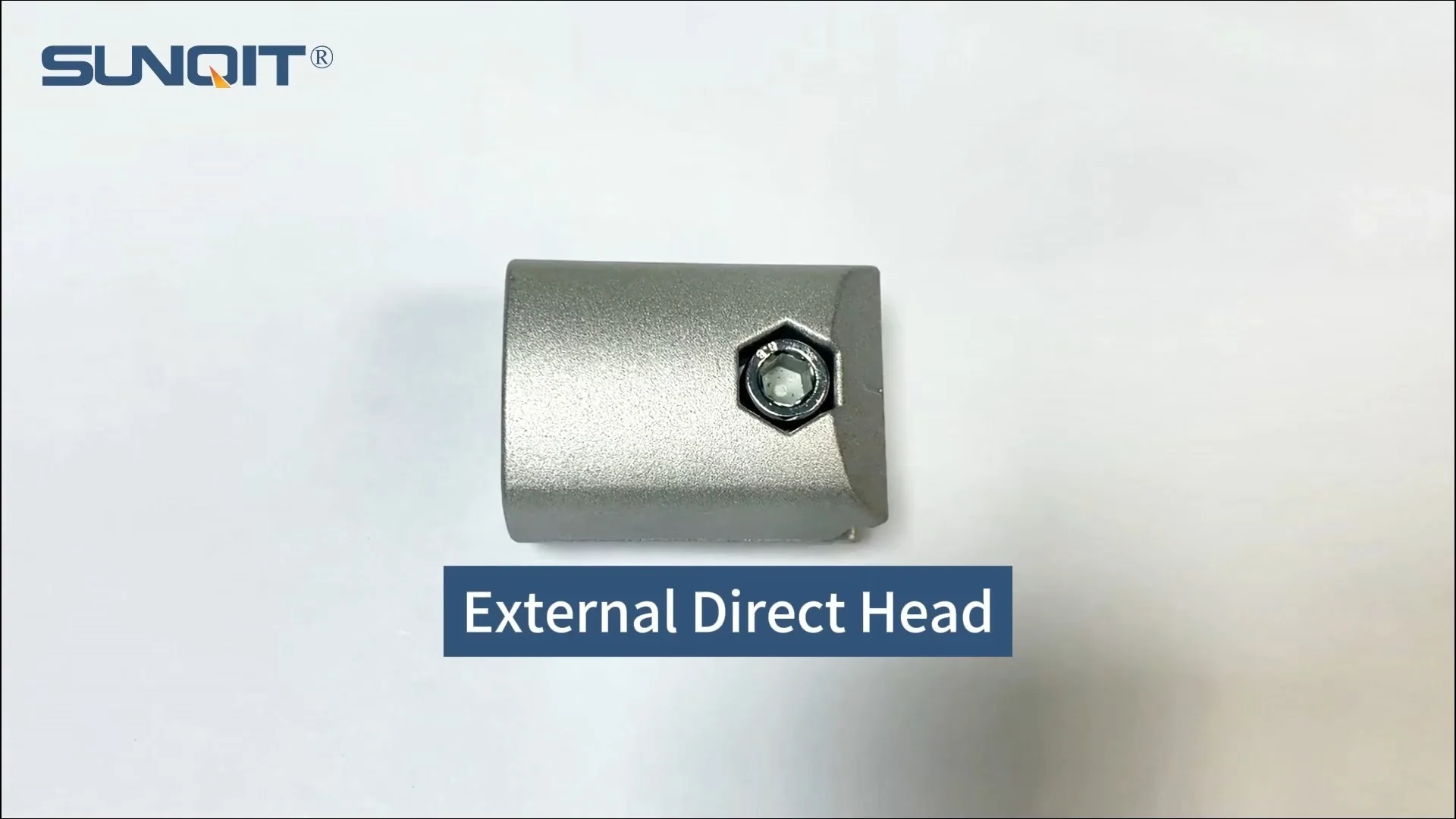
External Straight Aluminum Joint
Aluminum pipe joint outside connection used for two pcs 28pcs aluminum pipe connection in straight angle,it connects two pcs pipe from outside.
In the fast-paced world of 3C manufacturing—where "3C" stands for computers, communication, and consumer electronics—change is the only constant. New smartphone models launch every few months, smartwatch designs evolve overnight, and customer demands for sleeker, more powerful devices never let up. For factories on the front lines, this relentless pace isn't just a challenge; it's a make-or-break pressure test. Can their production lines adapt quickly enough? Can they reduce downtime when switching between products? Can they keep workers efficient and safe, even as workflows shift? These were the questions keeping Maria Gonzalez, the production manager at TechFlow Electronics, up at night in early 2024.
TechFlow, a mid-sized contract manufacturer based in the heart of Mexico's electronics hub, specialized in assembling circuit boards and subcomponents for global 3C brands. Their factory floor, like many in the industry, was a patchwork of rigid, decades-old workbenches and flow racks—sturdy, but about as flexible as a concrete wall. When a client suddenly changed a component's dimensions for a new tablet, the team would spend days dismantling and rebuilding workstations. When a surge in smart speaker orders hit, flow racks designed for smaller parts became bottlenecks, with workers stretching to reach items or fumbling with misaligned rollers. By the end of 2023, Maria's team was drowning in inefficiencies: setup times for new product runs averaged 16 hours, downtime due to workstation reconfigurations spiked to 8% of monthly production hours, and employee turnover in assembly lines was creeping upward as frustration grew.
"I remember standing on the floor one Tuesday morning, watching a line supervisor named Carlos try to jury-rig a workbench with zip ties and duct tape because the new motherboard was 2cm wider than the old one," Maria recalls. "He'd been at it for two hours, and the line was idling. The workers were standing around, looking at their phones, and I just thought, This can't be how we compete. " That moment sparked TechFlow's search for a better way—a solution that could turn their rigid factory into a dynamic, adaptable space. What they found was a quiet revolution in lean manufacturing: external straight aluminum joints and modular aluminum profiles . This is the story of how those small, unassuming components transformed TechFlow's production floor, one joint at a time.
The Pain Points: Why Rigidity Was Killing TechFlow's Efficiency
Before diving into the upgrade, it's critical to understand the specific hurdles TechFlow faced. For Maria and her team, the issues weren't just abstract "inefficiencies"—they were daily, tangible headaches that impacted every part of the operation. Let's break them down:
1. The "One-Size-Fits-None" Workbench Problem
TechFlow's assembly workbenches were relics from the early 2000s: heavy steel frames bolted to the floor, with fixed wooden tops and static shelving. They'd served the company well when product lines stayed consistent for years, but by 2023, that stability was long gone. A typical month might see the factory switch between assembling smartwatch charging docks (small, lightweight, requiring precision tools), laptop battery modules (bulkier, needing anti-static surfaces), and Bluetooth headphone cases (irregularly shaped, demanding custom fixtures).
"The workbenches were like stone tablets," says Carlos Mendez, the line supervisor Maria had watched that Tuesday morning. "If a product was even a little different, we had two choices: either squeeze it onto the existing bench and risk damaging parts, or spend half a day taking the bench apart with wrenches and rebuilding it. And forget about adjusting height—our tallest worker is 6'2", our shortest is 5'1", and everyone was stuck at 36 inches. By the end of the shift, people's backs were killing them."
The numbers backed up Carlos's frustration. A 2023 internal audit found that 42% of assembly errors were linked to poorly fitting workbench setups, and workers reported "discomfort due to fixed workstation height" as the second-most common complaint in exit interviews.
2. Flow Racks That Fought Against the Workflow
Up and down the production line, flow racks—used to move parts from storage to assembly stations—were another source of grief. These racks, made from welded steel with fixed roller tracks, were designed for a single product's part dimensions. When a new component came in with a slightly larger width, the rollers would jam. When parts got lighter, they'd slide too slowly; when heavier, they'd crash into stops at the end, damaging delicate components.
"We had a flow rack for camera modules that was supposed to feed three assembly stations," explains Luisa Torres, a material handler with 10 years at TechFlow. "But the rollers were spaced for the old camera, which was round. The new one was rectangular, so it kept getting stuck halfway. I'd have to walk up and nudge it every five minutes. Over an 8-hour shift, that's 96 trips—time I could've spent restocking or helping with quality checks."
By late 2023, flow rack jams were causing an average of 12 "micro-stoppages" per line per day, each lasting 3–5 minutes. Multiply that by 10 lines, and TechFlow was losing over 30 hours of productive time weekly—time that could've been used to meet tight client deadlines.
3. The Hidden Cost of "Good Enough"
Perhaps the biggest issue wasn't the obvious delays, but the slow, silent erosion of morale and innovation. Workers, used to making do with duct tape and workarounds, had stopped suggesting improvements. "Why bother?" one assembler told Maria in a one-on-one. "Even if we come up with a better way, the equipment can't handle it." The factory had become a place where "good enough" was the norm, and that norm was costing them clients. In Q4 2023, a major customer nearly pulled their contract after TechFlow missed a deadline by three days—all because reconfiguring a workbench for a last-minute design change took twice as long as promised.
"That was the wake-up call," Maria says. "We needed to stop patching and start rebuilding—this time, with flexibility in mind."
From Frustration to Solution: Discovering Lean Systems and Aluminum Modularity
Maria's first step was to assemble a cross-functional team: Carlos from production, Luisa from materials handling, an engineer from maintenance, and a representative from the quality department. Their mission? Research solutions that could make TechFlow's factory floor as adaptable as the products they built. They scoured industry trade shows, talked to peers at other 3C plants, and pored over case studies. The term that kept popping up: lean system .
Lean manufacturing, with its focus on eliminating waste and continuous improvement, wasn't new to TechFlow. They'd tried kaizen events and 5S audits in the past, but those efforts had plateaued because the physical infrastructure—those rigid workbenches and flow racks—couldn't keep up with the team's ideas. "Lean is about flow," Maria's team realized. "But if your tools can't flow with your processes, you're just rearranging deck chairs on a sinking ship."
It was during a visit to a trade show in Guadalajara that they stumbled upon the missing piece: a boothaluminum profiles and joints that promised "build, reconfigure, repeat—no welding required." The star of the display was a simple but ingenious component: the external straight aluminum joint . Unlike traditional welded joints or bolted steel brackets, this small, lightweight connector allowed aluminum profiles to be joined quickly, securely, and—most importantly—detachably. "I stood there watching a technician build a workbench from scratch in 12 minutes," Carlos says. "He added a shelf, adjusted the height, even swapped out the top for an anti-static panel—all with an Allen wrench. I turned to Maria and said, 'This is it.'"
The external straight aluminum joint, the team learned, was part of a broader ecosystem of modular aluminum components. Aluminum profiles—extruded metal beams with T-slots running their length—could be cut to any size, then connected with joints like the external straight model (for straight-line connections), 90-degree elbows, or 135-degree angles. Add accessories like roller tracks, caster wheels, and adjustable feet, and suddenly you had a system that could be reconfigured in hours, not days. "It was like building with industrial-grade Legos," Luisa jokes. "But instead of plastic bricks, these were strong enough to hold 50kg of circuit boards."
After vetting three suppliers, TechFlow chose a partner specializing in lean manufacturing components. In March 2024, they placed their first order: 200 meters of 40x40mm aluminum profiles, 500 external straight aluminum joints, 100 anti-static workbench tops, and a assortment of roller tracks and caster wheels. The goal? To rebuild two pilot assembly lines—one for smartphone circuit boards, one for smartwatch batteries—using the new modular system. If it worked, they'd roll it out factory-wide.

Implementation: Building a Factory That Breathes
Implementation began in April 2024, and from day one, it was a learning curve—for both the equipment and the team. The first task was to tear down the old workbenches and flow racks in the pilot lines. "Watching Carlos take a sledgehammer to the steel workbench he'd complained about for years was almost ceremonial," Maria laughs. "He sent a photo to the team WhatsApp group with the caption, 'Good riddance.'"
But dismantling was the easy part. Building the new system required a shift in mindset. "We'd always thought of workbenches as 'permanent,'" says maintenance engineer Raj Patel. "Now, we had to think of them as 'temporary by design.'" The team started with the smartphone circuit board line, where frequent product changes were most problematic. Using the aluminum profiles and external straight joints, they built a workbench that could be adjusted in height (from 75cm to 95cm) with a twist of a handle, and whose top could be swapped for different materials (anti-static for sensitive components, heat-resistant for soldering tasks). The external straight joints, which fit snugly into the T-slots of the profiles, made assembly a breeze: align the profile, slide in the joint, tighten the bolt with an Allen key, and done. "Even the new intern, Miguel, could put together a basic shelf in 10 minutes," Raj notes. "That's unheard of with traditional steel."
Next came the flow racks for the smartwatch battery line. Luisa, who'd spent years fighting jams, was put in charge of designing the new setup. "I measured every battery size we'd handled in the past two years, plus the ones the client mentioned for upcoming models," she says. Using adjustable roller tracks and aluminum profiles, she built a rack with variable roller spacing—thanks to, again, external straight joints that let her slide rollers left or right along the profile's T-slots. "The first time we ran a new battery through, it glided right into place," she recalls. "No nudging, no jams. I almost cried."
But the real test came in June 2024, when a client dropped a bombshell: they needed a rush order of 10,000 modified Bluetooth headphone cases, with a component that was 3cm longer than the previous version. In the old setup, this would've meant 16 hours of downtime to rebuild workbenches and flow racks. With the new system? Carlos's team met at 7 a.m., measured the new component, adjusted the workbench heights and flow rack roller spacing using Allen wrenches, and had the line up and running by 9:30 a.m. "That's 2.5 hours instead of 16," Maria says, still amazed. "The client called to ask if we'd pulled an all-nighter. I told them, 'No—we just finally have tools that work as hard as our team.'"

The Results: Numbers That Tell the Story
By December 2024—nine months after the pilot lines launched—TechFlow's transformation was undeniable. The team expanded the modular system to all five assembly lines, and the metrics spoke for themselves. Below is a snapshot of key improvements, comparing Q4 2023 (pre-upgrade) to Q4 2024 (post-upgrade):
| Metric | Q4 2023 (Pre-Upgrade) | Q4 2024 (Post-Upgrade) | Improvement |
|---|---|---|---|
| Setup time for new product runs | 16 hours | 3.5 hours | 78% reduction |
| Downtime due to workstation reconfigurations | 8% of monthly production hours | 1.2% of monthly production hours | 85% reduction |
| Flow rack micro-stoppages (per line per day) | 12 | 1 | 92% reduction |
| Assembly errors linked to workstation fit | 42% of total errors | 11% of total errors | 74% reduction |
| Employee turnover in assembly lines | 18% annual rate | 6% annual rate | 67% reduction |
| On-time delivery rate for client orders | 82% | 98% | 16% improvement |
But numbers only tell part of the story. Walk through TechFlow's factory today, and the atmosphere is different. Workers joke while they adjust their workbenches to their height—no more stooping or stretching. Line supervisors like Carlos spend less time troubleshooting jams and more time coaching their teams. Even the sound of the floor has changed: gone are the clangs of wrenches and the groans of stuck rollers, replaced by the steady hum of a system in flow.
"I used to dread product changeovers," says Ana Lopez, an assembler on the smartphone line. "Now? I actually look forward to them. Last month, we switched from a 6-inch to a 6.7-inch screen motherboard, and I had my station ready in 20 minutes. I even added a little shelf for my tools—something I never could've done before. It feels like the company trusts us to make our work better, and that makes a difference."

Why External Straight Aluminum Joints Stole the Show
While the entire modular system—aluminum profiles, roller tracks, adjustable feet—deserves credit, the external straight aluminum joint emerged as the unsung hero of TechFlow's upgrade. Why? Because it solved two critical problems that had plagued the factory for years: speed and security .
Traditional steel joints required welding or heavy bolts, which took time and skill. The external straight aluminum joint, by contrast, is designed for "click-and-tighten" assembly. Its sleek, low-profile design fits flush with aluminum profiles, creating a clean, sturdy connection without protruding edges that could snag parts or injure workers. "We used to have these big, clunky steel brackets that stuck out," Luisa says. "I've seen more than one worker scrape their arm on them. The aluminum joints are smooth—you don't even notice they're there until you need to adjust something."
Durability was another surprise. Maria's team initially worried that "detachable" meant "flimsy," but the external straight joints proved them wrong. Made from high-grade aluminum alloy with reinforced internal threading, they've withstood daily use, heavy loads (up to 150kg per joint, according to the supplier), and repeated reconfigurations without loosening or warping. "We've taken apart and rebuilt the same workbench at least 20 times in the past six months," Raj says. "The joints still hold like they're brand new."
Perhaps most importantly, the joints democratized improvement. Workers no longer needed to wait for maintenance to modify their workstations—they could do it themselves, with a simple Allen wrench. "Empowerment isn't just a buzzword here anymore," Maria says. "When Ana can add a shelf to her workbench in five minutes, she's not just solving her own problem—she's taking ownership of her work. That's the kind of culture lean manufacturing is supposed to build, but it takes the right tools to get there."
Beyond the Pilot: Scaling Success and Future Plans
With the pilot lines thriving, TechFlow is now expanding the modular system to other areas of the factory. Next on the list: packaging and shipping, where they'll use aluminum profiles and external straight joints to build adjustable pallet racks and conveyor guides. They're also exploring custom workbench designs for their R&D lab, where prototypes change daily and flexibility is even more critical.
"We're not just upgrading equipment—we're rethinking how we work," Maria says. "Last week, the quality team suggested adding a small shelf above the assembly line to hold inspection tools. In the old days, that would've taken a maintenance order, a week of waiting, and a welder. Now? Carlos grabbed some profiles and joints from the storage closet, and it was done by lunch."
Looking ahead, TechFlow is even considering how modular aluminum could help them expand. With a system that can be disassembled and reassembled quickly, they're exploring adding a second shift in a smaller satellite facility—no need to invest in all-new infrastructure. "The external straight aluminum joint didn't just fix our current problems," Maria says. "It opened doors we didn't even know were there."
Conclusion: The Power of Small Components in Big Transformations
In the grand scheme of 3C manufacturing, the external straight aluminum joint is a tiny thing—a small, unassuming piece of metal. But at TechFlow Electronics, it's become a symbol of something much bigger: the power of adaptability in a world that won't stop moving. By swapping rigid steel for modular aluminum, Maria's team didn't just reduce downtime or cut errors—they reimagined what their factory could be. They turned a place of frustration into a place of pride, where workers feel equipped to tackle whatever the next product launch throws their way.
For other 3C manufacturers struggling with the same rigid infrastructure, TechFlow's story offers a clear lesson: lean manufacturing isn't just about processes—it's about the tools that make those processes possible. And sometimes, the key to unlocking a more efficient, flexible, and human-centered factory floor lies in the smallest components: a joint that connects, adapts, and lets your team flow.
As Carlos likes to say, "We used to build workbenches to last forever. Now? We build them to last until we need something better . And with these joints, something better is always just an Allen wrench away."