- Company Articles
- Products and Technology
- Application Cases
- Case Study: Flat Adjustable Swivel Castor Wheels in 3C Assembly Line Optimization

Case Study: Flat Adjustable Swivel Castor Wheels in 3C Assembly Line Optimization
Related Product
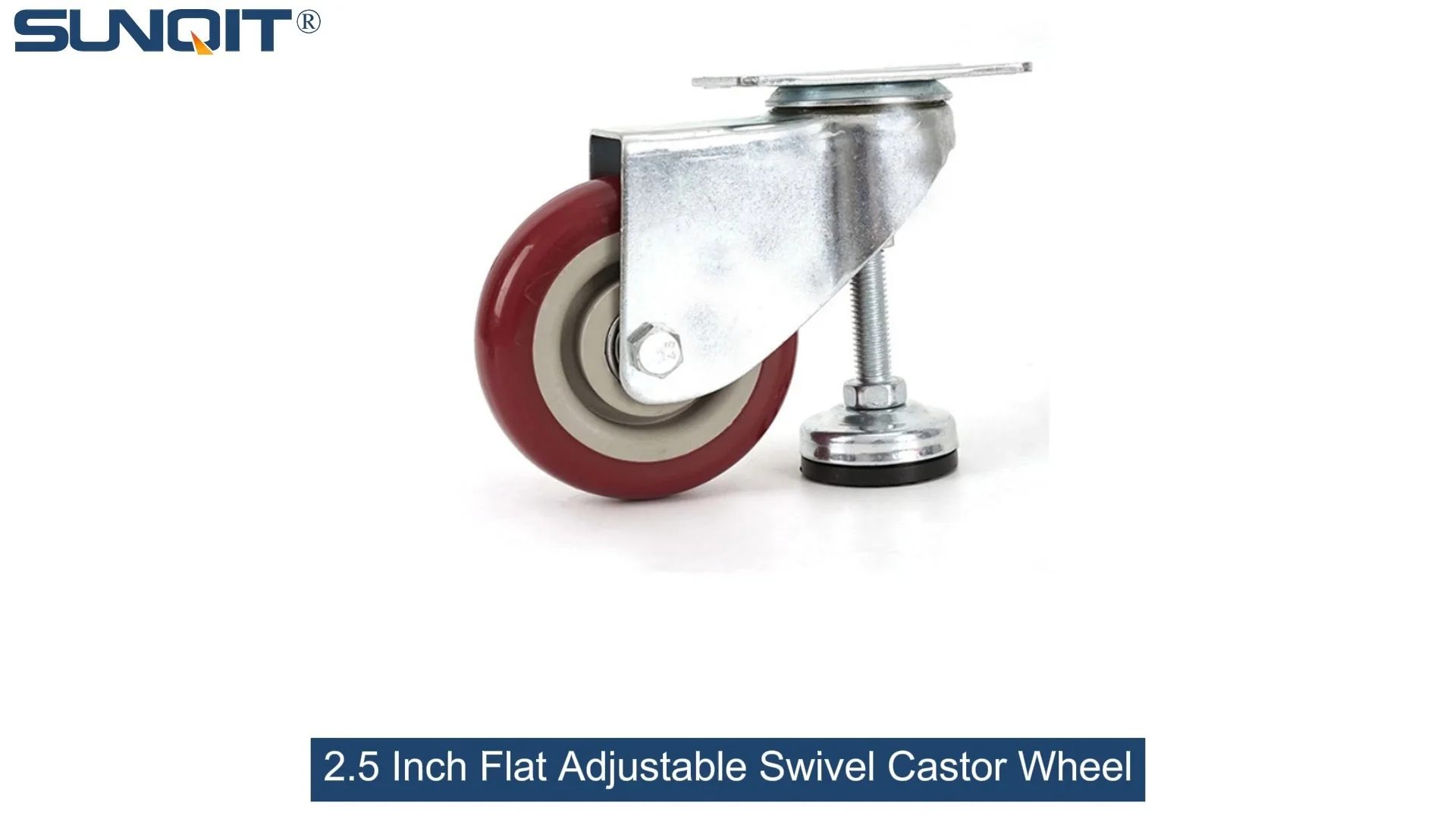
Flat Adjustable Swivel Castor Wheel
Swivel Chair Casters Ball Bearing Wheels Rubber Base with adjustable height function. Resistant to abrasion, impact and corrosion. Heavy payload can hold 80Kgs per pcs,which can make it works at a stable and smooth status.
On a typical morning at TechFlow Electronics' assembly plant in Guangdong, the air hums with the steady buzz of machinery. Workers in blue uniforms lean over workbenches, carefully fitting tiny circuit boards into smartphone casings, while conveyors trundle past, loaded with half-assembled devices. Yet beneath this orderly scene, a quiet frustration simmers. "We spend so much time moving materials between stations," sighs Maria, a lead assembler with 8 years of experience. "One minute, the workbench is too low; the next, the conveyor's stuck in a corner, and we're hauling bins across the floor. It's like fighting the space instead of working with it."
TechFlow, a mid-sized 3C manufacturer specializing in smartwatch and tablet components, was grappling with a common industry challenge: how to balance precision, speed, and flexibility in an environment where product lines change quarterly and consumer demand shifts overnight. Their assembly line, built around fixed workbenches and rigid conveyors, had become a bottleneck. Downtime spiked when reconfiguring for new product models, workers reported chronic back pain from awkward positioning, and the plant struggled to meet its monthly output targets by nearly 15%.
That all began to change in early 2024, when TechFlow partnered with a lean pipe supplier to overhaul its workflow. At the heart of this transformation? A deceptively simple component: flat adjustable swivel castor wheels. Far more than just "wheels on a bench," these castors became the linchpin of a lean system upgrade that redefined how TechFlow's team moved, worked, and collaborated. This case study explores how integrating these castors with workbenches, conveyors, and aluminum profiles turned operational chaos into a model of efficiency.
The Bottlenecks: Why TechFlow's Old Setup Was Failing
To understand the impact of the flat adjustable swivel castor wheels, it's critical to first unpack the specific pain points TechFlow faced. For years, the plant relied on a traditional assembly layout: heavy, bolted-down workbenches made from fixed steel frames, and conveyors mounted on immovable bases. While this setup initially felt stable, it clashed with the realities of modern 3C manufacturing—where agility and adaptability are non-negotiable.
1. Rigid Workbenches: A Barrier to Ergonomics and Flexibility
TechFlow's workbenches were designed for "one-size-fits-all" use, but their fixed height (75cm) and stationary position created problems. Taller workers hunched over for hours, while shorter staff strained to reach components on upper shelves. "I used to come home with shoulder pain every night," recalls Jason, an assembler on the smartwatch line. "The bench was too low, but there was no way to adjust it. We even tried stacking old phone books under our feet—until the supervisor told us it was a safety hazard."
Beyond ergonomics, the fixed benches made reconfiguration a nightmare. When TechFlow shifted production from a 10-inch tablet to a smaller 7-inch model, the team spent two full shifts disassembling and rebuilding workstations to accommodate the new component sizes. "We'd lose an entire day of production just moving benches," says Lisa, the plant's operations manager. "By the time we finished, the next product change was already on the horizon."
2. Immobile Conveyors: Stalling the Flow of Materials
The plant's conveyors, once a point of pride, had become a liability. Mounted on concrete bases, they followed a rigid path through the facility, forcing workers to carry materials long distances when a station fell off the conveyor line. "If a component was needed at Station 5 but the conveyor only reached Station 3, someone had to walk it over—wasting 2-3 minutes per batch," Lisa explains. "Multiply that by 50 batches a day, and suddenly you're looking at hours of lost time."
The conveyors also struggled with uneven floors. Over time, minor shifts in the concrete caused sections to tilt, leading to jams as components slid off-track. "We'd have a jam every hour, easy," Jason adds. "Clearing it meant stopping the entire line, which killed our momentum."
3. Wasted Space and Poor Collaboration
With fixed furniture, TechFlow's floor plan was static. Workbenches and conveyors occupied prime real estate, leaving little room for temporary stations during peak demand. Cross-departmental collaboration suffered, too: when the QA team needed to inspect a batch, they had to carry products to a separate, distant lab instead of bringing the inspection station to the line. "It felt like we were working around the furniture, not with it," Lisa admits.
The Solution: Flat Adjustable Swivel Castor Wheels as the Lean System Catalyst
In late 2023, TechFlow's leadership team began researching lean manufacturing solutions, determined to find a fix that didn't require a complete facility overhaul. That's when they connected with GreenLine Solutions, a lean pipe supplier specializing in modular, adaptable factory equipment. After a week-long assessment, GreenLine proposed a targeted upgrade: replacing fixed workbench and conveyor bases with flat adjustable swivel castor wheels, paired with aluminum profiles for added flexibility.
At first glance, the castors seemed unassuming—small, wheeled components with a flat mounting plate and a height-adjustable stem. But their design held the key to solving TechFlow's problems. "We explained that the castors weren't just about mobility," says Mark, GreenLine's lead consultant. "They're about controlled mobility. Adjustable height meant every worker could customize their bench; swivel wheels allowed 360-degree movement without tipping; and the flat plate ensured compatibility with TechFlow's existing aluminum profile workbenches. It was a plug-and-play solution that fit their workflow, not the other way around."
Key Features of the Flat Adjustable Swivel Castor Wheels
To understand why these castors worked, let's break down their critical features:
- Height Adjustability: A threaded stem allowed workers to raise or lower the castors by up to 5cm, adapting workbenches to individual heights (from 70cm to 85cm). This eliminated ergonomic strain and made stations usable for all team members.
- 360-Degree Swivel with Locking Brake: The castors rotated smoothly, letting workers reposition benches with a light push. A foot-operated brake locked the wheels in place, ensuring stability during assembly—no more wobbling mid-task.
- Heavy-Duty Load Capacity: Each castor supported up to 150kg, meaning even fully loaded workbenches (with tools, components, and a worker's weight) moved effortlessly.
- Non-Marking Wheels: Made from durable polyurethane, the wheels glided over concrete floors without scuffing, addressing maintenance concerns about floor damage.
- Aluminum Profile Compatibility: The flat mounting plate bolted directly to TechFlow's existing aluminum profile workbenches, avoiding the need for costly replacements.
Integrating Castors into a Holistic Lean System
The castors weren't deployed in isolation. GreenLine recommended pairing them with two other upgrades: modular aluminum profile workbenches (easily reconfigurable using T-slot connectors) and conveyor sections mounted on the same castor system. Together, these components formed a lean system focused on three principles: flow (uninterrupted material movement), flexibility (rapid reconfiguration), and respect for people (ergonomic, worker-centric design).
"We didn't just add wheels to benches," Mark emphasizes. "We redesigned the workflow around mobility. For example, a workbench could now roll directly to the conveyor, eliminating the need to carry materials. If QA needed to inspect a batch, they rolled their station to the line. It turned the entire floor into a dynamic space."

From Plan to Practice: Implementing the Upgrade
TechFlow approved the plan in January 2024, with a goal to complete the upgrade in three phases over six weeks—minimizing disruption to ongoing production. Here's how the process unfolded:
Phase 1: Assessment and Customization (Week 1)
GreenLine's team began by mapping TechFlow's current workflow, noting bottlenecks, and measuring workbench heights against worker ergonomic data. They then customized the castors: for heavier conveyor sections, they specified reinforced wheels with higher load capacity; for precision assembly stations, they added shock-absorbing rubber gaskets to reduce vibration during delicate tasks.
Phase 2: Pilot Testing (Weeks 2-3)
The first upgrades rolled out to the smartwatch assembly line—a high-mix, low-volume area where frequent reconfigurations were most critical. Five workbenches and two conveyor sections were retrofitted with castors. The team trained workers on adjusting heights, locking brakes, and safely moving stations. Initial feedback was overwhelmingly positive. "I adjusted my bench to 80cm on day one, and my back pain vanished by the end of the week," Jason says. "It sounds small, but it changed everything."
Challenges emerged, too. Some workers worried about stability, fearing benches would roll during use. GreenLine addressed this by demonstrating the brake's strength—even when pushed hard, locked castors didn't budge. Others struggled with over-adjusting, raising benches so high that components fell off. The team responded with color-coded height markers (red for minimum, green for ideal, blue for maximum) to guide adjustments.
Phase 3: Full-Scale Rollout (Weeks 4-6)
Buoyed by the pilot's success, TechFlow expanded the upgrade to all 24 workbenches and 8 conveyor sections across the plant. GreenLine provided on-site support, helping workers customize their stations and troubleshoot issues. By the end of week 6, the entire assembly floor was mobile—without a single day of total production shutdown.

The Impact: Measurable Improvements Across the Board
Six months after implementation, the results spoke for themselves. TechFlow tracked key metrics before and after the upgrade, and the data revealed dramatic improvements. Below is a snapshot of their progress:
| Metric | Before Implementation | After Implementation | Improvement |
|---|---|---|---|
| Average Time per Unit (Tablet Assembly) | 12 minutes | 9 minutes | 25% faster |
| Worker Fatigue Reports (Monthly) | 18 reports | 3 reports | 83% reduction |
| Floor Space Utilization | 65% (fixed layout) | 85% (modular layout) | 31% increase |
| Downtime Due to Repositioning | 8 hours/week | 1 hour/week | 87.5% reduction |
| Defect Rate (Per 1000 Units) | 12 defects | 5 defects | 58% reduction |
Beyond the Numbers: Stories from the Floor
While the metrics are impressive, the human impact may be even more significant. Workers like Maria now describe the plant as "unrecognizable" in the best way. "I can roll my bench right up to the conveyor now," she says. "No more walking back and forth with a tray of screws. And if my shoulders start to ache, I just crank the castor stem up a bit—no asking for permission, no waiting for maintenance. It makes me feel valued, like the company cares about how I work."
Lisa, the operations manager, notes a cultural shift, too. "Before, workers saw themselves as 'stuck' at their stations. Now, they're problem-solvers. Last month, the team rearranged their benches into a U-shape for a new product run—on their own—because they knew it would speed up handoffs. That's the lean system in action: giving people the tools to improve their own workflow."
Perhaps the most unexpected win? Cross-departmental collaboration. With mobile workbenches, the design team now joins assembly lines for real-time feedback, catching potential issues before they become defects. "We used to have a monthly 'design vs. production' meeting with endless spreadsheets," Lisa laughs. "Now, the designers just roll a bench over and say, 'Hey, try this tool layout.' It's saved us from so many costly mistakes."

The Takeaway: Small Components, Big Change in Lean Manufacturing
TechFlow's story is a powerful reminder that lean system success often hinges on the smallest details. Flat adjustable swivel castor wheels, once overlooked as "just wheels," became the catalyst for a 25% boost in productivity, happier workers, and a more adaptable plant. For 3C manufacturers facing similar challenges—tight deadlines, frequent product changes, and ergonomic concerns—this case study offers a clear lesson: mobility and adjustability aren't luxuries; they're essential.
As Mark from GreenLine puts it: "Manufacturing is about flow—of materials, of people, of ideas. When you lock down your tools, you lock down that flow. Flat adjustable swivel castor wheels unlock it. They turn static workspaces into dynamic ecosystems where change is not just possible, but easy. And in today's fast-paced 3C industry, easy change is the difference between falling behind and leading the pack."
For TechFlow, the upgrade was just the beginning. The company is now exploring adding the castors to its turnover trolleys and material racks, with plans to expand the lean system to its warehouse operations. "We used to think lean meant tearing everything down and starting over," Lisa reflects. "Now we know it's about finding the right pieces to make your existing workflow smarter. And sometimes, those pieces are as simple as a better wheel."