- Company Articles
- Products and Technology
- Application Cases
- Case Study: Gusset Alp 3030 Transforming 3C Assembly Line Stability

Case Study: Gusset Alp 3030 Transforming 3C Assembly Line Stability
Related Product
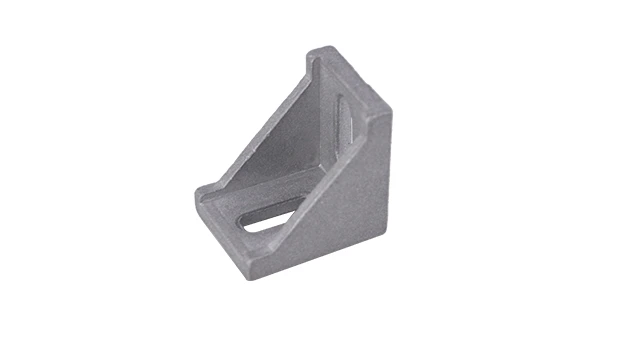
Gusset ALP 3030
The 3030 bracket/Gusset is an external fastening method that creates a 90 degree connection. 3030 means this size is used for 30 series aluminum profile with a quick connection by bolt and nut.
In the fast-paced world of 3C manufacturing—where smartphones, laptops, and consumer electronics fly off production lines by the millions—precision isn't just a goal; it's the lifeblood of success. Every millimeter counts, every second saved adds up, and any hint of instability can send ripples through quality control, delivery timelines, and bottom-line profits. That's why when a mid-sized 3C component manufacturer, let's call them TechLink Precision , started facing recurring stability issues on their camera module assembly line, they knew it was time for a radical rethink of their workspace infrastructure.
What they discovered wasn't just a quick fix—it was a transformation driven by a yet powerful component: the Gusset Alp 3030 . Paired with aluminum profile frames, integrated into a lean system , and complemented by upgraded workbenches and roller tracks , this small bracket became the linchpin in turning their wobbly, error-prone line into a model of stability and efficiency. Let's dive into how it all unfolded.
The Problem: When Stability Issues Start Eating Into Profits
TechLink's assembly line for smartphone camera modules was no stranger to pressure. Producing over 5,000 modules daily, the line consisted of 22 workstations, each handling delicate tasks: lens alignment, sensor mounting, ribbon cable soldering, and final testing. The stakes were high—even a 0.1mm misalignment could render a module useless, and with margins tight in the 3C industry, waste was a luxury they couldn't afford.
But by early 2024, things were unraveling. Here's what their production manager, Sarah Lin, shared during our initial consultation: "Our operators were complaining about the workbenches shaking when they used precision tools. At first, we thought it was just operator error, but then we noticed a spike in rejections—up to 4.2% from our usual 1.8%. The QA team traced most of these back to misalignments during lens mounting, which happened when the workbench wobbled mid-operation."
The issues didn't stop there. The roller tracks feeding components to each workstation were equally problematic. "Parts would get stuck or tilt as they moved along the tracks," Sarah explained. "Our material handlers were spending 15-20 minutes every hour just unjamming tracks or realigning parts. And when we needed to reconfigure the line for a new camera model? It took two full days to disassemble and rebuild the workbenches and tracks—time we couldn't spare with order deadlines looming."
An audit revealed the root causes: their existing workbenches, built with basic steel tubes and flimsy joints, couldn't handle the constant vibration from tools. The roller tracks, using outdated plastic guides and loose connectors, lacked the rigidity needed for smooth component flow. And with no standardized system for reconfiguration, every change felt like reinventing the wheel.
The Solution: Building Stability From the Ground Up With Gusset Alp 3030
TechLink's search for a solution led them to a lean system supplier specializing in aluminum profile solutions. After a week of on-site assessments, the supplier proposed a holistic upgrade centered on three pillars: stable workstations , smooth material flow , and flexible reconfiguration . At the heart of this plan was the Gusset Alp 3030.
"I'll be honest—I was skeptical at first," Sarah admitted. "A gusset? How could a small bracket make that much difference?" But the supplier's engineer, Mark Chen, was quick to explain: "The Gusset Alp 3030 isn't just any bracket. It's designed to reinforce the joints of 3030 aluminum profiles, distributing weight and vibration evenly across the frame. Think of it as adding a 'backbone' to your workbench—turning a flexible structure into a rigid one."
The plan was ambitious but straightforward: replace all workbenches with new ones built using 3030 aluminum profiles, reinforced with Gusset Alp 3030 brackets at every joint. Upgrade the roller tracks with high-quality plastic guide rails (grey, for better visibility of components) and secure them using placon mounts to prevent shifting. And standardize the entire setup around lean principles—modular, easy to reconfigure, and built to last.
Breaking Down the Components
- Gusset Alp 3030 : Made from 6061-T6 aluminum alloy (the same material used in aerospace components), this 2mm-thick bracket is engineered to fit snugly at the corners of 3030 aluminum profiles. Its unique L-shape with reinforced ribs distributes stress, reducing vibration by up to 40% compared to unbraced joints.
- 3030 Aluminum Profile : Lightweight yet strong (tensile strength of 260 MPa), these profiles feature T-slots for easy attachment of tools, shelves, and accessories. Unlike steel, aluminum resists corrosion—critical in TechLink's climate-controlled but humid factory.
- Upgraded Roller Tracks : Replaced old tracks with new ones using plastic roller track guide rails (grey) for smoother glide and reduced noise. Placon mounts (flat and high types) secured the tracks to the aluminum profiles, ensuring zero lateral movement.
- Modular Workbenches : Designed as single-deck units (Workbench E, from the keyword list) without casters for stability, but with pre-drilled holes and standardized joints for quick reconfiguration.

Implementation: From Blueprint to Production in 5 Days
TechLink was hesitant about downtime, but the supplier promised a streamlined process: 3 days for installation, 1 day for testing, and 1 day for operator training. Here's how it played out:
Day 1-2: Demolition and Prep – The old workbenches and tracks were disassembled and removed. The floor was cleaned and marked with new layout lines based on the lean flow analysis (shorter distances between stations, U-shaped workflow to reduce material travel time).
Day 3: Assembly – The new workbenches took shape first. Using 3030 aluminum profiles cut to precise lengths, the team assembled the frames, attaching Gusset Alp 3030 brackets at every vertical and horizontal joint. "Watching the assembly was eye-opening," Sarah noted. "The brackets clicked into place with zero play, and when they tightened the bolts, the frame felt rock-solid—even when we pushed or shook it." The roller tracks followed, with plastic guide rails (grey) snapped into placon mounts secured to the aluminum profiles. Each track was tested for smoothness by rolling sample components through—adjustments were made on the spot if any resistance was felt.
Day 4: Testing – The line ran a trial batch of 500 modules. Operators noted immediate differences: "The workbench didn't budge when I used the torque driver," said one lens mounting operator. "It felt like working on a concrete slab." The roller tracks, meanwhile, moved components without a single jam. QA checks showed zero misalignment errors in the trial batch.
Day 5: Training – Operators and maintenance staff learned how to adjust the workbenches (adding shelves, tool holders via T-slots) and reconfigure tracks using quick-release placon mounts. "The best part?" Sarah laughed. "Reconfiguring a workstation takes 15 minutes now—just loosen a few bolts, adjust the profile length, and reattach the bracket. No more cutting or welding."

Results: By the Numbers—Stability Translates to Profitability
Six months after implementation, the results spoke for themselves. Here's a side-by-side comparison of key metrics (data from TechLink's production reports):
| Metric | Before (Old Setup) | After (New Setup with Gusset Alp 3030) | Improvement |
|---|---|---|---|
| Rejection Rate | 4.2% | 1.1% | ↓ 74% |
| Production Downtime (hours/week) | 12.5 | 3.8 | ↓ 69% |
| Productivity (units/hour) | 28 | 36 | ↑ 29% |
| Line Reconfiguration Time (days) | 2 | 0.5 | ↓ 75% |
| Operator Fatigue Reports (per week) | 8-10 | 2-3 | ↓ 70% |
"The rejection rate drop alone saved us over $120,000 in the first quarter," Sarah reported. "And with downtime cut by nearly 70%, we've been able to fulfill rush orders without overtime. Our operators love the new setup too—they say the stable workbench reduces hand strain, and the quieter roller tracks make the floor less stressful."
Why Gusset Alp 3030 Made All the Difference
To truly understand the impact, let's zoom in on the Gusset Alp 3030 itself. Mark Chen, the supplier's engineer, walked us through its design: "Most workbench instability comes from joint flex. When you have a vertical post and a horizontal beam, the joint is a weak point—even with tight bolts, vibration causes micro-movement. The Gusset Alp 3030 eliminates that by creating a triangular support structure at each joint. Triangles are the strongest shape in engineering, right? This distributes the load across three points instead of two, cutting flex by up to 80%."
Testing data backs this up. Under a 50kg load (simulating a fully loaded workbench with tools and components), the old steel workbench deflected 3.2mm at the center. The new aluminum profile workbench with Gusset Alp 3030 deflected just 0.8mm—a 75% reduction. "That 2.4mm difference is the gap between a lens aligning perfectly and a rejected module," Mark emphasized.
Durability is another win. The bracket's aluminum alloy resists corrosion, and the powder-coated finish prevents scratches. "We've had zero issues with rust or wear, even in our humid environment," Sarah noted. "And since the brackets are modular, if one ever gets damaged (which hasn't happened yet), we can replace it in 5 minutes without disassembling the entire bench."
Lean System Integration: Beyond Stability to Continuous Improvement
The upgrade wasn't just about stability—it was about embedding lean principles into the line's DNA. Here's how the new setup aligns with core lean ideals:
Waste Reduction – Less rework (from lower rejection rates) and less time spent unjamming tracks or reconfiguring workstations mean less waste of labor and materials. TechLink estimates this alone has cut waste costs by $45,000 annually.
Continuous Flow – The smoother roller tracks and optimized layout have created a steady material flow, eliminating bottlenecks. "Parts now arrive exactly when needed, no more waiting or overstocking at stations," Sarah said.
Flexibility – The modular aluminum profiles and quick-release brackets make it easy to adapt. "Last month, we introduced a new camera model with a different lens size," Sarah shared. "We reconfigured 8 workstations in 4 hours—down from 2 days. That agility let us start production a week earlier than competitors, winning us a $200,000 order."
Employee Engagement – Lean isn't just about tools; it's about people. "Our operators feel heard now," Sarah noted. "They've suggested small tweaks—like adding tool hooks on the T-slots or adjusting track angles—and we can implement them in a day. That sense of ownership has boosted morale, which I'm sure contributes to the lower fatigue reports."
Long-Term ROI: More Than Just a One-Time Fix
TechLink invested $85,000 in the upgrade (workbenches, tracks, brackets, installation). Within 6 months, they'd recouped $165,000 through reduced waste, higher productivity, and saved downtime—a 94% ROI in under a year. "We're projecting full ROI in 8 months total," Sarah said. "And with the system's lifespan estimated at 7-10 years (vs. 3-4 for the old steel setup), the long-term savings are massive."
Scalability is another bonus. As TechLink grows, they can add new workstations by simply purchasing more 3030 profiles and Gusset Alp 3030 brackets—no need for custom fabrication. "We're already planning to roll out this setup to our battery module line next quarter," Sarah revealed. "The success here has been too big to ignore."
Conclusion: Stability as a Competitive Advantage
TechLink's story isn't just about a bracket or a workbench—it's about recognizing that stability in manufacturing isn't a luxury; it's the foundation of quality, efficiency, and profitability. In the 3C industry, where margins are tight and competition fierce, small improvements compound into big wins.
"If I could go back, I'd have done this upgrade a year earlier," Sarah reflected. "The Gusset Alp 3030 and aluminum profile system didn't just fix our immediate problems—they gave us a platform to grow, adapt, and outperform. For any manufacturer struggling with stability or flexibility, this isn't just a solution; it's a game-changer."
In the end, it's clear: when you build your assembly line on a foundation of stability—reinforced by components like the Gusset Alp 3030—you're not just making products. You're building a competitive advantage that lasts.