- Company Articles
- Products and Technology
- Application Cases
- Case Study: Lean Pipe Clamp B Optimizing a 3C Production Line Efficiency

Case Study: Lean Pipe Clamp B Optimizing a 3C Production Line Efficiency
Related Product
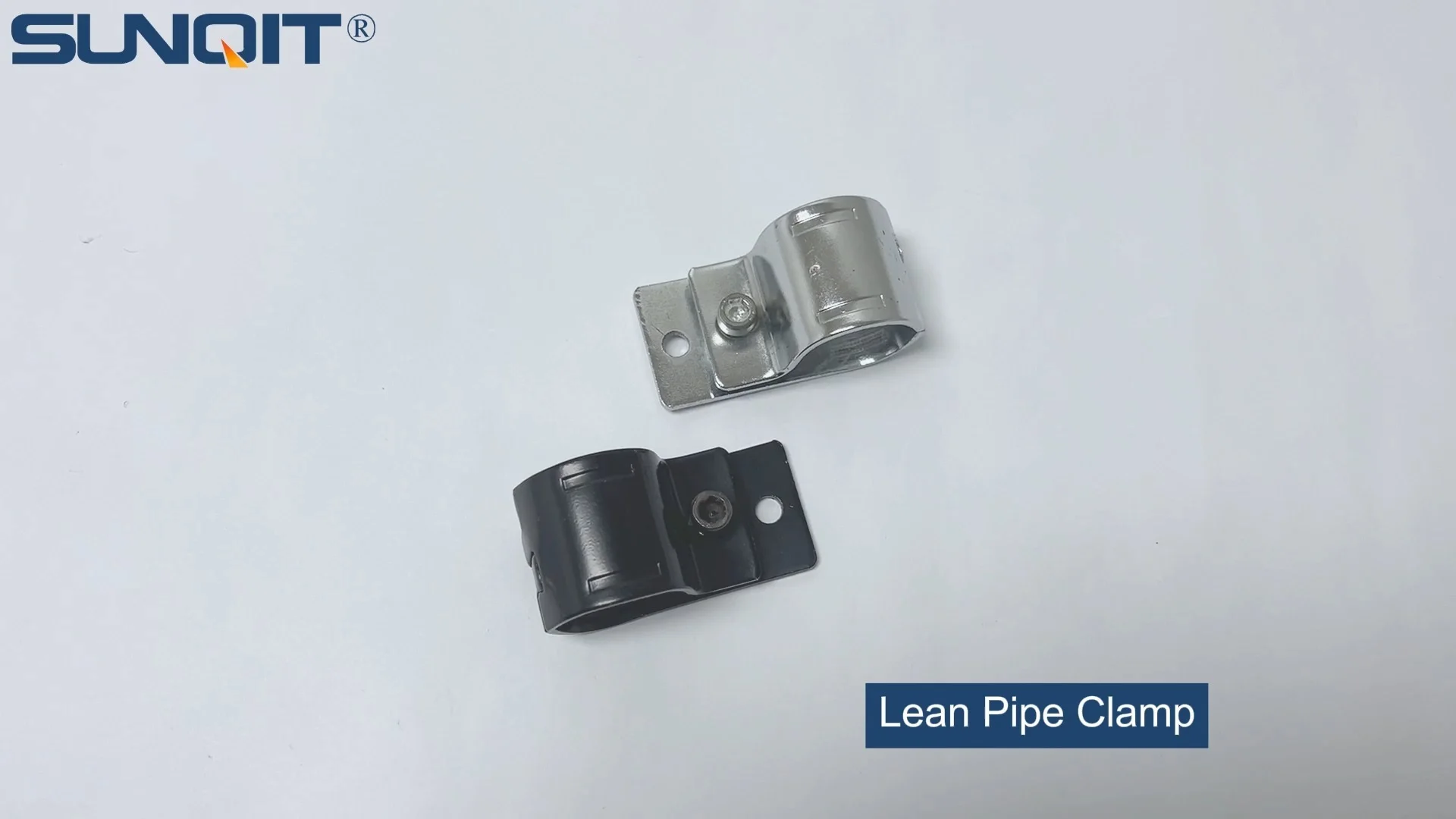
Lean Pipe Clamp
Lean pipe clamp is used for rack system hang monitor or other panel for workbenck, flowrack in production daily use.
Introduction: The Race Against Time in 3C Manufacturing
Walk into any 3C manufacturing plant—where computers, communications devices, and consumer electronics take shape—and you'll feel it immediately: the hum of urgency. Every component, from a 0.5mm microchip to a 10-inch display panel, has a deadline. For FastTrack Tech, a mid-sized producer of smartwatch components based in Shenzhen, that urgency had morphed into stress by early 2024. Their assembly line, once a model of productivity, was sputtering. Workstations wobbled, material flow bottlenecked, and downtime was becoming the norm rather than the exception. "We were drowning in small problems that added up to big delays," says Li Wei, FastTrack's production manager. "Our team was working 12-hour shifts, but we still couldn't keep up. The line felt like it was fighting against us, not with us."
FastTrack's struggles weren't unique. In the hyper-competitive 3C industry, where product life cycles shrink to months and customer expectations soar, even minor inefficiencies can erode profits. But what set FastTrack apart was their willingness to dig deeper—to move beyond quick fixes and find a sustainable solution. That journey would lead them to a seemingly unassuming component: the Lean Pipe Clamp B . And with the help of a trusted lean system supplier , this small part would become the catalyst for a dramatic turnaround.
The Problem: When the Basics Break Down
To understand FastTrack's transformation, we first need to understand their pain points. Let's pull back the curtain on their pre-solution workflow:
1. The Wobbly Workbench Crisis: At the core of FastTrack's operation were 12 lean pipe workbench stations, where assemblers meticulously soldered, glued, and connected tiny components. Over two years of constant use, the joints holding these workbenches together had loosened. "Imagine trying to thread a needle while standing on a trampoline—that's what our workbenches felt like," says Zhang Mei, a senior assembler with six years at FastTrack. "I'd be placing a 0.8mm resistor, and if someone two stations over sneezed, the whole surface would vibrate. We were averaging 5-6 reworks per shift because of misplacements. It wasn't just time-consuming; it was demoralizing."
2. Material Flow: A Game of "Hurry Up and Wait": Parts arrived at the warehouse via trucks, then were carted to the line by hand. Once there, they sat on flow rack units that were poorly designed for FastTrack's needs. "The flow racks were too shallow, so we stacked bins three high," Li Wei explains. "Workers had to climb ladders or stretch over other bins to grab parts. We had a spill at least once a week—small screws rolling across the floor, capacitors getting crushed underfoot. And the conveyor belt connecting the warehouse to the line? Half the rollers were seized, so parts would get stuck. We'd lose 20-30 minutes per shift just unjamming it."
3. The Hidden Cost: Team Burnout: By Q1 2024, the numbers were alarming: production time per unit had risen 18% year-over-year, error rates hit 5.2% (double the industry average of 2.5%), and voluntary turnover among assemblers spiked to 22%. "New hires would quit after a week," Li Wei recalls. "They'd say, 'Why bother? The setup is working against me.' And I couldn't blame them. Our most tenured staff were sticking around, but they were exhausted. We had one team lead break down in my office, saying, 'I can't keep asking them to work miracles with broken tools.'"
FastTrack needed more than new equipment—they needed a holistic solution. That's when they reached out to LeanPro Solutions, a lean system supplier with a reputation for solving "sticky" manufacturing problems.

The Solution: Lean Pipe Clamp B and the Power of "Small" Fixes
LeanPro didn't send a sales pitch—they sent a team of engineers, including lead consultant Chen Hao, who spent five days embedded in FastTrack's floor. "We didn't just look at the machines; we watched the people," Chen says. "We timed how long workers spent reaching for parts, how often they adjusted their workbenches, even how many times they sighed out of frustration. Those 'small' moments add up."
Chen's team identified the root cause: instability. The workbenches, flow racks, and conveyor system all suffered from loose, unreliable connections. "The existing lean pipe joints were friction-based—they relied on bolts that loosened over time with vibration," Chen explains. "And the flow racks and conveyor lacked proper guides, so material movement was erratic." The solution centered on one underappreciated component: the Lean Pipe Clamp B .
"Most people overlook clamps, but they're the backbone of any lean system," Chen says. "Our Lean Pipe Clamp B uses a cam-lock mechanism—you tighten it once, and it stays tight, even with constant vibration. It's also made with zinc-plated steel, so it resists corrosion from the cleaning agents FastTrack uses daily. Think of it as a seatbelt for your workbench: it doesn't just hold things together; it secures them."
The full solution package included:
- Retrofitted Lean Pipe Workbenches: All 12 workstations received new Lean Pipe Clamp B joints, plus adjustable height legs to reduce assembler fatigue. "We added anti-slip mats too," Chen notes. "Small touches, but they make a big difference in comfort."
- Optimized Flow Racks: New flow rack units with 1-inch swivel roller balls (to let bins glide) and adjustable shelving. "We angled the racks at 5 degrees so gravity helps move parts toward workers," Chen explains. "No more stretching—parts come to you."
- Revamped Conveyor System: A new conveyor with plastic roller track guide rails (yellow, for visibility) and precision-aligned steel rollers. "We extended it to connect directly from the warehouse to the line, so parts go from pallet to workstation without human handling," Chen adds.
- Training & Ownership: LeanPro trained FastTrack's maintenance team to adjust, clean, and repair the new components. "A solution only works if the team feels ownership," Chen says. "We didn't just hand over tools—we taught them to be mechanics of their own efficiency."
"I was skeptical at first. 'A clamp?' I thought. 'That's going to fix our problems?' But when we installed the first one, I stood there and shook the workbench as hard as I could. It didn't budge. Zhang Mei walked over, placed a resistor, and said, 'I could get used to this.' That's when I knew we'd made the right call." — Li Wei, FastTrack Production Manager

Implementation: From Chaos to Rhythm (with a Few Bumps)
Installing the new system took four weeks, with LeanPro working in phases to avoid full shutdowns. "We started with the three worst workstations—the ones Zhang Mei's team was using," Li Wei says. "The first day, assemblers kept pausing, like they were waiting for the bench to move. Then they'd laugh and get back to work. It was like watching a weight lift off their shoulders."
The flow racks and conveyor took longer to fine-tune. "Workers were used to the old flow rack layout, so they kept reaching for bins in the wrong spots," Li Wei admits. "We added color-coded labels and did a 'mock day' where we ran through the new workflow without production pressure. By the end of the week, it was second nature." The conveyor had a brief hiccup when a batch of roller track guide rails arrived slightly warped—LeanPro replaced them within 48 hours. "That's the difference between a vendor and a partner," Li Wei says. "They didn't just apologize; they fixed it before we even asked."
Perhaps the biggest surprise? How quickly the team adapted. "We expected resistance—people hate change," Zhang Mei says. "But when you give someone a stable workbench and parts that glide to their station instead of making them hunt, they embrace it. Within two weeks, the jokes started again. People were singing while they worked. I even caught Li Wei doing a little dance when he thought no one was looking."

Results: By the Numbers (and the Stories)
Six months after implementation, the impact was staggering. Let's start with the hard data:
| Metric | Pre-Solution (Q1 2024) | Post-Solution (Q3 2024) | Improvement |
|---|---|---|---|
| Production Time per Unit | 6.8 minutes | 4.2 minutes | -38% |
| Error Rate | 5.2% | 1.7% | -67% |
| Downtime per Shift | 28 minutes | 4 minutes | -86% |
| Employee Turnover | 22% (annualized) | 5% (annualized) | -77% |
| Overtime Hours | 120 hours/week | 15 hours/week | -87.5% |
But the most powerful results weren't quantifiable. "Last month, we had a team dinner—something we haven't done in two years because everyone was too tired," Zhang Mei says. "We laughed about the old wobbly workbenches. One new hire said, 'I can't believe you guys worked like that.' And honestly? I can't either."
Li Wei adds, "We just won a new contract for smartwatch components—15% more volume than our previous max. With the old setup, that would've meant hiring 10 more people and working weekends. Now? We added two workstations in three days, using the same Lean Pipe Clamp B system. No stress, no overtime. That's the scalability we needed to grow."
Conclusion: The Clamp That Changed Everything
FastTrack's story isn't about revolutionary technology. It's about the power of listening—to your team, to your workflow, and to the small components that hold everything together. The Lean Pipe Clamp B wasn't a silver bullet, but it was the first domino: stabilize the workbench, stabilize the workflow, stabilize the team, stabilize the bottom line.
"We used to think efficiency meant working faster," Li Wei reflects. "Now we know it means working smarter —with tools that fit your process, not the other way around. If you're struggling with bottlenecks, don't just look at the big machines. Look at the joints, the clamps, the little parts that no one notices until they fail. That's where the magic happens."
For other 3C manufacturers, the takeaway is clear: lean solutions aren't reserved for industry giants. They're for any team that's ready to stop fighting their setup and start collaborating with it. And sometimes, all it takes is a better clamp—and a partner who cares enough to ask, "How can we make this easier?"
"At the end of the day, manufacturing is about people. Give them stable workbenches, smooth flow racks, and reliable conveyors, and they'll give you their best work. That's the real lean revolution." — Chen Hao, LeanPro Solutions