- Company Articles
- Products and Technology
- Application Cases
- Case Study: One Way Rotatory Straight Lean Pipe Joint Chrome in Automotive Parts Warehousing

Case Study: One Way Rotatory Straight Lean Pipe Joint Chrome in Automotive Parts Warehousing
Related Product
One Way Rotatory Straight Lean Pipe Joint Chrome
Two way lean pipe joint for 2 pcs 28MM lean pipe connection in straight angle with rotatory fucntion, which used widely in workbench, flow rack, hand trolley frame connection.
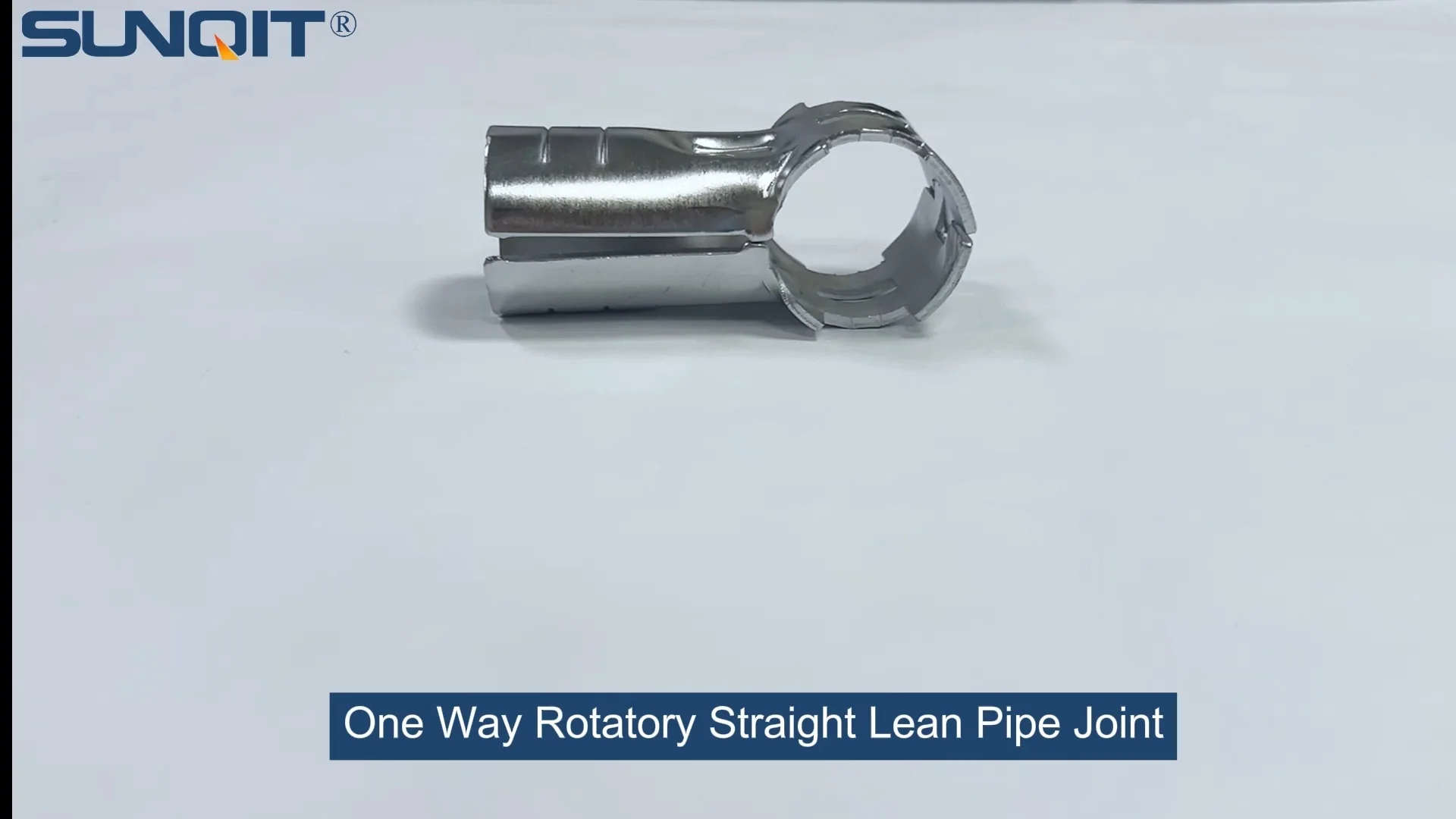
In the fast-paced world of automotive parts manufacturing, warehousing isn't just about storing components—it's about keeping the heartbeat of production steady. Every minute wasted searching for a part, every awkward reach for a tool, or every rigid workstation that can't adapt to a new part size chips away at efficiency. That's where lean systems come in, designed to streamline flow, reduce waste, and keep teams moving. But even the best lean setups can hit a wall when flexibility meets reality. Today, we're diving into a real-world story of how one small but mighty component—the One Way Rotatory Straight Lean Pipe Joint Chrome —transformed a struggling automotive parts warehouse, working hand-in-hand with lean pipe workbench setups, flow rack systems, and conveyor lines to turn chaos into a well-oiled machine.
The Client: AutoParts Hub's Growing Pains
AutoParts Hub, a mid-sized supplier specializing in precision engine components for major automakers, had been on a steady growth trajectory for five years. By 2023, their warehouse in Detroit was handling over 500 unique part SKUs daily, from tiny gaskets to bulky transmission housings. But with growth came growing pains. Their original setup, built around fixed steel shelving and static workstations, was showing cracks:
- Material Flow Bottlenecks: Parts often got stuck in transit between receiving, storage, and assembly lines. Workers spent 15-20% of their shifts manually moving bins, leading to delays.
- Rigid Workstations: The warehouse used old wooden workbenches and fixed steel racks. When a new part size came in—say, a larger gasket tray for electric vehicle models—teams had to request custom modifications, which took weeks and cost thousands.
- Wasted Space: Fixed shelving left gaps between components, wasting up to 30% of available vertical and horizontal space. With plans to add 20 new part lines, space was becoming critical.
- Safety Risks: Heavy bins stacked on unstable racks occasionally tipped, and awkward reaching for parts led to minor injuries (sprains, strains) that added up in lost workdays.
"We were drowning in inefficiency," said Maria Gonzalez, AutoParts Hub's Warehouse Manager. "One day, a team spent two hours rearranging a rack to fit a new transmission part—only to find it still didn't work. I knew we needed a system that could keep up with us, not the other way around."
The Challenge: Finding Flexibility Without Sacrificing Strength
Maria and her team began researching lean solutions, but they hit a snag: most "flexible" systems felt like a trade-off. Plastic lean pipes were light but wobbled under heavy parts. Traditional steel joints were strong but required tools to adjust, making quick reconfigurations impossible. They needed something that could:
- Support heavy loads (up to 300 lbs per shelf) without bending or breaking.
- Adjust in minutes, not weeks—preferably without tools.
- Integrate with existing equipment (like their conveyor lines) to avoid a complete overhaul.
- Stand up to the warehouse's daily wear and tear: oil spills, temperature fluctuations, and constant handling.
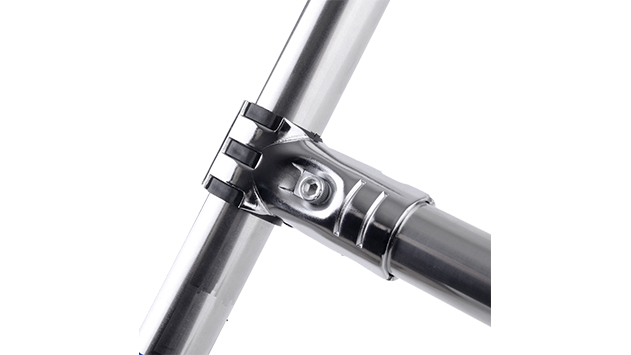
That's when they connected with a local lean pipe supplier who introduced them to the One Way Rotatory Straight Lean Pipe Joint Chrome . At first glance, it seemed unassuming—a small, chrome-plated joint with a rotating collar—but its design held the key to their problems.
The Solution: How the One Way Rotatory Joint Changed the Game
The One Way Rotatory Straight Lean Pipe Joint Chrome is designed for one primary goal: quick, tool-free adjustment. Unlike fixed steel joints that require wrenches or bolts, this joint uses a spring-loaded pin and a rotating collar. To adjust, a worker simply pulls the collar, rotates the connected pipe to the desired angle, and releases—the pin locks into place with a satisfying "click." The chrome plating adds durability, resisting rust and scratches even in oily warehouse conditions. But its real magic? It works seamlessly with standard lean pipes, making it easy to integrate into existing setups.
AutoParts Hub decided to test the joint in three high-priority areas: their lean pipe workbench stations, flow rack systems, and conveyor line connections. Here's how it played out:
1. Lean Pipe Workbench: From Static to Adaptive
workbench-details" style="font-size: 16px; line-height: 1.6; color: #34495e; margin-bottom: 20px;"> The warehouse's old workbenches were a nightmare for assembly teams. Each station was built for a specific part—so when a new part came in, workers had to huddle around a single "flexible" table, causing bottlenecks. With the rotatory joints, the team built modular workbenches:
- workbench-features" style="font-size: 16px; line-height: 1.6; color: #34495e; margin: 0 0 25px 20px; padding-left: 10px;">
- Adjustable Heights: Using the joints, legs could be rotated to raise or lower the bench by 6-12 inches, accommodating taller workers or larger bins.
- Swappable Accessories: Tool hooks, bin holders, and even small conveyor sections (for moving parts directly to assembly) could be attached in seconds by rotating the joint to align with the pipe.
- Collapsible Sections: For large parts like transmission housings, teams could rotate sections of the bench upward, creating extra space—then fold them back when done.
"I used to spend 10 minutes every morning rearranging my bench to fit the day's parts," said Juan Rivera, an assembly line worker. "Now, if I need a bin holder on the left instead of the right? I twist the joint, move it, and I'm ready. It's like the bench finally listens to me."
2. Flow Rack Systems: Smoothing Material Flow
Flow racks are supposed to let parts "flow" from receiving to picking via gravity, but AutoParts Hub's old steel racks had fixed angles—too steep, and parts would slide too fast (risking damage); too shallow, and they'd get stuck. The rotatory joints solved this by letting teams adjust the rack's slope on the fly:
- Variable Angles: By rotating the joints that held the rack's roller tracks, workers could adjust the slope from 5° (for heavy, fragile parts like glass headlight covers) to 15° (for lightweight gaskets).
- Modular Lanes: Adding or removing lanes for new parts took minutes. For example, when a new EV battery component line launched, the team added three lanes to an existing rack in under an hour—no tools needed.
- Space Savings: The joints allowed racks to be built taller (using vertical space) and closer together (since angles could be to prevent parts from hitting adjacent lanes), freeing up 25% of floor space.
3. Conveyor Line Connections: Eliminating Bottlenecks
conveyor-details" style="font-size: 16px; line-height: 1.6; color: #34495e; margin-bottom: 20px;"> AutoParts Hub's conveyor lines were the backbone of their material flow, but connecting different sections (straightaways, curves, drops) was a headache. Fixed steel brackets meant any misalignment—even by an inch—caused parts to jam. The rotatory joints, paired with adjustable roller tracks, let teams fine-tune connections:
- conveyor-features" style="font-size: 16px; line-height: 1.6; color: #34495e; margin: 0 0 25px 20px; padding-left: 10px;">
- Micro-Adjustments: Rotating the joint by just a few degrees aligned conveyor sections perfectly, reducing jams by 80% in the first month.
- Quick Repairs: When a roller track bent, workers could swap it out in 10 minutes by rotating the joint, removing the old track, and locking in a new one—no waiting for maintenance.
- Scalability: Adding a new conveyor branch for a second assembly line took a single day, compared to a week with the old steel brackets.

Implementation: From Blueprint to Reality
AutoParts Hub partnered with their lean pipe supplier to roll out the new system in phases, starting with the busiest workbench area and expanding to flow racks and conveyors over three months. The process wasn't without hiccups—some workers were skeptical at first ("Another 'miracle tool' that'll break in a week," one joked)—but training sessions helped. The supplier provided hands-on demos, showing teams how to adjust the joints, clean the chrome plating, and troubleshoot minor issues (like a stuck pin, which was fixed with a quick spray of lubricant).
The biggest challenge? Convincing leadership to invest. The initial cost—around $15,000 for joints, pipes, and accessories—seemed steep, but Maria ran the numbers: the old setup cost $8,000/year in custom modifications alone, plus $12,000 in lost productivity from delays. The new system would pay for itself in under a year.
Results: By the Numbers
Six months after full implementation, the results spoke for themselves. Here's how AutoParts Hub's metrics shifted:
| Metric | Before (Old System) | After (New System) | Improvement |
|---|---|---|---|
| Time to reconfigure a workstation | 2+ hours (with tools/custom parts) | 5-10 minutes (tool-free) | 92% faster |
| Material flow time (receiving to assembly) | 45 minutes | 22 minutes | 51% faster |
| Space utilization | 70% (30% wasted) | 95% (5% wasted) | 25% more efficient |
| Worker injuries (sprains/strains) | 8 incidents/year | 1 incident/year | 88% reduction |
| Annual cost of custom modifications | $8,000 | $0 (self-adjustable) | 100% savings |
"I was wrong," admitted the skeptical worker, now a convert. "That joint? It's not just a tool—it's like having a warehouse that can think on its feet."
Conclusion: Small Joint, Big Impact
The story of AutoParts Hub isn't just about a One Way Rotatory Straight Lean Pipe Joint Chrome —it's about the power of flexibility in manufacturing. In an industry where change is constant—new parts, new vehicles, new demands—rigid systems hold you back. The rotatory joint, paired with lean pipe workbench setups, flow rack systems, and smart conveyor integration, didn't just fix their problems; it gave them the freedom to adapt. Today, the warehouse runs smoother, workers are happier, and leadership is already planning to expand the system to their second location.
Sometimes, the smallest components make the biggest difference. For AutoParts Hub, that component was a joint that could rotate, adapt, and keep up with the pace of modern manufacturing—proving that lean isn't just a buzzword; it's about building systems that work with your team, not against them.