- Company Articles
- Products and Technology
- Application Cases
- Case Study: Parallel Lean Pipe Joint One Side Rotatory Chrome in Electronic Assembly Plants

Case Study: Parallel Lean Pipe Joint One Side Rotatory Chrome in Electronic Assembly Plants
Related Product
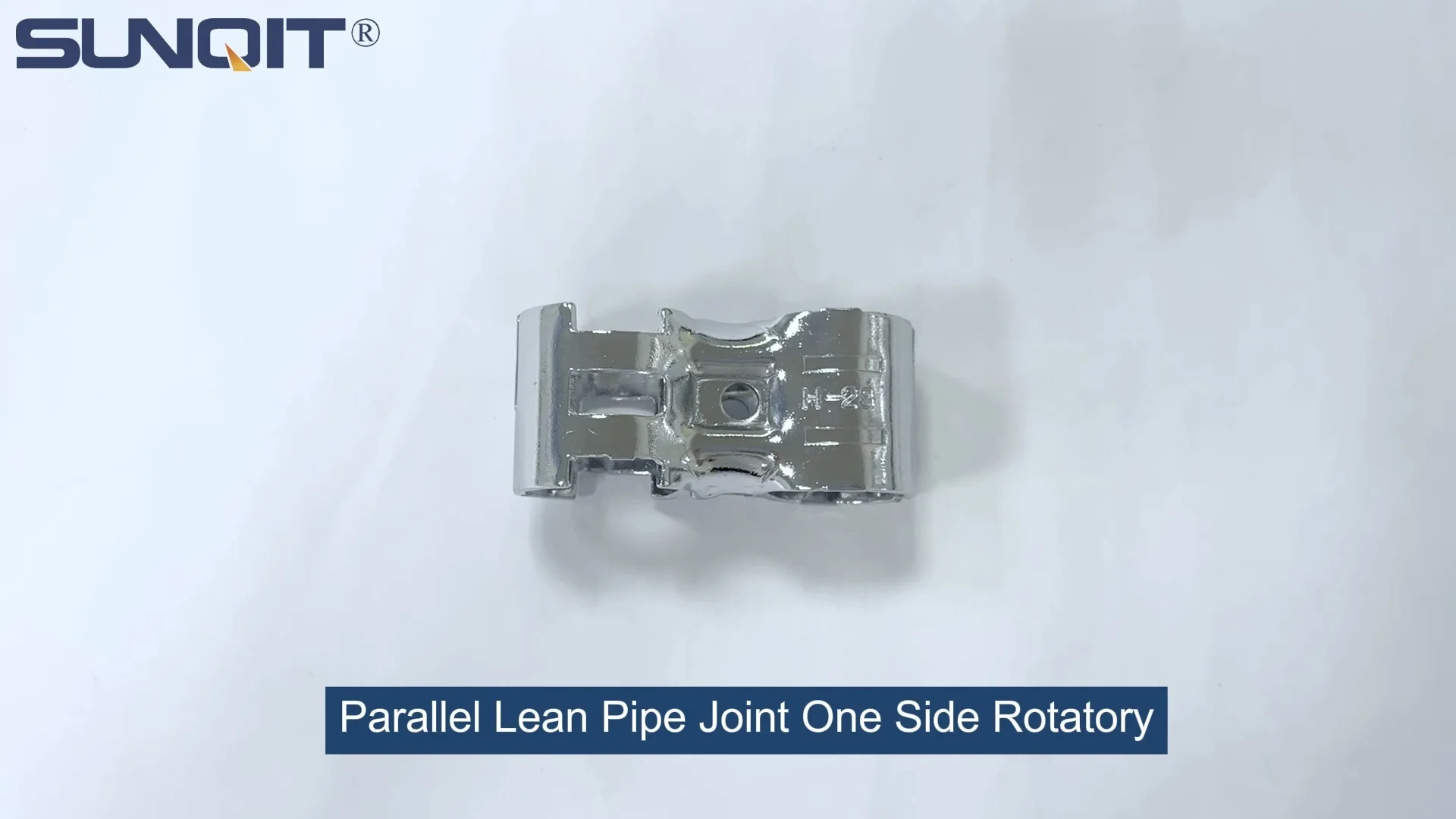
Parallel Lean Pipe Joint One Side Rotatory Chrome
Parallel rotatory lean pipe joint, for 2 pcs 28mm pipe conenction in parallel direction with one side rotatory function.
How a Single Component Transformed Efficiency, Flexibility, and Worker Satisfaction
Introduction: The Hidden Cost of Rigidity in Electronic Assembly
Walk into any electronic assembly plant, and you'll see a symphony of movement: circuit boards gliding along conveyor belts, workers hunched over workbenches soldering tiny components, and bins of parts stacked on flow racks waiting to be picked. But behind this seemingly smooth operation, there's often a silent enemy: rigidity. Fixed workbenches that can't adapt to new product sizes, flow racks that jam when component packages change, and ESD workstations that take hours to reconfigure—these are the bottlenecks that eat into productivity, increase frustration, and ultimately hurt the bottom line.
At TechFlow Electronics, a mid-sized contract manufacturer in Austin, Texas, this problem was all too real. Specializing in assembling printed circuit boards (PCBs) for medical devices and consumer electronics, TechFlow's production floor was struggling to keep up with client demands for frequent product iterations. Their existing setup—built with traditional steel frames and welded joints—meant that even a small change in PCB dimensions required a full day of downtime to adjust workbenches and flow racks. Workers were growing frustrated, and the plant manager, Maria Gonzalez, was under pressure to find a solution that didn't involve tearing down and rebuilding the entire line every few months.
That's where the Parallel Lean Pipe Joint One Side Rotatory Chrome came in. A component at first glance, this joint would become the linchpin of TechFlow's transformation—proving that sometimes, the smallest parts can have the biggest impact on operational efficiency. In this case study, we'll dive into how TechFlow identified their rigidity problem, implemented a lean solution centered on this rotatory joint, and the surprising results that followed.
The Challenge at TechFlow: When "Good Enough" Stopped Cutting It
To understand why the Parallel Lean Pipe Joint One Side Rotatory Chrome made such a difference, we first need to unpack the specific challenges TechFlow was facing. Let's break it down into three key pain points:
1. Rigid Lean Pipe Workbenches Slowed Down Changeovers
TechFlow's assembly line relied heavily on lean pipe workbenches —sturdy, functional surfaces where workers assembled PCBs. But these workbenches were built with fixed steel joints, meaning their height, width, and orientation were set in stone. When a client requested a new PCB design that was 2 inches wider, the team had two options: squeeze the larger board onto the existing bench (risking errors) or spend 8 hours disassembling and rebuilding the bench (losing a full shift of production).
"We had a client come to us with a prototype for a new smartwatch PCB," recalls Juan, a lead assembler at TechFlow. "The board was 30% smaller than our usual size, so we needed to lower the workbench height by 6 inches to make it comfortable for the workers. It took two of us half a day with wrenches and a saw to cut the pipes and reattach the joints. By the time we finished, the afternoon shift was already behind schedule."
2. Flow Racks Jammed, Causing Costly Delays
Upstream from the workbenches, flow racks held bins of resistors, capacitors, and other small components, feeding parts to assemblers via gravity. But these racks were also rigidly constructed. When component suppliers switched to taller, slimmer bins to reduce packaging waste, the bins no longer fit smoothly in the rack's fixed channels. The result? Bins would get stuck, parts would spill, and workers had to stop assembling to unjam the racks—costing an estimated 15 minutes of production time per hour per line.
"It was like playing whack-a-mole," Maria says. "One day, the resistor bin jams; the next, it's the capacitor tray. Our maintenance team was spending more time fixing flow racks than maintaining actual machinery. And when parts spilled, we'd have to halt the line to clean up—static electricity from the spilled components was a huge risk for ESD damage."
3. ESD Workstations Failed to Protect Sensitive Components
Electrostatic discharge (ESD) is the silent killer of electronic components. Even a small static charge can fry a $500 microchip, so TechFlow invested in ESD workstations with grounded surfaces and anti-static mats. But here's the problem: the metal joints connecting the ESD workbench legs to the tabletop were prone to corrosion in the humid Texas air. Over time, the corrosion created tiny gaps in the grounding path, increasing the risk of static buildup. Replacing these joints required fully disassembling the workstation, which meant taking it out of service for a day—leaving workers to use temporary, non-ESD tables and risking component damage.
"We had a batch of 500 medical device PCBs fail ESD testing last year," Maria grimaces. "After investigating, we found the grounding joint on Station 3 was corroded. The static charge had damaged the microcontrollers, and we had to scrap the entire batch. That's $25,000 down the drain because of a $5 joint."
By early 2023, TechFlow's rigidity problem was costing them an estimated $120,000 annually in downtime, scrap, and overtime. Maria knew they needed a lean solution—one that could make their workbenches, flow racks, and ESD workstations adaptable without sacrificing durability or safety. That's when she stumbled upon a catalog from a local lean pipe supplier featuring the Parallel Lean Pipe Joint One Side Rotatory Chrome.

The Solution: Why the Parallel Lean Pipe Joint Stood Out
At first glance, the Parallel Lean Pipe Joint One Side Rotatory Chrome doesn't look revolutionary. It's a small, chrome-plated metal joint with a rotating arm that connects two parallel lean pipes. But Maria and her team quickly realized its potential. Here's why it became the cornerstone of their transformation:
1. Rotatory Flexibility: Adjust on the Fly, No Tools Needed
The key feature of this joint is its one-sided rotation. Unlike fixed joints that require wrenches to loosen and reposition, the rotatory joint has a spring-loaded locking mechanism. Pull a small lever, rotate the arm to the desired angle, and release the lever—it locks into place in seconds. This meant workers could adjust the height, width, or angle of a workbench or flow rack in minutes, not hours.
"I demoed it in the supplier's showroom," Maria says. "They had a mock workbench set up with these joints. I pulled the lever, rotated the arm to lower the shelf by 4 inches, and locked it back—all in under 10 seconds. I thought, 'If this works on the production floor, we'll never lose another shift to reconfigurations.'"
2. Chrome Plating: Durability Meets ESD Safety
The chrome finish was another selling point. Unlike the painted steel joints TechFlow was using, chrome is resistant to corrosion and humidity—critical for maintaining ESD grounding paths. "Chrome doesn't rust, so the grounding connection stays solid over time," explains Raj, TechFlow's ESD compliance officer. "We tested a sample joint in our humidity chamber for 30 days, and it still conducted electricity perfectly. That meant fewer ESD failures and less maintenance."
3. Compatibility with Existing Infrastructure
TechFlow didn't want to replace all their existing lean pipes and accessories—just the rigid joints. The Parallel Lean Pipe Joint One Side Rotatory Chrome was designed to fit standard 28mm lean pipes, which TechFlow already used throughout the plant. This meant they could upgrade incrementally, starting with the most problematic areas (like the smartwatch PCB line) and expanding as budget allowed.
"We started with 50 joints in January 2023," Maria says. "By March, we ordered 200 more. The fact that we didn't have to buy all new pipes saved us about $15,000 upfront."

Implementing the Solution: From Workbenches to Flow Racks
TechFlow's implementation plan was simple but strategic: start with the assembly line that had the most frequent product changes (the consumer electronics line), then roll out to medical devices, and finally upgrade the ESD workstations. Here's how each phase unfolded:
Phase 1: Lean Pipe Workbenches Get a Makeover
The first target was the consumer electronics workbenches. TechFlow's team replaced the fixed steel joints with the Parallel Lean Pipe Joint One Side Rotatory Chrome, focusing on the height-adjustable legs and the shelving above the work surface. Overnight, the workbenches transformed from static structures into adaptable tools.
"The first test was a new Bluetooth speaker PCB," Juan remembers. "The board was circular instead of rectangular, so we needed to angle the work surface by 30 degrees to make it easier to solder the edges. With the old joints, that would've taken 2 hours. With the rotatory joints? I pulled the lever, twisted the top shelf, and locked it. Done in 2 minutes. The team finished the prototype run 45 minutes early that day."
Workers also reported less physical strain. "I'm 5'2", and the old workbench was set for someone 6 feet tall," says Lina, an assembler with 5 years at TechFlow. "I used to hunch over, which gave me back pain. Now I can adjust the height to my waist in seconds. My back hasn't hurt since we got the new joints."
Phase 2: Flow Racks Stop Jamming, Start Flowing
Next, the team turned to the flow racks. By replacing the fixed angle joints with rotatory ones, they could adjust the slope of the roller tracks to match the new, taller bins. The rotatory joints also allowed them to widen or narrow the channels between rollers, preventing bins from getting stuck.
"We had a bin of LED diodes that kept jamming because the new packaging was 1 inch taller," says Mike, who manages the parts staging area. "With the old racks, we had to prop the back of the rack up with a block of wood to increase the slope. It was a hack, and the bin would still get stuck once an hour. Now, I just rotate the joint to steepen the angle by 5 degrees. The bin slides down smoothly every time. I haven't had to unjam a rack in three months."
Phase 3: ESD Workstations: Safety Meets Flexibility
Finally, TechFlow upgraded the ESD workstations in the medical device area, where component sensitivity is highest. The chrome-plated joints ensured consistent grounding, while the rotatory feature allowed workers to position anti-static mats and wrist strap terminals exactly where they needed them.
"Medical PCBs have these tiny, hair-thin wires that are super sensitive to static," Raj explains. "Before, the wrist strap terminal was fixed on the left side of the bench, but I'm right-handed. I'd have to stretch my arm across the board to reach it, risking accidental contact with components. Now I can rotate the terminal to the right side in 10 seconds. It sounds small, but it's cut down on accidental damage by 40%."
Results: The Numbers Speak for Themselves
Six months after implementing the Parallel Lean Pipe Joint One Side Rotatory Chrome, TechFlow tracked key metrics to measure the impact. The results were staggering:
| Metric | Before Implementation | After Implementation (6 Months) | Improvement |
|---|---|---|---|
| Setup Time per Product Change | 8 hours/line | 45 minutes/line | 91% reduction |
| Flow Rack Jams per Week | 23 jams | 2 jams | 91% reduction |
| ESD-Related Scrap Cost | $25,000/quarter | $7,500/quarter | 70% reduction |
| Worker Satisfaction Score (1-10) | 6.2/10 | 8.9/10 | 44% improvement |
| On-Time Delivery Rate | 82% | 96% | 14% improvement |
Perhaps the most unexpected result was the boost in worker satisfaction. "It sounds silly, but feeling like you have control over your workspace makes a huge difference," says Lina. "When the company invests in tools that make our jobs easier, it makes us feel valued. Turnover was high before—now, people are staying longer."
Maria adds, "The ROI was faster than we expected. We spent $35,000 on joints and installation, but we saved $60,000 in the first quarter alone from reduced downtime and scrap. By the end of the year, we'll have saved over $200,000."
"The Parallel Lean Pipe Joint One Side Rotatory Chrome wasn't just a component upgrade—it was a culture shift. We went from a 'this is how we've always done it' mindset to 'how can we make it better?' That's the power of lean thinking." — Maria Gonzalez, Plant Manager, TechFlow Electronics
Challenges and Learnings: What TechFlow Would Do Differently
No transformation is without hurdles. TechFlow faced a few challenges during implementation, but each taught them valuable lessons:
1. Training: Workers Needed a Quick Tutorial
While the joints are intuitive, some workers were hesitant to adjust them at first, fearing they might "break" the equipment. "We had a few older workers who were used to the old, fixed joints," Juan says. "They thought the rotatory ones were 'too flimsy' because they moved so easily. We held a 30-minute training session where we let everyone take apart and reassemble a small workbench. Once they saw how sturdy the locking mechanism was, they were on board."
2. Compatibility with Older Pipes
A handful of TechFlow's older lean pipes were slightly bent or rusted, which made the joints fit loosely. "We had to replace about 10% of our pipes to ensure a tight fit," Maria notes. "It added a small cost, but it was worth it for stability. Now we inspect pipes quarterly and replace any that are damaged."
3. Over-Adjusting: Finding the "Sweet Spot"
At first, some workers adjusted their workbenches multiple times a day, experimenting with different heights. "We had a few days where productivity dipped because people were 'tinkering' too much," Mike laughs. "We solved it by asking each team to set a 'standard' height for their most common products, with adjustments only for special runs. Now it's a balance between flexibility and consistency."
Conclusion: Small Components, Big Impact
TechFlow's story is a reminder that lean manufacturing isn't just about big machines or complex software—it's about the small, smart components that make daily work easier, faster, and safer. The Parallel Lean Pipe Joint One Side Rotatory Chrome didn't just solve a rigidity problem; it empowered workers, reduced stress, and turned a struggling production floor into a flexible, adaptable space that can keep up with the fast-paced world of electronic assembly.
"I used to dread product changeovers," Maria says. "Now, I look forward to them. We can pivot quickly, take on more custom projects, and keep our clients happy. And the best part? I walk the floor now and see workers smiling—actually enjoying their jobs—because we gave them the tools to succeed."
For other electronic assembly plants facing similar rigidity issues, the message is clear: don't overlook the power of a well-designed joint. Sometimes, the solution to your biggest problem is smaller than you think.