- Company Articles
- Products and Technology
- Application Cases
- Case Study: Three Way Aluminum Pipe Joints in Automotive Assembly Line Upgrade

Case Study: Three Way Aluminum Pipe Joints in Automotive Assembly Line Upgrade
Related Product
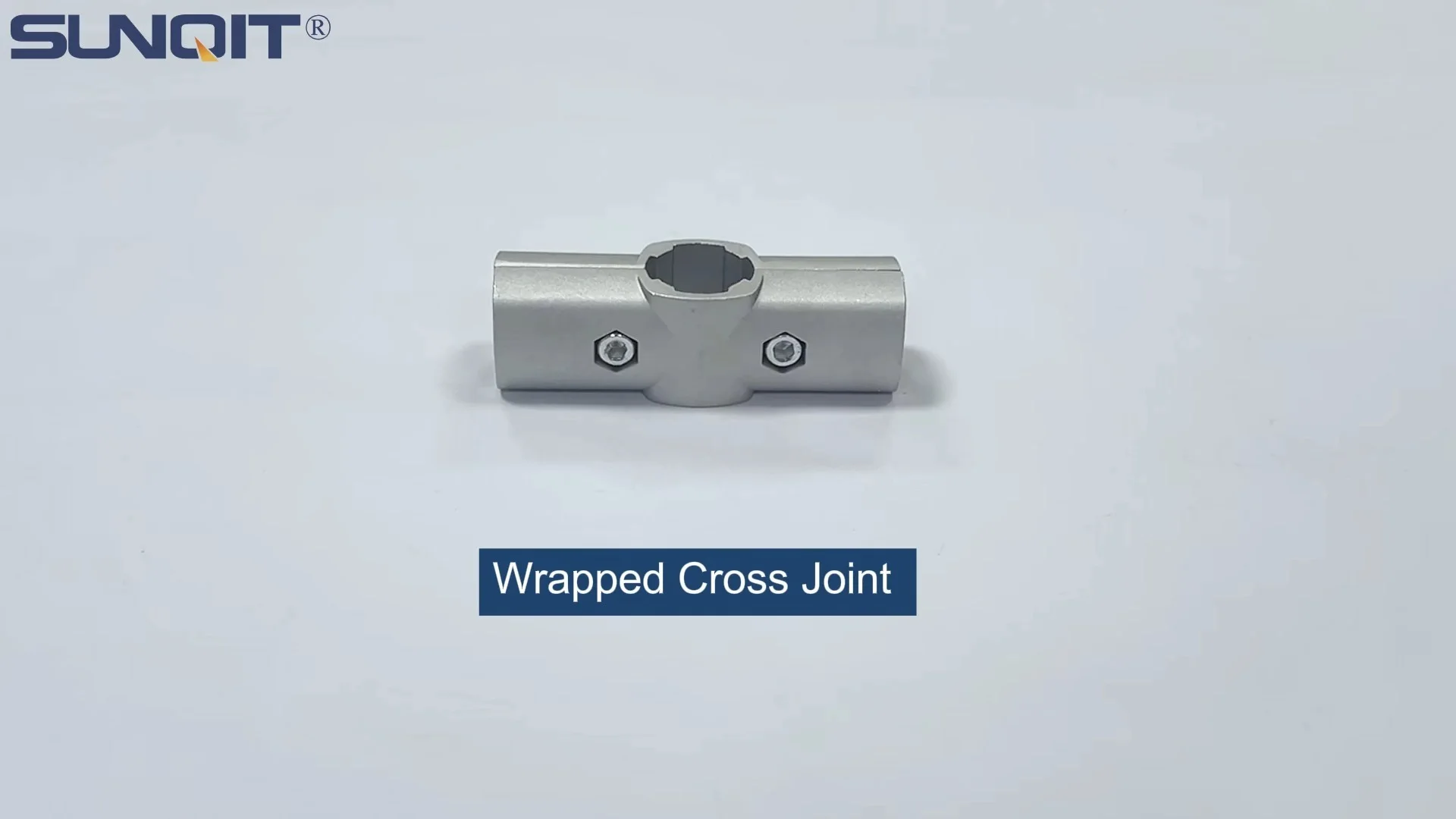
Three Way Aluminum Pipe Joint
Aluminum 3 way pipe joint for 28mm aluminum pipe connection in 3 direction.
Introduction: The Race for Agility in Modern Automotive Manufacturing
In the fast-paced world of automotive manufacturing, where consumer demands shift overnight and new models roll out every year, one thing has become crystal clear: rigidity is the enemy. For plant managers and production teams, the ability to adapt quickly—whether to a new vehicle design, a sudden surge in demand, or even a last-minute change in safety regulations—can mean the difference between leading the market and playing catch-up. This is the story of how Greenfield Automotive, a mid-sized manufacturer outside Detroit, transformed their assembly line from a static, frustrating bottleneck into a lean, flexible powerhouse using a seemingly simple component: the three way aluminum pipe joint.
Greenfield had built its reputation on producing reliable sedans and crossovers, but by early 2024, their leadership team knew they needed to pivot. Consumer interest was shifting toward electric SUVs, and their existing production setup—largely unchanged since 2010—was struggling to keep up. "We were spending 12 hours just reconfiguring workbenches and roller tracks every time we switched between models," recalls Maria Gonzalez, Greenfield's Production Director. "And that was on a good day. If a weld broke or a steel bracket bent, we'd lose a full shift. Our technicians were exhausted, our downtime numbers were embarrassing, and worst of all, we were missing opportunities to bid on new contracts because clients didn't trust our turnaround times."
What Greenfield needed wasn't just new equipment—it was a complete rethink of how their production floor operated. They needed a system that could grow, change, and evolve without the headaches of welding, heavy lifting, or specialized tools. That's when their search for a lean system upgrade led them to a technology that would become the backbone of their transformation: aluminum profiles paired with three way aluminum pipe joints.
The Challenge: Stuck in the Past with Welded Steel and Fixed Infrastructure
To understand why Greenfield's upgrade was so urgent, it helps to step onto their production floor before the changes. Walk through the doors of their main assembly building in 2023, and you'd be met with a maze of heavy, steel workbenches—each welded into place, their heights fixed, their shelves bolted to the frame. Above the line, roller tracks carried components from station to station, but these too were rigid: welded to steel supports, their angles unchangeable, their paths set in stone.
"The worst part was the ergonomics," says Juan Lopez, a senior assembly technician who's worked at Greenfield for 15 years. "I'm 5'8", but we have people on the line from 5'2" to 6'3". Those old steel benches? They were built for someone exactly 5'10", and that was it. If you were shorter, you strained your back leaning over. If you were taller, you hunched. We had more workers out with muscle injuries in 2022 than we did in the previous five years combined."
The rigidity also made it nearly impossible to adapt to new vehicle designs. When Greenfield won a contract to produce a limited-run electric SUV in late 2023, the team realized their existing setup couldn't handle the SUV's wider chassis. The roller tracks, designed for sedan components, were too narrow; the workbenches, too low to accommodate the SUV's battery packs. "We spent three weeks just modifying the line," Maria remembers. "We had to bring in a welding crew to cut and reattach steel brackets. The roller tracks? We had to buy entirely new ones because the old ones couldn't be adjusted. By the time we were ready, we'd blown through half the project's contingency budget, and we still had to shut down production for two days. Our CEO was livid."
Maintenance was another nightmare. Steel rusted in the humid Michigan summers, leading to jammed roller tracks and squeaky conveyors. Replacing a single damaged bracket meant shutting down that section of the line, as the entire bench or track would need to be disassembled. "I had a technician tell me once that changing a broken caster wheel on a workbench took two people and a forklift," Maria says, shaking her head. "Two people! For a caster wheel! That's when I knew we couldn't keep going like this."
The Solution: Lean Systems, Aluminum Profiles, and the Three Way Aluminum Pipe Joint
Desperate for a better way, Maria's team turned to lean manufacturing principles—specifically, the concept of "kaizen" or continuous improvement. They began researching modular production systems, and quickly landed on aluminum profiles. Unlike steel, aluminum is lightweight, corrosion-resistant, and—most importantly—doesn't require welding. But what really sold them was the three way aluminum pipe joint: a small, unassuming component that would become the linchpin of their new setup.
"At first, I was skeptical," admits Juan. "How could a little aluminum joint hold up to the weight of battery packs or engine parts? But when we tested it—when we saw that you could connect three aluminum pipes at 90-degree angles with just a hex key, no welding, no heavy tools—I was hooked. It was like building with adult Legos, but industrial-grade."
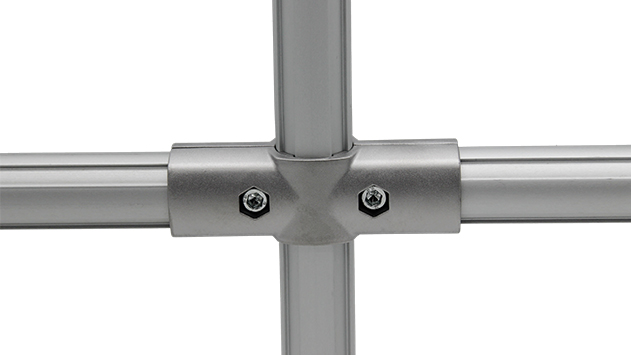
The three way aluminum pipe joint is deceptively simple: a cast aluminum connector with three threaded ports, designed to fit standard aluminum profiles (Greenfield chose 40mm x 40mm T-slot profiles, common in industrial setups). What makes it powerful is its versatility: it can join pipes in multiple configurations—vertical, horizontal, even at odd angles—allowing for custom workbenches, roller tracks, and material racks that can be reconfigured in minutes, not weeks. Paired with other aluminum profile accessories like end caps, gusset plates, and adjustable feet, it became the building block for a fully modular system.
Greenfield partnered with a local supplier specializing in lean system components, who helped design a pilot project: upgrading one section of their assembly line—the battery installation station—to use aluminum profiles and three way joints. The goal was modest: reduce changeover time by 50% and cut maintenance costs by 30%. No one expected what happened next.

Implementation: From Skepticism to Excitement on the Factory Floor
The pilot project kicked off in January 2024, and it didn't start smoothly. "The old-timers on the line were resistant," Juan laughs. "They'd been welding steel for decades; they thought aluminum was 'flimsy.' One guy even bet me $50 that the first battery pack would collapse the new workbench."
The installation itself took just two days—a fraction of the time the old steel setup would have required. A team of three technicians, using only hex keys and a rubber mallet, assembled the new workbench: aluminum profiles cut to length, connected with three way joints at the corners, topped with a lightweight aluminum honeycomb panel for the work surface. Adjustable feet let each technician set the height to their own comfort—no more hunching or straining. Above the bench, a modular roller track, also built with aluminum profiles and three way joints, carried battery packs from the storage area to the installation station. The track's angle could be adjusted with a simple turn of a knob, thanks to swivel roller balls that allowed components to glide smoothly, even with heavy loads.
On the first day of the pilot, the team held their breath as the first battery pack—weighing over 400 pounds—was placed on the new workbench. "It didn't even budge," Juan says, grinning. "That $50? I still haven't cashed the check, but I keep it on my toolbox as a reminder."
The real test came two weeks later, when the line needed to switch from the SUV battery pack to a smaller battery for a hybrid model. "In the old days, that would have meant shutting down for half a day to adjust the roller track and lower the workbench," Maria explains. "This time? Juan and his team did it in 23 minutes. They loosened the three way joints, adjusted the height of the bench legs, repositioned the roller track with a few twists of the joints, and were back to production. I was in the control room watching the downtime clock, and I swear I did a little dance when it hit 23 minutes."
Word spread quickly across the factory floor. Technicians from other sections started dropping by the pilot station, asking questions, testing the joints for themselves. "One guy from the engine assembly line came over and said, 'Can we get these for our torque wrenches?'" Maria recalls. "He wanted a modular rack that could hold different wrench sizes and adjust as new tools came in. That's when I knew we weren't just upgrading a line—we were changing the way people thought about their work."

Results: By the Numbers—How Modular Aluminum Transformed Greenfield's Operations
By June 2024, Greenfield had rolled out the aluminum profile system with three way joints across their entire assembly line. The results? Nothing short of transformative. To put it in perspective, here's how the old steel setup stacked up against the new modular aluminum system:
| Metric | Old Steel System (2023) | New Aluminum System (2024) | Improvement |
|---|---|---|---|
| Changeover Time (Model Switch) | 12 hours | 45 minutes | 93.75% reduction |
| Maintenance Downtime | 8 hours/month | 1 hour/month | 87.5% reduction |
| Worker Injury Rate | 6.2 injuries/100 workers | 1.8 injuries/100 workers | 71% reduction |
| Setup Cost for New Projects | $45,000 average | $12,000 average | 73% reduction |
| Technician Satisfaction Score (1-10) | 4.3 | 8.7 | 102% improvement |
"The injury rate is what matters most to me," says Maria, pointing to the table. "We used to have a worker's comp claim every other month. Now? We've gone six months without a single ergonomic injury. That's not just a metric—that's people going home to their families pain-free. That's priceless."
The financial impact was equally impressive. Greenfield's CFO, Raj Patel, reported that the modular system paid for itself within eight months, thanks to reduced downtime, lower maintenance costs, and new contracts they could now bid on confidently. "We landed a deal with a major EV startup in July because we could guarantee a 48-hour turnaround on prototype assembly," Raj says. "They didn't believe us at first—so we invited them to the plant. They watched Juan reconfigure a workbench in 30 minutes, and they signed the contract on the spot. That single contract covered the entire cost of the upgrade."
Perhaps the most unexpected benefit was the boost in morale. "Our technicians aren't just assembly workers anymore—they're problem-solvers," Maria says. "Last month, the night shift came up with a way to use three way joints and aluminum profiles to build a custom tool cart that fits under the SUV's chassis. They didn't wait for engineering to design it; they just grabbed some spare profiles and joints and built it themselves. That's the power of this system—it puts control back in the hands of the people who know the line best."
Technical Deep Dive: Why the Three Way Aluminum Pipe Joint Works
At first glance, the three way aluminum pipe joint might seem like a simple piece of hardware, but its design is the result of decades of innovation in lean manufacturing. Let's break down what makes it so effective:
Material Science: Aluminum Alloys for Strength and Lightweight Performance
Greenfield's joints are made from 6061-T6 aluminum alloy, a material prized for its high strength-to-weight ratio. T6 heat treatment gives it a tensile strength of 42,000 psi—strong enough to support the weight of automotive components while remaining lightweight (about 1/3 the weight of steel). This makes reconfiguration easy: a single technician can carry and connect aluminum profiles without heavy lifting equipment.
Design Ingenuity: T-Slots and Threaded Ports for Versatility
The joint's T-slot design is critical. Each aluminum profile has a longitudinal slot that allows for accessories—like shelves, hooks, or roller track brackets—to be added anywhere along the length, not just at fixed points. The three way joint's threaded ports align with these slots, so when you tighten a hex bolt through the slot into the joint, it creates a secure, vibration-resistant connection. No welding, no drilling—just a tight, reliable fit that can be loosened and re-tightened hundreds of times without losing integrity.
Compatibility: Working with the Ecosystem of Aluminum Profile Accessories
The three way joint doesn't work in isolation. It's part of a broader ecosystem of aluminum profile accessories that Greenfield leveraged to maximize flexibility. For example:
- Adjustable Feet: Screw-in feet with rubber anti-slip pads let workbenches be leveled on uneven floors, critical for stability.
- Swivel Roller Balls: These 1-inch diameter balls, mounted in aluminum tracks, allow components to glide smoothly in any direction, reducing friction and worker strain.
- End Caps: Plastic or aluminum caps fit over the ends of profiles, preventing dust buildup and eliminating sharp edges—an important safety feature.
- Gusset Plates: For high-load areas, like battery workbenches, these triangular plates reinforce joints, increasing stability without adding bulk.
Durability: Corrosion Resistance and Longevity
Unlike steel, aluminum naturally forms a protective oxide layer that resists rust. This was a game-changer for Greenfield, where humid summers and occasional floor washes had corroded steel components. "We haven't had to replace a single joint or profile in nine months," Juan notes. "The old steel stuff? We were replacing brackets every three to six months. This aluminum setup? It looks as good as the day we installed it."
Conclusion: Building the Factory of the Future—One Joint at a Time
Greenfield Automotive's transformation isn't just a story about a better pipe joint. It's a story about reimagining what manufacturing can be: flexible, human-centered, and adaptable to change. As Maria puts it, "We used to build our line around the vehicles. Now, we build our line around the people and the process. And the three way aluminum pipe joint? It's the tool that made that possible."
Today, walking through Greenfield's assembly line is like stepping into a factory of the future. Modular workbenches with adjustable heights, roller tracks that curve and adapt to new components, and custom carts built by the technicians themselves—all connected by those unassuming three way joints. The air is lighter, the mood more energetic. "I used to dread coming to work on model changeover days," Juan says. "Now? I look forward to it. It's like solving a puzzle, and we get to build the solution ourselves."
For other manufacturers considering a similar upgrade, Maria has a simple piece of advice: "Start small. Do a pilot. Let your technicians get their hands on the joints and profiles. Once they see what's possible, they'll be the ones pushing for more. This isn't just about technology—it's about empowering your team to innovate. And when you do that, there's no limit to what you can build."
As the automotive industry continues to evolve, one thing is clear: the factories that thrive will be the ones that can adapt. Greenfield Automotive, once stuck in the past, is now leading the charge—proving that sometimes, the most powerful innovations come in small packages. Like a three way aluminum pipe joint.
"We don't just build cars here anymore," Maria says, standing at the end of the upgraded line as a shiny new electric SUV rolls off the conveyor. "We build the future. And we're building it one joint at a time."