- Company Articles
- Products and Technology
- Application Cases
- Case Study: Two Way Lean Pipe Joint in Automotive Assembly Line Optimization

Case Study: Two Way Lean Pipe Joint in Automotive Assembly Line Optimization
Related Product
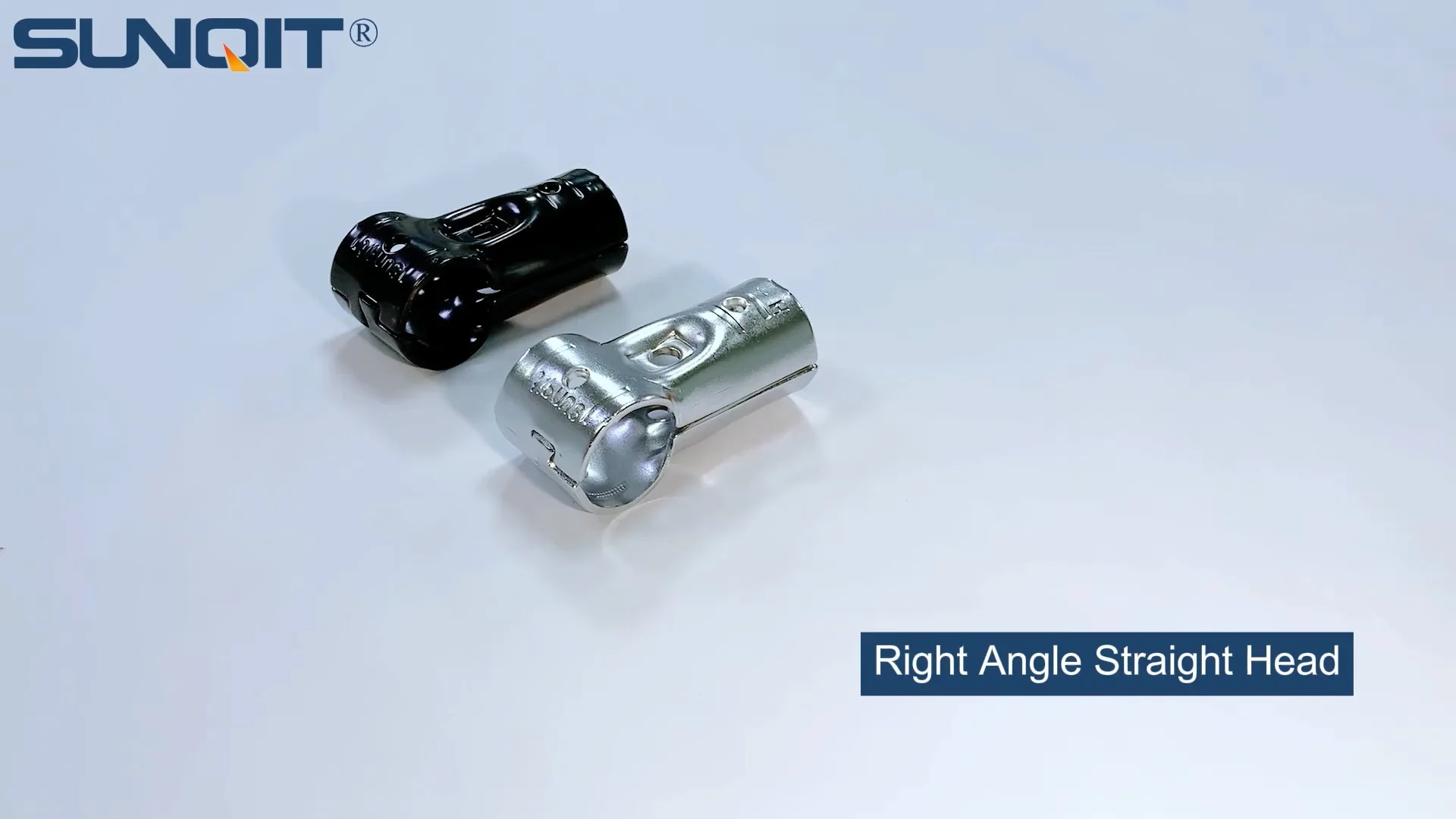
Two Way Lean Pipe Joint
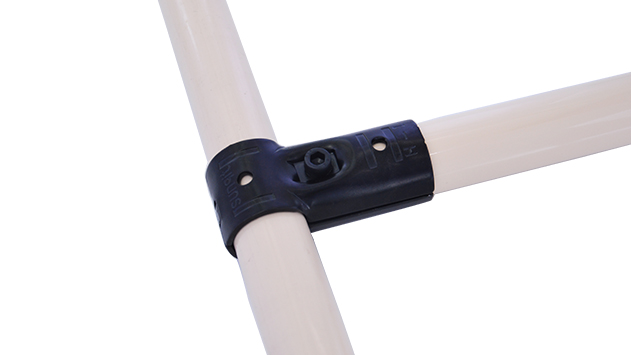
Two way lean pipe joint for 2 pcs 28MM lean pipe connection in straight angle, which used widely in workbench, flow rack, hand trolley frame connection.
In the fast-paced world of automotive manufacturing, where every second counts and adaptability is key to staying competitive, even the smallest inefficiencies can snowball into significant losses. For AutoPro Manufacturing, a mid-sized automotive parts supplier based in the Midwest, this reality hit hard in early 2023. Their door panel assembly line—responsible for producing interior door modules for three major car brands—was struggling with bottlenecks, high worker fatigue, and a rigid setup that made it nearly impossible to keep up with frequent design changes. That's when their lean transformation journey began, centered on a humble yet powerful component: the two way lean pipe joint. This is the story of how modular lean system components, including lean pipe workbenches, flow racks, and roller tracks, revolutionized their production floor.
The Challenge: A Line Stuck in Neutral
AutoPro's door panel line had been running on a traditional setup for over a decade. Welded steel workbenches, fixed metal shelving, and manually pushed carts defined the workflow. While this system had once been reliable, it was ill-equipped for the 2020s automotive landscape. "We were producing 15 different door panel variants that year, up from 5 just five years prior," explains Maria Gonzalez, AutoPro's Production Manager. "Every time a new design came in, we'd have to bring in a welding crew to modify the workbenches or rearrange shelving. It took 48 hours just to switch between models, and during that time, the line was dead in the water."
The issues ran deeper than changeover time. Workers on the line were logging an average of 12,000 steps per shift—far above the industry average of 8,000—due to poorly placed material storage. Parts often piled up on the floor near workstations because the fixed shelving couldn't be adjusted to match the flow of production. Ergonomic complaints were rising, too: the rigid workbenches sat at a one-size-fits-all height, forcing taller workers to hunch and shorter ones to stretch, leading to a 23% increase in reported strains compared to other lines.
Worst of all, throughput was stagnant. Despite running two 8-hour shifts, the line was only hitting 78% of its daily production target. "We knew we needed a lean system overhaul, but we were worried about the cost and downtime of a full rebuild," Gonzalez admits. "We needed something that could adapt without breaking the bank or halting production for weeks."
The Solution: Modular Lean System with Two Way Lean Pipe Joints
Enter LeanTech Solutions, a local lean system supplier specializing in modular manufacturing setups. After a week of observing the line, LeanTech's consultant, James Chen, proposed a radical but low-risk approach: replace the fixed infrastructure with a flexible lean system built around aluminum lean pipes, two way lean pipe joints, and configurable accessories like lean pipe workbenches, flow racks, and roller tracks. "The key here is modularity," Chen explained during his presentation to AutoPro's leadership team. "Traditional setups are like concrete—strong but unchangeable. A lean system using two way lean pipe joints is like Lego: strong enough to support production, but easy to take apart, rearrange, and rebuild in hours, not days."
At the heart of this proposal was the two way lean pipe joint. Unlike fixed welded connections or even single-directional clamps, these joints allow two pipes to connect at 90-degree angles with a simple twist-lock mechanism. Made from durable zinc-plated steel, they're designed to withstand the daily wear of a manufacturing environment while remaining easy to adjust. "You don't need tools to reposition them," Chen demonstrated, loosening a joint with his hand and rotating a pipe into a new angle. "A worker can reconfigure a workstation during a 15-minute break if needed."
The plan wasn't just about joints, though. LeanTech recommended a full ecosystem: lean pipe workbenches with adjustable heights (using the two way joints to add or remove pipe segments), flow racks equipped with roller tracks to let parts glide to workers instead of requiring manual transport, and mobile turnover trolleys built with the same modular pipes. "We'd start with the door panel line, then expand to other areas if it worked," Chen added. "The beauty is that these components are reusable—if you rearrange the line again, you just take the pipes and joints apart and rebuild them elsewhere."
Implementation: From Blueprint to Build in 30 Days
AutoPro greenlit the project in March 2023, with a tight timeline: implement the new system during weekend shutdowns to avoid disrupting production. The first step was removing the old welded workbenches—a process that took two Saturdays. "We were nervous about seeing the empty floor," Gonzalez recalls. "It felt like we were stripping the line down to nothing. But the LeanTech team reassured us that what came next would be better."
What came next was a masterclass in modular efficiency. Using basic aluminum tubes and two way lean pipe joints, the team built 12 new workstations in just 8 hours on the third weekend. Each workbench featured adjustable height legs (by adding or removing 12-inch pipe segments via the two way joints) and a wooden top that could be swapped out for ESD-safe materials if needed. "The joints made it so easy," says Carlos Mendez, a lead assembler who helped build the benches. "I've never put together anything that sturdy with just my hands. We even built a prototype workstation in the break room the week before to practice—by the time we got to the floor, it was like assembling furniture, but for a factory."
Next came the flow racks and roller tracks. These were installed along the assembly line to create a "supermarket" of parts, where components like armrests, window switches, and insulation pads would slide directly to the workstations via gravity. The roller tracks, mounted on aluminum profiles using roller track placon mounts, reduced the need for workers to walk to storage areas. "Before, I'd walk 50 feet to grab a window switch, then 50 feet back—do that 200 times a shift, and your feet are killing you," says Mendez. "Now the switches come to me on the roller track. I can focus on installing, not fetching."
Perhaps the most impactful change was the introduction of mobile turnover trolleys, built with the same two way lean pipe joints and caster wheels. These trolleys, loaded with kits of parts for specific door panel variants, could be rolled directly to the line and docked at the workbenches. "Changeovers went from 48 hours to 4 hours," Gonzalez reports. "Instead of welding, we just reconfigure the trolleys and adjust the roller tracks. For minor variant changes, like switching from a manual window crank to an electric switch, we can do it in under an hour."

Results: By the Numbers
By the end of the first month, the results were undeniable. AutoPro tracked key metrics for three months post-implementation, comparing them to the three months prior. The data told a clear story: the two way lean pipe joint and supporting lean system components had transformed the line.
| Metric | Before Implementation | After Implementation | Improvement |
|---|---|---|---|
| Changeover Time (per model switch) | 48 hours | 4 hours | 92% reduction |
| Worker Steps per Shift | 12,000 steps | 6,800 steps | 43% reduction |
| Daily Throughput (door panels) | 380 units | 520 units | 37% increase |
| Ergonomic Complaints | 18 per month | 3 per month | 83% reduction |
| Space Utilization | 65% of floor space used effectively | 92% of floor space used effectively | 42% improvement |
"The most surprising win was space utilization," Gonzalez notes. "By replacing bulky fixed shelving with compact flow racks and mobile trolleys, we freed up 1,200 square feet on the production floor. We're now using that space to add a sub-assembly station for wire harnesses, which has further boosted throughput."
Worker satisfaction saw a dramatic uptick, too. In a post-implementation survey, 92% of line workers reported feeling "less fatigued" at the end of their shifts, and 87% said the new setup made their jobs "easier to do well." "I used to go home with a backache every night," says Mendez. "Now? I can play soccer with my kids after work. That's the real win, isn't it?"

Beyond the Line: Scaling the Lean System
Encouraged by the success, AutoPro has since expanded the use of two way lean pipe joints and lean system components to two other assembly lines: their dashboard assembly and seat frame lines. "The ROI on the door panel line was 14 months," Gonzalez says. "We're projecting 12 months for the dashboard line, since we already have the tools and trained teams."
They've also started exploring specialized components, like ESD workstations for electronics assembly and stainless steel pipe series for areas with strict hygiene requirements. "The flexibility of the lean system means we're not locked into one type of material," Chen explains. "Aluminum lean pipes work great for most areas, but if we need stainless steel for a cleanroom, we can swap out the pipes while keeping the same two way joints."
For other manufacturers considering a similar upgrade, Gonzalez has a simple piece of advice: "Start small. We didn't replace our entire factory—we started with one line, proved the concept, and then scaled. The two way lean pipe joint isn't just a part; it's a mindset. It lets you experiment, adapt, and grow without fear of wasting money on rigid infrastructure."
Conclusion: The Power of Modularity
In an industry where change is the only constant, the two way lean pipe joint has emerged as a quiet hero for AutoPro Manufacturing. What began as a solution to a specific line's bottlenecks has evolved into a company-wide approach to lean manufacturing. By prioritizing flexibility, ergonomics, and worker-centric design, AutoPro didn't just optimize a production line—they built a foundation for long-term resilience.
As Gonzalez puts it: "In automotive, you're only as good as your ability to adapt. With our lean system, we're not just keeping up—we're ahead of the curve. And it all started with a joint that lets us twist, turn, and rebuild whenever we need to." For manufacturers everywhere, that's a lesson worth building on.