- Company Articles
- Products and Technology
- Application Cases
- Castor Fixed Plate Applications in 3C Assembly Lines: Enhancing Workflow

Castor Fixed Plate Applications in 3C Assembly Lines: Enhancing Workflow
Related Product
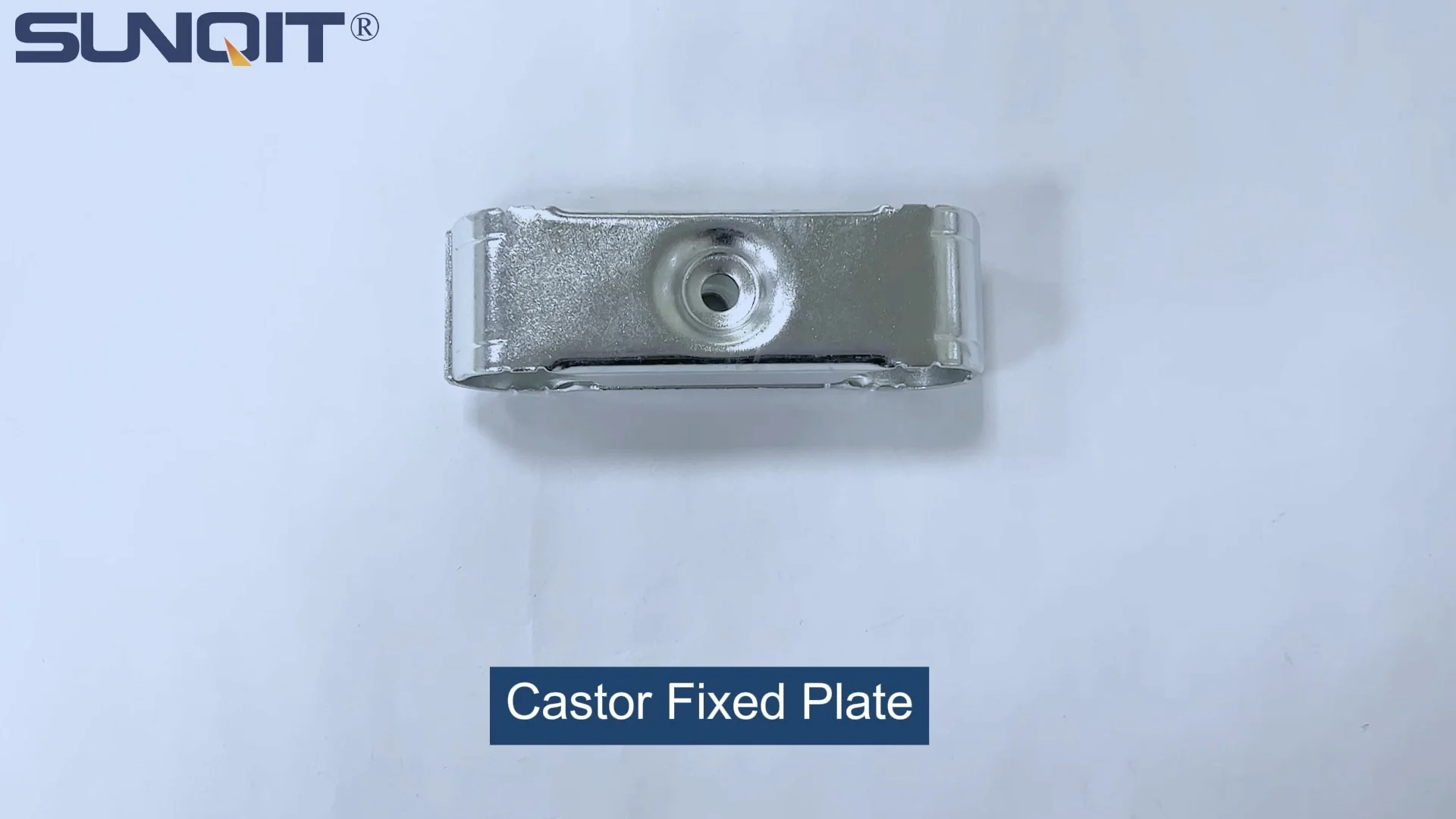
Castor Fixed Plate
Castor fixed plate, used for castor installation, one castor need two pcs castor plate to fix under the workbench, flow rack, and hand trolley.
In the fast-paced world of 3C manufacturing—where computers, communication devices, and consumer electronics are assembled with pinpoint precision—every component, no matter how small, plays a critical role in keeping production lines moving. Among these unsung heroes are caster fixed plates: unassuming yet indispensable caster accessories that bridge mobility and stability. For technicians assembling smartphones, laptops, or smartwatches, the difference between a smooth, efficient shift and a frustrating day of delays often comes down to how well their workstations, trolleys, and racks stay steady while on the move. In this article, we'll dive into how castor fixed plates transform 3C assembly lines, support lean system principles, and become the quiet backbone of modern manufacturing workflows.
What Are Castor Fixed Plates, and Why Do They Matter?
At first glance, a castor fixed plate might seem like little more than a metal or plastic square with bolt holes. But in reality, it's the critical link between a caster wheel and the equipment it supports—whether that's a workbench loaded with circuit boards, a turnover trolley carrying delicate phone screens, or a mobile flow rack stocked with batteries. Think of it as the "foundation" of mobility: without a sturdy, well-designed fixed plate, even the highest-quality caster wheel will wobble, loosen, or fail under pressure.
Most castor fixed plates are made from durable materials like steel, aluminum, or reinforced plastic, chosen for their ability to withstand the daily grind of 3C assembly. Steel plates, for example, excel at bearing heavy loads—perfect for workbenches cluttered with soldering irons, microscopes, and tool organizers. Aluminum plates, on the other hand, offer a lighter alternative with excellent corrosion resistance, making them ideal for cleanroom environments where dust and moisture could damage sensitive electronics.
But their real value lies in precision. A well-engineered fixed plate aligns the caster wheel perfectly with the equipment's base, ensuring that weight is distributed evenly. This prevents "tipping" when a trolley hits a small floor imperfection or a technician leans on a workbench during assembly. In 3C manufacturing, where even a 1mm misalignment can ruin a circuit board, that stability isn't just convenient—it's essential for quality control.
Castor Fixed Plates in Action: Key Applications in 3C Assembly
To understand how castor fixed plates enhance workflow, let's walk through three common scenarios in a 3C assembly line—each where these small components make a big difference.
1. Workbenches: The Heart of Assembly Precision
Workbenches are where the magic happens in 3C manufacturing. Here, technicians spend hours soldering microchips, attaching screens, and testing circuit boards—tasks that demand steady hands and a stable surface. A wobbling workbench isn't just annoying; it's a recipe for defects. Imagine a technician trying to solder a 0.5mm wire to a motherboard while their workbench shifts with every movement—that's a disaster waiting to happen.
Enter castor fixed plates. When paired with high-quality casters, they allow workbenches to be repositioned quickly (to adapt to changing production schedules) while locking securely in place during use. Many modern workbenches in 3C lines use "brakeable" casters, where stepping on a lever locks both the wheel and the swivel mechanism. But without a solid fixed plate, the brake's effectiveness is compromised: the plate ensures the caster stays bolted tight, so the brake engages fully, and the workbench doesn't "creep" mid-assembly.
One 3C manufacturer in Shenzhen, which produces smartwatch components, recently upgraded its workbenches with steel castor fixed plates. Previously, their plastic plates would warp under the weight of heavy testing equipment, causing casters to loosen. "We were spending 15 minutes every morning retightening bolts and realigning workbenches," says Li Jia, a production supervisor there. "Now, with steel plates, we haven't had a single loose caster in six months. The technicians say the workbench feels 'rooted,' and our defect rate on soldering jobs has dropped by 30%."
2. Turnover Trolleys and Flow Racks: Keeping Components Moving Safely
In 3C assembly, time is money—and that means components need to flow seamlessly from storage to assembly stations. Turnover trolleys and flow racks are the workhorses here, ferrying everything from tiny screws to finished subassemblies. But these tools are only effective if they're easy to move, yet stable enough to protect fragile parts like OLED screens or lithium-ion batteries.
Castor fixed plates play a dual role here: they reduce "jolting" during transport (which could damage sensitive components) and prevent trolleys from tipping when loaded unevenly. For example, a flow rack loaded with 20kg of phone batteries might become top-heavy. A fixed plate with reinforced bolt holes distributes that weight evenly across the caster, lowering the center of gravity and reducing the risk of spills.
Consider a turnover trolley used to transport glass phone screens. These screens are prone to cracking from even minor impacts. A trolley with a flimsy fixed plate might wobble as it's pushed across the factory floor, causing screens to rub against each other. But with an aluminum fixed plate (lightweight to reduce pushing effort, yet rigid to minimize vibration), the trolley glides smoothly, and screen breakage drops. One electronics plant in Dongguan reported a 40% reduction in screen damage after switching to aluminum fixed plates on their turnover trolleys—saving them over $50,000 annually in replacement costs.
3. Mobile Conveyors: Flexibility in Material Handling
While many 3C assembly lines use fixed conveyors for high-volume production, mobile conveyors are gaining popularity for their ability to handle short-run or customized orders (e.g., limited-edition phone models). These conveyors need to be set up, moved, and reconfigured quickly—often by just one or two workers. Here, castor fixed plates are key to balancing portability and performance.
Mobile conveyors typically have multiple casters (4-6, depending on length) to distribute weight. If even one caster's fixed plate is misaligned or weak, the conveyor belt can sag, causing parts to jam. For example, a conveyor moving small camera modules (each worth $20) could see jams if the belt isn't level—leading to scratched lenses or misaligned sensors. A steel fixed plate with precision-drilled bolt holes ensures each caster is mounted at the exact same height, keeping the conveyor belt flat and parts moving smoothly.
"We used to avoid mobile conveyors because they were too 'fiddly' to set up," says Wang Tao, a logistics manager at a Shanghai-based 3C contract manufacturer. "Now, with castor fixed plates that snap into our aluminum profile conveyors, we can reposition a 10-foot conveyor in 5 minutes flat. The plates keep everything level, so we haven't had a single jam in three months. It's transformed how we handle small-batch orders."

Supporting Lean Systems: How Castor Fixed Plates Drive Efficiency
Lean manufacturing principles—focused on eliminating waste, streamlining workflows, and continuous improvement—are the backbone of modern 3C production. Castor fixed plates might not be the first thing that comes to mind when you think of "lean tools," but they play a quiet yet vital role in making lean systems work.
Take 5S, a cornerstone of lean, which emphasizes "Sort, Set in Order, Shine, Standardize, Sustain." For "Set in Order" (organizing the workplace so everything has a place), mobility is key. Workstations, trolleys, and racks need to be positioned exactly where they're needed—no more, no less. Castor fixed plates enable this by making equipment easy to move and quick to secure, so lines can be reconfigured in minutes rather than hours.
Just-In-Time (JIT) production, another lean staple, relies on delivering components to assembly stations exactly when they're needed (and not a minute before). This reduces inventory costs and frees up floor space. Mobile turnover trolleys, supported by reliable castor fixed plates, are critical here: they can be loaded with small batches of components and moved directly to the line, eliminating the need for large storage areas. Without stable fixed plates, these trolleys might take longer to move (due to wobbling) or risk damaging components—undermining JIT's efficiency gains.
Even Kaizen (continuous improvement) benefits. When workers can easily adjust their workspaces—moving a workbench closer to a conveyor, or repositioning a flow rack to reduce reaching—they're more likely to suggest process improvements. "Our team used to hesitate to propose layout changes because moving equipment was such a hassle," says Li Jia, the Shenzhen production supervisor. "Now, with workbenches that glide smoothly and lock tight, they're always suggesting tweaks—like shifting a testing station 3 feet left to cut down on walking time. It's made Kaizen feel less like a 'program' and more like part of our daily routine."

Choosing the Right Castor Fixed Plate: A Practical Guide
Not all castor fixed plates are created equal. To maximize their benefits, 3C manufacturers need to choose the right plate for each application. Below is a comparison of common materials and their best uses:
| Material | Load Capacity (per plate) | Weight (per plate, 4x4 inch) | Corrosion Resistance | Best For |
|---|---|---|---|---|
| Steel (Zinc-Plated) | Up to 500 lbs | 2.5 lbs | Good (resists rust in dry environments) | Heavy workbenches, loaded turnover trolleys, stationary/mobile conveyors |
| Aluminum (Anodized) | Up to 300 lbs | 1.2 lbs | Excellent (resists moisture, chemicals, and dust) | Cleanrooms, mobile workstations, lightweight conveyors |
| Reinforced Plastic (Nylon) | Up to 150 lbs | 0.8 lbs | Excellent (resists corrosion, non-conductive) | ESD workstations (prevents static damage), small parts trolleys |
Other factors to consider include: Bolt Pattern (ensure the plate's bolt holes match your caster and equipment base), Thickness (thicker plates—3-5mm—offer more rigidity for heavy loads), and Mounting Type (weld-on vs. bolt-on; bolt-on is better for equipment that needs occasional caster replacement).

Future Trends: Innovations in Castor Fixed Plates
As 3C manufacturing evolves—with smaller components, faster production cycles, and stricter quality standards—castor fixed plates are evolving too. Here are three trends to watch:
- Lightweight yet Stronger Materials: Manufacturers are experimenting with aluminum alloys reinforced with carbon fiber, aiming to match steel's load capacity at half the weight. This would make mobile equipment even easier to move, reducing worker fatigue.
- Integrated Shock Absorption: For ultra-delicate components (e.g., foldable phone screens), fixed plates with built-in rubber gaskets or spring-loaded mounts could absorb vibrations during transport, further reducing defect rates.
- Smart Monitoring: IoT-enabled fixed plates with tiny sensors could detect when bolts start to loosen (via vibration analysis) and send alerts to maintenance teams. This would prevent unexpected failures and reduce downtime.
These innovations won't just make castor fixed plates better—they'll make them an active part of the "smart factory" ecosystem, contributing to data-driven decision-making and predictive maintenance.
Conclusion: The Unsung Hero of 3C Assembly
In the high-stakes world of 3C manufacturing, where a single defect can cost thousands of dollars and a minute of downtime can derail production targets, it's easy to focus on flashy technologies: robotic arms, AI-powered quality checks, or advanced 3D printing. But as we've explored, even the smallest components—like castor fixed plates—can have a outsized impact on workflow, quality, and efficiency.
Castor fixed plates do more than just hold casters in place. They enable the mobility that makes lean systems work, the stability that ensures precision assembly, and the flexibility that lets 3C manufacturers adapt to changing market demands. They're a reminder that in manufacturing, success often lies in the details—the quiet, unglamorous parts that keep the line moving, one component at a time.
So the next time you pick up a smartphone or laptop, take a moment to appreciate the invisible heroes behind its creation. Somewhere, in a bustling assembly plant, a castor fixed plate is hard at work—keeping a workbench steady, a trolley rolling, and a dream of "better, faster, smarter" manufacturing alive.