- Company Articles
- Products and Technology
- Product knowledge
- Castor Fixed Plate Compatibility: Matching with Different Caster Types

Castor Fixed Plate Compatibility: Matching with Different Caster Types
Related Product
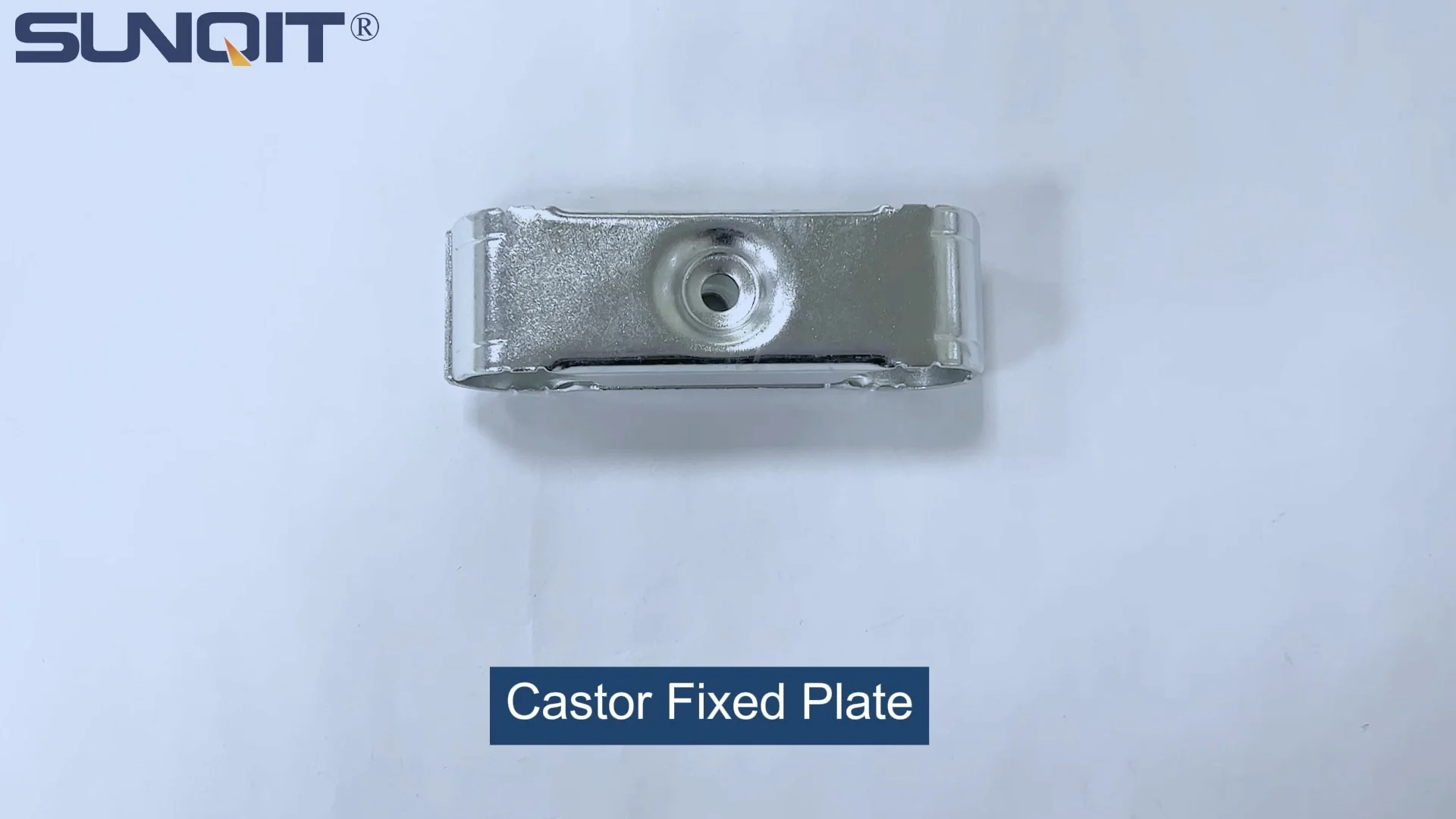
Castor Fixed Plate
Castor fixed plate, used for castor installation, one castor need two pcs castor plate to fix under the workbench, flow rack, and hand trolley.
Introduction: The Unsung Hero of Smooth Operations
Walk into any busy warehouse, manufacturing plant, or even a bustling retail stockroom, and you'll likely see carts, workbenches, and racks gliding across the floor with ease. What makes that smooth movement possible? While the casters themselves get a lot of attention, there's a quiet workhorse holding everything together: the castor fixed plate. It's the unassuming metal or aluminum piece that bolts the caster to the equipment, and getting its compatibility right can mean the difference between a seamless workflow and a frustrating day of stuck carts, wobbly shelves, or even safety hazards.
I remember a conversation with Maria, a warehouse manager at a mid-sized electronics facility, a few months back. She was at her wit's end because the new batch of material carts kept tipping over. "We ordered heavy-duty casters, just like the old ones," she told me. "But these feel like they're barely holding on." After a quick look, the issue wasn't the casters—it was the castor fixed plates. The old carts used flat swivel castor wheel with brake models paired with thick steel plates, but the new ones came with thinner, generic plates that couldn't handle the load. That mismatch cost her team hours of downtime and a few damaged components. It's a story I've heard too many times: overlooking the fixed plate leads to big headaches.
In this article, we're diving deep into castor fixed plate compatibility. We'll break down what these plates are, the different types of casters they work with (like swivel stem caster wheel and rigid models), and how to ensure you're pairing the right plate with the right caster for your needs. Whether you're setting up a new production line, upgrading your warehouse equipment, or just troubleshooting a wobbly cart, this guide will help you avoid Maria's mistake and keep your operations rolling smoothly.
What Are Castor Fixed Plates, Anyway?
Let's start with the basics: a castor fixed plate (sometimes called a mounting plate) is the metal or aluminum base that attaches the caster to the bottom of a cart, workbench, or rack. Think of it as the bridge between the caster and the equipment. Without it, the caster would have nothing to anchor to—imagine trying to screw a caster directly into a wooden cart frame without a plate; it would pull out in no time.
These plates come in all shapes and sizes, but they share a few key features. Most have pre-drilled holes for mounting bolts, a flat (or sometimes angled) surface to attach to the equipment, and a bottom surface designed to connect to the caster's top plate. Materials matter here too: steel plates are common for heavy loads, while aluminum plates are lighter and resistant to corrosion, making them ideal for cleanrooms or food processing environments. Some even come with adjustable leveling feet attachments, which add stability on uneven floors—a handy feature for workbenches that need to stay steady while in use.
But not all plates are created equal. A plate that works perfectly for a lightweight utility cart might crumple under a loaded material rack, and a plate designed for a smooth warehouse floor might not hold up in a factory with rough concrete. That's where compatibility comes in. The plate has to match not just the caster's size and type but also the weight it will carry, the environment it's in, and how the equipment will be used.

The Caster Family: Who's Who in the Wheel World
Before we talk compatibility, let's get to know the main caster types you'll encounter. Casters are like shoes: different styles serve different purposes. Here are the most common ones you'll need to pair with fixed plates:
1. Swivel Stem Caster Wheel
These are the "spin masters" of the caster world. A swivel stem caster wheel has a stem (a vertical rod) that allows the wheel to rotate 360 degrees, making it easy to maneuver tight corners. You'll find them on everything from office chairs to tool carts. The stem can be threaded (like a bolt) or unthreaded, and it typically fits into a socket or bracket on the equipment. For these casters, the fixed plate needs a stem hole or a mounting bracket that can secure the stem—more on that later.
2. Flat Swivel Castor Wheel with Brake
Similar to swivel stem casters but with a flat top plate instead of a stem. The top plate bolts directly to the equipment via the castor fixed plate. These are workhorses for medium to heavy loads, like pallet jacks or industrial workbenches. The "with brake" part is crucial here: the brake mechanism (usually a foot pedal) locks the wheel in place, preventing movement when needed. The fixed plate for these casters needs to align with the caster's top plate holes to ensure the brake operates smoothly—no misalignment allowed, or the brake might not engage fully.
3. Rigid Casters
No swivel here—rigid casters only move forward and backward. They're great for straight-line movement, like conveyor systems or long material racks. They're simpler in design, with a fixed axle and a top plate that bolts to the equipment. While they don't need the same swivel clearance as swivel casters, the fixed plate still needs to match their load capacity and mounting pattern.
4. Heavy-Duty and Specialty Casters
For extreme loads (think 1,000+ pounds) or harsh environments (like chemical plants or outdoor use), you'll need heavy-duty casters. These often have thicker top plates, larger wheels, and reinforced bearings. There are also specialty casters, like ESD (electrostatic discharge) casters for electronics manufacturing, which require conductive fixed plates to prevent static buildup. And let's not forget adjustable leveling feet —some casters come with these built-in, allowing you to level the equipment on uneven floors while still having the option to roll it when needed.

Compatibility 101: Matching Plates to Casters
Now, the million-dollar question: How do you know which castor fixed plate works with which caster? It boils down to three key factors: mounting style, load capacity, and hole pattern. Let's break each down.
Mounting Style: Stem vs. Top Plate
The first rule of compatibility is matching the caster's mounting style to the plate's design. Swivel stem caster wheel models need plates with stem mounts—either a hole that the stem fits into (with a nut to secure it) or a bracket that clamps around the stem. Top plate casters (like flat swivel castor wheel with brake ) need flat plates with pre-drilled holes that align with the caster's top plate. Mixing these up is a recipe for disaster: a stem caster on a top plate won't secure properly, and a top plate caster on a stem plate will wobble or fall off.
Load Capacity: Don't Skimp on Strength
Every caster and fixed plate has a load capacity rating (e.g., 200 lbs, 500 lbs, 1,000 lbs). The plate's capacity must be at least equal to the caster's capacity—and preferably higher, especially if the equipment will carry uneven loads. For example, if you have a caster rated for 300 lbs, the fixed plate should also be rated for 300 lbs or more. Using a weak plate with a strong caster is like putting a bicycle tire on a truck—it might work for a while, but it will fail when you need it most.
Hole Pattern: Measure Twice, Mount Once
Top plate casters and fixed plates have a pattern of mounting holes (usually 4 holes, one in each corner). These holes must align perfectly. If the plate's holes are too far apart or too close together, you won't be able to bolt the caster on securely. Most manufacturers list hole spacing (e.g., 4x4 inches, 5x5 inches) in their specs. Pro tip: Always measure the caster's top plate holes and the fixed plate holes with a ruler before buying. A few millimeters off can make all the difference.
Quick Check:
If you're unsure about compatibility, look for the caster manufacturer's recommended fixed plates. Many brands (like ours) design plates specifically for their caster models, taking the guesswork out of the equation.

The Compatibility Table: A Quick Reference Guide
To make things easier, here's a handy table matching common caster types with their ideal fixed plates. Keep in mind that specific models may vary, so always check the manufacturer's specs!
| Caster Type | Ideal Fixed Plate Type | Key Features to Look For | Common Applications |
|---|---|---|---|
| Swivel Stem Caster Wheel (Threaded Stem) | Stem-Mount Fixed Plate with Threaded Hole | Threaded hole matching stem diameter; Steel or aluminum construction | Office chairs, lightweight tool carts |
| Flat Swivel Castor Wheel with Brake | Heavy-Duty Flat Steel Plate | 4-hole pattern aligning with caster top plate; Reinforced edges for brake clearance | Industrial workbenches, material handling carts |
| Rigid Caster (Top Plate Mount) | Standard Flat Plate (Steel or Aluminum) | Simple 4-hole pattern; Load capacity matching caster rating | Straight-line conveyor systems, stationary racks with mobility |
| Heavy-Duty ESD Caster | Conductive Steel Plate with ESD Coating | Conductive material to prevent static buildup; High load capacity (1,000+ lbs) | Electronics manufacturing, cleanrooms |
| Caster with Adjustable Leveling Feet | Plate with Leveling Foot Mounts | Integrated threaded holes for leveling feet; Reinforced base for stability | Workbenches, inspection tables on uneven floors |
Beyond the Basics: Environmental and Usage Factors
Compatibility isn't just about size and load—it also depends on where and how the equipment will be used. Let's explore a few scenarios where these factors come into play.
Wet or Corrosive Environments
If your equipment is in a food processing plant (where there's frequent washing) or a marine facility (saltwater air), a standard steel fixed plate will rust quickly. In these cases, opt for aluminum or stainless steel plates, which resist corrosion. Pair them with casters that have sealed bearings to keep out moisture—remember, the plate and caster need to survive the environment together.
High-Traffic Areas
In busy warehouses where carts are constantly moving, the fixed plate takes a lot of stress. Look for plates with reinforced corners and thicker gauge steel (at least 3/16 inch) to prevent bending. For swivel stem caster wheel models in high-traffic areas, choose plates with extra support around the stem hole to avoid cracking from constant rotation.
ESD-Sensitive Zones
Electronics manufacturing requires ESD protection to prevent static from damaging components. Here, the fixed plate should be made of conductive material (like carbon steel) and paired with ESD casters. The plate acts as a ground path, directing static away from sensitive parts. Using a non-conductive plate (like plastic) here would defeat the purpose of the ESD casters!
Uneven Floors
If your facility has rough or uneven floors, consider fixed plates with adjustable leveling feet . These feet screw into the plate, allowing you to raise or lower individual corners to keep the equipment stable. Just make sure the plate has enough clearance for the leveling feet to extend without hitting the floor when the caster is in use.
Installation Tips: Getting It Right the First Time
Even with the right plate and caster, poor installation can ruin compatibility. Follow these steps to ensure a secure, long-lasting mount:
1. Gather the Right Tools
You'll need a drill (if holes aren't pre-drilled), bolts (matching the plate and caster hole size), washers, a wrench or socket set, and a level. For heavy equipment, enlist a helper to hold the caster while you mount it—safety first!
2. Clean the Mounting Surface
Dirt, rust, or old paint on the equipment's mounting surface can prevent the plate from sitting flat. Use a wire brush or sandpaper to clean the area before attaching the plate. A flat surface ensures even weight distribution and prevents the plate from warping.
3. Align Holes Carefully
Place the caster on the fixed plate and line up the holes. If using a flat swivel castor wheel with brake , make sure the brake pedal is facing outward (toward the edge of the equipment) for easy access. Tighten the bolts gradually, alternating between corners (like tightening a car tire) to avoid uneven pressure.
4. Torque to Spec
Over-tightening bolts can strip the holes or warp the plate; under-tightening leads to wobbling. Check the caster manufacturer's torque recommendations (usually listed in inch-pounds) and use a torque wrench if possible. A good rule of thumb: tighten until the bolt is snug, then give it a quarter-turn more.
5. Test Before Full Use
Once installed, give the equipment a test roll. Check for wobbling, unusual noises, or resistance. Engage the brake (if applicable) to ensure it locks the wheel securely. If something feels off, double-check the alignment and bolt tightness before putting the equipment into service.
Troubleshooting Common Compatibility Issues
Even with careful planning, issues can pop up. Here's how to fix the most common problems:
Problem: Wobbling or Loose Casters
Cause: Mismatched hole patterns, loose bolts, or a bent plate. Solution: Tighten bolts, check alignment, or replace the plate if it's bent. For swivel stem caster wheel models, ensure the stem is fully seated in the plate's stem hole and secured with a nut.
Problem: Brake Won't Engage
Cause: Fixed plate is misaligned with the caster's brake mechanism, or the plate is too thick, blocking the pedal. Solution: Realign the plate so the brake pedal moves freely, or switch to a thinner plate with cutouts for the brake.
Problem: Plate Cracks Under Load
Cause: Plate load capacity is too low for the caster or equipment weight. Solution: replace with a higher-capacity plate (steel is stronger than aluminum for heavy loads). Avoid using "universal" plates for extreme weights—invest in a plate rated for your specific needs.
Problem: Static Buildup (ESD Environments)
Cause: Non-conductive fixed plate interrupting the ESD path. Solution: Switch to a conductive steel plate and ensure all bolts are tight (loose connections break the ground path).
Pro Troubleshooting Trick:
If you're unsure why a caster is malfunctioning, remove it and inspect the plate. Look for cracks, bent edges, or stripped holes—these are telltale signs the plate is the culprit.
Conclusion: The Plate Makes the Pair
Castor fixed plates might not get the glory, but they're the backbone of any mobile equipment setup. By understanding the different caster types (like swivel stem caster wheel and flat swivel castor wheel with brake ), matching them with the right plate, and following proper installation steps, you can avoid downtime, reduce maintenance costs, and keep your operations running smoothly.
Remember Maria's story? After swapping out the generic plates for heavy-duty steel ones that matched her casters, her material carts became rock-solid. "We haven't had a single tip-over since," she told me a month later. "Who knew a little metal plate could make such a big difference?"
So the next time you're ordering casters, don't forget to ask about the fixed plates. Measure twice, check the specs, and when in doubt, consult a supplier who specializes in caster systems—they'll help you find the perfect pair. After all, in the world of material handling, it's the small details (like the right plate) that keep everything moving forward.