- Company Articles
- Products and Technology
- Product knowledge
- Castor Fixed Plate Design Innovations: Lightweight Yet Durable

Castor Fixed Plate Design Innovations: Lightweight Yet Durable
Related Product
Castor Fixed Plate
Castor fixed plate, used for castor installation, one castor need two pcs castor plate to fix under the workbench, flow rack, and hand trolley.
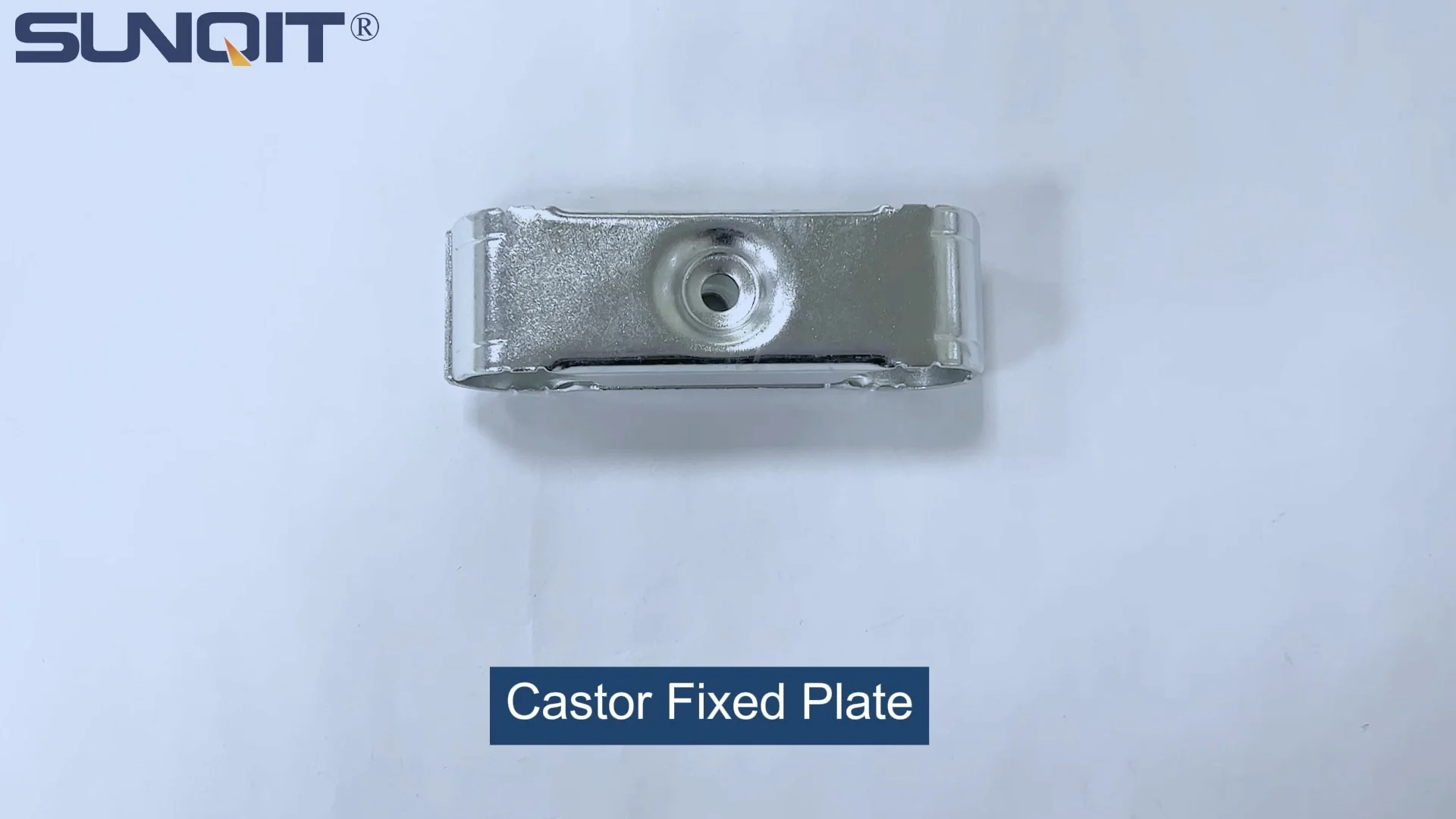
In the world of industrial equipment and material handling, some components quietly play a role so critical that their absence would bring operations to a grinding halt. The caster fixed plate is one such unsung hero. Tucked beneath workbenches, mounted on turnover trolleys, or integrated into material racks, this small but mighty part bridges the gap between casters and the equipment they support. Its job? To keep casters securely in place while bearing the weight of tools, products, and sometimes even workers. But in an era where efficiency, mobility, and longevity are non-negotiable, the humble fixed plate has undergone a transformation. Today's designs are breaking the mold—prioritizing lightweight construction without sacrificing an ounce of durability. Let's dive into how innovations in materials, engineering, and adaptability are redefining what a castor fixed plate can do.
The Evolution of Materials: From Heavy Steel to Smart Alloys
Not long ago, if you peeked under a workbench or a material trolley, chances are you'd find a castor fixed plate made of plain carbon steel. It was simple, affordable, and got the job done—sort of. Steel is strong, no doubt, but it's also heavy. A single steel plate might add several pounds to a trolley, making it harder to maneuver, especially when loaded with materials. Over time, exposure to moisture or chemicals in warehouses or factories would leave it prone to rust, weakening the connection between caster and equipment. And if the plate corroded too much? Casters would wobble, loads would shift, and suddenly that "reliable" steel component became a safety hazard.
Enter the era of engineered materials. Today's leading manufacturers are swapping traditional steel for aluminum profile alloys and composite blends, and the difference is game-changing. Aluminum, in particular, has emerged as a star player. Why? Let's start with weight: aluminum is about one-third the density of steel. A 10-inch steel fixed plate might weigh 5 pounds, but an aluminum one of the same size? Closer to 1.5 pounds. That might not sound like much on paper, but multiply that by four casters per trolley, and suddenly you're shaving 14 pounds off the total weight. For workers pushing trolleys across a factory floor all day, that translates to less fatigue, fewer injuries, and faster material transport.
But lightweight doesn't mean flimsy. Modern aluminum alloys—like the popular 6061-T6—are heat-treated to boost strength, offering a tensile strength of up to 45,000 psi. That's more than enough to handle the demands of a busy warehouse, where a workbench might hold power tools, spare parts, and a worker's weight during maintenance. Aluminum also brings another advantage to the table: corrosion resistance. Unlike steel, it forms a natural oxide layer that protects against rust, making it ideal for use in damp environments, cleanrooms, or even outdoor loading docks. For food processing plants or pharmaceutical facilities, where hygiene is critical, aluminum plates can be easily sanitized without fear of degradation.
Some manufacturers are taking it a step further with hybrid materials: aluminum cores reinforced with fiberglass or carbon fiber composites. These plates are even lighter than pure aluminum but retain the rigidity needed to prevent bending under heavy loads. Imagine a material rack in an automotive plant, loaded with engine parts weighing hundreds of pounds. A composite fixed plate would distribute that weight evenly across the caster, ensuring the connection stays tight for years—no warping, no cracking, just consistent performance.
Design Engineering: Precision and Purpose in Every Curve
Materials are only half the story. Even the best aluminum alloy won't perform well if the plate itself is poorly designed. Today's innovations in engineering are all about intentionality—shaping the plate to do more with less. Let's break down the key design tweaks that make modern castor fixed plates stand out.
First, there's the shift toward aluminum extrusion profile manufacturing. Traditional steel plates were often cut from sheets, which could lead to inconsistencies in thickness and edge quality. Extrusion, on the other hand, involves forcing molten aluminum through a die to create a uniform shape. This process ensures every plate has the exact same dimensions, from the mounting holes to the edge radius. Why does that matter? Consistency means the plate will fit perfectly with caster and accessories —no gaps, no loose bolts, no need for on-site modifications. For assemblers building workbenches or trolleys, that translates to faster setup times and fewer errors.
Then there's the focus on weight distribution. Old fixed plates were often flat, with mounting holes drilled haphazardly. Modern designs, however, use computer-aided engineering (CAE) to analyze stress points. You'll notice curved edges, reinforced ribs, and strategic cutouts that remove unnecessary material without weakening the plate. For example, a plate might have a "U" shape around the caster stem, adding rigidity where the load is heaviest, while hollowing out the center to reduce weight. This "strength where you need it" approach ensures the plate can handle dynamic loads—like when a trolley hits a bump—without flexing or cracking.
Mounting mechanisms have also gotten smarter. Traditional plates relied on simple bolt holes, which could strip over time if the caster was removed and reinstalled repeatedly. Today's plates often feature threaded inserts made of high-strength steel, pressed into the aluminum during manufacturing. These inserts create a durable connection point for bolts, preventing wear and ensuring a tight fit even after years of use. Some designs even include slotted holes, allowing for (fine adjustment) of caster position—handy when aligning wheels on a trolley to prevent drifting.
Compatibility is another area of innovation. A single fixed plate might now work with multiple caster types: swivel casters, rigid casters, even heavy-duty brake casters. This flexibility is a win for manufacturers and facility managers, who can standardize on one plate design instead of stocking a dozen different ones. It also makes upgrades easier—if a facility switches from plastic caster wheels to rubber ones for better grip, the same fixed plate can accommodate the new casters without modification.

Real-World Impact: How Innovations Translate to Better Workflows
Talk of materials and engineering is great, but how do these innovations actually affect day-to-day operations? Let's take a look at a few scenarios where modern castor fixed plates are making a tangible difference.
Consider a electronics manufacturing plant that uses workbench stations for assembly. Each workbench is on casters, allowing workers to reconfigure the line quickly for different product runs. In the past, the steel fixed plates on these workbenches added so much weight that moving them required two people—slowing down changeovers and disrupting productivity. After switching to aluminum alloy plates, the workbenches became light enough for one person to maneuver, cutting reconfiguration time by 40%. What's more, the aluminum plates resisted the cleaning chemicals used to sanitize the benches daily, so after six months, they still looked and performed like new—no rust, no bent edges.
Then there's the case of a warehouse that uses turnover trolleys to transport goods from storage to shipping. The old steel fixed plates on their trolleys would rust in the humid environment, causing casters to loosen over time. Loose casters led to wobbly trolleys, which sometimes tipped over, damaging products. The warehouse switched to composite fixed plates with stainless steel inserts, and the results were clear: after a year, not a single trolley had a loose caster, and product damage from tipping dropped by 75%. The lighter trolleys also meant workers could push more goods in a single trip, increasing daily throughput by 20%.
Even in niche industries, like aerospace manufacturing, where precision is critical, these plates are proving their worth. A facility building aircraft components needed material racks that could hold heavy tooling while remaining mobile for easy access. The racks required fixed plates that could handle 500-pound loads without flexing. By using a hybrid aluminum-carbon fiber plate, engineers achieved the strength needed while keeping the racks light enough to move with a single push. The plates also integrated seamlessly with the facility's existing aluminum profile accessories , allowing for quick customization of rack heights and configurations.

Traditional vs. Innovative: A Side-by-Side Comparison
| Feature | Traditional Steel Plate | Innovative Aluminum/Composite Plate |
|---|---|---|
| Weight (per 10" plate) | 5–6 lbs | 1.5–2 lbs |
| Corrosion Resistance | Poor (prone to rust) | Excellent (oxide layer or composite protection) |
| Load Capacity (max) | 300–400 lbs | 400–600 lbs (with alloy/composite reinforcement) |
| Installation Flexibility | Limited (fixed bolt holes) | High (slotted holes, threaded inserts for adjustments) |
| Maintenance Needs | High (requires painting/coating to prevent rust) | Low (no coating needed; easy to clean) |
| Lifespan (in industrial use) | 1–2 years (before rust/corrosion weakens it) | 5–7 years (with minimal wear) |

Looking Ahead: The Future of Castor Fixed Plate Design
As industries push for greener operations and smarter factories, the castor fixed plate is poised to evolve even further. One emerging trend is the use of recycled aluminum in plate manufacturing, reducing the carbon footprint without compromising performance. Manufacturers are also exploring integrating sensors into plates to monitor caster wear or detect loose bolts—sending alerts to maintenance teams before a small issue becomes a big problem.
Another area of focus is modularity. Imagine a fixed plate that can be snapped together with different caster and accessories —like adapters for different caster stem sizes or brake mechanisms—without needing tools. This would allow facilities to customize plates on the fly, reducing inventory costs and downtime. And as 3D printing technology advances, we might see even more complex, lightweight designs that were once impossible with traditional manufacturing methods.
But perhaps the most exciting development is the role these plates will play in the "lean manufacturing" revolution. Lean systems thrive on efficiency, and lightweight, durable fixed plates are a perfect fit. By reducing the weight of mobile equipment, they support just-in-time material delivery, where trolleys and workbenches are moved exactly when and where they're needed—no wasted effort, no unnecessary delays. In this way, the humble castor fixed plate isn't just a component; it's a building block for a more agile, productive workplace.
Conclusion: Small Component, Big Difference
The castor fixed plate may not be the most glamorous part of industrial equipment, but its evolution tells a larger story about how innovation thrives in the details. By reimagining materials—trading steel for aluminum and composites—and reengineering designs to prioritize strength, flexibility, and weight savings, manufacturers are creating plates that do more than just hold casters in place. They're enabling safer workplaces, more efficient workflows, and longer-lasting equipment.
So the next time you see a workbench gliding smoothly across a factory floor or a trolley loaded with materials being pushed with ease, take a moment to appreciate the small, lightweight, and surprisingly durable component making it all possible. The castor fixed plate has come a long way, and its future looks brighter—and lighter—than ever.