- Company Articles
- Products and Technology
- Product knowledge
- Castor Fixed Plate Failure Analysis: Why They Break in High-Volume Plants

Castor Fixed Plate Failure Analysis: Why They Break in High-Volume Plants
Related Product
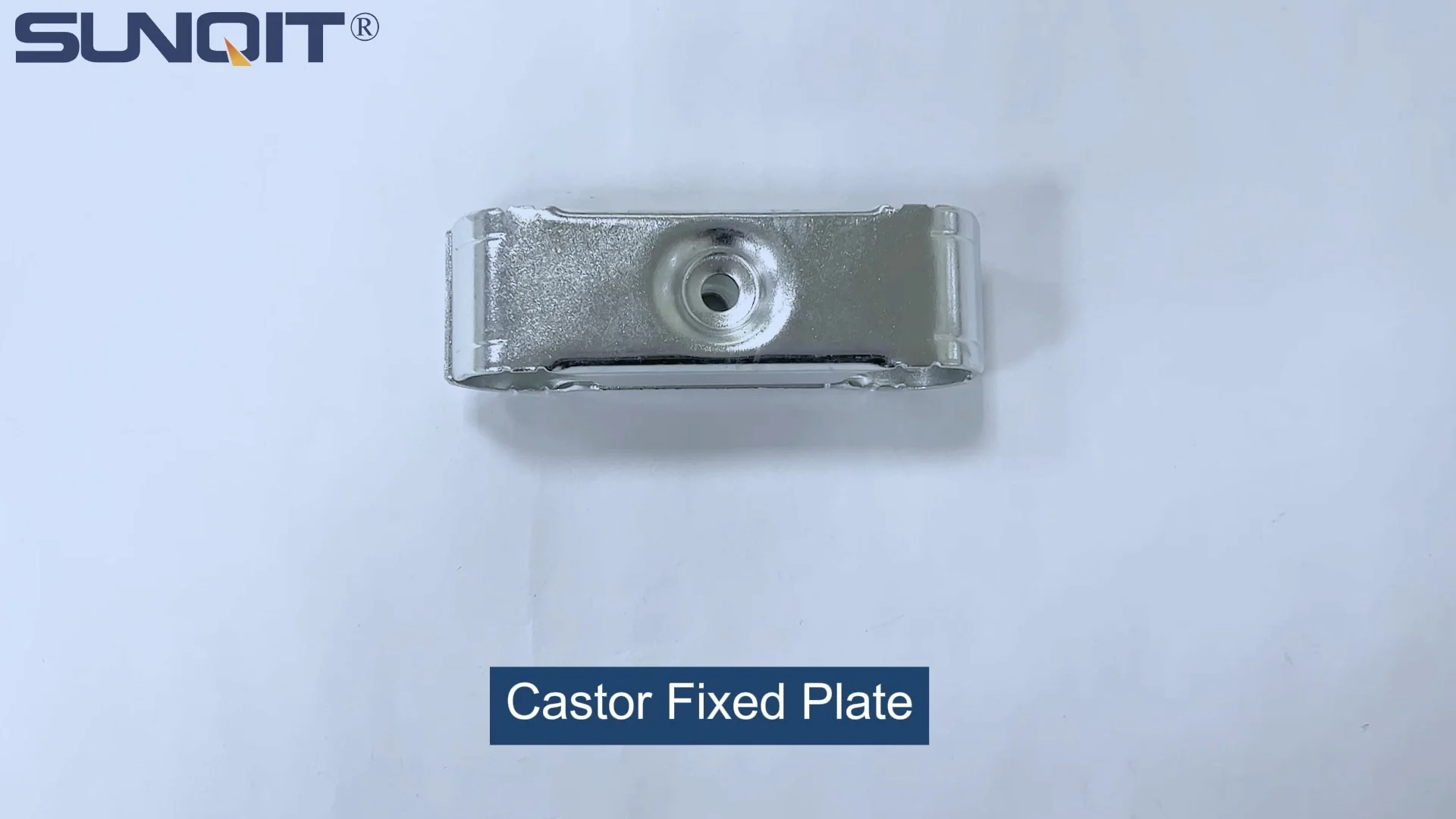
Castor Fixed Plate
Castor fixed plate, used for castor installation, one castor need two pcs castor plate to fix under the workbench, flow rack, and hand trolley.
The clock reads 9:17 AM in a bustling automotive assembly plant. Conveyor belts hum as car parts glide past workers in blue coveralls. Nearby, Maria, a material handler, pushes a loaded turnover trolley toward the welding station—its wheels gliding smoothly over the concrete floor. Up ahead, Raj adjusts a workbench on casters, repositioning it to align with the day's production schedule. The air smells of machine oil and fresh steel; every second counts in this high-volume facility, where stopping even for five minutes can cost thousands in lost output. Then, without warning, Maria's trolley lurches violently. A sharp, metallic crack echoes through the bay. The trolley tilts to one side, spilling a crate of bolts onto the floor. Raj looks over, startled. When he kneels to inspect the damage, he finds it: the castor fixed plate—the small, unassuming metal bracket connecting the caster wheel to the trolley—has snapped clean in two.
In high-volume manufacturing, where efficiency is king, it's often the smallest components that wield the biggest power. Castor fixed plates, though rarely noticed, are the unsung heroes of plant mobility. They anchor caster wheels to everything from workbenches and turnover trolleys to heavy-duty material racks, enabling the fluid movement that keeps lean systems running like well-oiled machines. But when they fail, the consequences ripple far beyond a spilled crate of bolts. Production lines stall. Workers scramble to reroute materials. Maintenance crews drop other tasks to make emergency repairs. And in the worst cases, broken fixed plates can even lead to safety hazards, from tripped workers to damaged equipment.
This article dives into the world of castor fixed plate failures in high-volume plants. We'll explore why these critical components break, the warning signs to watch for, and how proactive management can prevent costly disruptions. Along the way, we'll draw on real-world examples, technical insights, and practical strategies to help plant managers, maintenance teams, and operations leaders keep their mobility systems—and their lean systems—intact.
1. What Is a Castor Fixed Plate, Anyway?
Before we diagnose failure, let's get clear on the part itself. A castor fixed plate is the bridge between a caster wheel and the equipment it moves. Think of it as the "ankle" of the caster system: it attaches securely to the bottom of a workbench, turnover trolley, or material rack, while the caster wheel bolts (or welds) to its underside. Without it, the wheel has no stable base—making movement impossible (or, as Maria learned, dangerous).
These plates come in a range of shapes, sizes, and materials, tailored to the equipment they serve. A lightweight workbench might use a 1/8-inch steel fixed plate, while a heavy-duty turnover trolley could require a 3/8-inch aluminum or reinforced steel version. Some are flat and rectangular; others have angled edges or extra mounting holes to distribute weight. All, however, share a core purpose: to withstand the forces of movement, weight, and friction day in and day out.
Importantly, castor fixed plates are part of a larger ecosystem: "caster and accessories." This category includes everything from the wheels and bearings to the bolts, washers, and locks that keep the entire assembly functional. In high-volume plants, where caster systems are used around the clock, the fixed plate is often the first accessory to show signs of strain—making it a critical focus for preventive maintenance.
2. The Warning Signs: How to Spot Impending Failure
Castor fixed plates rarely fail without warning. Like a tired athlete, they send signals when they're struggling. The key is knowing how to read them. Here are the most common red flags:
Visual Cues: Cracks, Bends, and Corrosion
The easiest way to spot trouble is with a quick visual inspection. Run your eye along the fixed plate, paying attention to:
- Cracks: Tiny hairline fractures, often near bolt holes or along the edges, where stress concentrates. These start small but grow with repeated use.
- Bending or Warping: A fixed plate that's no longer flat—even slightly—indicates it's been overloaded or twisted beyond its design limits.
- Corrosion: Rust (on steel plates) or pitting (on aluminum) weakens the material, making it brittle. This is especially common in plants with high humidity, chemical exposure, or poor ventilation.
- Loose or Damaged Bolts: If the bolts securing the plate to the equipment are stripped, bent, or missing, the plate itself may be taking uneven stress.
Functional Issues: Wobbling, Sticking, and Uneven Movement
Even if a fixed plate looks intact, how it performs can reveal hidden problems. Watch for:
- Wobbling: The equipment sways from side to side as it moves, like a shopping cart with a bad wheel. This often means the fixed plate is bent or cracked, throwing the wheel alignment off-kilter.
- Uneven Height: One corner of a workbench or trolley sits lower than the others. This could signal a fixed plate that's started to collapse under load.
- Sticking or Grinding: The wheel hesitates or makes rough, scraping sounds when moving. While this could be a wheel or bearing issue, a misaligned fixed plate can also cause uneven friction.
Audible Alerts: Clicks, Creaks, and Cracks
Your ears can be just as useful as your eyes. A healthy caster system moves quietly, with a smooth "hum" of wheels on concrete. But a failing fixed plate might produce:
- Clicking: A repetitive "tick-tick-tick" as the plate shifts under load, often from loose bolts or a cracked mounting hole.
- Creaking: A high-pitched, groaning sound when the equipment is moved, indicating metal fatigue or stress on the plate.
- Sharp Cracks: The same sound Maria heard—the final straw before total failure. If you hear this, stop using the equipment immediately.

2. Why Do Castor Fixed Plates Break? The Root Causes
To fix a problem, you need to understand its source. Castor fixed plate failures rarely stem from a single issue; they're often the result of overlapping stresses, poor choices, or overlooked maintenance. Let's break down the most common culprits.
Material Fatigue: When "Good Enough" Isn't Enough
Metal, like all materials, gets tired. Every time a caster wheel hits a crack in the floor, or a loaded trolley is pushed up a slight incline, the fixed plate flexes minutely under the stress. Over weeks, months, or years, these tiny flexes create microscopic cracks in the metal—a process called "material fatigue." Eventually, the cracks grow large enough to split the plate.
In high-volume plants, fatigue accelerates fast. A turnover trolley making 50 trips a day, each carrying 500 pounds, subjects its fixed plates to thousands of stress cycles monthly. If the plate is made from low-grade steel (common in budget caster and accessories kits), it may not stand up to the abuse. Even higher-quality steel can fail if the design is flawed—for example, sharp corners (which concentrate stress) instead of rounded edges, or bolt holes placed too close to the plate's edge.
Overloading: Pushing Plates Past Their Limits
Here's a scenario we see all too often: A plant manager orders a set of workbenches with casters rated for 300 pounds each. But over time, workers stack tools, parts, and even lunch boxes on the benches, pushing the total weight to 450 pounds. No one notices—until a fixed plate snaps. Overloading is the single biggest cause of catastrophic fixed plate failure, and it's often accidental.
Why does this happen? Sometimes, it's a lack of clear labeling: If a turnover trolley doesn't have a weight limit sticker, workers may assume "if it moves, it's okay." Other times, it's poor planning: A lean system might call for consolidating materials to reduce trips, but if the caster fixed plates aren't upgraded to match the heavier loads, disaster strikes. Even temporary overloads—like slamming on the brakes with a heavy trolley—can cause "shock loading," which spikes stress on the plate far beyond its rated capacity.
Poor Installation: When "Close Enough" Costs You
A fixed plate is only as strong as its installation. Even the best plate will fail if it's mounted incorrectly. Common installation mistakes include:
- Misalignment: The plate is mounted at an angle, so the caster wheel isn't perpendicular to the floor. This causes uneven stress every time the equipment moves.
- Under-Tightened Bolts: Bolts that aren't torqued to specification loosen over time, allowing the plate to shift. This creates "play" in the system, leading to metal fatigue.
- Using the Wrong Hardware: Substituting bolts (e.g., using a 1/4-inch bolt where a 5/16-inch is required) or skipping washers reduces the plate's ability to distribute load.
- Welding Errors: For welded fixed plates (common on heavy equipment), a poor weld (porous, incomplete, or with air bubbles) acts like a pre-made crack, ready to split under stress.
Environmental Factors: When the Plant Itself Attacks
High-volume plants are harsh environments for metal components. Humidity, chemicals, and temperature swings can all weaken fixed plates over time:
- Moisture and Corrosion: Plants with steam cleaning, coolant systems, or poor drainage expose fixed plates to water, which causes rust (on steel) or oxidation (on aluminum). Rust doesn't just look bad—it eats away at the metal, thinning the plate until it can't support weight.
- Chemicals: Oil, grease, solvents, and even some cleaning agents can degrade metal or weaken the paint/coating that protects it. In food processing plants, caustic sanitizers are a common culprit.
- Temperature Extremes: In foundries or cold-storage facilities, metal expands and contracts with temperature changes. Over time, this thermal cycling can loosen bolts or create micro-cracks in the plate.
Inadequate Maintenance: Out of Sight, Out of Mind
In the chaos of high-volume production, maintenance often takes a backseat to meeting quotas. A loose bolt on a caster fixed plate? "We'll get to it tomorrow." A small crack in the corner? "It's been like that for weeks—it'll hold." But "tomorrow" turns into next week, and "weeks" turn into months. By the time maintenance finally inspects the plate, it's too late.
Common maintenance gaps include:
- Infrequent Inspections: Many plants only check caster systems during scheduled shutdowns, which may be quarterly or even annually. In between, small issues snowball.
- Ignoring "Minor" Damage: A bent edge or a tiny crack is dismissed as "not a big deal," but these flaws grow with every use.
- Neglecting Lubrication: While lubrication is often associated with caster wheels and bearings, dry bolts can seize up, causing the fixed plate to absorb extra stress when the wheel turns.

3. The Ripple Effect: How Fixed Plate Failures Disrupt Lean Systems
In high-volume plants, lean systems are built on the principle of "flow"—the uninterrupted movement of materials, people, and information. Castor fixed plates are critical to this flow: they let workers reposition workbenches for line balancing, move materials just-in-time to production stations, and quickly reorganize layouts for new product runs. When a fixed plate fails, flow grinds to a halt—and the costs add up fast.
Consider a mid-sized electronics plant running a lean line for smartphone assembly. A turnover trolley with a broken fixed plate stalls material delivery to Station 4, where workers assemble circuit boards. Within 10 minutes, Station 4 runs out of components. Workers there stand idle, while Stations 1–3 keep producing, creating a backlog. By the time maintenance replaces the fixed plate (45 minutes later), the line is 20 units behind schedule. At $50 per unit, that's $1,000 in lost revenue—plus the cost of the replacement plate, labor, and potential overtime to catch up.
But the damage goes beyond dollars. Failed fixed plates erode worker morale: No one likes cleaning up spills, waiting for repairs, or worrying about safety. They also undermine trust in the lean system itself. If "continuous improvement" doesn't include upgrading caster components, workers may start ignoring other lean protocols, fearing they'll be stuck fixing preventable problems.
Case Study: A $25 Plate, $25,000 in Losses
A automotive parts supplier in Michigan learned this lesson the hard way in 2023. One Monday morning, a material rack B (3 row and 3 floor) loaded with engine blocks collapsed when its castor fixed plate failed. The rack, which weighed 2,500 pounds fully loaded, crashed into a nearby conveyor, bending the belt and damaging the motor. The result: a 4-hour production shutdown, $15,000 in conveyor repairs, $8,000 in lost parts, and $2,000 in overtime to meet the week's order. The root cause? An underrated fixed plate (rated for 1,500 pounds) that had been installed during a rushed weekend maintenance project. The replacement plate cost $25. The total bill? $25,000.

4. How to Prevent Fixed Plate Failures: A Proactive Playbook
The good news is that most castor fixed plate failures are preventable. With the right mix of design, training, and maintenance, you can keep your mobility systems—and your lean systems—strong. Here's how:
Step 1: Choose the Right Plate for the Job
Start at the source: select fixed plates that match your plant's needs. Ask:
- What's the maximum load? Don't just guess—calculate the total weight of the equipment plus its typical load (tools, materials, workers, etc.). Add a 25% safety margin to account for shock loading (e.g., sudden stops) or accidental overloading.
- What's the environment like? In wet or chemical-heavy areas, choose stainless steel or aluminum fixed plates (both resist corrosion) over plain steel. For extreme temperatures, look for plates with heat-treated or cold-rolled steel.
- How will it be used? If the equipment moves frequently (like a daily-used turnover trolley), opt for plates with rounded edges and reinforced bolt holes to reduce fatigue. For stationary equipment (like a rarely moved workbench), standard plates may suffice—but still check the weight rating.
Step 2: Install with Precision
Even the best plate will fail if installed poorly. Train maintenance teams to:
- Follow the manufacturer's specs: Use the recommended bolts, torque settings, and mounting pattern. If the manual says "use 5/16-inch Grade 8 bolts torqued to 25 ft-lbs," don't substitute with whatever's in the toolbox.
- Align plates perfectly: Use a level to ensure the plate is flat and perpendicular to the equipment. A misalignment of just 2 degrees can double stress on the plate over time.
- Inspect welds (if applicable): After welding, check for porosity, cracks, or incomplete fusion. Grind down sharp edges to reduce stress points.
Step 3: Label and Train to Prevent Overloading
Workers can't respect weight limits if they don't know them. Post clear, visible stickers on all wheeled equipment listing the maximum load. Train new hires on proper loading procedures, and conduct refresher courses quarterly. For extra protection, install load sensors on critical equipment (like heavy material racks) that alert workers if the weight exceeds safe levels.
Step 4: Inspect and Maintain Regularly
Set up a scheduled inspection program. We recommend:
- Daily checks (by operators): Have workers do a quick visual and functional check before using equipment. Look for wobbling, cracks, or loose bolts. If something seems off, tag the equipment "out of service" and report it to maintenance.
- Weekly checks (by maintenance): Perform a deeper dive: Tighten loose bolts, clean corrosion, and lubricate moving parts (including caster wheels and fixed plate bolts).
- Quarterly audits: Review usage patterns (e.g., "Is this trolley now carrying heavier loads than it was six months ago?"). replace plates that show signs of fatigue, even if they haven't failed yet.
| Failure Mode | Common Cause | Impact | Prevention |
|---|---|---|---|
| Cracking | Material fatigue from repeated stress | Catastrophic failure, equipment collapse | Use rounded-edge plates; inspect for hairline cracks monthly |
| Bending/Warping | Overloading or poor alignment | Uneven movement, wheel misalignment | Label weight limits; align plates with a level during installation |
| Corrosion | Moisture, chemicals, or humidity | Weakened material, slow failure | Use stainless steel/aluminum plates; clean and coat regularly |
| Bolt Failure | Under-tightening or wrong bolt grade | Plate shifts, uneven stress, secondary failure | Torque bolts to specs; use manufacturer-recommended hardware |
Step 4: replace Proactively, Not Reactively
Even with perfect maintenance, fixed plates don't last forever. Create a replacement schedule based on usage: For heavily used equipment (e.g., a turnover trolley making 100 trips/day), replace plates every 1–2 years. For lightly used equipment (e.g., a monthly-moved workbench), every 3–5 years. Proactive replacement costs a fraction of emergency repairs—and avoids the chaos of unexpected downtime.
5. Conclusion: Small Plate, Big Impact
Back in that automotive plant, Maria's broken castor fixed plate is now a distant memory. After the incident, the plant manager launched a "Caster Care" program: upgrading all turnover trolley plates to heavy-duty stainless steel, adding weight limit stickers, and training workers to report cracks or wobbles immediately. Six months later, fixed plate failures are down 90%. Production runs smoother. Workers feel safer. And when Raj adjusts that workbench on casters now, he does so with confidence—knowing the small metal bracket holding it all together is built to last.
In high-volume manufacturing, success lies in the details. Castor fixed plates may be small, but their role in keeping lean systems flowing is enormous. By choosing the right plates, installing them carefully, training teams to respect limits, and maintaining proactively, you can turn these "invisible" components into pillars of reliability. After all, in a world where every second counts, the last thing you need is a broken plate to bring your operation to its knees.
So the next time you walk through your plant, take a moment to look down. Those caster fixed plates under the workbenches, the turnover trolleys, and the material racks? They're not just metal—they're the foundation of your productivity. Treat them with care, and they'll keep your lean system moving forward.