- Company Articles
- Products and Technology
- Product knowledge
- Castor Fixed Plate for 3C Product Assembly: Precision Requirements

Castor Fixed Plate for 3C Product Assembly: Precision Requirements
Related Product
Castor Fixed Plate
Castor fixed plate, used for castor installation, one castor need two pcs castor plate to fix under the workbench, flow rack, and hand trolley.
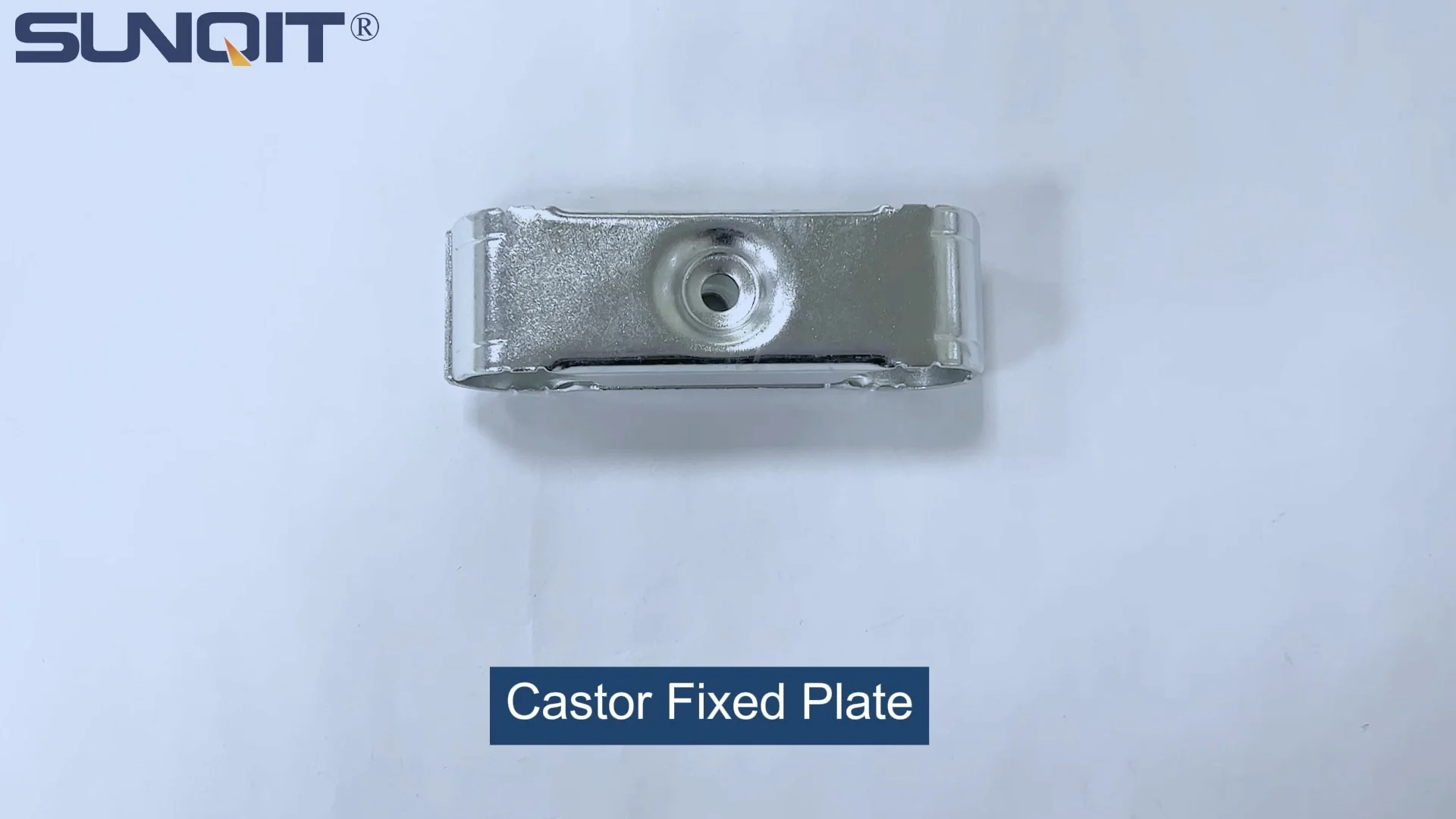
Introduction: The Critical Role of Precision in 3C Assembly
In the fast-paced world of 3C manufacturing—where "3C" stands for computers, communication devices, and consumer electronics—every millimeter matters. From the smallest smartphone components to the sleek frames of laptops, the assembly process demands a level of precision that leaves no room for error. Behind the scenes of these high-tech production lines, there's an unsung hero quietly ensuring stability, flexibility, and accuracy: the castor fixed plate. Often overlooked, this humble component is the bridge between mobile workbenches, trolleys, and the factory floor, playing a pivotal role in maintaining the efficiency and reliability of 3C assembly operations. In this article, we'll dive into why precision in castor fixed plates is non-negotiable, how they integrate with lean systems and aluminum profiles, and why they're indispensable for modern 3C manufacturing.
Understanding Castor Fixed Plates: More Than Just a Connector
At first glance, a castor fixed plate might seem like a simple metal or plastic piece with a few holes. But in reality, it's a meticulously engineered component designed to solve a critical problem: how to attach caster wheels to workbenches, trolleys, or material racks while ensuring stability, load-bearing capacity, and smooth movement. Think of it as the "foundation" of mobility in the assembly line—without a well-made castor fixed plate, even the best caster wheels would wobble, slip, or fail under the weight of tools, components, or (semi-finished products).
A typical castor fixed plate consists of a flat base (often rectangular or square) with pre-drilled holes for securing both the caster wheel (via bolts or screws) and the workbench or trolley frame. The key here is precision: the holes must align perfectly with the caster's mounting points and the frame's attachment points to prevent misalignment. Even a tiny discrepancy—say, a hole drilled 0.5mm off-center—can cause the caster to tilt, leading to uneven weight distribution, increased friction, or even damage to the workbench over time.
But the castor fixed plate's job doesn't end with alignment. It also acts as a load distributor. In 3C assembly, workbenches often carry heavy equipment: ESD-safe tools, automated screwdrivers, or bins of small components like microchips or circuit boards. A poorly designed fixed plate might bend or crack under this weight, compromising not just mobility but also the safety of operators and the integrity of the products being assembled. That's why material selection, thickness, and structural design are just as important as hole precision.

Why Precision Matters: The Stakes in 3C Product Assembly
In 3C manufacturing, precision isn't a luxury—it's a necessity. Products like smartphones or laptops are built with components that often measure just a few millimeters in size; a single misstep in assembly can render an entire device useless. So, how does a castor fixed plate impact this? Let's break it down into four critical areas: vibration control, alignment, ESD protection, and load capacity.
Vibration Control: Keeping Delicate Components Safe
3C components are fragile. A microchip with 100,000 transistors, for example, can be damaged by even minor vibrations. When a workbench is moved (to reconfigure the assembly line or transport materials), any wobbling or shaking caused by an ill-fitting castor fixed plate transfers directly to the components on the bench. Over time, this can lead to micro-cracks in solder joints, misaligned connectors, or even complete component failure. A precisely made castor fixed plate, however, ensures that the caster wheel rotates smoothly and the workbench stays stable—minimizing vibration and protecting sensitive parts.
Alignment: Ensuring Consistency in Workflow
Lean manufacturing principles, which dominate 3C production, emphasize the importance of a "flow"—where materials and products move seamlessly from one workstation to the next. If a workbench equipped with casters drifts off course because its castor fixed plates are uneven, it can disrupt this flow. Operators might waste time realigning the bench, or worse, materials could slide off, causing delays and waste. Precision in the fixed plate's mounting holes and surface flatness ensures that the workbench moves in a straight line, aligns perfectly with adjacent stations, and maintains the rhythm of the assembly line.
ESD Protection: Safeguarding Against Static Damage
Many 3C components are highly sensitive to electrostatic discharge (ESD). An ESD workbench—designed to dissipate static electricity—is a standard fixture in 3C factories, but its effectiveness depends on every part of the system working together, including the castor fixed plate. If the plate is poorly connected to the workbench frame or caster, it can break the ESD grounding path. Static charge might then build up on the bench, discharging into components and frying them. Precision here means tight, consistent connections: bolts that are torqued to spec, holes that align to ensure metal-to-metal contact, and a flat surface that prevents gaps where static could accumulate.
Load Capacity: Supporting the Weight of Production
A typical 3C assembly workbench might carry 50kg or more: tools, bins of screws, circuit boards, and even automated assembly arms. The castor fixed plate must distribute this weight evenly across the caster wheels to prevent overloading any single wheel (which could cause it to lock or fail). Precision in the plate's thickness and material strength ensures it doesn't bend or warp under load, while accurately placed mounting holes keep the caster centered, so weight is spread uniformly. Without this, operators risk injury from tipping workbenches, or delays from sudden caster failures.

Material Matters: Aluminum Profile as the Ideal Choice
When it comes to castor fixed plates, material selection is a balancing act: the plate needs to be strong enough to support heavy loads, lightweight enough to keep workbenches mobile, and durable enough to withstand the wear and tear of daily factory use. For 3C assembly, one material stands out: aluminum profile. Let's explore why aluminum has become the go-to choice, and how it compares to other common materials like steel or plastic.
| Material | Precision Tolerance | Weight (per 100x100mm plate, 5mm thick) | Corrosion Resistance | Suitability for ESD Workbench | Cost |
|---|---|---|---|---|---|
| Aluminum Profile | ±0.02mm (CNC machined) | 135g | High (anodized surface) | Excellent (conductive, easy to ground) | Moderate |
| Steel | ±0.03mm (CNC machined) | 395g | Low (prone to rust without coating) | Good (conductive, but heavy) | Low |
| Plastic (Nylon) | ±0.1mm (injection molded) | 50g | High | Poor (insulative, hard to ground) | Low |
Why Aluminum Profile Shines
Aluminum profile—specifically extruded aluminum—offers a unique combination of properties that make it perfect for castor fixed plates. First, its lightweight nature (about 1/3 the weight of steel) reduces the overall load on casters, making workbenches easier to move and extending caster life. This is critical in 3C factories, where assembly lines are often reconfigured daily to meet changing production demands.
Second, aluminum is highly machinable. Extruded aluminum profiles have uniform density and minimal internal stress, allowing for precise CNC machining of holes, slots, and mounting points with tolerances as tight as ±0.02mm. This level of precision ensures that the castor fixed plate aligns perfectly with both the workbench frame and caster accessories (like bolts, washers, or locking mechanisms), eliminating wobble and ensuring consistent performance.
Third, aluminum's natural corrosion resistance—especially when anodized—makes it ideal for factory environments, where exposure to oils, coolants, or humidity is common. Unlike steel, which requires painting or plating to prevent rust, anodized aluminum forms a hard, protective oxide layer that resists wear and chemical damage, ensuring the fixed plate maintains its structural integrity over time.
Finally, aluminum is conductive, making it compatible with ESD workbenches. By integrating the castor fixed plate into the ESD grounding system, manufacturers can ensure static charge is safely dissipated from the workbench to the floor, protecting sensitive 3C components from electrostatic damage.

Integration with Lean Systems: Driving Efficiency in Modern Factories
Lean system principles—focused on minimizing waste, maximizing efficiency, and fostering continuous improvement—are the backbone of 3C manufacturing. At its core, lean manufacturing is about flexibility: the ability to adapt quickly to changing product designs, production volumes, or customer demands. This is where castor fixed plates, when precision-engineered, become a silent partner in lean success.
Flexible Workbench Layouts: Adapting to Change
In a lean factory, assembly lines are rarely static. One day, a line might produce 10,000 smartphone chargers; the next, it could switch to wireless earbuds, requiring a completely different setup. Workbenches, trolleys, and material racks need to be moved, repositioned, or even combined to create new workflows. A poorly designed castor fixed plate would make this process cumbersome: workbenches might stick, wobble, or fail to align with new stations, wasting valuable time and creating bottlenecks.
Precision castor fixed plates eliminate these issues. By ensuring smooth, straight movement and stable positioning, they allow operators to reconfigure the line in minutes rather than hours. For example, a workbench equipped with aluminum profile fixed plates and high-quality casters can be rolled into place, locked securely, and immediately integrated into the new workflow—no shimming, no readjusting, no wasted effort. This flexibility reduces "changeover waste," a key target in lean manufacturing, and keeps production lines running at peak efficiency.
Reducing Downtime: The Cost of Poor Quality
In lean systems, downtime is the enemy. Every minute a line is idle due to equipment failure or maintenance eats into profits. Castor fixed plates might seem small, but their impact on downtime is significant. A loose or cracked plate can cause a caster to lock, leading to a stuck workbench and halted production. Operators might need to stop work, disassemble the caster, and replace the plate—costing precious time and diverting resources from value-added tasks.
Precision-manufactured fixed plates, made from durable aluminum profile, drastically reduce this risk. Their tight tolerances and robust design mean they rarely fail, and when they do, replacement is quick and easy (thanks to standardized mounting holes and compatible caster accessories). This reliability ensures that lean production lines stay operational, meeting tight deadlines and maintaining high output levels.
Just-in-Time (JIT) Production: Supporting the Flow of Materials
Just-in-Time production—a cornerstone of lean systems—relies on materials arriving at the workstation exactly when they're needed, eliminating inventory waste. Trolleys equipped with castor fixed plates play a key role here, transporting components from storage to assembly lines with minimal delay. A precision fixed plate ensures these trolleys move smoothly and predictably, allowing materials to be delivered on schedule. For example, a trolley carrying delicate circuit boards can be pushed at a steady pace without worrying about sudden jolts (caused by uneven fixed plates) that might damage the components. This reliability keeps the JIT flow intact, reducing inventory costs and improving overall productivity.
Manufacturing Precision: From Design to Quality Control
Creating a castor fixed plate that meets 3C assembly's strict precision requirements is no accident. It requires a rigorous manufacturing process, from initial design to final inspection. Let's walk through the key steps that ensure each plate delivers the stability, accuracy, and durability needed in 3C factories.
Design: Engineering for Function and Fit
The process starts with design. Engineers work closely with 3C manufacturers to understand their specific needs: What's the maximum load the workbench will carry? What caster accessories (bolts, locking mechanisms) will be used? Is ESD protection required? Using CAD software, they design the plate's dimensions, hole positions, and thickness to meet these requirements. For example, a plate intended for a heavy-duty ESD workbench might be 6mm thick with reinforced edges, while one for a lightweight trolley could be 4mm thick with optimized hole spacing to reduce weight without sacrificing strength.
CNC Machining: Cutting with Micrometer Accuracy
Once the design is finalized, the aluminum profile is cut to size and sent to CNC machining centers. Here, precision drills and mills create the mounting holes, slots, and recesses with tolerances as tight as ±0.02mm. This level of accuracy is critical: a hole that's even 0.1mm off-center can cause the caster to tilt, leading to wobble. CNC machines use high-speed spindles and carbide tools to ensure clean, burr-free cuts, and automated measuring systems check dimensions after each operation to catch any errors early.
Surface Treatment: Enhancing Durability and Conductivity
After machining, the aluminum castor fixed plate undergoes surface treatment. Anodization is the most common process, where the plate is submerged in an electrolytic solution and exposed to an electric current. This forms a hard, porous oxide layer on the aluminum's surface, which can then be dyed (often black or silver for factory use) and sealed. Anodization improves corrosion resistance, scratch resistance, and wear resistance—all essential in high-traffic factory environments. For ESD workbenches, the anodized layer can also be treated to enhance conductivity, ensuring the plate integrates seamlessly with the grounding system.
Quality Control: Testing for Performance
Before leaving the factory, every castor fixed plate undergoes a battery of tests. Dimensional checks verify that holes, thickness, and flatness meet design specs. Load tests simulate the weight of a fully loaded workbench, ensuring the plate doesn't bend or deform under stress. For ESD-compatible plates, continuity tests confirm that static charge flows freely from the plate to the grounding point. Finally, a visual inspection checks for surface defects like cracks, pits, or uneven anodization—any of which could compromise performance.
Real-World Impact: A Case Study in 3C Manufacturing
To understand the tangible benefits of precision castor fixed plates, let's look at a real-world example: a mid-sized 3C manufacturer specializing in smartwatch components. In 2023, the company was struggling with a recurring issue: workbench instability on its assembly line, leading to a 2.5% defect rate in finished products—well above the industry average of 0.5%.
The Problem: Wobbly Workbenches and Costly Defects
The manufacturer's assembly line used steel workbenches equipped with generic castor fixed plates sourced from a low-cost supplier. Over time, operators noticed that the workbenches would wobble slightly when moved, and even when stationary, the casters would "creep" under load, causing tools and components to shift. This instability led to misaligned solder joints, scratched watch faces, and occasionally, dropped components that had to be scrapped. The defect rate was costing the company an estimated $120,000 annually in wasted materials and rework.
The Solution: Switching to Aluminum Profile Fixed Plates
After an audit, the manufacturer identified the castor fixed plates as the root cause. The generic steel plates had inconsistent hole spacing (tolerances of ±0.2mm) and were prone to rust, which had caused some mounting bolts to loosen. The company partnered with a supplier specializing in aluminum profile components and switched to precision-engineered aluminum castor fixed plates with CNC-machined holes (±0.02mm tolerance), anodized surfaces, and ESD grounding compatibility.
The Results: A 75% Reduction in Defects
Within three months of installing the new plates, the results were striking. The workbenches moved smoothly, with no wobble or creep, and the ESD grounding system performed consistently, reducing static-related damage. The defect rate dropped from 2.5% to 0.6%—near the industry benchmark. Line operators reported less fatigue from moving workbenches, and reconfiguration time for the assembly line decreased by 40%, as workbenches aligned perfectly with new stations. By the end of the year, the manufacturer had saved over $90,000 in defect-related costs, with the new fixed plates paying for themselves in under six months.
Future Trends: Innovations in Caster Fixed Plate Technology
As 3C manufacturing evolves—with trends like miniaturization, automation, and smart factories—so too will the demands on components like castor fixed plates. Here are three emerging innovations that could shape the future of these critical parts:
Smart Integration with IoT and Predictive Maintenance
The rise of Industry 4.0 is bringing sensors and connectivity to even the smallest factory components. Future castor fixed plates could include embedded strain gauges or vibration sensors that monitor load, wear, and alignment in real time. Data from these sensors would feed into a factory's IoT platform, alerting maintenance teams to potential issues (like a loose bolt or a cracked plate) before they cause downtime. For example, a sensor detecting unusual vibration in a fixed plate could trigger an automated work order, ensuring the plate is replaced during a scheduled maintenance window rather than failing unexpectedly.
Advanced Materials: Carbon Fiber Reinforced Aluminum
While aluminum profile is currently the gold standard, researchers are exploring carbon fiber reinforced aluminum (CFRAl) for even higher strength-to-weight ratios. CFRAl plates would be lighter than pure aluminum but stronger, making them ideal for heavy-duty applications like automated assembly workbenches carrying robotic arms. Early prototypes show promise, with CFRAl plates offering 30% higher load capacity than aluminum at the same thickness—though cost remains a barrier to widespread adoption.
Customization for Specialized 3C Applications
As 3C products become more diverse—think foldable smartphones, AR headsets, or medical-grade wearables—assembly lines will require specialized workbenches and trolleys. Castor fixed plates will need to be customized to fit unique caster types (like ultra-low-profile casters for tight spaces) or integrate with specialized accessories (like magnetic mounting systems for tool storage). Suppliers are already offering 3D-printed prototypes of custom fixed plates, allowing manufacturers to test designs quickly before scaling to mass production with CNC machining.
Conclusion: The Foundation of Precision Assembly
In the high-stakes world of 3C manufacturing, where precision and efficiency are everything, the castor fixed plate may be small, but its impact is enormous. From ensuring workbench stability and ESD protection to enabling flexible lean system workflows, this unassuming component plays a critical role in delivering the high-quality products consumers demand.
As we've explored, the key to a successful castor fixed plate lies in precision—precision in design, machining, and material selection. Aluminum profile, with its lightweight, machinable, and corrosion-resistant properties, has emerged as the ideal material, offering the tight tolerances and durability needed for 3C assembly. When paired with a commitment to quality control and integration with lean principles, precision castor fixed plates become more than just parts—they become partners in manufacturing excellence.
For 3C manufacturers looking to stay competitive, investing in high-quality castor fixed plates isn't an expense—it's a strategic decision. As the case study shows, the return on investment is clear: lower defects, reduced downtime, and happier operators. In the end, it's the little things—the components we often overlook—that build the foundation for success in 3C manufacturing.