- Company Articles
- Products and Technology
- Product knowledge
- Castor Fixed Plate for 3C Testing Equipment: Stability Requirements

Castor Fixed Plate for 3C Testing Equipment: Stability Requirements
Related Product
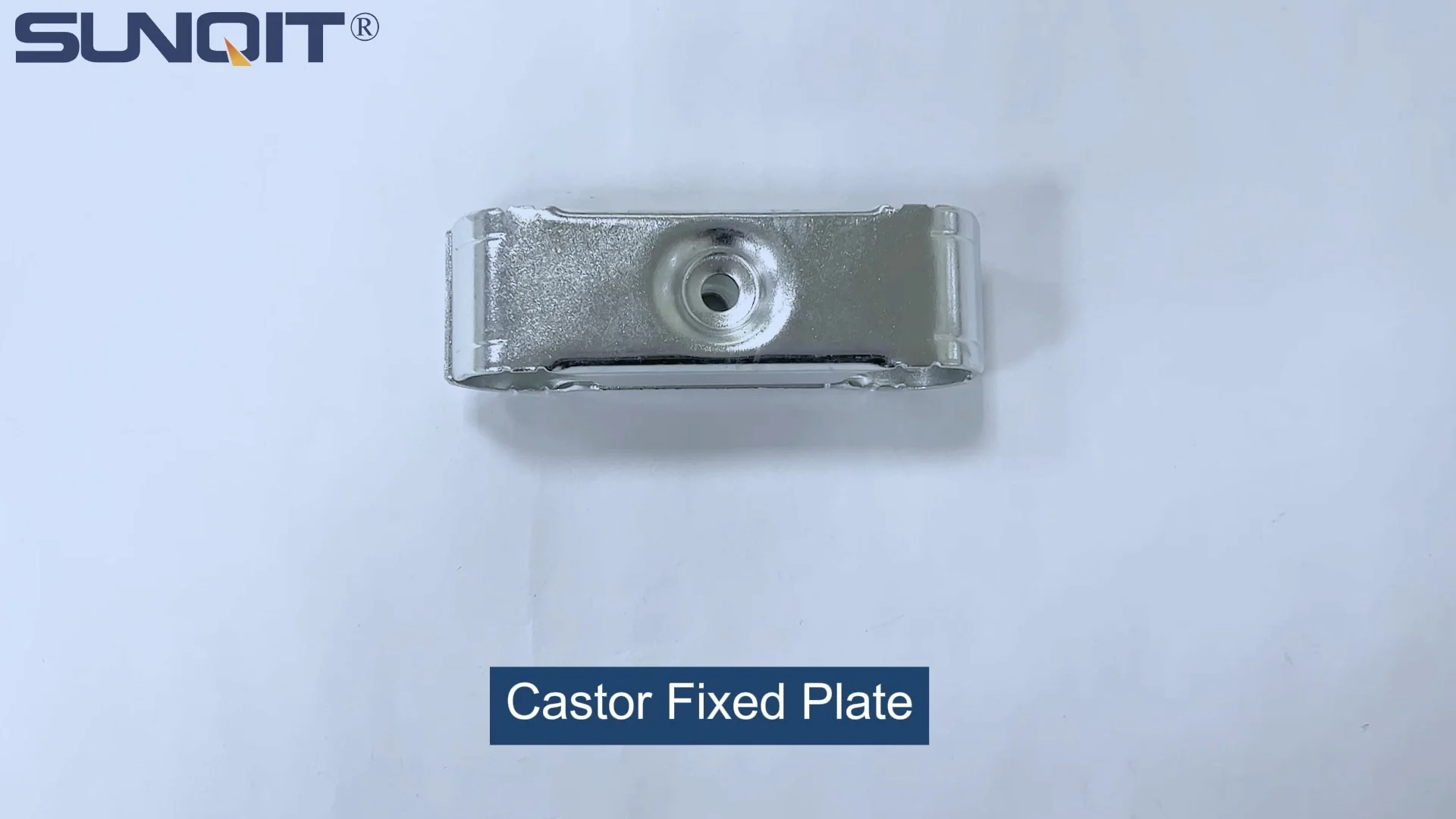
Castor Fixed Plate
Castor fixed plate, used for castor installation, one castor need two pcs castor plate to fix under the workbench, flow rack, and hand trolley.
Introduction: The Unsung Hero of Precision Testing
Walk into any 3C (Consumer Electronics, Communications, and Consumer Electronics) testing lab, and you'll likely be greeted by rows of sleek machines: environmental chambers simulating desert heat or arctic cold, vibration tables shaking devices to their limits, and optical measurement systems with lenses so precise they can detect a hairline scratch on a smartphone screen. What you might not notice, though, are the quiet workhorses keeping all this precision in check: the castor fixed plates bolted to the bottom of these testing rigs.
In a world where a single misalignment can mean the difference between a phone passing its drop test and shattering on impact, or a laptop's battery lasting 10 hours versus 8, stability isn't just a nice-to-have—it's the backbone of reliable testing. And at the heart of that stability? A well-designed castor fixed plate. These unassuming metal (or sometimes aluminum profile) plates bridge the gap between mobility and immobility: letting technicians move heavy equipment across the lab floor when needed, then locking it down so firmly that even the most rigorous vibration test won't budge it a millimeter.
But what exactly makes a castor fixed plate up to the task? How do engineers balance the need for movement with the demand for rock-solid stability? And why does something as simple as a metal plate matter so much in the high-stakes world of 3C product testing? Let's dive in.
Why Stability Matters in 3C Testing: More Than Just "Staying Still"
To understand why castor fixed plates are critical, let's first talk about what 3C testing actually involves. When a company designs a new smartwatch, tablet, or wireless earbud, it doesn't just ship it off to stores and hope for the best. Before hitting the market, these devices undergo hundreds of tests to ensure they're durable, safe, and perform as promised.
Think about a smartphone's camera module, for example. To test its autofocus accuracy, engineers use a machine that takes thousands of photos of a target chart under different lighting conditions. If the testing rig shifts even 0.1mm during this process, the data becomes useless—suddenly, the camera might seem "defective" when it's actually the test setup that's off. Multiply that by thousands of devices, and you're looking at delayed launches, wasted R&D budgets, or worse: products that fail in real-world use because their tests were unreliable.
Or consider a laptop's keyboard durability test. A machine taps each key millions of times to simulate years of typing. If the testing equipment vibrates excessively (because its base isn't stable), the tapping mechanism might hit the keys at an angle, leading to false results. The laptop might pass the test, but in reality, its keys could start sticking after just a few months of use.
Then there are environmental tests. A 5G router, for instance, might be placed in a chamber that cycles between -40°C and 70°C to test its temperature tolerance. If the chamber itself isn't properly anchored, the expansion and contraction of its materials could warp the internal components, throwing off temperature readings. The router might "fail" a test it should pass, or vice versa—either way, the product's reliability is called into question.
In short, stability in 3C testing isn't just about preventing equipment from rolling across the floor. It's about maintaining precise alignment, minimizing vibration, and ensuring that external forces (like the movement of nearby machines or even foot traffic in the lab) don't interfere with measurements. And that's where the castor fixed plate comes in.

The Role of Castor Fixed Plates: Bridging Mobility and Stability
Imagine trying to move a 500kg environmental chamber across a lab floor. Without wheels, you'd need a forklift or a team of people—neither of which is practical for daily adjustments. But put casters on it, and suddenly you can reposition it with a gentle push. The problem? Casters, by design, roll. And when you're running a precision test, "rolling" is the last thing you want.
Enter the castor fixed plate. Think of it as a middleman between the equipment and the casters. When you need to move the machine, the plate holds the casters securely, allowing them to roll freely. When you're ready to test, you engage the plate's locking mechanism (often paired with anti-slip adjustable leveling feet), which anchors the equipment to the floor. It's a simple idea, but the execution is anything but.
A high-quality castor fixed plate needs to do three things flawlessly:
1. Support the load : Testing equipment isn't light. A medium-sized vibration table, for example, can weigh 800kg or more. The plate must distribute this weight evenly across the casters and the floor to prevent bending or warping.
2. Lock firmly : When engaged, the plate should eliminate all movement—no rocking, no sliding, no "play" in the casters. Even a tiny amount of give can amplify vibrations, turning a minor tremor into a major measurement error.
3. Withstand the environment : Labs can be harsh places. Some tests involve chemicals (like salt spray for corrosion resistance), while others generate dust or high humidity. The plate must resist rust, corrosion, and wear to maintain its integrity over time. To achieve this, the castor fixed plate isn't a standalone component. It works hand-in-hand with other parts of the mobility system, including the casters themselves (often part of a broader "caster and accessories" ecosystem), anti-slip adjustable leveling feet (which fine-tune height and grip), and the base frame of the equipment (often made from aluminum profile for its strength and light weight). Together, these components form a stability system that's greater than the sum of its parts.
1. Support the load : Testing equipment isn't light. A medium-sized vibration table, for example, can weigh 800kg or more. The plate must distribute this weight evenly across the casters and the floor to prevent bending or warping.
2. Lock firmly : When engaged, the plate should eliminate all movement—no rocking, no sliding, no "play" in the casters. Even a tiny amount of give can amplify vibrations, turning a minor tremor into a major measurement error.
3. Withstand the environment : Labs can be harsh places. Some tests involve chemicals (like salt spray for corrosion resistance), while others generate dust or high humidity. The plate must resist rust, corrosion, and wear to maintain its integrity over time. To achieve this, the castor fixed plate isn't a standalone component. It works hand-in-hand with other parts of the mobility system, including the casters themselves (often part of a broader "caster and accessories" ecosystem), anti-slip adjustable leveling feet (which fine-tune height and grip), and the base frame of the equipment (often made from aluminum profile for its strength and light weight). Together, these components form a stability system that's greater than the sum of its parts.

Key Components of a Stability System: What Makes It Work?
Let's break down the anatomy of a typical stability system for 3C testing equipment, with a focus on how the castor fixed plate interacts with its counterparts.
1. The Castor Fixed Plate Itself
The star of the show. Made from materials like steel, aluminum, or (in some cases) reinforced plastic, the plate is typically a flat, rigid sheet with pre-drilled holes for mounting casters and leveling feet. Its design depends on the equipment's weight and the type of tests it will undergo. For example, a plate used with a drop-test machine (which subjects devices to sudden impacts) might have reinforced edges to prevent bending, while one for a thermal chamber might include slots for cable management (since chambers often have external sensors and power cords).
The star of the show. Made from materials like steel, aluminum, or (in some cases) reinforced plastic, the plate is typically a flat, rigid sheet with pre-drilled holes for mounting casters and leveling feet. Its design depends on the equipment's weight and the type of tests it will undergo. For example, a plate used with a drop-test machine (which subjects devices to sudden impacts) might have reinforced edges to prevent bending, while one for a thermal chamber might include slots for cable management (since chambers often have external sensors and power cords).
2. Casters and Accessories
Casters are the "movement" part of the equation, but not all casters are created equal. For testing equipment, you'll often see heavy-duty swivel casters with locking brakes. The castor fixed plate provides a stable mounting point for these casters, ensuring they're aligned correctly (misaligned casters can cause the equipment to "wobble" even when locked). Accessories like caster cups (which sit under the wheels to prevent floor damage) or shock-absorbing pads (to reduce vibration transfer) are also mounted to the plate.
Casters are the "movement" part of the equation, but not all casters are created equal. For testing equipment, you'll often see heavy-duty swivel casters with locking brakes. The castor fixed plate provides a stable mounting point for these casters, ensuring they're aligned correctly (misaligned casters can cause the equipment to "wobble" even when locked). Accessories like caster cups (which sit under the wheels to prevent floor damage) or shock-absorbing pads (to reduce vibration transfer) are also mounted to the plate.
3. Anti-Slip Adjustable Leveling Feet
Even the most perfectly flat lab floors have imperfections. A tiny bump or dip can cause equipment to rock, which is why anti-slip adjustable leveling feet are a must. These threaded feet screw into the castor fixed plate and can be raised or lowered to level the equipment. The "anti-slip" part is crucial: the feet often have rubber or rubber-like tips that grip the floor, preventing sliding even under vibration. When the equipment is in use, the leveling feet are lowered to take most of the weight, reducing stress on the casters and ensuring the plate stays firmly in place.
Even the most perfectly flat lab floors have imperfections. A tiny bump or dip can cause equipment to rock, which is why anti-slip adjustable leveling feet are a must. These threaded feet screw into the castor fixed plate and can be raised or lowered to level the equipment. The "anti-slip" part is crucial: the feet often have rubber or rubber-like tips that grip the floor, preventing sliding even under vibration. When the equipment is in use, the leveling feet are lowered to take most of the weight, reducing stress on the casters and ensuring the plate stays firmly in place.
4. Aluminum Profile Base Frames
Many modern testing rigs use aluminum profile for their base frames. Lightweight yet strong, aluminum profile is easy to customize (thanks to its modular design) and resistant to corrosion—important in labs with high humidity or chemical exposure. The castor fixed plate is often bolted directly to the aluminum profile frame, creating a rigid connection that minimizes flexing during tests.
Together, these components create a system that's both mobile and stable—a balance that's surprisingly hard to achieve without careful engineering.
Many modern testing rigs use aluminum profile for their base frames. Lightweight yet strong, aluminum profile is easy to customize (thanks to its modular design) and resistant to corrosion—important in labs with high humidity or chemical exposure. The castor fixed plate is often bolted directly to the aluminum profile frame, creating a rigid connection that minimizes flexing during tests.

Stability Requirements: What Labs Demand from Castor Fixed Plates
So, what specific standards must a castor fixed plate meet to be considered "stable enough" for 3C testing? Let's outline the key requirements, based on industry best practices and common lab specifications.
Load Capacity: More Than Just "Can It Hold the Weight?"
Load capacity is the most basic requirement, but it's not as simple as "the plate must support X kg." Engineers calculate the equipment's weight, then add a safety margin (often 50-100% of the rated load) to account for dynamic forces. For example, a vibration table that weighs 800kg might generate additional forces during testing (as it shakes a 100kg device), so the plate must handle 1,200kg or more to be safe. Why the extra margin? Because when a plate is overloaded, it can warp. Even a 1mm bend in the plate can cause the equipment to tilt, which in turn affects test accuracy. A warped plate also puts stress on the casters and leveling feet, leading to premature wear. Vibration Resistance: Keeping Still When the World Shakes
Many 3C tests involve vibration—whether it's simulating a device's journey in a truck (transportation vibration tests) or testing a speaker's durability (by vibrating it at high frequencies). The castor fixed plate must prevent these vibrations from transferring to the floor (which could affect nearby equipment) and also keep the testing rig itself from moving. To achieve this, plates are often designed with vibration-dampening features, like rubber gaskets between the plate and the equipment base, or reinforced ribs that absorb shock. The anti-slip adjustable leveling feet play a role here too: their rubber tips act as mini shock absorbers, reducing the amount of vibration that escapes into the lab. Precision Alignment: Keeping Everything Square
For optical tests (like measuring a phone's screen brightness uniformity), the equipment must be aligned with sub-millimeter precision. If the castor fixed plate isn't perfectly flat, or if the casters are mounted at slightly different heights, the entire rig could tilt, throwing off the alignment. That's why many plates come with laser-etched alignment marks, ensuring that casters and leveling feet are mounted in exactly the right positions. Some high-end plates even include built-in spirit levels, so technicians can verify that the plate itself is level before mounting the equipment. Environmental Durability: Standing Up to Heat, Cold, and Chemicals
3C testing labs are diverse environments. A thermal cycling chamber might go from -50°C to 150°C in a matter of hours—extreme temperatures that can cause metal plates to expand and contract. A salt-spray chamber, used to test corrosion resistance, will expose everything (including the castor fixed plate) to salty mist. Plates used in these environments must be made from corrosion-resistant materials. Aluminum profile, for example, is naturally resistant to rust, while steel plates might be coated with zinc or epoxy. Some plates even have sealed edges to prevent moisture from seeping into the mounting holes and causing bolts to seize up. Compatibility with Lab Floors
Not all lab floors are the same. Some are concrete, others are epoxy-coated, and a few (in cleanrooms) are made of specialized materials that can't be scratched. The castor fixed plate must work with these surfaces without damaging them. For example, on soft epoxy floors, the anti-slip adjustable leveling feet might have larger, softer tips to distribute weight and prevent indentations. On concrete, smaller, harder tips can be used for better grip.
Load capacity is the most basic requirement, but it's not as simple as "the plate must support X kg." Engineers calculate the equipment's weight, then add a safety margin (often 50-100% of the rated load) to account for dynamic forces. For example, a vibration table that weighs 800kg might generate additional forces during testing (as it shakes a 100kg device), so the plate must handle 1,200kg or more to be safe. Why the extra margin? Because when a plate is overloaded, it can warp. Even a 1mm bend in the plate can cause the equipment to tilt, which in turn affects test accuracy. A warped plate also puts stress on the casters and leveling feet, leading to premature wear. Vibration Resistance: Keeping Still When the World Shakes
Many 3C tests involve vibration—whether it's simulating a device's journey in a truck (transportation vibration tests) or testing a speaker's durability (by vibrating it at high frequencies). The castor fixed plate must prevent these vibrations from transferring to the floor (which could affect nearby equipment) and also keep the testing rig itself from moving. To achieve this, plates are often designed with vibration-dampening features, like rubber gaskets between the plate and the equipment base, or reinforced ribs that absorb shock. The anti-slip adjustable leveling feet play a role here too: their rubber tips act as mini shock absorbers, reducing the amount of vibration that escapes into the lab. Precision Alignment: Keeping Everything Square
For optical tests (like measuring a phone's screen brightness uniformity), the equipment must be aligned with sub-millimeter precision. If the castor fixed plate isn't perfectly flat, or if the casters are mounted at slightly different heights, the entire rig could tilt, throwing off the alignment. That's why many plates come with laser-etched alignment marks, ensuring that casters and leveling feet are mounted in exactly the right positions. Some high-end plates even include built-in spirit levels, so technicians can verify that the plate itself is level before mounting the equipment. Environmental Durability: Standing Up to Heat, Cold, and Chemicals
3C testing labs are diverse environments. A thermal cycling chamber might go from -50°C to 150°C in a matter of hours—extreme temperatures that can cause metal plates to expand and contract. A salt-spray chamber, used to test corrosion resistance, will expose everything (including the castor fixed plate) to salty mist. Plates used in these environments must be made from corrosion-resistant materials. Aluminum profile, for example, is naturally resistant to rust, while steel plates might be coated with zinc or epoxy. Some plates even have sealed edges to prevent moisture from seeping into the mounting holes and causing bolts to seize up. Compatibility with Lab Floors
Not all lab floors are the same. Some are concrete, others are epoxy-coated, and a few (in cleanrooms) are made of specialized materials that can't be scratched. The castor fixed plate must work with these surfaces without damaging them. For example, on soft epoxy floors, the anti-slip adjustable leveling feet might have larger, softer tips to distribute weight and prevent indentations. On concrete, smaller, harder tips can be used for better grip.
Material Matters: Why Aluminum Profile is Gaining Popularity
When it comes to choosing materials for castor fixed plates, engineers have options: steel, aluminum, plastic, or even composite materials. But in recent years, aluminum profile has emerged as a favorite for 3C testing equipment. Why? Let's compare the pros and cons of common materials using the table below:
As the table shows, aluminum profile strikes a sweet spot: it's strong enough for most 3C testing equipment (which rarely exceeds 1,500kg), lightweight (making the equipment easier to move when needed), and corrosion-resistant. Its modular nature is another plus—aluminum profile can be cut to size, drilled, and assembled quickly, which is ideal for custom testing rigs (a common sight in 3C labs, where no two tests are exactly alike).
For example, a lab testing smartwatch screens might need a small, portable testing station that can be wheeled to different workbenches. Using an aluminum profile castor fixed plate keeps the total weight down (so technicians can move it easily) while still supporting the station's 400kg load. And since the station might be used near a thermal chamber (with high humidity), aluminum's corrosion resistance ensures the plate won't rust over time.
That said, aluminum isn't perfect. For extremely heavy equipment (like a 2,000kg shock test machine), steel might still be the better choice. But for the majority of 3C testing applications, aluminum profile offers the best balance of performance and practicality.
| Material | Load Capacity (Typical) | Corrosion Resistance | Weight (kg/m², 10mm thick) | Cost (Relative) | Best For |
|---|---|---|---|---|---|
| Steel | High (1,500-3,000 kg) | Low (prone to rust unless coated) | 78.5 | Moderate | Extremely heavy equipment (e.g., large environmental chambers) |
| Aluminum Profile | Medium-High (800-2,000 kg) | High (naturally corrosion-resistant) | 27.0 | Moderate-High | Most 3C testing equipment (balances strength, weight, and durability) |
| Reinforced Plastic | Low-Medium (300-800 kg) | High (resistant to chemicals and moisture) | 12.0 | Low | Lightweight equipment (e.g., small optical measurement tools) |
| Composite (Fiberglass/Carbon Fiber) | High (1,200-2,500 kg) | Very High (impervious to most chemicals) | 18.0 | Very High | Specialized labs (e.g., cleanrooms with strict weight limits) |
Installation Best Practices: Getting It Right the First Time
Even the best castor fixed plate won't perform well if it's installed incorrectly. Here are some tips to ensure your stability system works as intended:
1. Check the Equipment's Center of Gravity
Before mounting the plate, determine where the equipment's weight is concentrated. If most of the weight is on one side (e.g., a thermal chamber with heavy compressors on the left), the casters and leveling feet on that side should be spaced closer together to distribute the load evenly. The castor fixed plate should extend beyond the equipment's base by a few centimeters on all sides to prevent tipping. 2. Torque the Bolts Properly
Over-tightening bolts can warp the plate or strip the threads; under-tightening can lead to looseness over time. Use a torque wrench to follow the manufacturer's specifications. For aluminum profile plates, use bolts with a flat washer to prevent the bolt head from digging into the aluminum (which can weaken the plate). 3. Level the Plate Before Mounting the Equipment
Even if the floor is uneven, the castor fixed plate itself should be perfectly level. Use a spirit level to adjust the leveling feet until the plate is flat. This ensures that when the equipment is mounted, its weight is distributed evenly across the plate—no hotspots that could cause warping. 4. Test the Locking Mechanism
After installation, simulate testing conditions to ensure the plate locks securely. For example, if the equipment will be used for vibration tests, run a short, low-intensity vibration cycle and check if the plate moves. If it does, adjust the leveling feet (lower them further to increase grip) or tighten the caster brakes. 5. Inspect Regularly
Labs are busy places, but regular maintenance of the castor fixed plate is critical. Check for signs of wear: loose bolts, cracked welds (on steel plates), or corrosion. Clean the plate and leveling feet periodically to remove dust and debris (which can prevent the feet from gripping properly). replace worn casters or leveling feet immediately—don't wait for them to fail.
Before mounting the plate, determine where the equipment's weight is concentrated. If most of the weight is on one side (e.g., a thermal chamber with heavy compressors on the left), the casters and leveling feet on that side should be spaced closer together to distribute the load evenly. The castor fixed plate should extend beyond the equipment's base by a few centimeters on all sides to prevent tipping. 2. Torque the Bolts Properly
Over-tightening bolts can warp the plate or strip the threads; under-tightening can lead to looseness over time. Use a torque wrench to follow the manufacturer's specifications. For aluminum profile plates, use bolts with a flat washer to prevent the bolt head from digging into the aluminum (which can weaken the plate). 3. Level the Plate Before Mounting the Equipment
Even if the floor is uneven, the castor fixed plate itself should be perfectly level. Use a spirit level to adjust the leveling feet until the plate is flat. This ensures that when the equipment is mounted, its weight is distributed evenly across the plate—no hotspots that could cause warping. 4. Test the Locking Mechanism
After installation, simulate testing conditions to ensure the plate locks securely. For example, if the equipment will be used for vibration tests, run a short, low-intensity vibration cycle and check if the plate moves. If it does, adjust the leveling feet (lower them further to increase grip) or tighten the caster brakes. 5. Inspect Regularly
Labs are busy places, but regular maintenance of the castor fixed plate is critical. Check for signs of wear: loose bolts, cracked welds (on steel plates), or corrosion. Clean the plate and leveling feet periodically to remove dust and debris (which can prevent the feet from gripping properly). replace worn casters or leveling feet immediately—don't wait for them to fail.
Case Study: How a Castor Fixed Plate Solved a Vibration Test Nightmare
The Problem: A Smartphone Manufacturer's Mysterious Test Failures
A leading smartphone brand was having trouble with its drop-test machine. The machine was supposed to simulate a phone falling from waist height onto a concrete surface, but the results were inconsistent: some phones would shatter, while others (same model, same conditions) would survive. The team suspected the machine itself was moving during the test, but when they checked, the casters were locked, and the equipment seemed stable.
After weeks of frustration, they brought in a third-party engineer, who noticed something: the machine's castor fixed plate was made of thin steel and had warped slightly under the weight of the drop arm (which swung down with force during each test). The warping caused the base to rock, changing the angle of the drop by 0.5 degrees—enough to make the phone hit the surface at a slightly different angle each time.
The Solution: Upgrading to an Aluminum Profile Plate
The engineer recommended replacing the steel plate with a thicker aluminum profile plate (6mm instead of 3mm) with reinforced edges. They also added larger anti-slip adjustable leveling feet to increase grip. After installation, the plate no longer warped, and the drop angle remained consistent. The test results stabilized, and the manufacturer was able to pinpoint the actual cause of the phone failures (a weak adhesive in the screen assembly).
The Takeaway
Even small issues with the castor fixed plate can have big consequences. In this case, a warped plate led to weeks of wasted testing and delayed product launches. Investing in a high-quality plate (and regular inspections) saved the company time and money in the long run.
Conclusion: The Quiet Guardian of Quality
In the fast-paced world of 3C product development, where new devices are launched every few months and competition is fierce, precision is everything. And precision starts with stability. The castor fixed plate may not be the most glamorous component in a lab, but it's one of the most critical. It ensures that when engineers say a device "passes" a test, they can trust that result—confident that the equipment stayed still, the measurements were accurate, and the product is ready for the hands of consumers.
As labs adopt more advanced testing methods (like AI-driven optical inspection or multi-axis vibration testing), the demands on stability systems will only grow. Castor fixed plates will need to handle higher loads, resist more extreme environments, and integrate with smart sensors (to monitor for wear or misalignment in real time). But one thing will remain the same: their role as the quiet guardians of quality, ensuring that the devices we rely on every day are safe, durable, and built to last.
So the next time you pick up your smartphone or laptop, take a moment to appreciate the unsung heroes behind its reliability—including the humble castor fixed plate, working tirelessly in a lab somewhere to make sure your device can handle whatever life throws at it.