- Company Articles
- Products and Technology
- Product knowledge
- Castor Fixed Plate for Cross-Industry Use: From Automotive to Medical Warehouses

Castor Fixed Plate for Cross-Industry Use: From Automotive to Medical Warehouses
Related Product
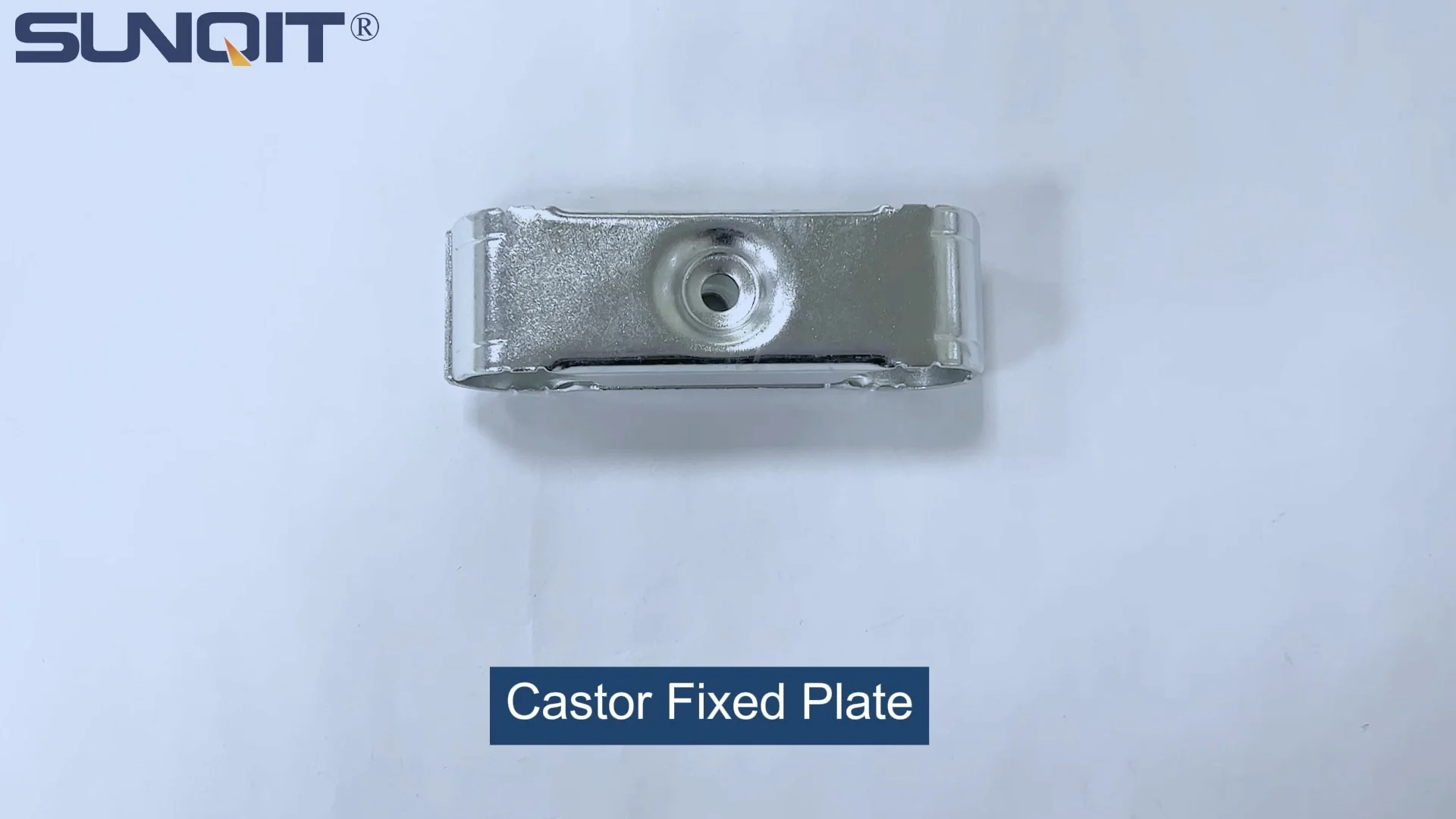
Castor Fixed Plate
Castor fixed plate, used for castor installation, one castor need two pcs castor plate to fix under the workbench, flow rack, and hand trolley.
In a bustling automotive assembly plant in Detroit, Marcus, a third-shift worker, pushes a trolley stacked with wiring harnesses toward the chassis line. For months, the trolley's wheels had a frustrating wobble—each turn felt like a battle, and more than once, a harness slipped off, delaying the line. Then, his supervisor installed a new caster fixed plate. Overnight, the difference was staggering: the trolley glided straight, the wheels stayed aligned, and Marcus could focus on his work instead of wrestling with equipment. "It's like going from a rusted bicycle to a new car," he jokes. That small, unassuming metal plate? It's the unsung hero of efficient workflows, quietly powering operations from factory floors to medical supply rooms.
Caster fixed plates might not grab headlines, but they're the backbone of mobility in modern workplaces. They secure casters to everything from workbenches and turnover trolleys to heavy-duty material racks, ensuring that equipment moves smoothly, safely, and precisely—no matter the industry. In this article, we'll dive into how this humble component transforms operations, with a close look at its impact in automotive manufacturing and medical warehouses. We'll also explore why choosing the right caster fixed plate (andcaster and accessories) is critical for building lean systems that keep businesses agile and workers thriving.
What Is a Caster Fixed Plate, Anyway?
At its core, a caster fixed plate is a flat, sturdy bracket designed to bridge two crucial elements: the caster wheel (the part that rolls) and the equipment it's attached to (like a workbench or turnover trolley). Think of it as the "glue" that keeps the caster securely fastened, even when the equipment is loaded with heavy materials or moving over uneven floors. Without a reliable fixed plate, casters can loosen, wobble, or even detach—turning a simple task like moving inventory into a safety hazard.
These plates come in various shapes and sizes, tailored to different needs. Some are small and lightweight, designed for medical carts that need to navigate tight hospital corridors. Others are thick, reinforced steel plates built to handle the brute force of automotive parts trolleys, which might carry 500+ pounds of engine components. Materials matter, too: aluminum plates offer a balance of strength and lightness, making them ideal for equipment that's frequently moved, while stainless steel plates shine in environments where hygiene is critical (hello, medical warehouses).
But here's the thing: a caster fixed plate isn't just a piece of metal. It's part of a larger ecosystem of caster and accessories that work together to solve specific problems. Pair it with a heavy-duty swivel caster, and you get 360-degree mobility for a workbench. Attach it to a brake-equipped caster, and suddenly that same workbench can lock in place during precision tasks. It's this versatility that makes caster fixed plates indispensable across industries.
The Quiet Engine of Lean Systems
In today's fast-paced workplaces, "lean" isn't just a buzzword—it's a way of life. Lean systems aim to eliminate waste, boost efficiency, and keep operations flexible enough to adapt to changing demands. And guess what? Caster fixed plates are quietly powering that flexibility.
Consider this: In a lean manufacturing setup, every second counts. If a worker spends 10 extra minutes wrestling with a stuck trolley, that's 10 minutes lost from production. Multiply that across a shift, and the losses add up. A well-designed caster fixed plate ensures that equipment moves effortlessly . Trolleys glide from station to station, workbenches reposition with a push, and materials flow without bottlenecks. That's waste reduction in action—no fancy software, just a solid plate doing its job.
But lean systems aren't just about speed; they're about adaptability. Modern factories and warehouses reconfigure their layouts constantly to meet new orders or product lines. A workbench that's bolted to the floor? It's a liability. But a workbench on casters secured by a durable fixed plate? It becomes a modular tool, ready to shift to a new location in minutes. This adaptability is why lean system managers swear by quality caster components—they turn static workspaces into dynamic, responsive environments.
Take a leading electronics manufacturer in Texas, for example. They recently redesigned their assembly line using lean principles, swapping fixed workstations for mobile ones with caster fixed plates. The result? Changeover time between product models dropped by 40%, and workers reported less physical strain. "We used to have to disassemble and rebuild workbenches whenever we switched products," says the plant manager. "Now, we just roll them into place. The caster fixed plates make sure they stay steady during assembly—no wobbling, no mistakes."

Automotive Manufacturing: Where Durability Meets Precision
Automotive plants are a masterclass in controlled chaos. Thousands of parts move across the floor daily—from tiny screws to heavy engine blocks—and every component needs to reach the assembly line exactly when it's needed. In this high-stakes environment, caster fixed plates aren't just helpful; they're mission-critical.
Let's start with the basics: material transport. Trolleys loaded with steel frames or transmission parts can weigh upwards of 1,000 pounds. A flimsy fixed plate here isn't just inefficient—it's dangerous. That's why automotive facilities rely on heavy-gauge steel caster fixed plates, often paired with aluminum profile accessories for added strength without extra weight. These plates distribute the load evenly across the caster, preventing bending or cracking even under constant use. "We once had a cheap fixed plate snap under a loaded trolley," recalls a safety officer at a Michigan auto plant. "It took two hours to clean up and replace, and we almost missed our production target. Now, we only use industrial-grade plates—they're worth every penny."
Then there are the workbenches. Automotive technicians need stable surfaces to assemble intricate parts like wiring looms or dashboard components. But in a lean system, those workbenches also need to move. A mechanic might need to shift their bench closer to a vehicle on the line, then roll it back to access tools. Here, caster fixed plates with locking mechanisms shine. They keep the bench steady during assembly, then release with a foot pedal, letting the mechanic reposition with ease. And because automotive environments are tough—oils, grease, and occasional impacts—many plates are coated in rust-resistant finishes to extend their lifespan.
Even the smallest details matter. For example, some automotive plants use caster fixed plates with slotted holes, allowing (micro-adjustments) to caster alignment. This ensures that trolleys roll in straight lines, preventing them from veering into equipment or workers. In a factory where inches count, that precision is invaluable.

Medical Warehouses: Hygiene, Safety, and Silent Operation
Walk into a medical warehouse, and you'll notice a few things right away: sterility, organization, and an almost eerie quiet. Unlike automotive plants, where the hum of machinery is constant, medical facilities demand silence—after all, a noisy trolley could disrupt a nearby lab or patient care unit. They also require strict hygiene; surfaces must be easy to clean, with no crevices for bacteria to hide. Enter the caster fixed plate, reimagined for these unique needs.
First, materials. Medical warehouses often opt for aluminum or stainless steel caster fixed plates. Aluminum is lightweight, making trolleys easy to maneuver, and its smooth surface wipes clean with disinfectant. Stainless steel, meanwhile, resists corrosion from frequent cleaning, ensuring the plate stays functional for years. Both materials avoid the porousness of painted steel, which can trap germs—a non-negotiable in spaces storing pharmaceuticals or surgical supplies.
Then there's noise. Medical staff move turnover trolleys and racks around the clock, often in areas near patient rooms or labs. A squeaky caster or rattling fixed plate isn't just annoying—it's unprofessional and potentially disruptive. That's why medical-grade caster fixed plates are designed with tight tolerances, ensuring a snug fit between the plate, caster, and trolley. Many also include rubber gaskets or plastic inserts to dampen vibrations, keeping movement almost silent. "Our night shift used to get complaints about noisy trolleys waking patients," says a warehouse manager at a large hospital system. "After switching to silent-fit fixed plates, the complaints stopped. It's the little things that make a big difference."
Safety is another priority. Medical trolleys often carry fragile items—vials of medication, glass lab samples, or sensitive medical devices. A sudden jolt from a loose caster could shatter vials or damage equipment. Caster fixed plates with locking mechanisms prevent this, keeping trolleys steady when loading/unloading and secure during transport. Some even have anti-slip features, ensuring the plate stays attached to the trolley even if it hits a bump.

Across Industries: How Caster Fixed Plates Adapt
While automotive and medical sectors highlight the extremes of durability and hygiene, caster fixed plates prove their worth in nearly every industry. Let's take a quick tour of how they're customized to meet unique needs:
| Industry | Key Challenges | Caster Fixed Plate Features | Real-World Impact |
|---|---|---|---|
| Logistics & Warehousing | Heavy loads, frequent movement, rough concrete floors | Thick steel construction, shock-absorbing design, rust-resistant coating | Reduced trolley downtime by 35% in a major e-commerce warehouse |
| Food Processing | High moisture, strict sanitation standards, temperature extremes | Stainless steel material, seamless welding (no crevices), FDA-approved coatings | Passed 6-month hygiene audits with zero bacterial growth on plate surfaces |
| Retail | Light to medium loads, frequent reconfiguration, customer-facing environments | Aluminum alloy (lightweight), decorative finishes, quiet-roll design | Store staff can reconfigure displays 2x faster during seasonal changes |
Choosing the Right Caster Fixed Plate: It's All in the Details
With so many options on the market, how do you pick the right caster fixed plate for your needs? Start with these key questions:
- What's the load capacity? A medical trolley carrying 50 pounds needs a different plate than an automotive trolley hauling 1,000 pounds. Always choose a plate rated for 1.5x your maximum expected load to account for sudden bumps or uneven floors.
- What's the environment like? Wet (food processing), dusty (construction), or sterile (medical)? Stainless steel or aluminum works best in harsh conditions; powder-coated steel is a budget-friendly option for dry, indoor spaces.
- How mobile is the equipment? If you're moving a workbench once a month, a basic plate might suffice. If it's rolling hourly, invest in a plate with reinforced corners and tight tolerances to prevent wear.
- Does it need to integrate with existing systems? If you're using aluminum profile workbenches, look for plates designed to bolt directly to those profiles. Mismatched components lead to wobbling and inefficiency.
Don't forget about the (matching) caster and accessories, either. A high-quality plate won't perform if paired with cheap casters or flimsy bolts. Opt for a supplier that offers complete caster systems—plate, wheel, brake, and hardware—to ensure compatibility.
The Future of Caster Fixed Plates: Smarter, Greener, More Adaptive
As industries evolve, so do caster fixed plates. Today's innovations focus on three areas: smart technology, sustainability, and modularity.
Smart plates with built-in sensors could soon monitor load weight, detect wear, or even alert maintenance when a caster needs adjustment—preventing breakdowns before they happen. In logistics, this could mean predictive maintenance that keeps warehouses running 24/7 without unexpected delays.
Sustainability is another trend. Manufacturers are experimenting with recycled steel and aluminum in plate production, reducing carbon footprints without sacrificing strength. Some are even developing biodegradable coatings for plates used in eco-sensitive industries like organic food processing.
Modularity, too, is key. With lean systems demanding ever-greater flexibility, future plates might feature quick-connect designs, allowing workers to swap casters in seconds for different tasks—hard rubber wheels for concrete floors, soft wheels for hospital corridors, all using the same plate.
The Unsung Hero We Can't Do Without
Marcus, the automotive worker, sums it up best: "You don't think about the caster fixed plate until it's not working. Then you realize how much you rely on it." From keeping medical supplies moving safely to powering the assembly lines that build our cars, this small component is the quiet force behind efficient, agile, and human-centered workplaces.
So the next time you see a smoothly rolling trolley or a perfectly positioned workbench, take a moment to appreciate the caster fixed plate. It's proof that in the world of lean systems and industrial efficiency, the smallest parts often make the biggest difference.