- Company Articles
- Products and Technology
- Product knowledge
- Castor Fixed Plate for Flexible Workstations: Adapting to Changing Needs

Castor Fixed Plate for Flexible Workstations: Adapting to Changing Needs
Related Product
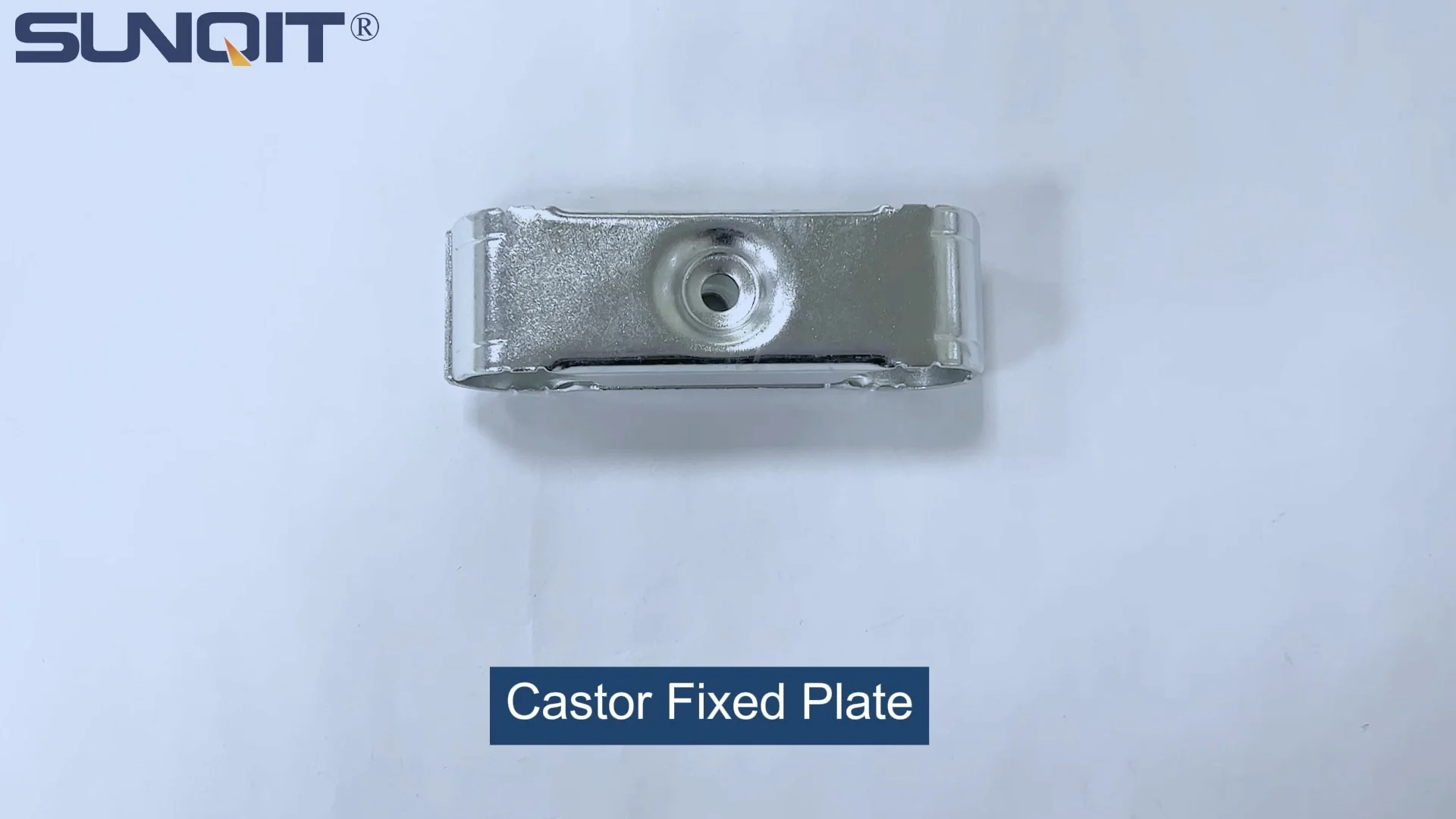
Castor Fixed Plate
Castor fixed plate, used for castor installation, one castor need two pcs castor plate to fix under the workbench, flow rack, and hand trolley.
Walk into any modern factory, warehouse, or even office today, and you'll notice a quiet revolution unfolding. The rigid, immovable workstations of yesteryear—those heavy metal desks bolted to the floor, those clunky production line tables that took a team of workers to rearrange—are slowly disappearing. In their place? Workspaces that bend, shift, and grow with the people using them. And at the heart of this transformation lies a small but mighty component: the castor fixed plate. It's not the flashiest piece of equipment on the factory floor, but ask any operations manager, line worker, or small business owner what keeps their workflow agile, and you'll likely hear about this unsung hero.
In a world where change is the only constant—whether it's a sudden spike in demand, a new product launch, or a shift to hybrid work models—static workstations have become a liability. They trap teams in outdated layouts, slow down problem-solving, and even dampen morale. But what if your workbench could glide across the floor at the push of a hand, then lock into place with the turn of a lever? What if reconfiguring a production line took hours instead of days? That's the promise of flexible workstations, and the castor fixed plate is the key that unlocks it all. Let's dive into how this unassuming part is reshaping the way we work, one roll (and lock) at a time.
The Weight of Rigidity: Why Static Workstations Are Holding Us Back
Think about the last time you had to rearrange furniture in your home. Maybe you wanted to create a better flow for a gathering, or fit a new piece of equipment into your home office. Now imagine doing that with a desk that weighs 300 pounds and is bolted to the floor. Frustrating, right? Multiply that by 50 workstations in a factory, and you've got a recipe for operational gridlock.
Traditional workstations—built with fixed legs, welded frames, and zero mobility—were designed for a different era. An era where production lines ran the same way for years, where teams stayed in one role indefinitely, and where "efficiency" meant doing one thing, perfectly, forever. But today's businesses don't work that way. A small electronics manufacturer might need to switch from assembling smartphones to tablets overnight. A warehouse might shift from storing winter gear to summer inventory in a week. Even offices are reconfiguring spaces to balance in-person collaboration and quiet focus areas.
The costs of rigidity add up fast. Take Maria, for example, a production supervisor at a mid-sized automotive parts plant I visited last year. "We used to spend an entire weekend rearranging our assembly line whenever we got a new order," she told me. "We'd have to unbolt workbenches, hire a crew to move them with forklifts, then re-level everything. By Monday, the team was exhausted, and we'd often lose a full day of production just getting back up to speed." That's not just time wasted—it's revenue left on the table, and employee burnout creeping in.
Then there's the human element. Static workstations force people to adapt to their environment, instead of the other way around. A line worker might spend hours reaching across a too-wide bench, straining their shoulders. A warehouse staffer might trek back and forth between fixed storage racks, wasting steps that could be saved with a mobile trolley. Over time, these small inefficiencies chip away at morale and productivity. As one worker put it: "When your tools feel like they're working against you, it's hard to feel motivated to do your best."
Meet the Castor Fixed Plate: Your Workstation's "On/Off Switch" for Mobility
So, what exactly is a castor fixed plate, and why does it matter? At its core, it's a metal (or sometimes aluminum) plate that attaches to the bottom of a workstation—like a lean pipe workbench—and connects it to caster wheels. But it's not just a "middleman" part; it's the brains of the operation. The plate's design ensures that the caster wheels are securely fastened to the workstation, distributing weight evenly to prevent tipping. And most importantly, it integrates with the caster's locking mechanism, letting you switch between "mobile" and "stationary" modes in seconds.
Picture this: You're a small business owner running a custom packaging shop. One day, you're assembling boxes for a local bakery; the next, you need to switch to shipping labels for an e-commerce client. With a lean pipe workbench equipped with a castor fixed plate, you can roll the bench to the labeling station, lock the casters with a quick tap of your foot, and get to work. No more lifting heavy equipment, no more asking coworkers for help—just smooth, solo operation. That's the power of control. The castor fixed plate puts you in charge of your space, not the other way around.
But it's not just about convenience. The best castor fixed plates are built to last, with materials like galvanized steel or aluminum that stand up to daily wear and tear. They're designed to handle heavy loads, too—some can support workbenches weighing 500 pounds or more without bending or warping. And because they're compatible with standard caster wheels (think swivel, brake, or heavy-duty models), they're easy to replace or upgrade if your needs change. It's modularity at its finest: a single component that adapts to your workflow, not the other way around.

A Dream Team: How Castor Fixed Plates Play Nice with Other Workstation Stars
The castor fixed plate doesn't work alone. To create a truly flexible workstation, it teams up with other key players: lean pipe workbenches, caster wheels, and aluminum profiles. Together, they form a system that's greater than the sum of its parts. Let's break down this dream team and see how they collaborate.
Lean Pipe Workbench: The Foundation of Flexibility
At the top of the hierarchy is the lean pipe workbench. Made from lightweight but sturdy pipes (often aluminum or steel) and joints, these workbenches are designed for customization. Need an extra shelf? Add a pipe and a joint. Want to mount a tool rack? Just clamp it on. But even the most modular workbench is stuck in place without wheels—and that's where the castor fixed plate comes in. By attaching the bench to caster wheels via the fixed plate, you turn a static surface into a mobile command center. It's like giving your workbench legs that can both run and stand still.
Caster Wheels: The "Roll" in Mobility
Caster wheels are the muscles of the operation, but they're useless without a strong connection to the workstation. That's where the castor fixed plate shines. The plate acts as a bridge, securing the wheels to the bench and ensuring they can handle the load. And with options like swivel casters (for easy turning), brake casters (for quick locking), or heavy-duty casters (for rough floors), you can pick the perfect wheel for your space. For example, in a warehouse with concrete floors, you might opt for rubber-coated caster wheels to reduce noise and protect the floor—all while the castor fixed plate keeps them firmly attached to your lean pipe workbench.
Aluminum Profile: The Unsung Support Beam
Aluminum profiles are the backbone of many modern workstations, thanks to their strength, light weight, and versatility. They're often used to build the frame of a lean pipe workbench, providing a sturdy base for shelves, tool hooks, and other accessories. When paired with a castor fixed plate, aluminum profiles become even more powerful. The plate's slim design fits seamlessly with the profile's T-slot system, making installation a breeze. And because aluminum is resistant to rust and corrosion, it's ideal for humid environments—like a food processing plant or a garage—where steel might degrade over time. Together, aluminum profiles and castor fixed plates create a workstation that's both tough and nimble.

The Proof Is in the Numbers: How Castor Fixed Plates Boost Bottom Lines and Morale
Flexibility sounds great in theory, but does it actually move the needle for businesses? Let's look at the hard (and soft) benefits of upgrading to workstations with castor fixed plates.
| Metric | Static Workstations | Flexible Workstations (with Castor Fixed Plates) |
|---|---|---|
| Reconfiguration Time | 1–3 days (requires tools/team labor) | 1–3 hours (single person, no tools) |
| Worker Fatigue | High (lifting, pushing heavy equipment) | Low (smooth rolling, easy locking) |
| Space Utilization | Poor (fixed layouts waste unused space) | Excellent (workstations can be moved to unused areas) |
| Adaptability to New Projects | Limited (requires new workstations for new tasks) | High (reconfigure existing workstations in hours) |
| Employee Satisfaction | Medium (frustration with rigid setups) | High (sense of control, reduced physical strain) |
The numbers speak for themselves, but let's zoom in on the human impact. Take Alex, a line worker at a small electronics assembly plant. Before their company upgraded to lean pipe workbenches with castor fixed plates, Alex and their team spent 20 minutes every morning moving tools and materials between fixed workstations. "We'd have to carry heavy bins across the floor, and if someone was running behind, the whole line slowed down," Alex told me. Now, with mobile workbenches, each station rolls to the materials. "It sounds small, but those 20 minutes add up to over 80 hours a year—time we can spend actually building products instead of moving them. And my back doesn't ache at the end of the day anymore." That's the kind of change that doesn't just boost productivity; it improves quality of life.

From Factory Floors to Home Offices: Where Castor Fixed Plates Make the Biggest Difference
The beauty of the castor fixed plate is its versatility. It's not just for big factories or warehouses—small businesses, home offices, and even schools are reaping its benefits. Let's explore a few real-world scenarios where this component shines.
Small Manufacturing: Agility on a Budget
For small manufacturers, every dollar and minute counts. A local furniture maker I spoke with, for example, used to struggle with limited floor space. They could only build one type of table at a time, as switching layouts took too long. After adding castor fixed plates to their lean pipe workbenches, they can now rotate between dining tables, desks, and bookshelves in hours. "We went from 2 product launches a year to 4," the owner said. "And we didn't have to expand our space—we just got smarter with how we use it."
Home Offices: The "Multitasker" Workbench
Remote work has turned spare bedrooms and garages into home offices, but many of us are still using static desks that don't adapt to our needs. Enter the lean pipe workbench with a castor fixed plate. Need to turn your desk into a crafting station for the weekend? Roll it to the living room, lock the casters, and get creative. Have a video call? Roll it back to the quiet corner of your bedroom. It's like having a workspace that moonlights as a hobby station, all without sacrificing stability.
Schools and Makerspaces: Learning That Moves
In classrooms and makerspaces, flexibility is key to fostering creativity. Teachers need to rearrange desks for group projects, then switch to rows for lectures. Makers need workbenches that can move to the 3D printer, then to the tool station. With castor fixed plates, students and educators can reconfigure the space in minutes, turning a static room into a dynamic learning lab . One high school shop teacher told me, "My students used to waste 15 minutes moving tables before every project. Now, they spend that time brainstorming instead. And when a kid has a great idea, they can roll their workstation right over to share it with the class—it's magic."
Case Study: How a 50-Person Factory Cut Downtime by 70% with Castor Fixed Plates
The Challenge: A mid-sized electronics plant in the Midwest was struggling with frequent reconfigurations. Their production line needed to switch between smartphone chargers and Bluetooth speakers every 2–3 weeks, a process that took 2 full days of downtime. Workers had to unbolt workbenches, hire a forklift to move them, and then rewire tools and test equipment. Morale was low, and deadlines were often missed.
The Solution: The plant invested in 12 lean pipe workbenches, each equipped with castor fixed plates and brake caster wheels. They also added aluminum profile shelves to keep tools organized during moves.
The Results: The first reconfiguration after the upgrade took just 4 hours—down from 2 days. Workers could roll each bench to its new position, lock the casters, and reconnect tools in minutes. Downtime dropped by 70%, and the plant met its next 3 deadlines ahead of schedule. "We used to dread product switches," one line manager said. "Now, we almost look forward to them—they're that easy."
The Future of Work: Where Castor Fixed Plates (and Flexibility) Are Headed
As workplaces continue to evolve, the demand for flexible solutions will only grow. We're already seeing trends like "cellular manufacturing" (small, self-contained production units) and "hot-desking" (shared workspaces) rise in popularity—both of which rely on mobile workstations. And the castor fixed plate is poised to play an even bigger role.
One emerging trend is smart castor fixed plates equipped with sensors that track movement, weight distribution, and even maintenance needs. Imagine getting an alert on your phone when a caster wheel is starting to wear out, or a dashboard that shows how often your workbench is being moved (helping you optimize your floor plan). It's flexibility with data—making your workspace not just mobile, but intelligent.
Sustainability is another area where castor fixed plates will shine. By extending the life of workstations (since you can reconfigure them instead of replacing them), they reduce waste and cut down on manufacturing emissions. And with more companies prioritizing eco-friendly materials, we'll likely see castor fixed plates made from recycled steel or aluminum in the years ahead.
Final Thoughts: Flexibility Isn't a Luxury—It's a Necessity
At the end of the day, the castor fixed plate is more than just a piece of hardware. It's a symbol of how workplaces are evolving to put people first. It's about giving teams the freedom to adapt, the tools to innovate, and the peace of mind that comes with knowing your workspace can keep up with you—not the other way around.
Whether you're running a factory, a home office, or a classroom, the message is clear: rigidity holds us back. Flexibility sets us free. And with components like the castor fixed plate, lean pipe workbench, and caster wheels, that freedom is within reach for businesses of all sizes. So the next time you're stuck staring at a static workstation, remember: there's a better way. It's rolling, locking, and ready to transform the way you work—one castor fixed plate at a time.