- Company Articles
- Products and Technology
- Product knowledge
- Castor Fixed Plate for Lean Tubes: Reusability & Continuous Improvement

Castor Fixed Plate for Lean Tubes: Reusability & Continuous Improvement
Related Product
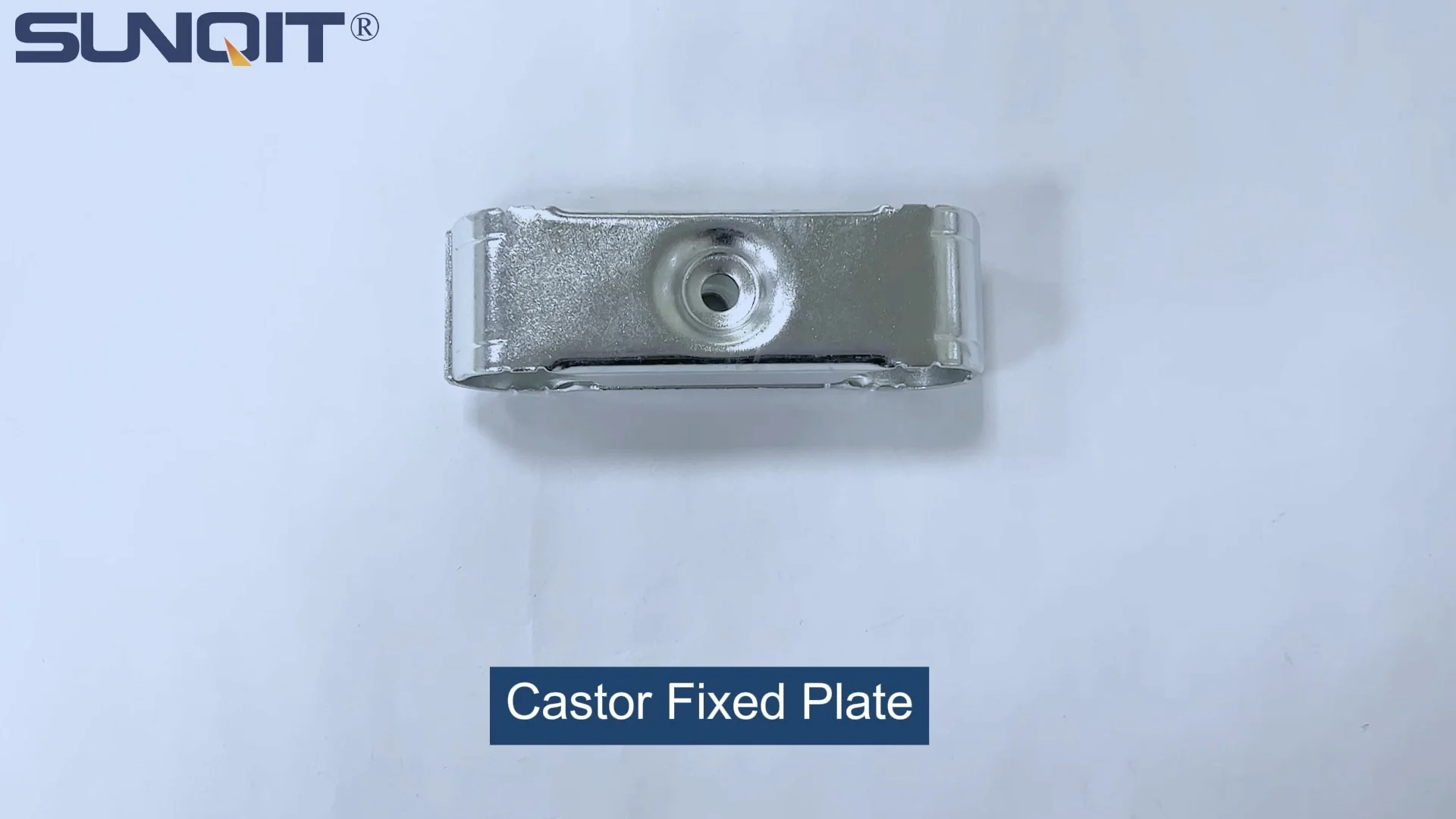
Castor Fixed Plate
Castor fixed plate, used for castor installation, one castor need two pcs castor plate to fix under the workbench, flow rack, and hand trolley.
Introduction: The Unsung Hero of Lean Mobility
In the fast-paced world of manufacturing and warehousing, where efficiency and flexibility can make or break a business, every component matters—even the small ones. Take, for example, the castor fixed plate for lean tubes. At first glance, it might seem like just another metal piece, but anyone who's worked on a factory floor knows better. This unassuming component is the quiet force that turns static structures into mobile, adaptable tools, enabling the kind of agility that modern lean systems demand.
Lean manufacturing isn't just about cutting costs; it's about creating systems that can evolve, adapt, and improve over time. And at the heart of that adaptability is mobility. Whether it's a workbench that needs to shift to a new assembly line, a turnover trolley carrying materials across the shop floor, or a material rack that must reposition to accommodate a sudden rush order, being able to move these structures quickly and safely is non-negotiable. That's where the castor fixed plate steps in. It's the critical link between the lean tube framework and the caster wheels, ensuring that mobility is both reliable and repeatable.
The Role of Castor Fixed Plates in Lean Systems
To understand why castor fixed plates are indispensable, let's start with the basics of a lean system. Lean systems thrive on minimizing waste—whether that's wasted time, space, or resources. A key way to achieve this is by designing modular, customizable structures using lean tubes, joints, and accessories. These structures—workbenches, racks, trolleys—need to be both sturdy and mobile to keep up with changing production needs.
A castor fixed plate is essentially a mounting bracket that attaches caster wheels (a vital part of caster accessories) to a lean tube framework. But it's not just a simple bracket. It's engineered to distribute weight evenly, withstand constant movement, and maintain stability even when carrying heavy loads. Imagine a workbench loaded with electronic components: if the caster attachment is flimsy, the bench might wobble, risking damage to parts or even injury to workers. A high-quality castor fixed plate eliminates that risk by creating a secure connection between the lean tube and the caster, turning a static workbench into a stable, mobile workstation.
But its role goes beyond stability. In lean systems, downtime is the enemy. When a production line needs to reconfigure, every minute spent disassembling or reassembling equipment eats into productivity. Castor fixed plates are designed for quick, tool-free installation (in many cases), allowing teams to adjust layouts on the fly. This speed of adjustment is a cornerstone of continuous improvement—one of the core principles of lean management.

Reusability: The Green (and Cost-Effective) Advantage
In an era where sustainability and cost control are top priorities, reusability isn't just a nice-to-have—it's a necessity. Castor fixed plates excel here, and it's one of the reasons they've become a staple in lean environments.
Let's break down how reusability works in practice. Suppose a manufacturer decides to upgrade its workbenches from traditional steel frames to aluminum lean tube structures. With many fixed components, this upgrade would mean replacing everything—frames, casters, and all. But with castor fixed plates, the story is different. Since they're designed to be compatible with standard lean tube diameters (like 28mm or 30mm), the same castor fixed plate that was attached to a steel lean tube can often be detached, inspected, and reattached to the new aluminum lean tube. No need to buy new plates; just reuse what's already on hand.
This reusability translates directly to cost savings. Over time, as a facility reconfigures its layout, adds new production lines, or phases out old equipment, the ability to repurpose castor fixed plates reduces the need for new purchases. It also cuts down on waste—fewer discarded metal parts ending up in landfills, aligning with the sustainability goals that many modern businesses prioritize. Workers appreciate it too: reusing components means less time ordering and waiting for new parts, and more time focusing on the tasks that drive production forward.
But reusability isn't just about compatibility with different lean tubes. It's also about durability. A well-made castor fixed plate, often made from steel, aluminum, or stainless steel, can withstand years of use—being attached, detached, and reattached multiple times without losing structural integrity. Unlike cheap plastic brackets that crack or bend after a few moves, these metal plates hold up, ensuring that the initial investment pays off over the long haul.

Continuous Improvement Through Design Evolution
Lean systems are never static—they're built on the idea of continuous improvement, or kaizen . This philosophy applies to every component, including the humble castor fixed plate. Over the years, manufacturers of lean tube accessories have refined the design of castor fixed plates to meet the evolving needs of factories and warehouses.
One area of improvement is adaptability. Early castor fixed plates were often one-size-fits-all, limiting their use to specific lean tube diameters or caster types. Today, many plates are designed with slotted holes or adjustable clamps, allowing them to fit multiple tube sizes (like 28mm lean tubes or 30mm aluminum pipes) and work with various caster accessories, from light-duty swivel casters to heavy-duty brake casters. This flexibility means that a single plate can serve multiple purposes, reducing the need for specialized components and simplifying inventory management.
Another key evolution is in load capacity. As factories handle heavier materials—think automotive parts or industrial machinery—castor fixed plates have had to keep up. Modern designs feature reinforced corners, thicker metal gauges, and larger mounting surfaces to distribute weight more effectively. A high-quality steel castor fixed plate, for example, can now support loads of up to 500kg or more, making it suitable for everything from small tool trolleys to large material racks.
Corrosion resistance is also a focus of continuous improvement. In environments like food processing plants or outdoor warehouses, exposure to moisture, chemicals, or salt can quickly degrade metal components. To address this, many castor fixed plates are now coated with zinc, powder, or even made from stainless steel, ensuring they stand up to harsh conditions without rusting or weakening. This not only extends their lifespan but also maintains their reliability—critical for safety in any workplace.
Perhaps the most impactful design improvement is the shift toward tool-free installation. Early plates often required bolts, nuts, and wrenches to attach, which slowed down reconfiguration. Today's plates frequently use quick-release levers, snap-on clamps, or threaded knobs that can be tightened by hand. This small change reduces setup time from minutes to seconds, making it easier for teams to adjust layouts on the fly and keep production moving.

Integration with Lean Tubes and Accessories
A castor fixed plate doesn't work in isolation—it's part of a larger ecosystem of lean tubes, joints, and accessories. To truly appreciate its value, we need to see how it integrates with these components to create functional, mobile structures.
Let's take a common example: a turnover trolley used to transport parts between assembly stations. The trolley's frame is built using lean tubes connected by lean pipe joints—these joints allow for easy assembly and disassembly, a hallmark of lean design. At the base of the frame, four castor fixed plates are attached to the lean tubes (one at each corner). Each plate then connects to a caster wheel (from caster accessories), complete with a brake to lock the trolley in place when loading or unloading.
The key here is the synergy between the lean pipe joint and the castor fixed plate. The lean pipe joint ensures the frame is rigid and stable, while the castor fixed plate ensures that rigidity doesn't compromise mobility. When the trolley needs to be reconfigured—say, to carry taller loads—the lean pipe joints are loosened, the frame is adjusted, and the castor fixed plates remain securely attached, ready to support the new structure. This integration of components is what makes lean systems so versatile.
Another example is the humble workbench. A basic workbench (like "Workbench E" from some lean suppliers) might start as a static table, but adding castor fixed plates and caster wheels transforms it into a mobile workstation. Suddenly, that workbench can move to where the workers are, rather than forcing workers to move to the bench. If the production line changes, the bench is wheeled to the new location, the casters are locked, and work resumes—no downtime, no hassle.
Even specialized equipment, like ESD workstations used in electronics manufacturing, benefit from this integration. ESD workstations require static control to protect sensitive components, but they still need mobility. Castor fixed plates designed for ESD environments (often made from conductive materials) ensure that the workstation can move freely while maintaining the necessary static-dissipative properties. It's a perfect example of how the castor fixed plate adapts to niche needs without sacrificing its core function.
Key Features of Common Castor Fixed Plates
| Material | Load Capacity (kg) | Compatible Lean Tube Diameter | Reusability Score (1-5) | Best For |
|---|---|---|---|---|
| Steel (Zinc-Coated) | 300-500 | 28mm, 30mm | 5 | Heavy-duty trolleys, material racks, workbenches |
| Aluminum | 150-300 | 28mm, 30mm, 40mm | 4 | Lightweight workstations, cleanrooms (corrosion-resistant) |
| Stainless Steel | 200-400 | 28mm, 30mm | 5 | Food processing, pharmaceutical, or outdoor use (high corrosion resistance) |
Choosing the Right Castor Fixed Plate: What to Consider
With so many options available, selecting the right castor fixed plate can feel overwhelming. But by focusing on a few key factors, you can ensure that the plate you choose meets your needs and stands the test of time.
Load Capacity: Start by calculating the maximum weight the structure will carry. This includes the weight of the lean tube frame, any materials or equipment on it, and even the workers who might lean on it. A good rule of thumb is to choose a castor fixed plate with a load capacity 20% higher than your estimated maximum weight to account for unexpected stress.
Lean Tube Compatibility: Check the diameter of your lean tubes. Most standard lean tubes are 28mm, but aluminum lean tubes or stainless steel pipes might have different diameters (like 30mm or 40mm). Ensure the castor fixed plate's clamp or mounting holes match your tube size to avoid instability.
Caster Type: The caster wheel and its accessories (like brakes or swivel locks) will affect the plate you need. Heavy-duty casters require sturdier plates with larger mounting bolts, while light-duty casters can work with simpler designs. Also, consider if the caster needs to swivel—some plates are designed to accommodate swivel casters by allowing 360° rotation without binding.
Environment: Where will the plate be used? In a dry factory, a zinc-coated steel plate might be sufficient. In a wet or corrosive environment (like a brewery or marine facility), stainless steel is a better choice. For cleanrooms or electronics plants, look for plates with smooth surfaces that are easy to sanitize or ESD-compliant materials.
Reusability Needs: If you anticipate frequent reconfigurations, prioritize plates with adjustable clamps or universal fit designs. These will give you the flexibility to use the same plate on different structures over time, maximizing your investment.
Real-World Impact: A Case Study
To see how castor fixed plates drive real change, let's look at a hypothetical (but realistic) case study. Consider a mid-sized automotive parts manufacturer with a 50,000 sq. ft. facility. A few years ago, their production floor was filled with static workbenches and fixed material racks. When they needed to reconfigure for a new car model, the process took days: workers disassembled racks, moved heavy workbenches with forklifts, and reassembled everything from scratch. Downtime was costly, and employee morale suffered from the tedious, physically demanding work.
The solution? They invested in a lean system built around aluminum lean tubes, lean pipe joints, and—you guessed it—castor fixed plates. They replaced static workbenches with mobile ones (using castor fixed plates and caster accessories), converted fixed racks into turnover trolleys, and even added roller tracks with swivel roller balls for smoother material flow. The results were striking:
- Setup Time Reduced by 60%: Reconfiguring the production line now takes hours instead of days. Workers simply unlock the casters, wheel the workbenches and trolleys to the new layout, lock the brakes, and start production.
- Cost Savings: By reusing castor fixed plates and lean tubes when upgrading, the company saved over $15,000 in new equipment costs in the first year alone.
- Worker Satisfaction: Employees reported less physical strain from moving heavy equipment, and the ability to adjust their workstations to their needs boosted productivity and morale.
- Adaptability: When a sudden rush order came in, the factory quickly shifted resources by moving mobile workstations to the bottleneck area, increasing output by 25% that month.
The plant manager summed it up best: "We used to see our facility as a fixed space, but now it feels like a living, breathing system. The castor fixed plates are a big part of that—they're small, but they let us move the entire operation when we need to. It's like having a factory that can rearrange itself."
Future Trends: What's Next for Castor Fixed Plates?
As lean manufacturing continues to evolve, so too will the components that power it. Looking ahead, we can expect to see a few key trends shaping the future of castor fixed plates.
Smart Integration: With the rise of Industry 4.0, we might see castor fixed plates equipped with sensors that monitor load capacity, track movement, or alert maintenance teams to wear and tear. Imagine a plate that sends a notification to a supervisor's phone when a caster is starting to wobble, preventing breakdowns before they happen.
Eco-Friendly Materials: Sustainability will drive the use of recycled or biodegradable materials (for non-structural parts) and more energy-efficient manufacturing processes for castor fixed plates. Aluminum, already a lightweight and recyclable option, will likely grow in popularity as companies aim to reduce their carbon footprint.
Modular Design 2.0: Future plates may feature even more modular components, allowing users to swap out parts (like clamps or mounting brackets) instead of replacing the entire plate. This "repairable by design" approach will extend lifespans further and reduce waste.
Customization: With the growth of 3D printing, small-batch custom castor fixed plates could become more accessible. Facilities with unique needs (like extra-large tubes or specialized mounting requirements) could order plates tailored to their exact specifications, without the high cost of traditional manufacturing.
Conclusion: Small Component, Big Impact
The castor fixed plate for lean tubes may not be the most glamorous component in a factory, but it's undoubtedly one of the most essential. It embodies the principles of lean manufacturing—reusability, flexibility, and continuous improvement—in a single, unassuming piece of metal. By enabling mobility, reducing waste, and adapting to evolving needs, it helps businesses stay agile in a world where change is the only constant.
Whether you're a small workshop just starting with lean systems or a large manufacturer looking to optimize your existing setup, don't overlook the power of a quality castor fixed plate. It's a reminder that in lean manufacturing, success often lies in the details—the small components that work together to create something greater than the sum of their parts.
So the next time you see a mobile workbench gliding across the factory floor, or a turnover trolley effortlessly carrying materials to where they're needed, take a moment to appreciate the castor fixed plate. It's not just holding things together—it's holding up the entire lean system.