- Company Articles
- Products and Technology
- Product knowledge
- Castor Fixed Plate for Mobile Workstations: Key to Agile Manufacturing

Castor Fixed Plate for Mobile Workstations: Key to Agile Manufacturing
Related Product
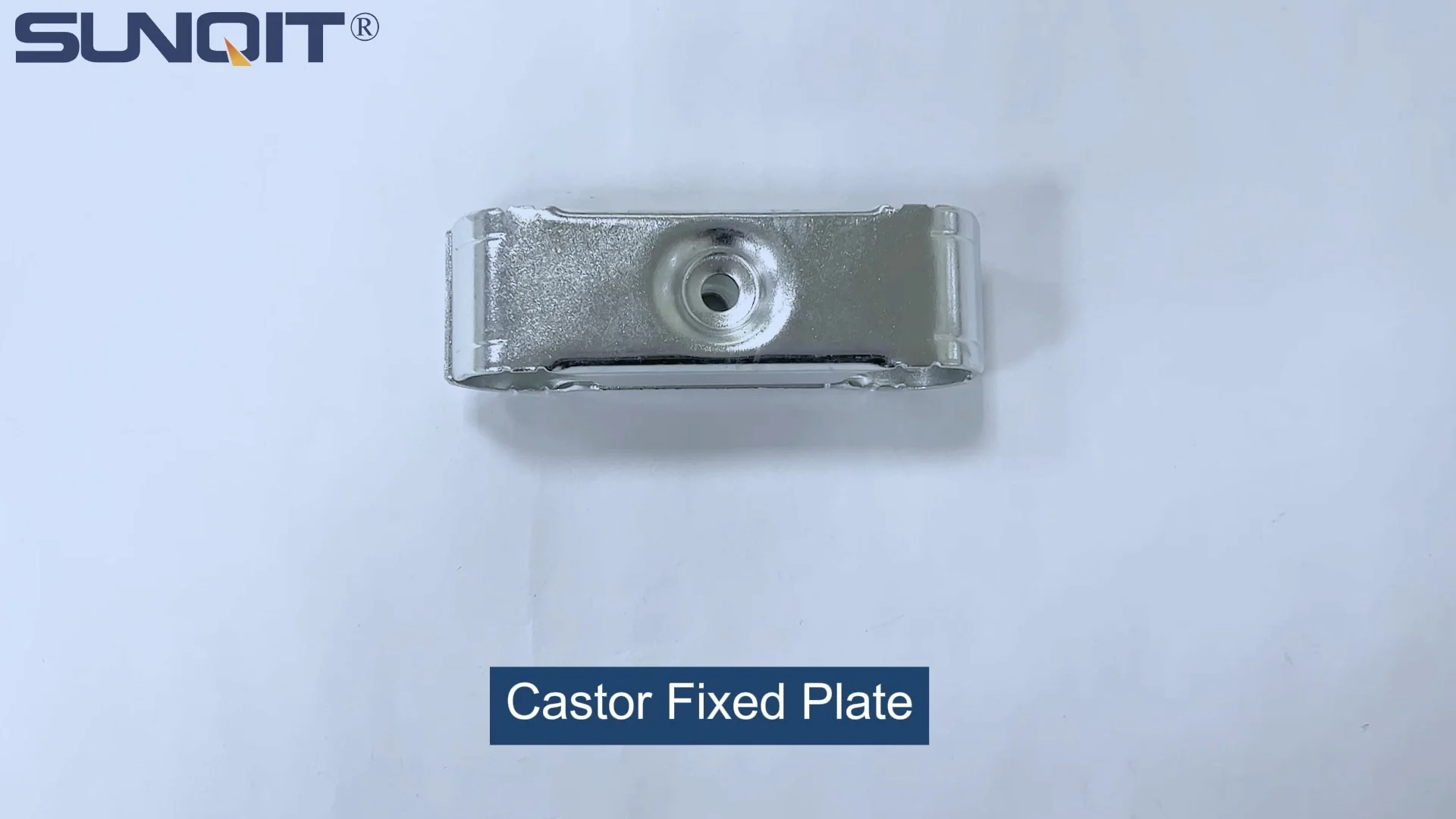
Castor Fixed Plate
Castor fixed plate, used for castor installation, one castor need two pcs castor plate to fix under the workbench, flow rack, and hand trolley.
In today's fast-paced manufacturing landscape, agility isn't just a buzzword—it's the difference between thriving and falling behind. As customer demands shift, product lifecycles shorten, and production runs become more dynamic, factories and workshops are under pressure to adapt quickly. Enter agile manufacturing: a philosophy built on flexibility, responsiveness, and continuous improvement. At the heart of this transformation lies a simple yet powerful tool: the mobile workstation. From workbench setups that can be repositioned in minutes to turnover trolley and rack systems that keep materials flowing seamlessly, mobility is the backbone of agile operations. But what makes this mobility possible? While caster wheel s get much of the credit, there's an unsung hero holding it all together: the castor fixed plate. This small but critical component is the key to turning static workspaces into dynamic, adaptable hubs that drive efficiency and innovation.
What is Agile Manufacturing, and Why Does Mobility Matter?
Agile manufacturing emerged as a response to the limitations of traditional, rigid production systems. In the past, factories were designed for mass production of a single product, with fixed assembly lines and static workstations. But today, customers want personalized products, shorter delivery times, and frequent design updates. Agile manufacturing meets these needs by prioritizing flexibility—allowing teams to pivot quickly, scale production up or down, and reconfigure workflows on the fly.
At its core, agile manufacturing relies on three principles: adaptability, collaboration, and customer focus. Adaptability, in particular, hinges on the ability to rearrange physical spaces to match changing production needs. Imagine a electronics plant that needs to switch from assembling smartphones to tablets overnight. Without mobile workstations, this would require days of dismantling and rebuilding fixed structures—a costly delay. With mobile setups, however, teams can reposition workbench es, reroute material flows using turnover trolley and rack systems, and get back to production in hours. This level of flexibility isn't just convenient; it's a competitive advantage.
Mobile Workstations: More Than Just "Wheels on a Bench"
Mobile workstations are far more than just standard workbenches or racks with casters bolted on. They're engineered for versatility, designed to support a wide range of tasks while remaining easy to move and reconfigure. Let's break down their key features:
- Modularity: Many mobile workstations use lean pipe or aluminum profile systems, allowing teams to add shelves, tool holders, or bins as needed. This customization ensures the workstation fits the task, not the other way around.
- Durability: Built to withstand the rigors of factory floors, they're often made with heavy-duty materials like steel or aluminum, capable of supporting hundreds of pounds of tools, parts, or products.
- Mobility: The star feature, of course, is their ability to move. This is where caster wheel s and castor fixed plates come into play—enabling smooth movement across concrete, tile, or even uneven surfaces.
- Safety: Quality mobile workstations include features like locking casters, anti-slip surfaces, and ergonomic heights to protect workers from strain or injury.
Common examples of mobile workstations include assembly workbenches, material handling trolleys, picking carts, and inspection stations. In lean manufacturing environments, these tools are essential for reducing waste—minimizing unnecessary movement, cutting down on inventory storage space, and ensuring materials are delivered exactly where they're needed, when they're needed.

The Role of Casters: More Than Just Rolling Wheels
When we talk about mobile workstations, caster wheel s are often the first thing that comes to mind. After all, they're the part that touches the ground and makes movement possible. But casters alone aren't enough. A caster's performance—how smoothly it rolls, how much weight it can support, and how long it lasts—depends entirely on how it's attached to the workstation. This is where the castor fixed plate enters the picture.
Think of it this way: If a caster is the "foot" of the workstation, the fixed plate is the "ankle" that connects the foot to the leg. A weak or poorly designed ankle would make walking unstable; similarly, a subpar castor fixed plate can turn a mobile workstation into a wobbly, inefficient liability. The fixed plate's job is to distribute the workstation's weight evenly across the caster, absorb shocks from uneven floors, and prevent the caster from detaching or bending under pressure.
In short, without a reliable castor fixed plate, even the highest-quality caster wheel s won't perform well. It's the critical link that turns individual components into a cohesive, mobile system.

What Exactly is a Castor Fixed Plate?
A castor fixed plate—sometimes called a caster mounting plate or caster base—is a flat, rigid component that attaches the caster to the bottom of a workstation, trolley, or rack. It's typically made of metal (like steel or aluminum) or heavy-duty plastic, and it features pre-drilled holes for bolts or screws that secure it to both the caster and the workstation frame.
While its design may seem simple, the fixed plate plays several vital roles:
- Weight Distribution: Workstations can carry heavy loads—think of a workbench loaded with power tools or a turnover trolley stacked with inventory. The fixed plate spreads this weight across the caster's mounting points, preventing stress concentration that could crack the caster or the workstation frame.
- Stability: A well-designed fixed plate ensures the caster remains aligned with the workstation, preventing wobbling or tipping during movement. This is especially important when navigating corners or uneven floors.
- Shock Absorption: Factory floors are rarely perfectly smooth. The fixed plate acts as a buffer, absorbing small impacts from cracks, bumps, or debris, which helps extend the life of both the caster and the workstation.
- Easy Installation and Replacement: Standardized fixed plates make it simple to install or swap out casters, reducing downtime when maintenance is needed.

Materials Matter: Choosing the Right Castor Fixed Plate
Castor fixed plates are available in a range of materials, each suited to different environments and applications. Let's explore the most common options and their pros and cons:
| Material | Load Capacity (Typical Range) | Durability | Corrosion Resistance | Weight | Best For |
|---|---|---|---|---|---|
| Steel | 500–2,000 lbs per plate | Excellent—resists bending and wear | Low (prone to rust; often coated with zinc or paint for protection) | Heavy (3–8 lbs per plate) | Heavy-duty workstations, outdoor use (with coating), high-load trolleys |
| Aluminum | 300–1,000 lbs per plate | Good—lightweight but strong; resists dents | High (naturally forms a protective oxide layer) | Light (1–4 lbs per plate) | Clean rooms, food processing, pharmaceutical facilities, indoor workstations |
| Plastic Composite | 100–500 lbs per plate | Moderate—resists impact but may flex under heavy loads | Excellent (impervious to water, chemicals) | Very light (0.5–2 lbs per plate) | Light-duty trolleys, medical equipment, environments where non-marking is critical |
When selecting a material, consider your workspace conditions. For example, a steel fixed plate with a zinc coating might be ideal for a automotive factory with high humidity, while aluminum would be better suited for a cleanroom where corrosion and weight are concerns. Plastic composites, meanwhile, shine in settings where noise reduction or non-marking properties are priorities—like hospitals or retail warehouses.
Castor Fixed Plates in Lean Systems: Eliminating Waste, Boosting Efficiency
In a lean system , every component is evaluated for its contribution to value—anything that doesn't add value is considered waste. Castor fixed plates may seem like a minor detail, but they play a big role in reducing waste and boosting efficiency:
- Reduced Downtime: A failed caster or loose fixed plate can bring production to a halt. High-quality fixed plates prevent unexpected breakdowns, keeping workstations moving and teams productive.
- Lower Maintenance Costs: Durable fixed plates extend the life of casters by reducing stress on bearings and axles. This means fewer replacements and less time spent on repairs.
- Improved Workflow: Smooth-rolling workstations (made possible by secure fixed plates) allow for faster material transport, shorter lead times, and more responsive production schedules.
- Enhanced Safety: Wobbly workstations or detached casters are safety hazards. Fixed plates keep casters securely in place, reducing the risk of trips, falls, or product damage.
In essence, castor fixed plates are a small investment that delivers big returns in a lean system . They ensure that the mobility promised by mobile workstations is reliable, consistent, and cost-effective over the long term.
Installation Best Practices: Getting It Right the First Time
Even the best castor fixed plate won't perform well if it's installed incorrectly. Proper installation is critical to ensuring stability, safety, and longevity. Here's a step-by-step guide to getting it right:
- Prepare the Workstation Frame: Ensure the area where the fixed plate will be mounted is clean, flat, and free of debris. If the frame is damaged or uneven, repair it first—an uneven base will lead to uneven weight distribution.
- Align the Fixed Plate: Position the plate so that its mounting holes line up with the caster's holes and the workstation frame. Use a level to ensure the plate is flat—tilting can cause the workstation to wobble.
- Secure with Bolts: Use high-quality bolts (preferably stainless steel or zinc-plated) that match the plate's hole size. Tighten them to the manufacturer's recommended torque—over-tightening can strip threads, while under-tightening can lead to loosening over time.
- Use Lock Washers or Thread Locker: To prevent bolts from loosening due to vibration, add lock washers or apply thread locker compound. This is especially important in high-vibration environments like manufacturing plants.
- Test the Assembly: Once installed, give the workstation a gentle push to check for wobbling. Load it with its typical weight and roll it across different floor surfaces to ensure smooth movement. If something feels off, recheck the alignment and tightness of the fixed plate.
Regular inspection is also key. Over time, bolts can loosen, and plates can bend or corrode. Schedule monthly checks to tighten bolts, clean plates (especially in humid environments), and replace any damaged components before they fail.
Real-World Impact: How Castor Fixed Plates Drive Success
To understand the importance of castor fixed plates, let's look at a few real-world examples:
Case Study 1: Automotive Assembly Plant
A large automotive manufacturer was struggling with frequent downtime due to broken casters on their assembly line trolleys. The trolleys, which carried heavy engine components, relied on cheap plastic fixed plates that would crack under the load. After switching to steel fixed plates with reinforced edges, caster failures dropped by 80%. This not only reduced maintenance costs but also cut production delays, allowing the plant to increase output by 15%.
Case Study 2: Electronics Manufacturing Facility
An electronics plant using ESD workbench es needed to reconfigure their production line weekly to accommodate new product models. Their old workstations used aluminum fixed plates that were lightweight but prone to bending. By upgrading to thicker aluminum plates with internal reinforcement, the workstations became more stable, reducing the time needed to reposition them by 30%. Workers also reported less fatigue, as the smoother-rolling workstations required less effort to move.
Case Study 3: Food Distribution Warehouse
A food warehouse used turnover trolley and rack systems to transport perishable goods. The humid environment caused their steel fixed plates to rust, leading to seized casters. Switching to corrosion-resistant aluminum fixed plates eliminated rust issues, extending caster life from 6 months to 3 years. This reduced replacement costs and ensured timely delivery of fresh products to stores.
The Future of Castor Fixed Plates: Innovations on the Horizon
As manufacturing continues to evolve, so too will the components that power it. Here are a few trends shaping the future of castor fixed plates:
- Smart Monitoring: Some manufacturers are experimenting with fixed plates embedded with sensors that track weight, vibration, and wear. This data can alert maintenance teams to potential issues before they cause failures, enabling predictive maintenance.
- Eco-Friendly Materials: With sustainability becoming a priority, we're seeing more fixed plates made from recycled steel or aluminum, or biodegradable composites for light-duty applications.
- 3D-Printed Customization: 3D printing allows for on-demand production of custom fixed plates tailored to unique workstation designs. This is especially useful for small-batch manufacturers or facilities with specialized needs.
- Integrated Shock Absorption: New designs incorporate built-in springs or rubber pads to better absorb impacts from rough floors, further extending caster and workstation life.
Conclusion: The Unsung Hero of Agile Manufacturing
In the world of agile manufacturing, where flexibility and efficiency are king, mobile workstations are indispensable. And at the heart of these workstations lies the castor fixed plate—a small component with a huge impact. It ensures that caster wheel s roll smoothly, workstations stay stable, and teams can adapt quickly to changing demands.
Whether you're running a lean system in a automotive plant, managing a workbench -filled electronics shop, or coordinating turnover trolley and rack systems in a warehouse, investing in high-quality castor fixed plates is a decision that pays off. It reduces downtime, improves safety, and helps your team stay agile in a world that waits for no one.
So the next time you see a mobile workstation gliding across the factory floor, take a moment to appreciate the unsung hero holding it all together. The castor fixed plate may not grab headlines, but it's the quiet force driving the future of manufacturing.