- Company Articles
- Products and Technology
- Product knowledge
- Castor Fixed Plate for Small Batch Production: Agile Solutions

Castor Fixed Plate for Small Batch Production: Agile Solutions
Related Product
Castor Fixed Plate
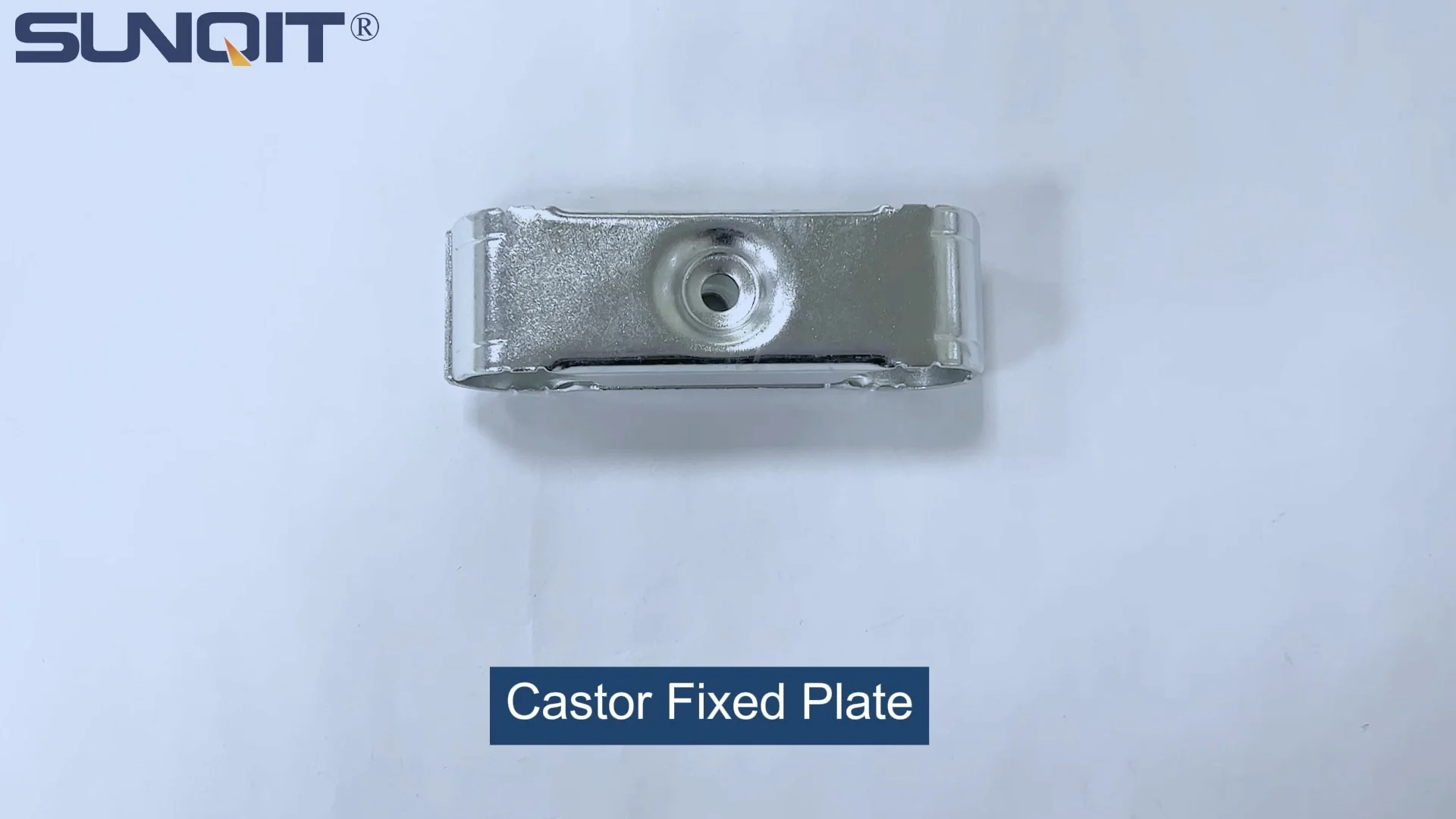
Castor fixed plate, used for castor installation, one castor need two pcs castor plate to fix under the workbench, flow rack, and hand trolley.
Small batch production is the heartbeat of innovation for countless businesses—from artisanal workshops crafting custom electronics to local manufacturers prototyping new medical devices. But here's the thing: while big factories rely on massive, inflexible machinery, small-scale teams thrive on adaptability. The problem? Too often, their workspace tools feel like they're stuck in the Stone Age. Heavy workbenches that won't budge, turnover racks that scrape the floor when moved, and production lines that take hours to reconfigure. Sound familiar? If you've ever wished your workshop could "breathe" and shift with your projects, you're not alone. That's where the unsung hero of agile manufacturing steps in: the castor fixed plate.
At first glance, it might seem like just another metal plate. But for small batch producers, this unassuming component is a game-changer. It's the bridge between stability and mobility, the reason your turnover trolley glides instead of grinds, and the secret to reconfiguring your workbench in minutes instead of hours. Let's dive into why this tiny but mighty tool deserves a spot in your production line—and how it works with other key components like lean pipe joints, workbenches, and caster accessories to turn chaos into clarity.
What Even Is a Castor Fixed Plate?
Let's start with the basics. A castor fixed plate is exactly what it sounds like: a flat, sturdy plate designed to attach casters (those swiveling wheels you see on trolleys and workbenches) to equipment. But don't let its simplicity fool you. Think of it as the "glue" that holds your mobility system together. Without a reliable fixed plate, casters wobble, tools tip, and moving heavy loads becomes a back-breaking chore.
Most castor fixed plates are made from durable materials like steel or aluminum—tough enough to handle the bumps and scrapes of daily workshop life. They come in various sizes, from compact plates for lightweight workbenches to heavy-duty versions built for loaded turnover trolleys. The magic is in their design: pre-drilled holes align perfectly with caster mounting holes, and their flat surface distributes weight evenly, so your equipment stays stable even when fully loaded. No more wobbly carts or lopsided racks—just smooth, confident movement.
Why Small Batch Production Can't Afford to Ignore It
Small batch work is all about pivoting fast. One week, you're assembling 50 units of Product A; the next, you're switching to Product B, which needs a totally different layout. If your tools can't keep up, you're wasting precious time—time that could be spent innovating or meeting tight deadlines. Here's how castor fixed plates solve that:
- Agility on a Budget: Big factories spend millions on automated conveyor systems. Small producers? We need tools that work now , without breaking the bank. A castor fixed plate costs a fraction of those fancy systems but lets you turn any static piece of equipment into a mobile unit. Suddenly, your workbench isn't just a workbench—it's a workstation that can roll to where the action is.
- Less Stress, More Productivity: Ever tried moving a fully loaded turnover rack by yourself? It's not just hard—it's dangerous. A castor fixed plate paired with quality casters turns that struggle into a one-person job. No more rounding up coworkers for a "rack-moving party" or risking strained muscles. Your team stays focused on building, not brute-forcing.
- Space-Saving Superpower: Small workshops rarely have extra square footage. A castor fixed plate lets you "park" equipment when it's not in use—slide that material rack against the wall, tuck the workbench into a corner, and free up space for the next project. It's like having a workshop that rearranges itself.

How It Plays Well with Others: Integration with Key Components
A castor fixed plate doesn't work alone. It's part of a ecosystem of tools that small batch producers rely on daily. Let's break down how it teams up with three essentials: turnover trolley and rack, workbench, and lean pipe joint systems.
1. Turnover Trolley and Rack: Mobility Without the Headache
Turnover trolleys are the workhorses of small production lines—hauling raw materials, finished products, and everything in between. But without a solid castor fixed plate, they're more like stubborn mules than reliable partners. Imagine this: You've just loaded your trolley with 20kg of circuit boards. You push, and… it lurches. One caster is loose, the other is stuck, and the whole thing threatens to tip. Not ideal.
Enter the castor fixed plate. By securely mounting casters to the trolley's base, it ensures all four wheels move in sync. No more uneven rolling, no more stuck wheels, and no more white-knuckling the handle. Even better, when paired with swivel casters (those that rotate 360 degrees), your trolley can navigate tight corners and narrow aisles—perfect for workshops where space is at a premium. And when you need to park it? Lock the caster brakes, and the fixed plate keeps everything steady. It's mobility with control.
2. Workbench: Your "Mobile Command Center"
Your workbench is where the magic happens—the place you solder, assemble, and test. But if it's bolted to the floor, you're stuck working around it instead of with it. A castor fixed plate changes that. By adding casters to your workbench (via the fixed plate), you can roll it right up to your turnover trolley when unloading materials, then push it back to the testing area when you're done. Need to collaborate with a teammate? Just wheel it over to their station. It's like having a workstation that comes to you.
But wait—won't a mobile workbench be wobbly? Not with the right fixed plate. Look for plates made from thick steel or aluminum; they distribute weight evenly, so even when you're leaning on the bench to tighten a lean pipe joint, it stays rock-solid. And if you need extra stability for precision work? Lock the casters, and the fixed plate acts as an anchor. Stability when you need it, movement when you don't—no compromises.
3. Lean Pipe Joints: Building a "Lego Set" for Production
Lean manufacturing is all about cutting waste—and lean pipe joints are the building blocks of that philosophy. These versatile connectors let you build custom racks, workstations, and production lines using simple pipes and joints. But here's the catch: even the most cleverly designed lean system is useless if it can't move. That's where castor fixed plates shine.
Picture this: You've built a material rack using lean pipe joints, perfect for storing components for your current project. But next month, you're switching to a larger product, and you need the rack to be taller. With a castor fixed plate, you can wheel the entire rack to your assembly area, take it apart, and rebuild it in minutes. No more disassembling it in place and carrying pieces across the workshop. The fixed plate keeps the base stable during transport, so your carefully built structure doesn't collapse mid-move. It's lean manufacturing with a mobility upgrade.

Real-World Impact: How a Small Electronics Shop Cut Setup Time by 70%
Let's put this into perspective with a hypothetical (but totally relatable) example. Meet "TechTiny," a small electronics manufacturer with 10 employees, specializing in custom circuit boards for startups. Before they started using castor fixed plates, their workflow was a mess:
- Workbenches were bolted to the floor, so assemblers had to walk back and forth 20+ times a day to grab tools.
- Turnover racks had cheap, wobbly casters (no fixed plates), so moving them required two people and often resulted in scratched floors.
- Switching between projects took 4 hours—half a workday—because they had to disassemble and rebuild their lean pipe material racks from scratch.
Then, they invested in castor fixed plates. Here's what changed:
- Mobile Workbenches: They added castor fixed plates and lockable casters to their workbenches. Now, assemblers roll their stations right to the material racks, cutting walking time by 80%.
- Smooth-Rolling Turnover Trolleys: By upgrading to heavy-duty castor fixed plates, their trolleys now glide with one hand—no more two-person moves. Scratched floors? A thing of the past.
- Lean System Mobility: Their lean pipe material racks now sit on bases with castor fixed plates. Switching projects? They wheel the racks to a corner, adjust the lean pipe joints, and roll them back—setup time down to 1 hour.
Result? TechTiny increased their weekly output by 30% and cut employee fatigue complaints in half. All because of a simple plate that connects casters to equipment. That's the power of agility.

Choosing the Right Castor Fixed Plate: It's Not One-Size-Fits-All
Not all castor fixed plates are created equal. To get the most out of yours, you'll need to consider a few key factors:
- Load Capacity: How much weight will your equipment carry? A small workbench might need a plate rated for 100kg, while a loaded turnover trolley could need 500kg+. Check the specs—overloading a plate is a safety hazard.
- Material: Steel plates are tough but heavy; aluminum is lighter (great for mobile workbenches) but less durable for extreme loads. Choose based on your daily use.
- Caster Compatibility: Make sure the plate's hole pattern matches your casters. Most standard casters use 4-hole mounts, but it never hurts to double-check.
- Environment: If your workshop is damp (like a food processing facility), look for rust-resistant plates (stainless steel is a good bet). For cleanrooms, aluminum won't shed particles.
And don't forget about caster accessories! A high-quality castor fixed plate paired with cheap casters is like putting a Ferrari engine in a bicycle. Invest in lockable casters, shock-absorbing wheels (to protect delicate components), and replacement caster accessories (like bearings) to keep things rolling smoothly.
Castor Fixed Plate Comparison: Which One Fits Your Needs?
| Plate Type | Material | Max Load (kg) | Best For | Pros | Cons |
|---|---|---|---|---|---|
| Standard Steel | Carbon Steel | 300 | Turnover Trolley and Rack | Durable, affordable | Heavy (hard to install alone) |
| Lightweight Aluminum | Aluminum Alloy | 150 | Workbench | Light, rust-resistant | Not for heavy loads |
| Stainless Steel Heavy-Duty | 304 Stainless Steel | 500 | Lean Pipe Material Racks | Corrosion-proof, ultra-strong | Pricey (worth it for heavy use) |
| Plastic-Coated Steel | Steel with PVC Coating | 200 | Cleanrooms, Food-Grade Workshops | Non-slip, easy to clean | Coating can chip over time |
The Future of Small Batch Manufacturing: Mobility as a Competitive Edge
As small batch production becomes more critical—with consumers demanding personalized products and startups racing to market—agility isn't just a nice-to-have; it's a survival skill. Tools like castor fixed plates might seem small, but they're part of a bigger trend: making small workshops as nimble as tech startups.
Think about it: Industry 4.0 is all about smart factories, but for small producers, "smart" doesn't have to mean expensive robots. It means having a workspace that adapts to you . A workspace where your tools move when you need them to, where setup times are measured in minutes, and where your team can focus on creating instead of struggling with equipment. That's the future—and it starts with components like castor fixed plates, lean pipe joints, and quality workbenches.
Final Thoughts: Your Workshop Deserves to Move at Your Pace
Small batch production is hard enough without fighting against your own tools. The next time you're staring at a workbench that won't budge or a turnover trolley that feels like it's stuck in mud, remember: the solution might be simpler than you think. A castor fixed plate isn't just a metal plate—it's a ticket to a more efficient, less stressful, and more innovative workshop.
So, take a look around your space. What could use a mobility upgrade? A workbench that needs to roll? A turnover rack that's begging for smoother casters? A lean pipe system that's crying out to be reconfigured on the fly? Whatever it is, the castor fixed plate is ready to help. Your projects (and your back) will thank you.