Castor Fixed Plate for Turnover Carts: Ensuring Smooth Movement on Factory Floors

Related Product
Castor Fixed Plate
Castor fixed plate, used for castor installation, one castor need two pcs castor plate to fix under the workbench, flow rack, and hand trolley.
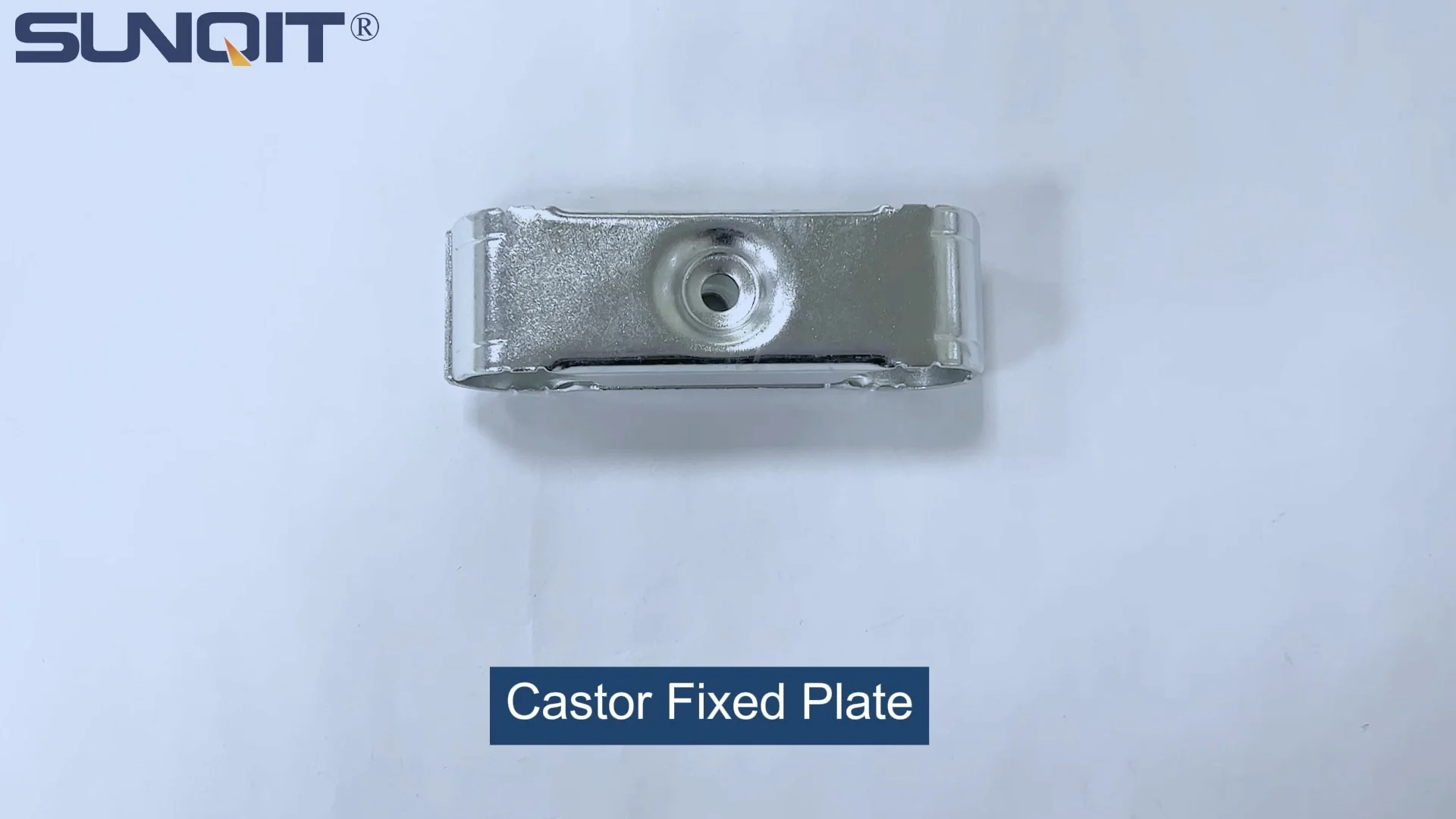
Castor Fixed Plate
Imagine a busy factory floor: workers hurrying to move materials from one station to another, assembly lines humming, and deadlines looming. In the middle of all this chaos, there's one unsung element that keeps everything from grinding to a halt: movement. Materials, tools, and (semi-finished products) need to flow seamlessly—no jams, no delays, no wasted effort. That's where turnover carts come in. These workhorses of material handling shuttle goods across the factory, but their efficiency hinges on a tiny, often overlooked component: the castor fixed plate. It might not grab headlines, but without it, even the sturdiest caster wheel would wobble, the cart would tip, and your carefully planned workflow could collapse. Today, we're diving deep into this small but mighty part, exploring why it matters, how it works, and how choosing the right one can transform your factory's efficiency—especially when paired with principles of the lean system.

Understanding Turnover Trolleys in Modern Factories

Before we zoom in on the castor fixed plate, let's take a step back and appreciate the star of the show: the turnover trolley. If you've ever walked through a manufacturing plant, warehouse, or distribution center, you've seen them—metal or aluminum frames with shelves, wheels, and sometimes foldable sides, designed to carry everything from small components to heavy machinery parts. They're the backbone of material handling, bridging the gap between storage and production lines, between shipping and receiving, and between workers who need tools at their fingertips. Turnover trolleys aren't just "carts with wheels," though. In the context of a lean system, they're strategic tools. Lean manufacturing is all about eliminating waste—whether that's wasted time, wasted space, or wasted effort. A well-designed turnover trolley reduces waste by keeping materials exactly where they're needed, when they're needed. Need to move 500 circuit boards from the storage room to the assembly line? A turnover trolley with dividers keeps them organized and prevents damage. Need to transport tools between workstations? A trolley with lockable drawers ensures nothing gets lost. In short, turnover trolleys turn "chaotic movement" into "controlled flow"—and that's where the turnover trolley and rack category shines, offering versatile solutions for every material handling need. But here's the thing: even the best-designed trolley is only as good as its ability to move. A trolley that sticks, wobbles, or can't handle the load is worse than no trolley at all. It slows down workers, increases the risk of accidents, and turns "lean" into "mean" (as in, frustrating and inefficient). That's why the wheels—specifically, the caster wheels—and their connection to the trolley frame are so critical.

The Unsung Hero: Caster Wheels and Their Connection to Turnover Carts

Let's talk about caster wheels. These small, swiveling (or fixed) wheels are what give turnover trolleys their mobility. They come in all shapes and sizes: heavy-duty steel wheels for rough floors, soft rubber wheels for smooth concrete, swivel casters for easy maneuverability, and locking casters to keep the trolley steady when loading or unloading. But here's a secret: the caster wheel itself is just one part of the equation. To function properly, it needs a stable, secure connection to the trolley's frame. That's where the castor fixed plate enters the story. Think of it this way: if the caster wheel is the "foot" of the trolley, the castor fixed plate is the "ankle." It's the metal (or sometimes plastic) plate that bolts the caster to the trolley's frame, distributing the weight of the load evenly and ensuring the wheel moves in sync with the trolley. Without a strong, well-fitted fixed plate, the caster could loosen over time, leading to wobbling, uneven wear on the wheel, or even catastrophic failure—like the wheel detaching mid-movement. This is especially important in high-volume factories where turnover trolleys are in constant use. Imagine a trolley carrying 500 pounds of metal parts: every bump, turn, and stop puts stress on the caster and its connection. A flimsy fixed plate would bend or crack under that pressure, turning a simple material run into a safety hazard. On the flip side, a high-quality fixed plate absorbs that stress, keeps the caster aligned, and ensures the trolley glides smoothly—shift after shift, day after day.

What is a Castor Fixed Plate? Breaking Down Its Purpose and Design

So, what exactly is a castor fixed plate? At its core, it's a flat or slightly curved piece of material—usually steel, aluminum, or reinforced plastic—with pre-drilled holes that allow it to be bolted to both the caster wheel assembly and the trolley frame. Its primary job is to create a rigid, stable link between the two, ensuring that when the trolley moves, the caster moves with it, not against it. Let's break down its key functions:
  • Load Distribution: When a trolley is loaded, the weight isn't just on the caster wheel—it's on the fixed plate, which spreads that weight across the trolley's frame. This prevents stress concentrations that could bend or crack the frame over time.
  • Alignment: Casters need to be perfectly aligned with the trolley's direction of movement. A well-designed fixed plate ensures the caster sits at the right angle (usually 90 degrees to the frame), so the wheel rolls straight and doesn't "fight" against the trolley.
  • Vibration Dampening: Factories are noisy places, and trolleys often roll over uneven floors. The fixed plate acts as a buffer, absorbing some of the vibrations and preventing them from loosening bolts or damaging the caster's internal bearings.
  • Safety: By securing the caster tightly, the fixed plate reduces the risk of the wheel coming loose—a critical safety feature when workers are pushing heavy loads around.
Design-wise, castor fixed plates aren't one-size-fits-all. They come in different shapes (square, rectangular, round) and sizes, depending on the caster's load capacity and the trolley's frame design. For example, a heavy-duty trolley carrying 1,000 pounds might use a 6-inch square steel plate with four mounting holes, while a lightweight trolley for small parts could use a 4-inch rectangular aluminum plate with two holes. Some plates even have raised edges or reinforced corners for extra strength, or slotted holes to allow for (fine adjustments) during installation.

Materials Matter: Choosing the Right Castor Fixed Plate for Your Needs

Now that we know what a castor fixed plate does, let's talk about materials. The material you choose will depend on three factors: the weight of the loads you're carrying, the environment you're working in, and your budget. Here's a breakdown of the most common options:

Steel: The Heavyweight Champion

Steel is the go-to material for heavy-duty applications. It's strong, durable, and can handle loads up to several thousand pounds. Most steel fixed plates are also coated with zinc (galvanized) or powder-coated to resist rust and corrosion—important in factories with high humidity or exposure to chemicals. If your turnover trolleys are hauling metal parts, machinery, or other heavy items, a steel fixed plate is your best bet. Just keep in mind: steel is heavy, so it adds a bit of weight to the trolley itself. For lightweight applications, this might be overkill.

Aluminum: Lightweight and Corrosion-Resistant

Aluminum is a great alternative for medium-load applications or environments where corrosion is a concern (like food processing plants or cleanrooms). It's lighter than steel, which makes the trolley easier to push, and it naturally resists rust. However, aluminum isn't as strong as steel—so it's not ideal for loads over 500 pounds. It's also more expensive than steel, so you'll pay a premium for that lightweight, rust-free performance.

Reinforced Plastic: The Budget-Friendly Option

For very light loads (under 200 pounds), reinforced plastic fixed plates are an option. They're cheap, lightweight, and resistant to chemicals, but they lack the strength of metal. You might see them on small trolleys used for office supplies or lightweight electronics components, but they're not recommended for factory floors where durability is key. When choosing a material, it's also important to consider the caster and accessories ecosystem. A steel caster wheel paired with a plastic fixed plate is a recipe for disaster—the plate will likely crack under the caster's weight. Always match the fixed plate material to the caster's load rating and the trolley's frame material for optimal performance.

Installation Insights: How a Well-Fitted Castor Fixed Plate Prevents Downtime

Even the best castor fixed plate won't perform well if it's installed incorrectly. Poor installation is one of the top causes of caster-related downtime in factories—think loose bolts, misaligned wheels, or plates that crack because they're not bolted tight enough. Here's how to get it right:

Step 1: Choose the Right Bolts

The bolts that secure the fixed plate to the trolley frame and caster are just as important as the plate itself. Use high-strength bolts (grade 8 or higher for steel plates) that match the size of the plate's mounting holes. Avoid using bolts that are too long (they'll stick out and scratch floors or catch on things) or too short (they won't secure the plate properly).

Step 2: Align the Plate Perfectly

Before tightening the bolts, double-check the plate's alignment. The caster should sit straight, with the wheel parallel to the trolley's frame. If it's even slightly off, the wheel will drag, causing uneven wear and making the trolley harder to push. Use a level or straightedge to ensure the plate is flush against the frame—no gaps allowed.

Step 3: Torque the Bolts Properly

"Tighten until it won't turn" is not a good strategy here. Over-tightening can strip the threads or warp the plate, while under-tightening leaves the plate loose. Check the caster manufacturer's guidelines for torque specs (usually measured in foot-pounds) and use a torque wrench to get it right. For steel plates, you'll typically torque bolts to 25-35 foot-pounds; aluminum plates may require less (15-25 foot-pounds) to avoid cracking.

Step 4: Test Before Full Deployment

After installing the plate, give the trolley a test run. Push it across the factory floor, make sharp turns, and load it to its maximum capacity. Listen for unusual noises (like squeaking or grinding), and check if the trolley wobbles or pulls to one side. If something feels off, stop and recheck the alignment or bolt tightness. It's better to spend 10 extra minutes testing than to have a trolley break down mid-shift.

Maintenance Tips to Extend the Life of Your Castor Fixed Plate and Caster System

A castor fixed plate isn't a "set it and forget it" part. Like any component in a factory, it needs regular maintenance to stay in top shape. Here's a simple maintenance routine to keep your plates (and casters) working for years:

Weekly Inspections

Every week, have a maintenance technician (or even the workers who use the trolleys) give the fixed plates a quick once-over. Check for:
  • Loose bolts: Tighten any that are wiggling.
  • Cracks or bends in the plate: If you see even a small crack, replace the plate immediately—it will only get worse under load.
  • Rust or corrosion: For steel plates, sand off rust and apply a fresh coat of paint or rust inhibitor.

Monthly Lubrication

While the fixed plate itself doesn't need lubrication, the bolts and caster wheel bearings do. Apply a few drops of machine oil or grease to the bolt threads and caster bearings to prevent rust and keep things moving smoothly. This is especially important in humid environments where metal parts are prone to seizing up.

Quarterly Load Testing

Every three months, test the trolley's load capacity with the fixed plate installed. Load it to 125% of its rated capacity and push it around for 30 minutes. If the plate holds up without bending or cracking, you're good to go. If not, upgrade to a heavier-duty plate.

replace When Needed

Even with perfect maintenance, fixed plates wear out eventually. If you notice consistent issues—like bolts loosening every week, or the plate bending under normal loads—it's time for a replacement. Don't wait for a failure; a new plate costs a fraction of the downtime (or accident) it could prevent.

Comparing Castor Fixed Plates: A Quick Reference Table

Material Max Load Capacity (lbs) Best For Pros Cons
Steel (Galvanized) Up to 2,000 Heavy loads, rough environments Durable, corrosion-resistant, strong Heavy, more expensive than plastic
Aluminum Up to 500 Medium loads, cleanrooms, food plants Lightweight, rust-free, easy to maneuver Less strong than steel, higher cost
Reinforced Plastic Up to 200 Light loads, office use, low-budget setups Cheap, lightweight, chemical-resistant Weak, prone to cracking under stress

The Bigger Picture: Castor Fixed Plates in Lean System Implementation

By now, you might be thinking, "Okay, the castor fixed plate is important—but how does it tie into the lean system?" Great question. Lean manufacturing is all about creating value with fewer resources, and a key part of that is "flow"—ensuring materials and products move through the factory without unnecessary stops or delays. A turnover trolley with a faulty fixed plate disrupts that flow: workers waste time pushing a wobbly cart, materials get delayed, and production lines slow down. In lean terms, that's "non-value-added activity"—the very thing lean aims to eliminate. Let's look at a real-world example. A mid-sized electronics manufacturer was struggling with production delays. Their assembly line was supposed to receive circuit boards every 30 minutes via turnover trolleys, but the trolleys kept breaking down. After investigating, they found the issue: the castor fixed plates were made of thin, low-grade steel that bent under the weight of the circuit boards. This caused the casters to wobble, making the trolleys hard to push and leading to frequent breakdowns. Workers were spending 10-15 minutes per shift fixing or replacing casters—time that should have been spent assembling products. The solution? They switched to galvanized steel fixed plates with a higher load capacity. The result? Trolley breakdowns dropped by 90%, and the assembly line started receiving materials on time. Workers reported less fatigue (no more struggling with wobbly carts), and production output increased by 5% in the first month. All from upgrading a $10 part. That's the power of paying attention to the small details in a lean system. Beyond reducing downtime, a well-functioning castor fixed plate also supports other lean principles:
  • 5S (Sort, Set in Order, Shine, Standardize, Sustain): Trolleys with reliable casters are easier to "set in order" (store in designated spots) and "shine" (clean), keeping the factory floor organized.
  • Kaizen (Continuous Improvement): Regularly inspecting and maintaining fixed plates is a form of kaizen—small, incremental improvements that add up to big efficiency gains over time.
  • Just-In-Time (JIT) Production: JIT relies on materials arriving exactly when needed. A trolley that moves smoothly ensures materials get to the line on schedule, avoiding stockouts or overstocking.

Troubleshooting Common Issues with Castor Fixed Plates

Even with the best planning, issues can arise. Here's how to troubleshoot common castor fixed plate problems:

Problem: Trolley Wobbles When Moving

Cause: Loose bolts, misaligned plate, or a bent plate. Solution: Tighten bolts, re-align the plate, or replace a bent plate.

Problem: Caster Wheel Won't Swivel

Cause: Plate is warped, preventing the caster from rotating freely. Solution: replace the plate with a flat, undamaged one.

Problem: Plate Cracks Under Load

Cause: Plate is underrated for the load, or material is poor quality. Solution: Upgrade to a higher-load-capacity plate (e.g., steel instead of aluminum).

Problem: Bolts Keep Loosening

Cause: Vibration from rough floors, or bolts are too small. Solution: Use lock washers or thread-locking adhesive, and upgrade to larger bolts.

Conclusion: Small Part, Big Impact

The castor fixed plate might not be the most glamorous part of your factory's equipment, but it's a critical one. It's the silent partner that keeps your turnover trolleys moving, your materials flowing, and your lean system running like a well-oiled machine. By choosing the right material, installing it properly, and maintaining it regularly, you can avoid downtime, improve safety, and boost productivity—all while keeping costs low. So, the next time you see a turnover trolley gliding across the factory floor, take a moment to appreciate the small metal plate holding it all together. It's a reminder that in manufacturing, as in life, the little things often make the biggest difference. And in a lean system, where every second and every dollar counts, that difference can be the key to staying ahead of the competition.


Get In Touch with us

Hey there! Your message matters! It'll go straight into our CRM system. Expect a one-on-one reply from our CS within 7×24 hours. We value your feedback. Fill in the box and share your thoughts!