- Company Articles
- Products and Technology
- Product knowledge
- Castor Fixed Plate Functions in Material Handling: Stability & Mobility

Castor Fixed Plate Functions in Material Handling: Stability & Mobility
Related Product
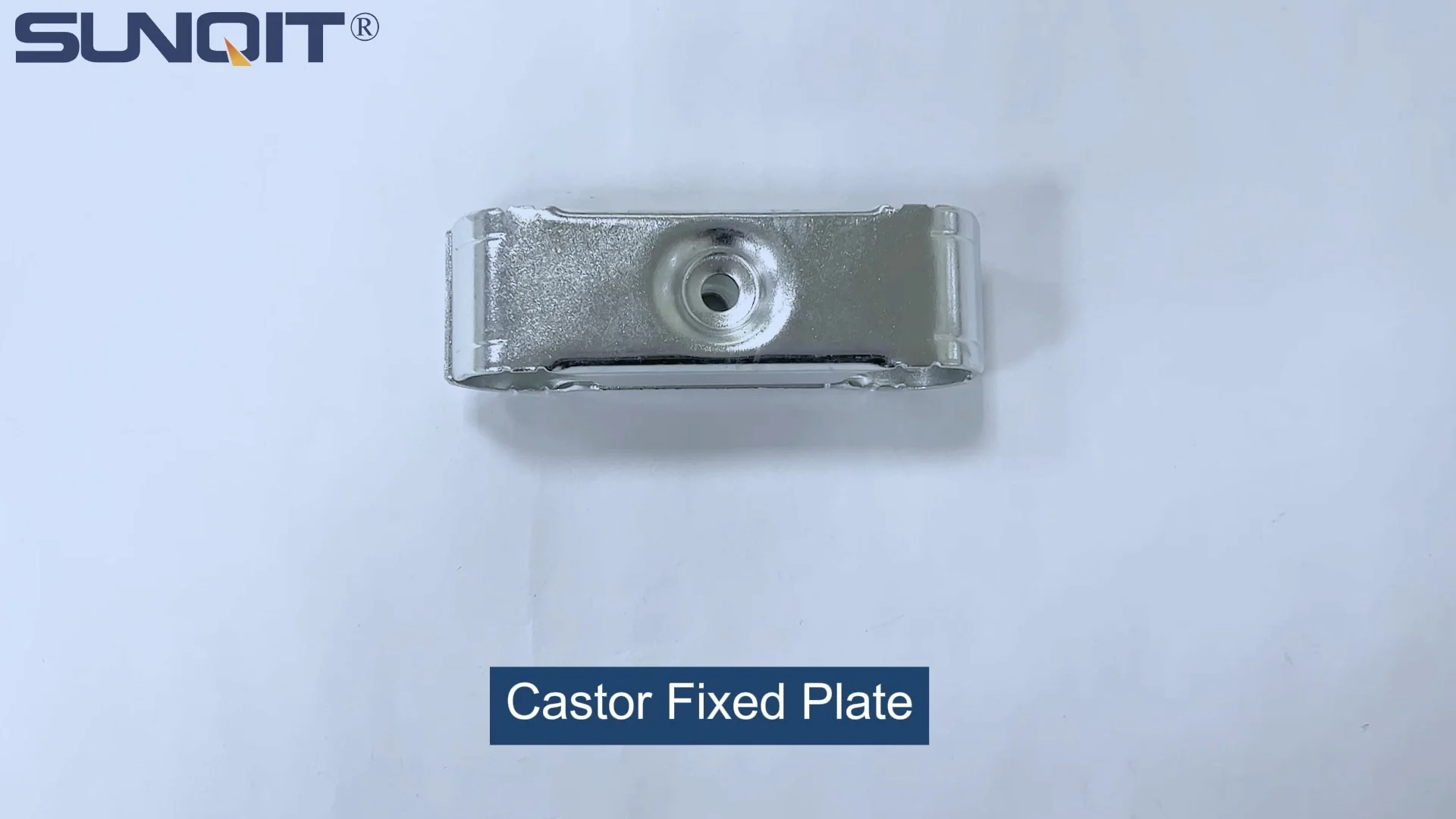
Castor Fixed Plate
Castor fixed plate, used for castor installation, one castor need two pcs castor plate to fix under the workbench, flow rack, and hand trolley.
Introduction: The Hidden Backbone of Efficient Workflows
Step into any manufacturing facility, warehouse, or logistics hub, and you'll quickly realize that the smooth flow of materials is the lifeblood of operations. Every cart rolled across the floor, every workbench repositioned for a new task, and every rack adjusted to optimize space relies on one fundamental balance: stability to keep loads secure, and mobility to keep processes moving. Yet amid the buzz of conveyor belts and the hum of machinery, there's a quiet hero working behind the scenes—the castor fixed plate.
Think about the last time you struggled with a wobbly shopping cart at the grocery store. Now imagine that cart loaded with 500 pounds of fragile electronics or heavy machinery parts. In industrial settings, that instability isn't just a nuisance; it's a threat to productivity, safety, and profitability. A single tipped trolley can damage thousands of dollars in inventory. A workbench that sticks or shifts during assembly can throw off precision, leading to defective products. And a material rack that's hard to move forces workers to waste energy better spent on value-adding tasks.
Enter the castor fixed plate: a simple yet ingenious component that bridges casters and the equipment they support. Whether it's a turnover trolley shuttling parts between stations, a lean pipe workbench on an assembly line, or a flow rack feeding components to workers, this plate ensures that mobility doesn't come at the cost of stability. In this article, we'll explore how castor fixed plates work, why they're indispensable in material handling, and how they empower businesses to build workflows that are both flexible and rock-solid.
What Exactly Is a Castor Fixed Plate?
At first glance, a castor fixed plate might look like little more than a flat piece of metal with holes. But that simplicity is deceptive. This component is engineered to solve a critical challenge: how to attach casters to equipment in a way that's both secure and functional. Think of it as the "glue" that holds the mobility system together—without it, casters would loosen, wobble, or even detach, turning reliable equipment into liabilities.
Most castor fixed plates are made from durable materials like steel, stainless steel, or aluminum, chosen for their strength and resistance to wear. Their design is deceptively thoughtful: pre-drilled holes align perfectly with both the mounting points on the caster and the base of the equipment (whether it's a workbench, trolley, or rack), allowing bolts or screws to create a tight, unyielding connection. Some plates feature reinforced edges or gussets for extra strength, while others are coated in zinc or powder to resist corrosion in damp or chemical-exposed environments.
Take, for example, a stainless steel castor fixed plate used in a food processing plant. It needs to withstand frequent washdowns with harsh cleaners without rusting, while still supporting heavy loads of ingredients. Or an aluminum plate on a lean pipe workbench in an electronics assembly line: it must be lightweight enough to keep the workbench easy to move, yet strong enough to support sensitive circuit boards and tools. In every case, the plate's material, size, and design are tailored to the specific demands of the job.

The Dual Superpowers: Stability & Mobility Explained
Castor fixed plates deliver two core benefits that make them irreplaceable: they keep equipment stable under load, and they enable smooth, effortless movement. Let's break down how they master both roles.
Stability: The Foundation of Safe Material Handling
Stability starts with weight distribution. When you place a heavy load on a mobile cart, the force isn't just concentrated on the casters—it's spread across the castor fixed plate, which then transfers it evenly to the equipment's frame. This distribution is critical because uneven weight is the leading cause of tipping. For instance, a material rack b (3 row and 3 floor) loaded with boxes might weigh 800 pounds. With four casters, each connected via a fixed plate, the plate ensures that ~200 pounds rests on each caster, not 400 on one and 100 on another. This balance is especially vital when navigating corners, where centrifugal force can shift loads to one side.
But stability isn't just about weight—it's about rigidity. Over time, the vibration and movement of equipment can loosen bolts and connections. A castor fixed plate acts as a rigid barrier, preventing the caster from twisting or shifting relative to the equipment. Without it, casters might "walk" out of alignment, causing the equipment to veer off course or wobble. The plate locks the caster in place, maintaining alignment even after months of heavy use.
Mobility: Making Heavy Loads Feel Light
If stability is about staying grounded, mobility is about moving freely—without wasting energy. A well-designed castor fixed plate minimizes friction and ensures casters can swivel and roll with minimal effort. How? By eliminating "play" in the connection between caster and equipment. When a caster is loosely mounted, even a small gap between the caster and the equipment creates resistance. Every push or pull has to overcome that slack, making movement jerky and tiring.
A tight-fitting castor fixed plate eliminates this slack. It holds the caster firmly, so when a worker pushes a trolley, the force transfers directly to the wheels, not to wobbly connections. This efficiency isn't just about speed; it's about ergonomics. Workers exert less force, reducing fatigue and the risk of strain injuries. In fact, studies show that well-designed mobility systems can cut pushing/pulling effort by up to 30%—a game-changer for shift-long productivity.
Even wear is another mobility benefit. When casters are mounted unevenly (common without fixed plates), some wheels bear more weight than others, leading to uneven tread wear. This makes movement progressively harder as wheels degrade. Castor fixed plates ensure all casters sit at the same height and bear equal load, so wheels wear evenly, extending their lifespan and keeping movement smooth for longer.

Where You'll Find Castor Fixed Plates Hard at Work
Castor fixed plates are everywhere in material handling—often in places you might not notice until you start looking. Let's explore some common applications and how these plates add value:
Turnover Trolleys & Material Racks: The Workhorses of Warehouses
Turnover trolleys are the backbone of intra-facility transport, used to move everything from raw materials to finished goods. A typical trolley might carry 300-800 pounds of inventory, and without a sturdy castor fixed plate, that load could become unstable. For example, a hand trolley a loaded with automotive parts needs to navigate tight aisles and sudden stops; the fixed plates on its casters ensure the load stays balanced, preventing parts from sliding or the trolley from tipping. Similarly, material racks like "material rack b (3 row and 3 floor)" rely on fixed plates to keep stacked boxes secure, even when the rack is moved to a new location.
Lean Pipe Workbenches: Flexibility in Assembly Lines
Lean manufacturing thrives on adaptability, and lean pipe workbenches are designed to be reconfigured on the fly. A workbench might start the day assembling circuit boards, then be moved to a new station in the afternoon to pack products. Here, castor fixed plates are critical: they let the workbench roll smoothly to its new spot, then lock into place to provide a stable surface for precision tasks. A "workbench e (single deck-without caster)" can be upgraded with casters and plates to become a mobile workstation, giving teams the flexibility to rearrange lines based on demand—all without sacrificing stability during use.
Flow Racks & Conveyor Systems: Keeping Materials Moving
Flow racks use gravity to feed components to workers, but their positioning often needs adjustment to align with assembly lines. Mobile flow racks, equipped with casters and fixed plates, can be shifted to match changing production needs. The plates ensure the rack remains level, so parts flow evenly without jamming. Similarly, portable conveyor extensions—used to bridge gaps between fixed conveyors—rely on fixed plates to stay stable, even as heavy packages roll over them. Without these plates, the conveyor might shift, causing packages to misalign or fall.
ESD Workstations: Protecting Sensitive Electronics
In electronics manufacturing, ESD (electrostatic discharge) workstations protect sensitive components from static damage. These workstations often need to be mobile to accommodate reconfigurable cleanrooms. Castor fixed plates here do double duty: they keep the workstation stable to prevent component spills, and they ensure casters (often ESD-safe) remain grounded, maintaining the workstation's static protection. A loose caster could break the ground connection, putting expensive microchips at risk—making the fixed plate a silent guardian of product quality.

Choosing the Right Castor Fixed Plate: A Practical Guide
Not all castor fixed plates are created equal. To maximize performance, you need to match the plate to your equipment, load, and environment. Here's a breakdown of key considerations, plus a comparison of popular options:
| Plate Type | Material | Typical Load Capacity (Per Plate) | Best For | Key Advantages | Potential Drawbacks |
|---|---|---|---|---|---|
| Standard Steel | Mild Steel | 300-600 lbs | General warehouse trolleys, workbenches | Strong, affordable, widely available | Prone to rust in damp environments |
| Stainless Steel | 304/316 Stainless Steel | 400-800 lbs | Food processing, pharmaceuticals, cleanrooms | Corrosion-resistant, easy to sanitize | Higher cost than mild steel |
| Aluminum | 6061 Aluminum Alloy | 200-400 lbs | Lean systems, lightweight workbenches, ESD stations | Lightweight, rust-proof, non-magnetic | Lower load capacity than steel |
| Reinforced Steel | High-Strength Steel with Ribs | 800-1,500 lbs | Heavy-duty material racks, industrial machinery | Extreme durability, ideal for heavy loads | Adds weight to equipment; bulkier |
Start by calculating your total load: add the weight of the equipment itself plus the maximum load it will carry, then divide by the number of casters (and thus plates) to get the per-plate capacity needed. For example, a 1,000-lb material rack with four casters requires plates rated for at least 250 lbs each (plus a 20% safety margin, so 300 lbs). Next, consider the environment: stainless steel is a must in wet or corrosive settings, while aluminum shines in lean, weight-sensitive applications like mobile workbenches.
Don't forget compatibility! The plate must match the caster's mounting pattern (the distance between bolt holes) and the equipment's base. A mismatch here can lead to loose connections or uneven weight distribution—defeating the plate's purpose. Always check specs with your caster and equipment supplier, or consult a lean system supplier who specializes in material handling components.
Installation & Maintenance: Keeping Plates Performing at Their Best
Even the best castor fixed plate won't perform well if installed or maintained poorly. Here's how to ensure yours deliver long-term reliability:
Installation: Get It Right the First Time
Start with clean, flat mounting surfaces. Rust, debris, or unevenness under the plate can create weak points. Use the correct fasteners—grade 8 bolts for heavy loads, stainless steel for corrosion resistance—and torque them to the manufacturer's specs. Over-tightening can warp the plate; under-tightening leaves room for movement. For critical applications (like ESD workstations), use thread-locking compound to prevent bolts from loosening due to vibration.
Alignment is also key. The plate should sit parallel to the equipment's base and perpendicular to the caster stem. A crooked plate will cause uneven weight distribution and premature wear. Use a level to check alignment during installation, and shim if needed to ensure the plate sits flat.
Maintenance: Small Checks, Big Results
Regular inspections are simple but effective. Every month, check for: loose bolts (tighten as needed), signs of rust or corrosion (clean and treat with anti-rust spray), and bending or warping (replace immediately if deformed). For high-use equipment like turnover trolleys, increase checks to weekly—these workhorses take the most abuse.
Lubrication matters too. While the plate itself doesn't need lubrication, the caster's swivel joint does. A well-lubricated caster reduces stress on the plate, preventing premature failure. Use a dry lubricant in dusty environments to avoid attracting debris, and a waterproof grease in wet areas.
Finally, replace plates proactively. If a plate shows signs of cracking, excessive rust, or warping, don't wait for it to fail. A new plate costs a fraction of the damage caused by a tipped load or injured worker. Keep spares on hand for critical equipment to minimize downtime.
Why It All Matters: The Business Case for Quality Plates
At this point, you might be thinking, "These plates are small—do they really impact the bottom line?" The answer is a resounding yes. Consider this: a single incident involving a tipped trolley with $10,000 in electronics could cost more than 100 high-quality castor fixed plates. Multiply that by the number of trolleys, racks, and workbenches in your facility, and the ROI becomes clear.
Efficiency gains add up too. A study by the Material Handling Institute found that workers spend 20% of their time moving materials; reducing that by even 5% (thanks to smoother mobility) translates to hundreds of extra productive hours per year. And with labor costs rising, every minute saved is money earned.
Safety is another critical factor. OSHA estimates that overexertion injuries (often caused by pushing/pulling heavy, unstable equipment) cost businesses $15-20 billion annually in workers' comp and lost productivity. Stable, easy-to-move equipment reduces these risks, keeping teams safe and operations running.
Conclusion: The Quiet Catalyst for Better Workflows
Castor fixed plates may not grab headlines, but they're the unsung heroes of material handling. By balancing stability and mobility, they turn ordinary equipment into tools of efficiency—keeping loads secure, workers productive, and businesses profitable. From the lean pipe workbench on the assembly line to the turnover trolley in the warehouse, these plates prove that great things really do come in small packages.
So the next time you see a smoothly rolling trolley or a steady workbench, take a moment to appreciate the castor fixed plate. It's a reminder that in material handling, as in business, success often lies in the details—the small, intentional choices that build stronger, more resilient operations. And when it comes to those choices, investing in quality castor fixed plates is one decision that always pays off.